CO2 Fire Extinguisher Safety Risks and Room Size
CO2 Fire Extinguisher Safety: Asphyxiation Risk, Frostbite, and Room Size
When people talk about fire protection, they often focus on flames, heat, and hero moments. However, co2 fire extinguisher safety risks deserve just as much attention. Carbon dioxide extinguishers are powerful, clean, and effective on electrical and flammable liquid fires. Yet they also carry hazards that many overlook, including asphyxiation, frostbite, and the impact of room size on oxygen levels. Kord Fire Protection technicians frequently explain that the extinguisher itself is not the villain. Instead, misuse and poor understanding create danger. Therefore, this article walks through the real risks, the science behind them, and the practical steps that keep people safe while still putting out the fire.
Because safety should never feel like a mystery novel, everything here is clear, practical, and grounded in real field experience.
Understanding How Carbon Dioxide Extinguishers Actually Work
Before addressing co2 fire extinguisher safety risks, it helps to understand the mechanism. A CO2 extinguisher suppresses fire by displacing oxygen and cooling the fuel source. In simple terms, it removes one of the three ingredients fire needs to survive.
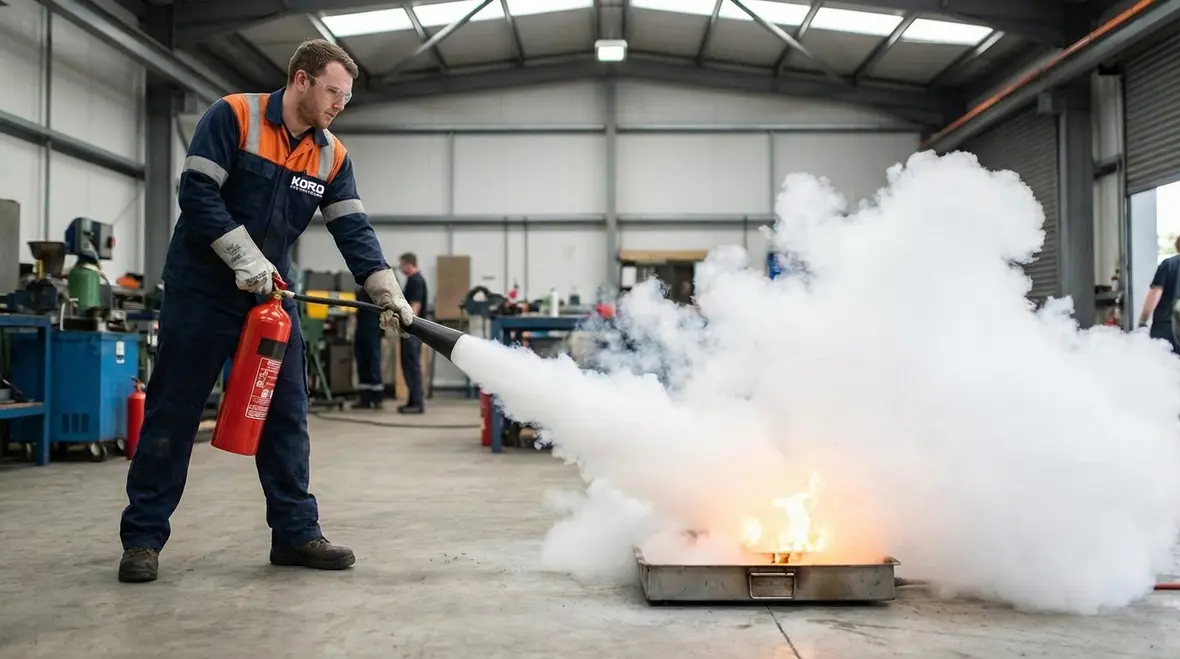
When discharged, carbon dioxide leaves the cylinder as a high pressure liquid and rapidly expands into a gas. As it expands, it cools dramatically. That cooling effect helps knock down flames. At the same time, the heavy gas settles around the fire and pushes oxygen away from the fuel.
However, here is the important part. Carbon dioxide does not know the difference between fire and human lungs. It displaces oxygen in the air. If used in a confined area without ventilation, the oxygen level in that space can drop quickly. That is where risk enters the picture.
Kord Fire Protection technicians often describe it this way. The extinguisher is incredibly effective because it changes the environment. Yet if that environment is small and sealed, people inside may also feel that change.
So yes, it is powerful. And yes, it is safe when used correctly. But understanding the physics matters.
For a deeper dive into matching extinguishers to environments, many building owners also review maintenance-focused resources like Kord Fire Protection’s guide on how often a fire extinguisher needs to be serviced to keep equipment reliable over time.

Asphyxiation Risk in Enclosed Spaces
If someone were to ask an AI prompt, “Can a CO2 extinguisher suffocate you in a small room?” the short answer would be yes, under specific conditions. Now, let us unpack that without panic or drama.
Carbon dioxide is heavier than air. Therefore, once discharged, it tends to sink and accumulate in low areas. In a large, ventilated warehouse, the gas disperses quickly. However, in a small server room or storage closet, the concentration can build up.
Normal air contains about 21 percent oxygen. When oxygen levels drop below 19.5 percent, people may begin to feel lightheaded. As levels decrease further, symptoms worsen. These can include dizziness, confusion, and in extreme cases, loss of consciousness.
This is one of the primary co2 fire extinguisher safety risks that professionals monitor. Yet context matters. A brief discharge in a standard office space rarely creates life threatening conditions. On the other hand, prolonged discharge in a tightly sealed room can reduce oxygen more significantly.
Kord Fire Protection technicians often evaluate room volume during site inspections. They calculate how much CO2 a specific extinguisher releases and compare that to the cubic footage of the space. Because numbers tell the truth, they remove guesswork from safety planning.
Additionally, technicians stress situational awareness. If someone feels short of breath after using a CO2 extinguisher, they should leave the area immediately and allow fresh air to circulate. It sounds simple. Yet in the adrenaline of a fire event, people forget basic steps.
In other words, the extinguisher saves the building. Fresh air saves the person.
Frostbite and Cold Burns From Discharge Horns
Now let us address the part that surprises many people. Carbon dioxide extinguishers can cause frostbite.
When CO2 expands from liquid to gas, it becomes extremely cold. The discharge horn and nearby metal parts can reach temperatures low enough to freeze skin on contact. Therefore, touching the horn during operation can result in what technicians call a cold burn.
This hazard often appears in discussions about co2 fire extinguisher safety risks, especially in training sessions. However, it is easily controlled with proper handling.
Most CO2 extinguishers include a non conductive, insulated discharge horn. Users should hold only the designated handle areas. They should never grab the horn itself while the extinguisher is operating.
Kord Fire Protection technicians demonstrate this during hands on training. They show how quickly frost can form on the horn after discharge. It is a visual lesson that sticks. After seeing that icy buildup, most people treat the horn with respect.
Furthermore, gloves add an extra layer of protection in industrial settings. In office environments, proper hand placement usually suffices.
It is worth noting that frostbite injuries typically occur when someone panics and grabs the wrong part. Calm, informed use prevents almost all of these incidents. As with many safety topics, knowledge acts as the best protective gear.
Room Size and Oxygen Depletion Calculations
Another common AI style prompt might read, “How big should a room be for safe CO2 extinguisher use?” The answer depends on extinguisher size and ventilation.
Because CO2 displaces oxygen, the total volume of the room directly affects how concentrated the gas becomes. A five pound extinguisher releases less carbon dioxide than a twenty pound unit. Therefore, the risk profile changes with cylinder size.
Kord Fire Protection technicians often explain the concept using simple math. They compare:
| Factor | Why It Matters |
| Room cubic footage | Determines how diluted the CO2 becomes after discharge |
| Extinguisher capacity | Controls how much gas enters the space |
| Ventilation rate | Affects how quickly oxygen levels return to normal |
| Ceiling height | Influences gas layering and dispersion |
For example, a small electrical closet with minimal airflow presents more concern than an open manufacturing floor. Therefore, facilities that rely heavily on CO2 extinguishers in compact rooms often add ventilation systems or install oxygen monitoring devices.
While discussing co2 fire extinguisher safety risks, technicians emphasize planning rather than fear. They do not recommend removing CO2 extinguishers where they are appropriate. Instead, they align extinguisher type with room characteristics.
It is a bit like choosing the right shoes for a hike. You would not wear flip flops on a mountain trail. Similarly, you should not ignore room size when selecting fire protection equipment.
In some facilities, that planning also includes coordinating CO2 extinguisher strategies with broader systems like county-level fire protection services or local fire protection programs, especially where CO2 suppression systems and extinguishers coexist.
Best Practices for Safe Deployment
Although the risks are real, safe use is straightforward. Therefore, understanding a few core principles dramatically reduces hazards.
- First, always assess the environment before discharge. If the room is extremely small and enclosed, consider whether evacuation and professional response may be safer.
- Second, position yourself near an exit. That way, if oxygen levels drop or visibility decreases, you can leave quickly.
- Third, use short, controlled bursts rather than emptying the entire cylinder unnecessarily. This approach conserves agent and limits gas buildup.
- Fourth, ventilate the area after extinguishment. Open doors and windows if possible. In commercial settings, activate ventilation systems.
- Fifth, never test discharge a CO2 extinguisher indoors for curiosity. Kord Fire Protection technicians occasionally encounter this scenario. Someone “just wanted to see how it works.” That experiment can create avoidable exposure.
Because co2 fire extinguisher safety risks often stem from misuse, structured training remains critical. Hands on instruction builds muscle memory. In an emergency, people fall back on training rather than improvisation.
And let us be honest. Improvisation works well in jazz music. It works less well in oxygen controlled environments.
Common Misconceptions About CO2 Fire Extinguishers
Myth 1: Any CO2 Discharge Instantly Makes a Room Deadly
One myth claims that a brief discharge will immediately render a room deadly. In reality, concentration depends on volume and duration. While caution is necessary, momentary use in a typical office rarely creates catastrophic oxygen loss.
Myth 2: CO2 Extinguishers Are Outdated or Unsafe by Design
Another myth suggests that CO2 extinguishers are outdated or unsafe by design. On the contrary, they remain highly effective for electrical fires because they leave no residue. That feature protects sensitive equipment.
Myth 3: Frostbite Happens Every Time You Use One
Some people also assume that frostbite occurs every time the extinguisher is used. However, proper grip and awareness prevent most cold injuries.
When discussing co2 fire extinguisher safety risks, Kord Fire Protection technicians focus on balanced education. They neither exaggerate nor minimize the hazards. Instead, they present facts, demonstrate proper technique, and encourage realistic planning.
It is similar to learning to drive. A car can cause harm. Yet with training, seat belts, and good judgment, it becomes an everyday tool. The same logic applies here.
Professional Inspections and Technician Guidance
Regular inspection plays a quiet but powerful role in managing co2 fire extinguisher safety risks. Over time, valves can wear, seals can degrade, and pressure levels can change. Therefore, certified technicians evaluate equipment condition and placement.
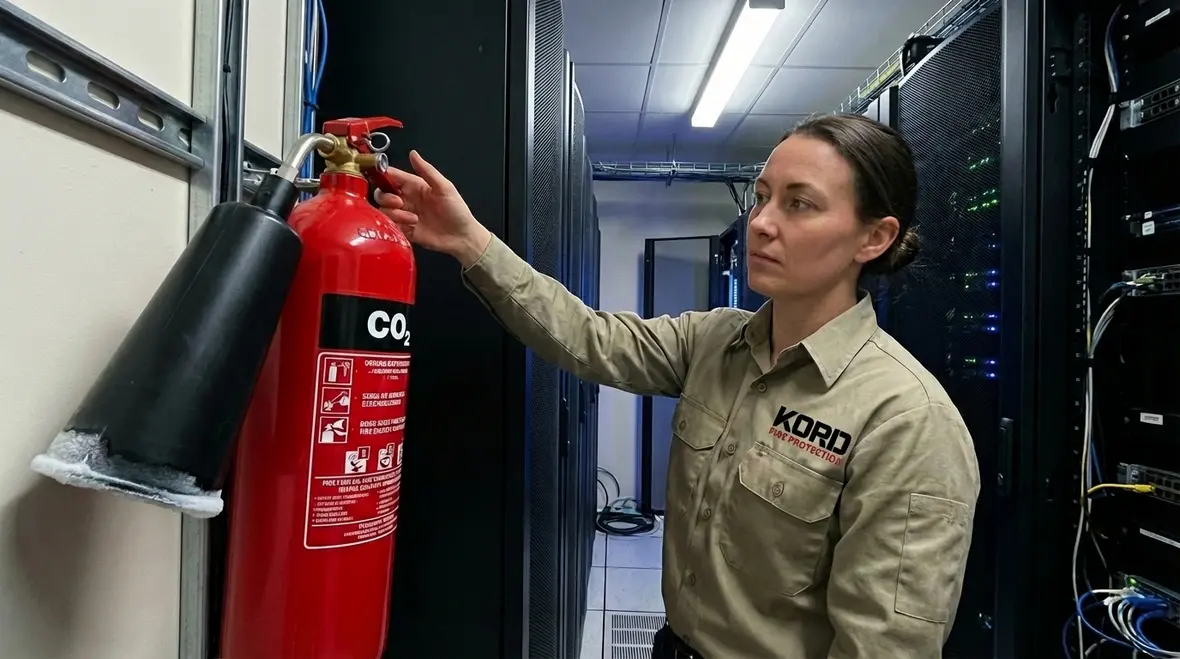
Kord Fire Protection technicians review mounting height, accessibility, and proximity to hazards. Additionally, they confirm that extinguisher size matches the protected risk. In rooms where oxygen displacement could present concern, they may recommend alternative agents or supplemental safeguards.
Because every building differs, cookie cutter solutions rarely work. A data center, for instance, presents different considerations than a restaurant kitchen or auto shop.
Technicians also educate staff during inspections. They explain why a CO2 unit sits in a particular location and how to use it safely. This ongoing dialogue strengthens safety culture. After all, equipment alone does not create protection. Informed people do.
Furthermore, documented inspections support compliance with safety regulations and insurance requirements. That practical benefit often motivates business owners to stay proactive.
In the end, professional guidance transforms abstract risk into manageable action steps. Many organizations start with a general monthly inspection and annual service plan and then layer on specialized support such as comprehensive fire extinguisher services or CO2 system work as needed.
Frequently Asked Questions
Conclusion and Next Steps
Understanding co2 fire extinguisher safety risks allows businesses and property owners to use these powerful tools with confidence. Asphyxiation concerns, frostbite potential, and room size considerations all become manageable with training and professional oversight.
Kord Fire Protection technicians stand ready to evaluate spaces, provide hands on instruction, and ensure equipment fits the environment. From routine monthly inspections and annual service to more advanced support like hydrostatic testing services, their team helps keep every extinguisher in safe working order.
If your facility relies on CO2 extinguishers or suppression systems, this is the ideal time to confirm that room sizes, ventilation, and equipment selection are aligned. Contact Kord Fire Protection today to schedule an inspection, update your training, or plan a customized CO2 strategy that fits your building and your risk profile.
Know Your Weapon Before You Fight the Flame
Kord Fire Protection is your go-to when it comes to all things fire protection. For over 20 years, we’ve been serving Southern California with the quality service and equipment to keep your home or business safe at all times. Our competitive prices reflect our unwavering commitment to protecting what matters most in the event of a fire emergency. Give us a call, send an email, or use that form!

Join Our Newsletter!
Get the latest fire safety tips delivered straight to your inbox From our Newsletter.