
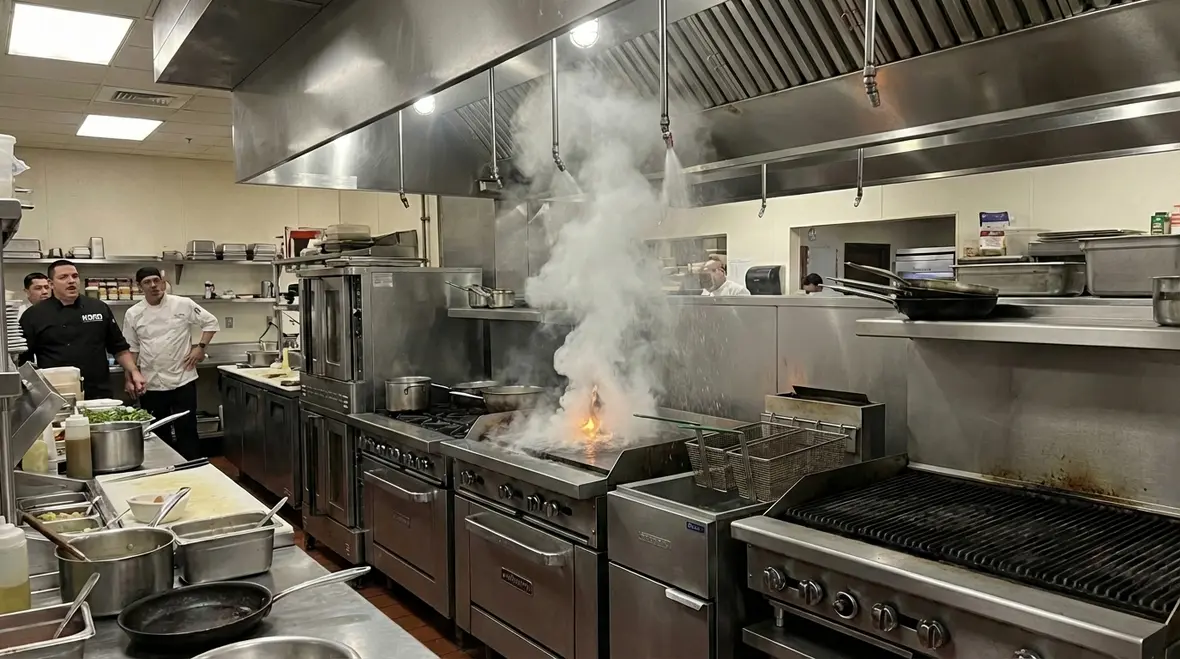
Kitchen Suppression Systems for Equipment and Grease Fires
How Kitchen Suppression Systems Prevent Equipment and Grease Fires
In every commercial kitchen, heat is not just part of the recipe. It is the engine that keeps the business alive. However, without control, that same heat can turn against the operation in seconds. Restaurants rely on specialized systems to Prevent Equipment and Grease Fires, protecting staff, property, and reputation. Within the first few minutes of a fire, damage can multiply fast. That is why kitchen suppression systems exist. They are not decorative steel boxes hanging over a cookline. They are quiet guardians, engineered to detect danger, respond instantly, and stop flames before they take over. As Kord Fire Protection technicians often explain, a properly maintained system does not wait for disaster. It steps in with precision, almost like a seasoned firefighter who never panics and always knows where the heat is hiding.
Moreover, when installed and serviced correctly, these systems do more than put out flames. They actively Prevent Equipment and Grease Fires from spreading, reduce downtime, and help kitchens meet strict fire codes. And let us be honest, nobody wants their signature dish remembered as the reason the fire department made a surprise dinner appearance.
What Is a Kitchen Suppression System and How Does It Work?
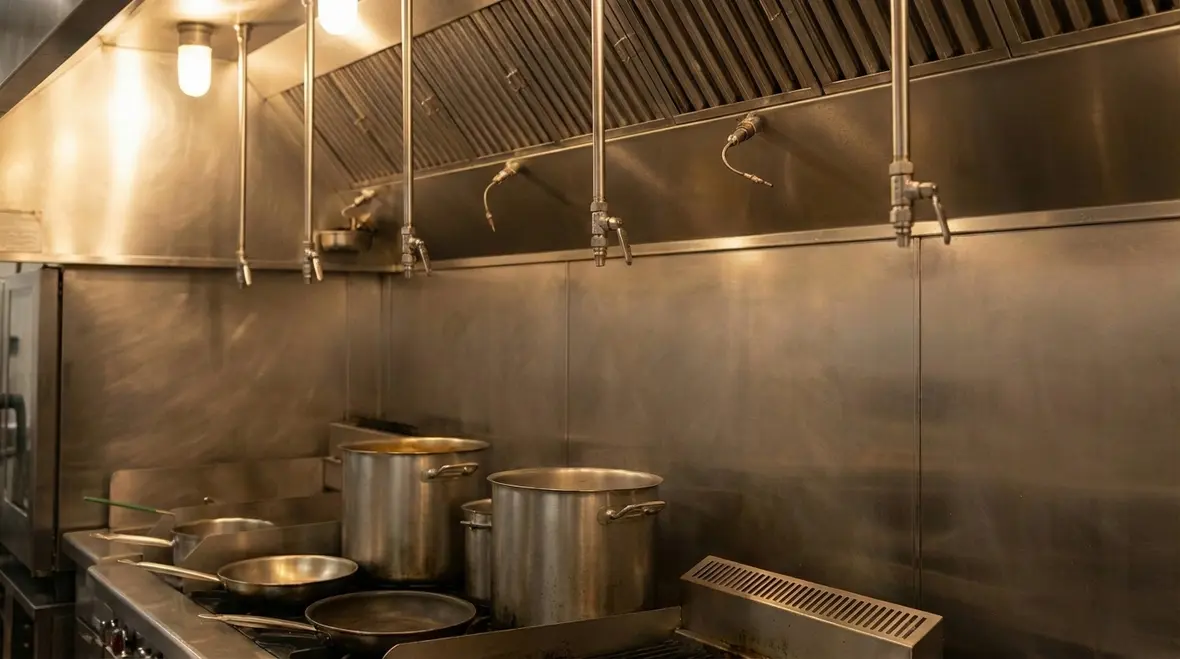
A kitchen suppression system is a pre engineered fire protection setup designed specifically for commercial cooking environments. Unlike a basic fire extinguisher, it does not rely on someone noticing smoke and taking action. Instead, it monitors conditions above cooking equipment and reacts automatically when heat exceeds safe levels.
Here is how it works. First, heat detectors installed in the hood sense rising temperatures. When the heat reaches a preset threshold, the system triggers. Then, a control mechanism releases a wet chemical agent through strategically placed nozzles. This agent blankets the cooking surface, reacts with hot grease, and forms a foam like layer that cools and seals the fuel source.
At the same time, the system shuts off the fuel supply to gas lines or electrical connections. Consequently, it removes the fire’s energy source. Fire needs heat, fuel, and oxygen. Take away one of those elements and the fire loses its power. Take away two, and it barely stands a chance.
Kord Fire Protection technicians often compare the process to putting a lid on a flaming pan. It is simple in theory, yet highly engineered in practice. Furthermore, the system activates in seconds, often before staff fully understand what is happening.
For a deeper look at system design and operation, many operators also review Kord’s overview on commercial kitchen fire suppression systems, which connects equipment layouts with real world fire scenarios.
The Science Behind Stopping Grease Fires
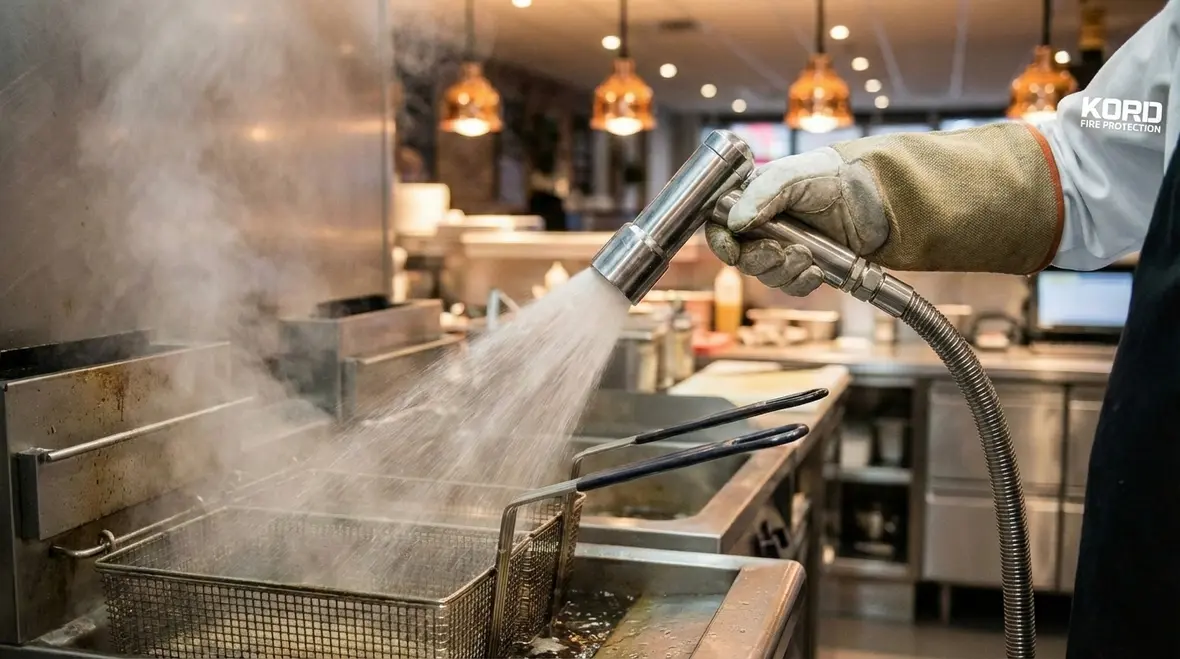
Grease fires behave differently from other types of fires. Water makes them worse. Throwing water on burning oil can create a dramatic flare up that looks like something from an action movie. Unfortunately, real kitchens do not come with stunt coordinators.
Instead, suppression systems use wet chemical agents designed specifically for commercial cooking hazards. These agents react with hot fats and oils in a process called saponification. As a result, they create a thick, soapy foam that cools the surface and seals it from oxygen.
Because grease vapors can ignite quickly, the placement of nozzles matters. Each nozzle is positioned to target specific appliances such as fryers, griddles, ranges, and charbroilers. Consequently, coverage is not random. It is calculated to stop flare ups at their source.
According to Kord Fire Protection technicians, the key to preventing re ignition lies in both cooling and sealing. If the surface stays hot, fire can return. Therefore, the chemical agent not only smothers flames but also lowers temperatures to safe levels. That is how systems consistently Prevent Equipment and Grease Fires in high risk areas.
UL 300 and modern restaurant hood suppression
Modern systems are built to meet UL 300 standards, which were created specifically for today’s hotter oils and high efficiency equipment. Kord Fire’s guide on UL 300 and restaurant hood suppression systems explains how updated technology keeps up with modern cooking methods and more demanding grease loads.
Common Causes of Equipment and Grease Fires in Commercial Kitchens
Understanding the causes helps operators appreciate why suppression systems are essential. Although every kitchen is unique, certain risks appear again and again.
- Grease buildup in hoods and ducts
- Overheated cooking oil
- Faulty gas connections
- Electrical malfunctions in appliances
- Improper cleaning routines
For example, grease accumulates over time inside ventilation systems. When flames flare up on a cooktop, that grease can ignite and carry fire into ductwork. From there, the blaze can spread beyond the kitchen. However, a properly maintained suppression system activates before flames travel upward.
Additionally, equipment left unattended increases risk. Even the most experienced chef can get distracted. After all, kitchens are fast paced environments. Therefore, automatic protection provides a safety net when human attention shifts elsewhere.
Linking everyday risks to system design
The same patterns show up whether a restaurant is in Camarillo, Los Angeles, or anywhere across Southern California. That is why many owners start by reviewing regional guidance like Kord Fire’s article on fire suppression systems for Camarillo restaurants and then tailoring protection to their own line, menu, and operating hours.
System Components and Their Roles
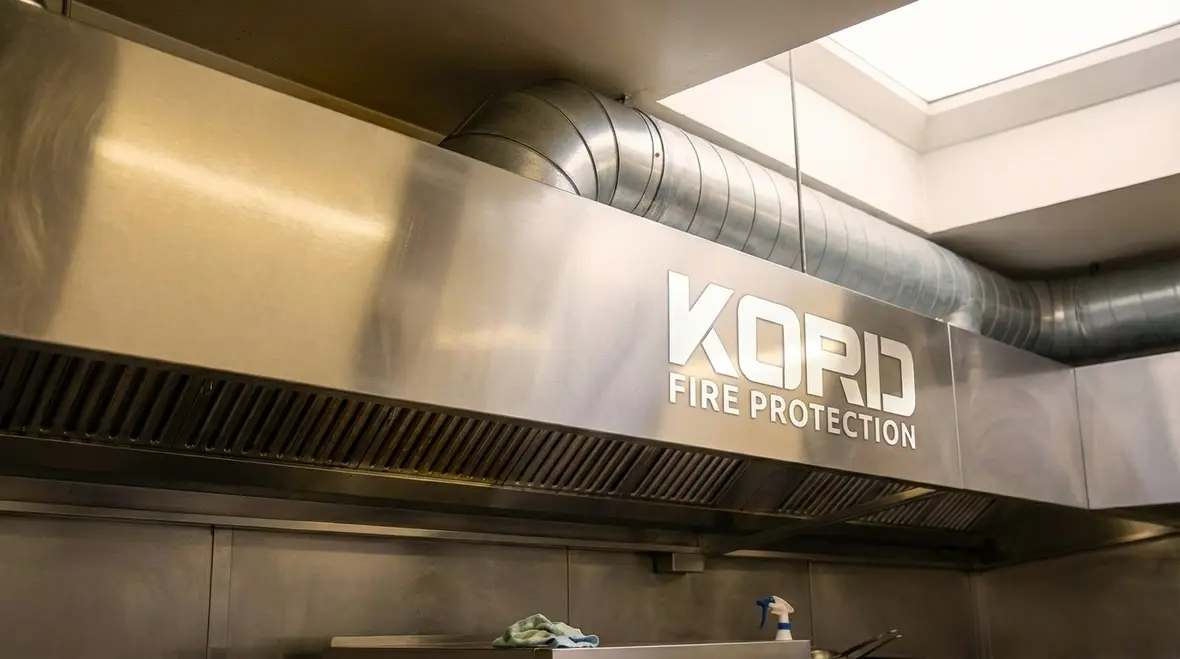
Each part of a kitchen suppression system plays a specific role. When these components work together, they create a coordinated defense.
| Component | Function |
| Heat Detectors | Senses excessive temperatures and triggers activation |
| Control Panel | Releases agent and shuts down fuel or power sources |
| Nozzles | Distributes wet chemical over targeted appliances |
| Agent Tank | Stores the fire suppressing chemical |
| Manual Pull Station | Allows staff to activate system manually if needed |
Because these components must respond in harmony, regular inspections are critical. Kord Fire Protection technicians emphasize that even a slightly blocked nozzle can reduce effectiveness. Therefore, scheduled maintenance ensures every part performs as designed.
How Often Should Kitchen Suppression Systems Be Inspected?
This is one of the most common questions operators ask. The short answer is every six months, at minimum. Local codes may require more frequent checks depending on cooking volume and equipment type.
During an inspection, certified technicians examine the agent tank, test detection lines, verify nozzle alignment, and confirm that fuel shutoff mechanisms operate correctly. In addition, they check for grease buildup that could interfere with system performance.
Regular inspections do more than satisfy regulations. They ensure the system will Prevent Equipment and Grease Fires when it matters most. After all, a system that has not been serviced is like a smoke alarm with dead batteries. It looks reassuring, but it does nothing.
Kord Fire Protection technicians often explain that kitchens evolve. Equipment gets moved. New appliances get installed. Consequently, suppression systems must adapt to maintain full coverage. Professional servicing keeps protection aligned with real world changes.
Pairing inspections with full fire suppression services
Many restaurants combine hood and suppression inspections with broader fire suppression services, ensuring that kitchen systems, clean agent suppression, and other specialty systems all stay code compliant and ready to respond.
Integration With Hood Cleaning and Staff Training
A suppression system does not operate in isolation. Instead, it works best as part of a broader fire safety plan. Hood cleaning removes grease that could fuel a larger blaze. Staff training ensures employees know how to respond after activation.
For instance, once a system discharges, staff should avoid turning equipment back on until it has been inspected. Additionally, they should understand evacuation procedures. While the system handles the flames, people must handle communication and safety.
Furthermore, consistent cleaning reduces strain on the suppression system. When grease buildup is minimal, the system can focus on active flames rather than secondary fuel sources. As a result, the entire kitchen environment becomes safer.
Kord Fire Protection technicians often remind managers that fire protection is layered. Detection, suppression, cleaning, and training each support the other. Remove one layer, and the overall shield weakens.
The Financial and Operational Benefits of Fire Prevention
Beyond safety, there is a business case for investing in reliable systems. A kitchen fire can halt operations for days or even months. Lost revenue, damaged equipment, and insurance complications add up quickly.
However, when systems effectively Prevent Equipment and Grease Fires, downtime decreases. Insurance providers often look favorably on businesses with documented inspections and maintenance. Consequently, some operators may benefit from lower premiums.
Moreover, customers value safety. In today’s world, news travels fast. Nobody wants their restaurant trending for the wrong reason. A visible commitment to fire protection builds trust with both staff and guests.
There is also peace of mind. Owners can focus on quality and service instead of worrying about worst case scenarios. And while peace of mind may not appear on a balance sheet, it certainly improves sleep.

FAQ About Kitchen Suppression Systems
Conclusion
Commercial kitchens thrive on heat, speed, and precision. Yet without reliable protection, those same elements create risk. Kitchen suppression systems stand ready to Prevent Equipment and Grease Fires, protecting people, property, and profit. With guidance from experienced professionals like Kord Fire Protection technicians, businesses can ensure every component works as intended. Do not wait for smoke to signal a problem. Schedule an inspection, strengthen your defenses, and keep your kitchen focused on great food instead of fire alarms.
If you are ready to review your own setup, explore Kord’s dedicated pages on UL 300 restaurant systems and their broader fire suppression expertise across Southern California. From design to inspection and emergency service, the team helps you move from “hoping it works” to knowing your kitchen is protected every time the line heats up.
Need service now? Request a quote for commercial kitchen fire suppression services and put a tested plan behind every plate that leaves the pass.
Know Your Weapon Before You Fight the Flame
Kord Fire Protection is your go-to when it comes to all things fire protection. For over 20 years, we’ve been serving Southern California with the quality service and equipment to keep your home or business safe at all times. Our competitive prices reflect our unwavering commitment to protecting what matters most in the event of a fire emergency. Give us a call, send an email, or use that form!

Join Our Newsletter!
Get the latest fire safety tips delivered straight to your inbox From our Newsletter.


