
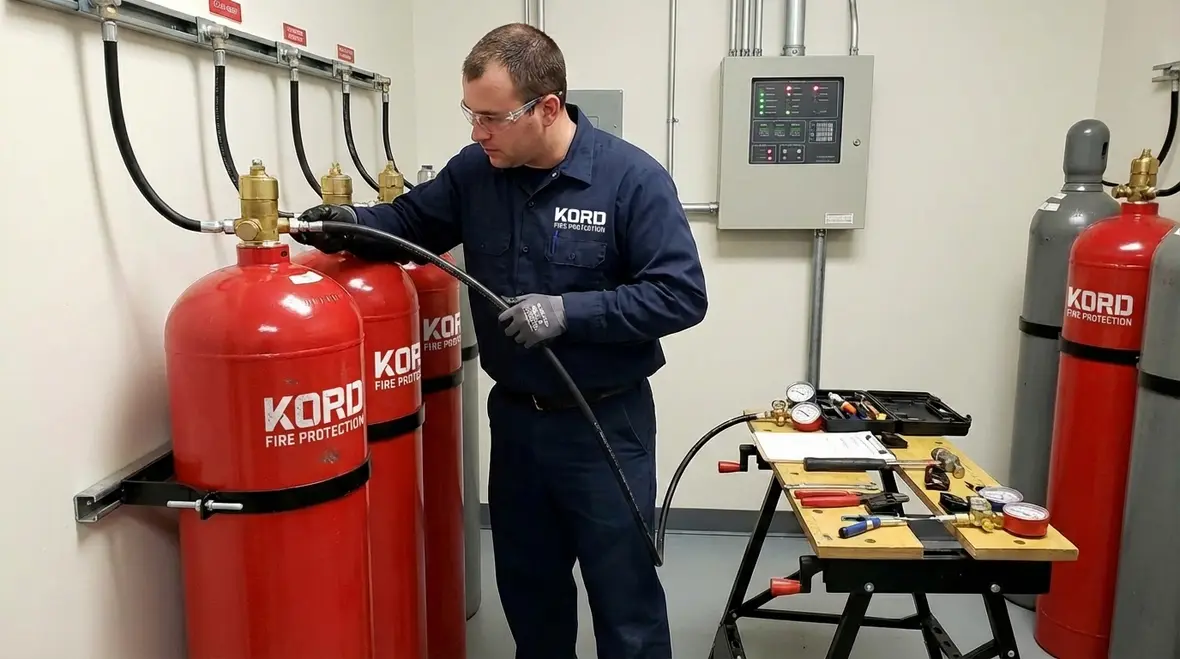
Fire System Recharging After Suppression Discharge
There is a moment after every fire suppression discharge when the smoke clears, alarms fall silent, and everyone breathes again. It feels like the crisis has passed. However, that quiet moment is exactly when fire System Recharging becomes crucial. A discharged system is no longer a safety net. It is an empty promise hanging on the wall.
Kord Fire Protection technicians often explain it this way: a fire suppression system without recharging is like a superhero without powers. The suit may look impressive, but it cannot save the day twice. Therefore, restoring your system immediately after activation is not just a recommendation. It is a responsibility.
This article explores why restoring fire suppression systems matters, how the process works, and what businesses risk by delaying action. Along the way, Kord Fire Protection technicians help break down the technical side in a way that makes sense, without putting anyone to sleep.
What Happens After a Fire Suppression System Discharges?
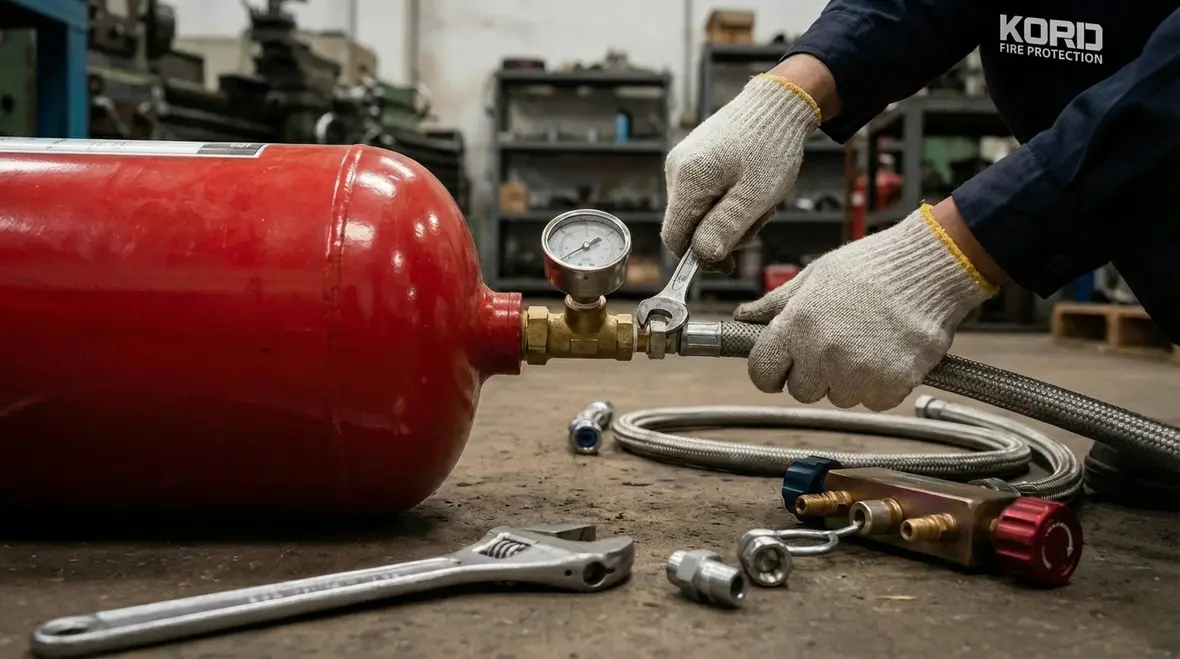
When a fire suppression system activates, it releases its extinguishing agent to control or eliminate a fire. That agent might be water, foam, clean agent gas, or a dry chemical, depending on the system type. Once released, the stored pressure drops, cylinders empty, and detection components may become compromised.
As a result, the system is no longer operational. Even if the fire was minor, the discharge changes the internal balance of the system. Valves open. Sensors trip. Control panels log faults. In many cases, seals and components require inspection or replacement.
Kord Fire Protection technicians emphasize that a discharged system cannot simply be topped off like a soda at a fast food counter. Instead, it must be carefully inspected, tested, and restored to manufacturer specifications. Otherwise, the system might fail during the next emergency.
Additionally, residue from certain suppression agents can affect nearby equipment. Therefore, professionals must assess surrounding areas to ensure nothing interferes with proper restoration. Skipping this step may create hidden vulnerabilities.
For facilities that rely on clean agent fire suppression systems, this assessment is especially important. Those systems are designed to protect sensitive equipment without water damage, but they still require a full reset after activation to keep that protection reliable.
Why Fire System Recharging Is Non Negotiable for Safety
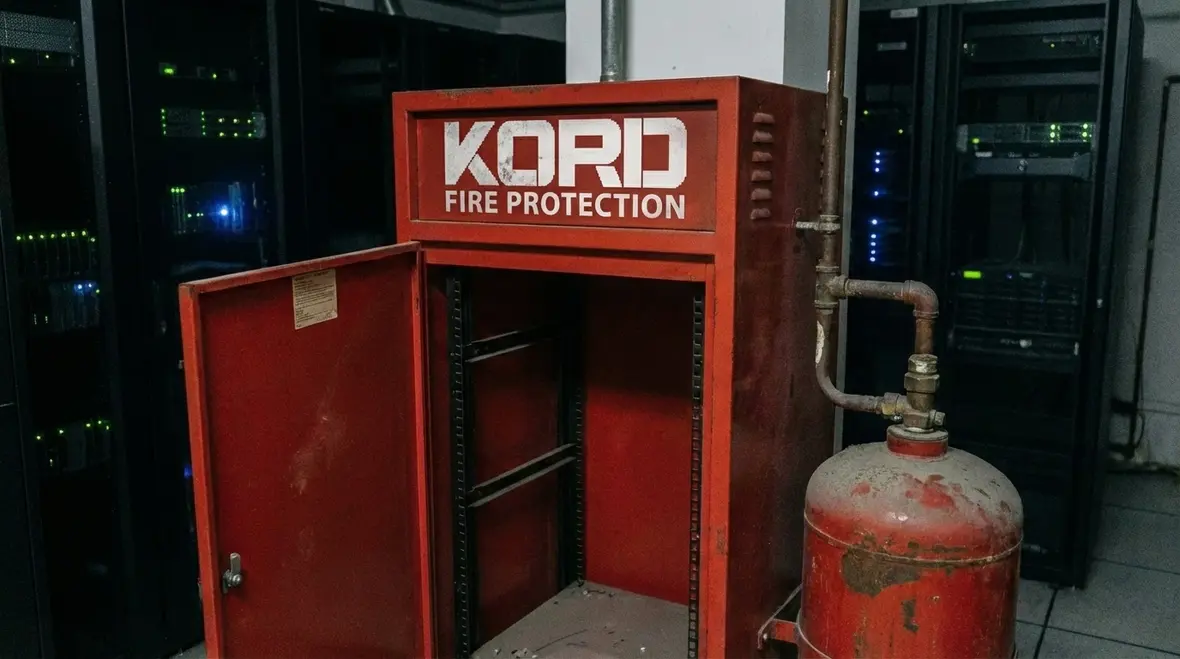
Safety codes and insurance requirements are clear. After any discharge, immediate fire System Recharging is essential. However, beyond compliance, there is a practical reason. Fires rarely send calendar invites before they happen.
If a second fire occurs before restoration, the building has no automatic protection. That gap in readiness can lead to severe damage, business interruption, or even injury. In other words, the building moves from protected to exposed in a single event.
Kord Fire Protection technicians often explain that fire risks do not disappear after one incident. Electrical systems may still be stressed. Cooking equipment may still malfunction. Flammable materials remain present. Therefore, the need for protection continues.
Furthermore, local fire codes typically require systems to be fully operational at all times. Delays in restoring fire suppression equipment can result in fines or forced shutdowns. And no business owner enjoys explaining to customers why the doors are closed because someone thought waiting a week was harmless.
In higher-risk environments such as commercial kitchens, where grease, heat, and constant cooking collide, staying protected with a properly reset system is non negotiable. That is why many restaurants pair fast recharging with code-compliant UL 300 kitchen suppression systems to keep inspections and insurers on their side.
The Real Risks of Delaying System Restoration
Some property owners assume that if the fire was small, recharging can wait. However, that assumption can prove costly. First, insurance claims may be affected if proper restoration is not documented. Many insurers require proof that the system was returned to service by certified professionals.
Second, equipment damage can worsen over time. Residual pressure loss, corrosion, or unnoticed leaks may develop. Consequently, what began as a straightforward refill can become a more expensive repair.
There is also the human factor. Employees feel safer when they know protective systems work. When they see empty cylinders or fault lights blinking, confidence drops. A workplace should not feel like the set of a disaster movie waiting for the sequel.
Kord Fire Protection technicians often remind clients that rapid response protects more than property. It protects reputation. In today’s world, news spreads fast. A business that fails to restore its safety systems sends the wrong message.
Inside the Process of Professional Fire System Recharging
Many people wonder what actually happens during restoration. The process involves far more than replacing a cylinder.
First, technicians conduct a full inspection. They verify the cause of discharge, examine detection devices, and review control panel data. Next, they check piping, nozzles, and connections for damage or blockages.
After that, they refill or replace agent cylinders according to manufacturer standards. Pressure levels must match precise specifications. Even slight variations can affect performance.
Then comes functional testing. Technicians confirm that alarms, sensors, and release mechanisms respond correctly. Only after thorough verification does the system return to service.
Kord Fire Protection technicians explain that this methodical approach ensures reliability. It is not about speed alone. It is about certainty. After all, fire suppression systems exist for worst case scenarios. They must perform perfectly when needed.
For many businesses, this is also a natural time to review whether their current protection setup is still the best fit. Some discover that sensitive areas would benefit from upgrading to a dedicated clean agent suppression system for critical assets, especially where downtime or equipment loss would be catastrophic.
How Kord Fire Protection Technicians Explain the Science Behind It
Kord Fire Protection technicians have a talent for translating technical detail into clear language. They often compare suppression systems to the human body. The cylinders act like lungs, holding the life saving agent. The piping serves as arteries, delivering it quickly. The detection system functions as the brain, sensing danger and triggering action.
Once the agent releases, those lungs are empty. Without restoration, the system cannot breathe again. Therefore, recharging restores both capacity and readiness.
Moreover, technicians stress the importance of using certified agents and calibrated equipment. Substituting materials or skipping pressure testing compromises performance. It is similar to putting bargain tires on a race car. It may look fine, but the results can disappoint at high speed.
Through clear explanations, they help business owners understand that fire System Recharging is not just maintenance. It is rebuilding a critical defense layer.
Fire System Recharging Checklist for Business Owners
Business owners often ask what steps they should expect after a discharge. The following overview helps clarify the process:
Immediate Actions
- Contact certified fire protection professionals
- Document the discharge event
- Notify insurance provider if required
- Secure affected areas
Professional Restoration Steps
- Full system inspection
- Agent cylinder refill or replacement
- Component repair or replacement
- Pressure calibration and testing
- Final certification and documentation
By following these steps, businesses reduce downtime and ensure compliance. More importantly, they restore peace of mind. And peace of mind, unlike office coffee, should never run empty.
Long Term Protection Starts With Immediate Action
Every fire event tells a story. Sometimes it is a small kitchen flare up. Other times it is a larger mechanical failure. Regardless of size, each discharge proves that the system worked as intended. However, its job does not end there.
Long term protection depends on swift restoration. When businesses treat recharging as urgent, they maintain continuous coverage. In contrast, when they delay, they gamble with safety.
Kord Fire Protection technicians often share a simple truth. Fire suppression systems are silent guardians. They wait patiently, sometimes for years, without recognition. Yet when called upon, they act instantly. The least a business can do is return the favor by restoring them promptly.
In a world filled with unpredictable risks, reliable protection offers stability. Therefore, investing in professional restoration is not just a technical requirement. It is a smart business decision.
For organizations reviewing broader protection strategies after a discharge, it may also be the right moment to look at complementary solutions like automatic fire suppression systems or specialized systems for high value environments. The goal is the same: keep your defenses ready long after the last wisp of smoke disappears.
Frequently Asked Questions
Conclusion and Next Steps
Fire suppression systems protect lives, property, and livelihoods. However, after any discharge, that protection disappears until properly restored. Do not leave your safety to chance. Trust experienced professionals who understand every valve, sensor, and cylinder. Contact Kord Fire Protection technicians today to schedule expert inspection and fire System Recharging services. Because when it comes to safety, preparation should never take a day off.
If your facility also relies on specialized suppression solutions—such as clean agents, CO₂, foam, or kitchen systems—Kord Fire Protection can help evaluate, recharge, and service them as part of a broader fire suppression services plan. Taking action now keeps your systems ready, your inspections smooth, and your people protected long before the next alarm ever sounds.
Know Your Weapon Before You Fight the Flame
Kord Fire Protection is your go-to when it comes to all things fire protection. For over 20 years, we’ve been serving Southern California with the quality service and equipment to keep your home or business safe at all times. Our competitive prices reflect our unwavering commitment to protecting what matters most in the event of a fire emergency. Give us a call, send an email, or use that form!

Join Our Newsletter!
Get the latest fire safety tips delivered straight to your inbox From our Newsletter.


