Kitchen Suppression Nozzle Placement for Safer Kitchens
In commercial kitchens, smoke does not wait politely for inspections, and grease never takes a day off. That is why kitchen suppression nozzle placement gets handled like a safety decision, not an afterthought. When suppression nozzles sit in the right spots, they guide agent flow where it matters most, so fires face less chaos and more control. And while some teams treat nozzle work like basic plumbing, professionals know it is timing, angles, and airflow that decide whether the system performs. Then, when the planning is done right, Kord Fire Protection can become a vital partner by aligning placement with inspection needs, code requirements, and ongoing service.
Why nozzle placement controls fire behavior
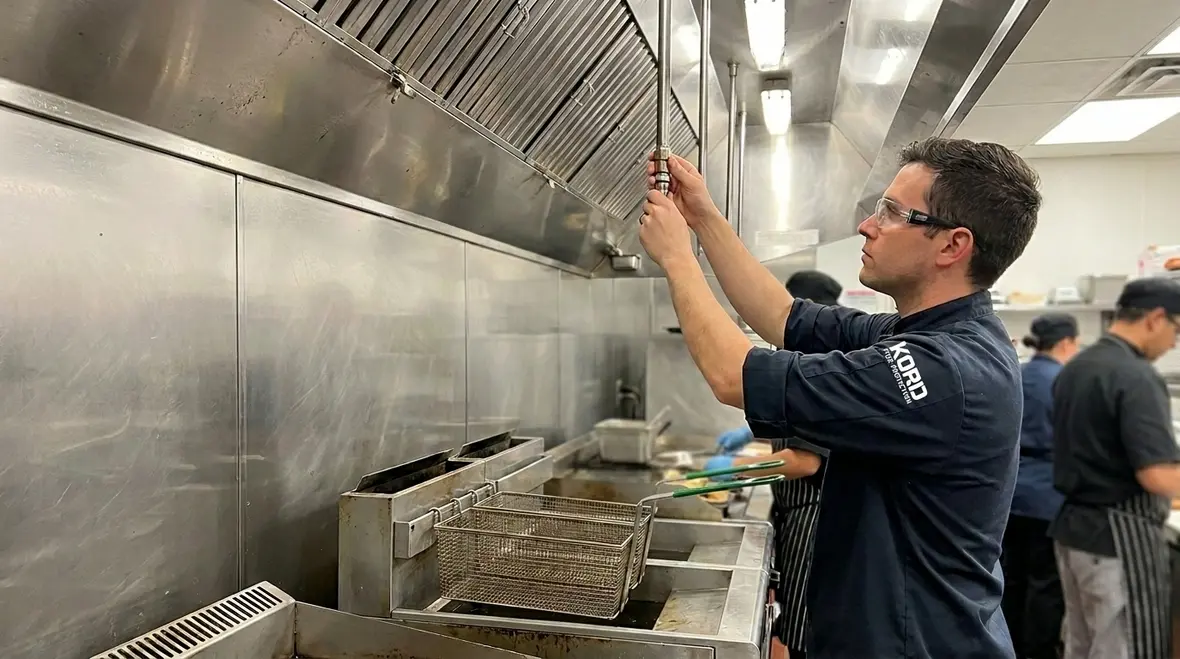
Nozzle placement shapes how the suppression agent moves through the hood cavity and into the hazard zone. If the system aims at the wrong area, the agent can end up diluted, delayed, or simply pushed aside by heat, airflow, and fan movement. In practice, this means the fire may grow while the system tries to find the right space. It is like aiming a fire extinguisher at the ceiling because the flames look dramatic there, which they do, until the flames win.
Because a kitchen hood is not a static box, placement must account for real conditions. Grease fires create fast heat rise, turbulent flow, and changing pressure. As a result, suppression nozzles must be oriented to cover key zones under the hood, near duct entries, and where residue typically burns. When teams plan suppression nozzle positioning with that in mind, they increase the odds that the agent arrives quickly and spreads where burning starts.
Coverage has to meet the fire where it starts
That sounds obvious, yet it is the part many rushed installations underestimate. Fires in commercial cooking operations do not politely remain centered for easy suppression. They follow grease, heat, and airflow. Proper placement means the nozzles are not just present above the line, but intentionally located so discharge reaches plenum spaces, surface hazards, and duct entry points without wasting precious seconds. That is also why Kord’s related guidance on commercial kitchen fire suppression systems fits naturally into the conversation. A system is only as useful as the way its parts work together.
How hood design and airflow affect coverage
Each kitchen hood behaves differently. Some hoods feature deep baffles, differing angles, and various filter layouts. Meanwhile, exhaust fans and make up air units shift the pressure balance. Therefore, the same nozzle layout can perform well in one facility and underperform in another.
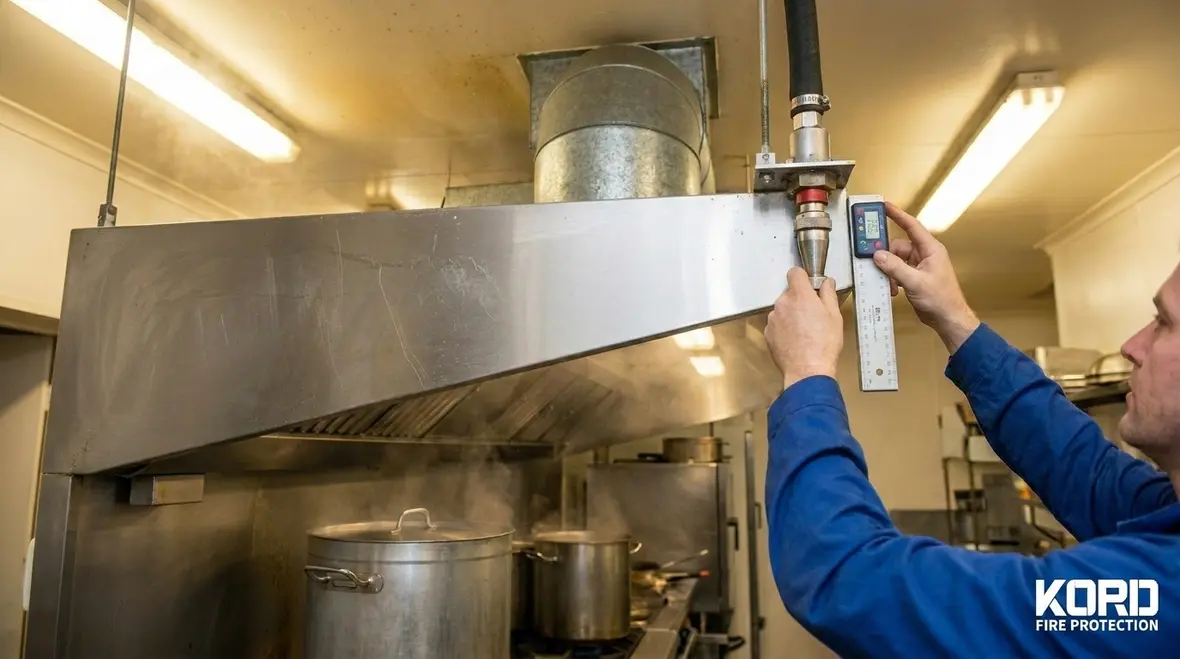
Technicians usually review hood height, duct geometry, and the path from the hood to the duct. Next, they evaluate where smoke and heat collect before the first ignition is even detected. Then they match the suppression system to that reality. When airflow pushes hot gases toward one side, the nozzle arrangement must counter that movement. Otherwise, the agent loses the race.
Also, kitchens do not stay the same. New cooking equipment, extra hoods, altered fan speeds, and layout changes all impact airflow. So teams should treat kitchen fire suppression planning as an ongoing job, not a one time install.
Small airflow changes can create big protection gaps
A hood that was balanced around one appliance lineup may behave very differently after an equipment swap. Add a new fryer, shift a griddle, or adjust fan output, and the heat path may no longer match the original discharge strategy. That is one reason articles like Kord’s advanced commercial kitchen fire safety strategies keep emphasizing system thinking. Fire protection in a kitchen is not a collection of isolated parts. It is a moving relationship between equipment, ventilation, suppression, and maintenance.
Target zones under the hood and in the duct
Suppression works best when coverage hits the earliest ignition area and the path heat takes. In most real fires, the danger forms around grease layers on hood surfaces, filter banks, and duct sections where residue collects. For that reason, teams place nozzles to address those target zones with deliberate focus.
They also consider how agent distribution changes as it travels. Depending on nozzle type and discharge pattern, coverage may form a spray pattern, a directed stream, or a broader cloud. Consequently, the system needs placement that supports the intended discharge shape. This step matters because a system can have all the right parts and still fail if the parts sit in the wrong location.
When the kitchen suppression nozzle placement plan accounts for hood surfaces plus duct entry regions, it reduces blind spots. And yes, blind spots are where fires love to hide. Like a villain in a superhero movie who says I had a backup plan, except in this case the backup plan is the wrong nozzle location.
The duct entry is not a side quest
Too many conversations focus only on visible appliance coverage and forget what happens once heat, smoke, and grease move upward. Duct entry areas deserve direct attention because that is where fire can continue traveling after conditions under the hood appear controlled. Kord’s kitchen suppression systems for equipment and grease fires explains the wider picture well. Good coverage does not stop at what the cook can see from the line.
Common placement mistakes that teams should avoid
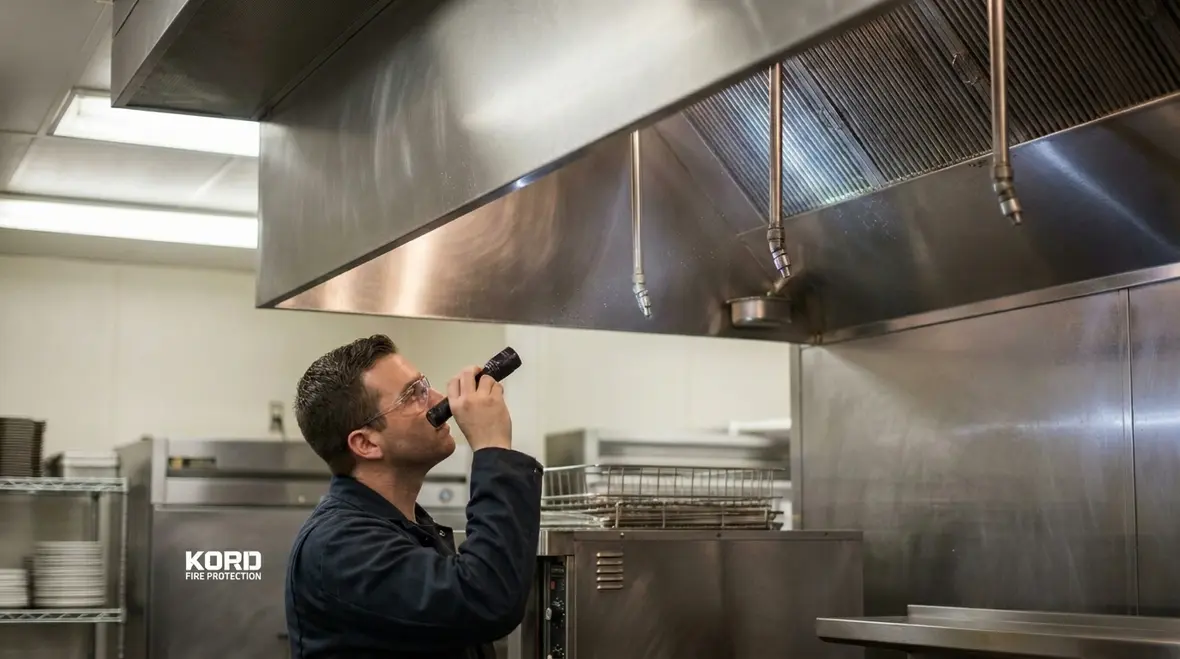
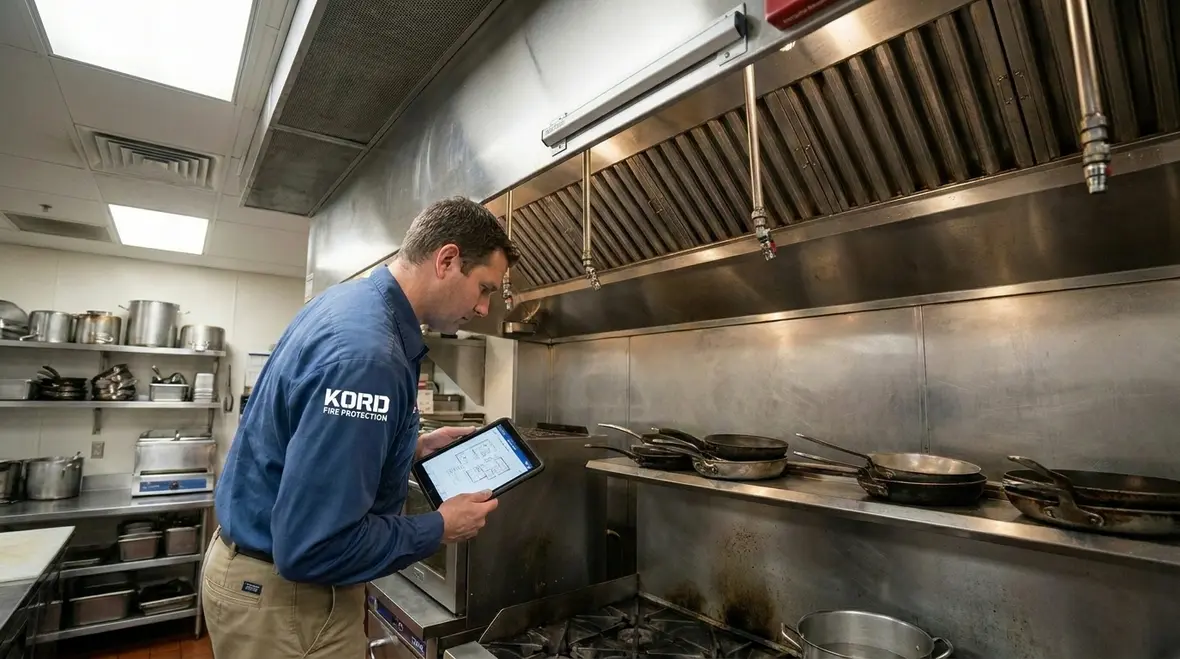
Even smart, experienced crews can make errors when they skip site measurements or rely on guesswork. Typical mistakes include placing nozzles too far from key hazard surfaces, positioning them without accounting for baffle interference, and ignoring fan flow direction. Another problem happens when installers treat the hood like a simple rectangular chamber and do not verify duct connections.
Teams also sometimes overlook maintenance impacts. Filters move, baffles get adjusted, and grease build up can change airflow paths. If placement relies on assumptions that never get verified, coverage can drift over time. It is why training and documented commissioning matter.
To keep the system reliable, teams should verify clearances, confirm mounting angles, and validate coverage during commissioning. Furthermore, they should label and document the as built configuration so future service does not turn into a scavenger hunt.
- Nozzles mounted too far from the true hazard zone
- Discharge patterns blocked by filters or hood geometry
- Airflow direction ignored during layout planning
- Duct entry areas left with weak or inconsistent coverage
- No as built documentation for future inspections and service
Why code alignment and testing matter
Fire protection systems must follow rules, not vibes. Code requirements influence nozzle types, installation methods, coverage expectations, and inspection intervals. Therefore, correct placement supports performance and keeps compliance intact.
Testing and verification also reduce uncertainty. When professionals perform functional checks and review agent discharge behavior, they confirm the system meets the design intent. This step helps teams catch issues early, such as misalignment, incorrect orientation, or installation drift.
At this point, Kord Fire Protection can become a vital partner with the service job. They help facilities align placement decisions with safety expectations, inspection readiness, and ongoing support. In other words, they help teams avoid the classic moment when an inspector asks a question and everyone suddenly remembers the last week they spent meaning to update the paperwork.
UL 300 conversations belong in placement planning
If a facility wants practical context around current kitchen suppression expectations, Kord’s UL 300 and restaurant hood suppression systems page is a strong internal reference point. It connects compliance, component function, and inspection realities in a way that supports smarter nozzle placement decisions before they become service headaches later.
Choosing the right service partner for nozzle placement
Not all service teams approach suppression systems the same way. A strong partner brings planning discipline, site measurement skills, and a process that connects installation to real coverage outcomes. They also understand that kitchens evolve. New equipment and new workflows can change airflow patterns, so the system should stay accurate.
When teams select a partner, they should look for these capabilities:
- Site review that checks hood geometry, duct routing, and airflow
- Documentation that records as built nozzle positioning
- Commissioning that validates coverage and system function
- Maintenance support that keeps performance steady over time
- Code minded planning that reduces compliance surprises
And because right now can turn into too late faster than anyone wants to admit, proactive coordination matters. Kord Fire Protection supports facilities with a job mindset that treats safety as a living process, not a one time install. Near the end of the planning process, it also helps to connect suppression work to the right service path. If the project includes new installation, upgrades, inspection, or maintenance, Kord’s fire suppression services page provides a clear next step for commercial facilities that want protection aligned with real operational demands.
FAQ: kitchen suppression nozzle placement
Final call for safer kitchens
Fire protection earns its reputation before the alarm ever sounds, and that starts with smart nozzle positioning. When facilities invest in proper kitchen suppression nozzle placement planning, they improve coverage in the real hazard zones, reduce blind spots, and support compliance. Then, they keep the system reliable through service and verification.
If a hood upgrade is coming, or if the current setup needs review, contact Kord Fire Protection to align placement, testing, and ongoing support. For teams specifically reviewing restaurant hood compliance and wet chemical protection, the best direct next step is UL 300 restaurant systems. Your kitchen deserves a plan that performs under pressure.

Join Our Newsletter!
Get the latest fire safety tips delivered straight to your inbox From our Newsletter.