

Kitchen Fire Suppression Deficiencies and Inspections
Kitchen suppression systems keep places safe, yet kitchen fire suppression deficiencies still show up with annoying regularity. When operators treat inspections like an annual chore, minor issues turn into major problems. For example, clogged nozzles, weak ventilation control, or poorly connected detection can all delay suppression right when seconds matter. Furthermore, incorrect kitchen design assumptions can cause uneven agent coverage, so a flare up spreads like it just got invited to the party.
In the real world, these failures rarely happen overnight. Instead, they build up through skipped maintenance, rushed commissioning, and parts that were never meant to last. And that is exactly where Kord Fire Protection steps in, functioning as a vital partner that brings calm, repeatable service to a job that people often treat like a last minute fire drill.
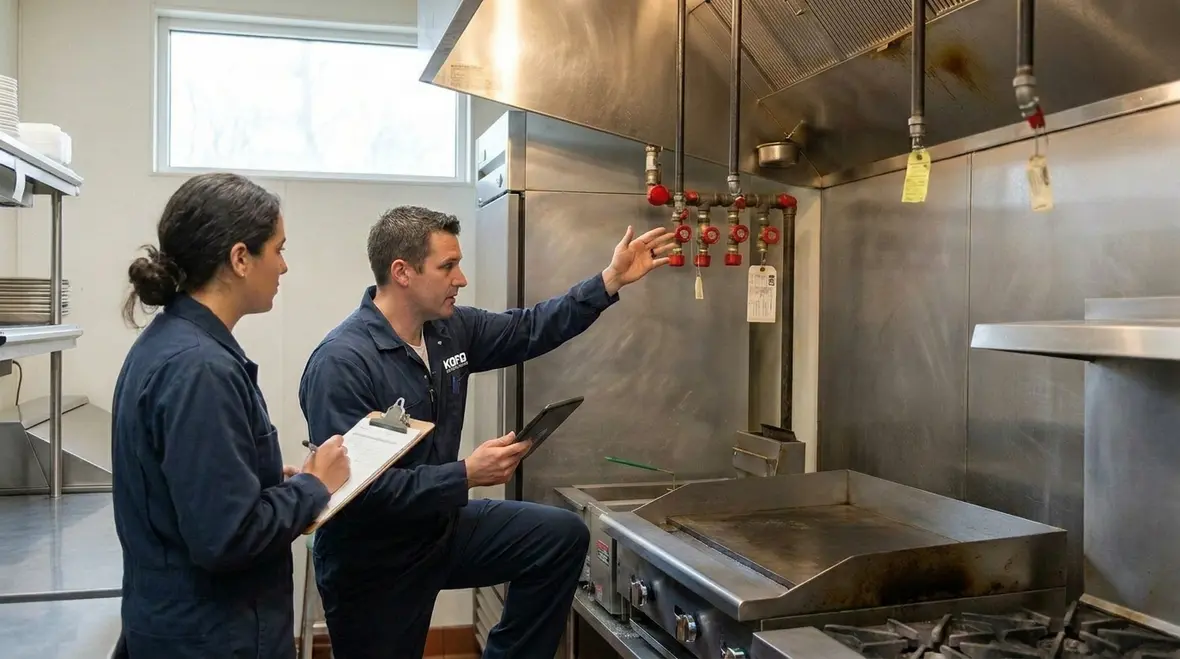
What kitchen suppression deficiencies look like in daily operations
Kitchen environments push suppression systems hard. They deal with heat, grease, smoke, vibration, and frequent changes to cooking layouts. As a result, kitchen suppression deficiencies often show up as small symptoms first, then as system failures later.
Common examples include blocked or partially blocked nozzles, corroded tubing, and unverified discharge time. In addition, technicians sometimes find loose wiring, missing caps on fittings, or indicator panels that do not match the actual system status. Consequently, the system might appear ready while it is not actually capable of delivering the needed agent.
Then there is the human side. When staff do not understand how the system resets, they may delay action during an event. That behavior sounds minor, until it is the difference between a controlled incident and a full kitchen evacuation.
Small warning signs that deserve more attention
A system does not have to look dramatic to be compromised. Sometimes the first clue is a greasy nozzle cap, a service tag that stopped getting updated, or a pull station that has become part of the wall decor. Those details are easy to ignore during a busy shift, but they matter because suppression systems do not get points for trying. They either respond correctly or they do not.
Operators who catch these small signs early usually spend less money and face fewer disruptions. That is one reason many teams review practical resources like Kord Fire Protection’s restaurant hood fire suppression inspection checklist guide when building better routines around service and verification.
How inspection gaps create slow failure
Many deficiencies do not break the system completely. Instead, they degrade performance over time. Therefore, an inspection gap does not just postpone detection, it shifts the risk profile.
Consider sensor testing. If operators only do quick visual checks, they miss drift in detection components. Meanwhile, grease accumulation can mask heat signatures and slow triggering. Similarly, deferred cleaning can change airflow patterns and reduce how effectively the system captures the fire, even when discharge occurs.
Also, some buildings rely on outdated service logs. Without clear documentation, teams cannot confirm that maintenance met the manufacturer’s requirements. Transitioning from “we think it was serviced” to “we can prove it was serviced” is the difference between confidence and guesswork.
Why paperwork is part of performance
Documentation is not glamorous, and nobody has ever thrown a parade for an accurate inspection log. Still, those records help teams confirm whether fusible links were replaced, whether nozzle alignment was checked, and whether appliance changes triggered a system review. If you need a broader look at what technicians often verify during scheduled service, this UL 300 restaurant hood fire suppression guide is a useful internal reference point.
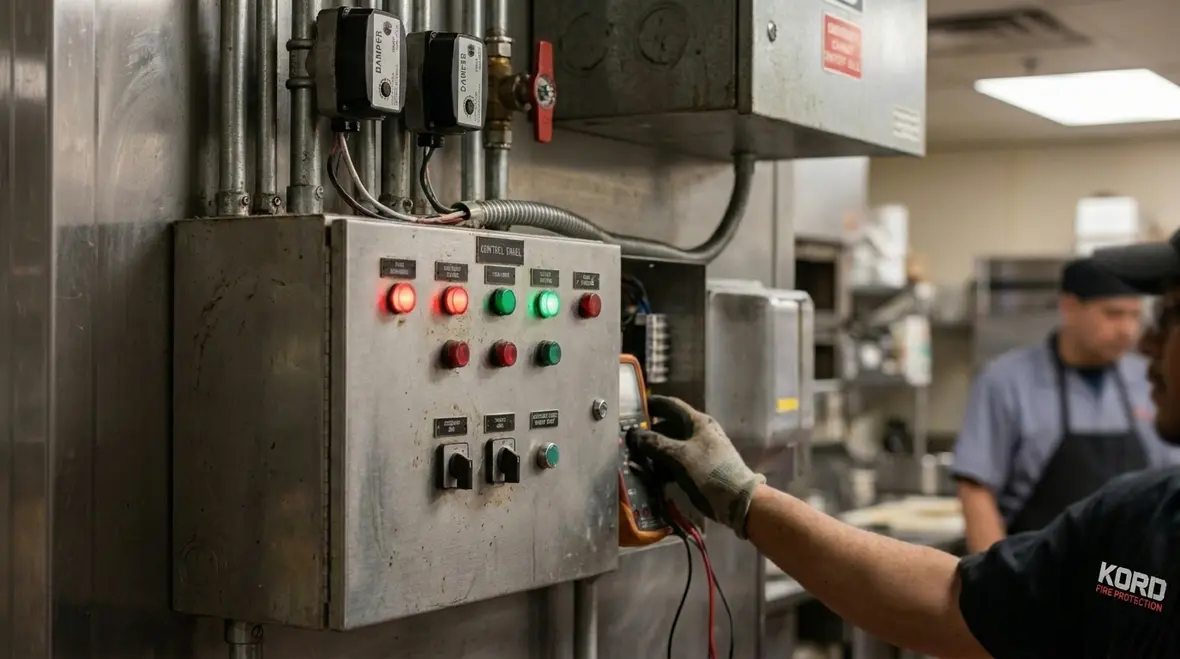
Agent delivery problems that delay or weaken response
Suppression systems must deliver agent fast and in the right way. However, several kitchen fire suppression system problems can interrupt this mission.
First, piping issues can block flow. A small kink, improper slope, or damaged gasket can restrict pressure. Next, nozzle alignment matters. If nozzles mount at the wrong angle or at an incorrect height, the agent coverage becomes uneven. As fires grow, uneven coverage turns into spreading flames and scorching surfaces.
Next comes the control sequence. If wiring connections are incorrect or aged components fail under heat, the system might delay discharge or fail to release at all. Then, even when suppression triggers, the system needs to coordinate with exhaust shutdown and damper control. If those controls do not work as designed, the fire can receive fresh oxygen at the worst time.
In short, kitchen suppression deficiencies are not always about one part. They often come from the chain: detection, actuation, agent flow, and coordinated operations.
The chain only works when every link does
That is why service has to go beyond a quick glance. A system can have a charged tank and still fail through poor nozzle direction, a weak mechanical release, or bad coordination with ventilation. Kord Fire Protection covers this bigger picture in its overview of commercial kitchen fire suppression systems, where the focus stays on real performance instead of checkbox comfort.
Why kitchen design changes often create hidden risk
Kitchen layouts evolve. New appliances get installed. Hood systems get adjusted. Contractors reroute ductwork and wiring to “match the field.” While all of that feels normal, it can create hidden risk.
When the hood canopy changes, the airflow pattern changes. As a result, the fire behavior changes too. If the suppression system coverage was designed around an earlier configuration, the system may not respond as intended now. In addition, if someone adds a new cook line without updating the suppression coverage map, the system may miss a critical area.
To keep pace with change, teams should treat the suppression system like an engineered system, not a background appliance. Therefore, when modifications occur, they must trigger a re-evaluation of nozzle placement, detection coverage, and control coordination.
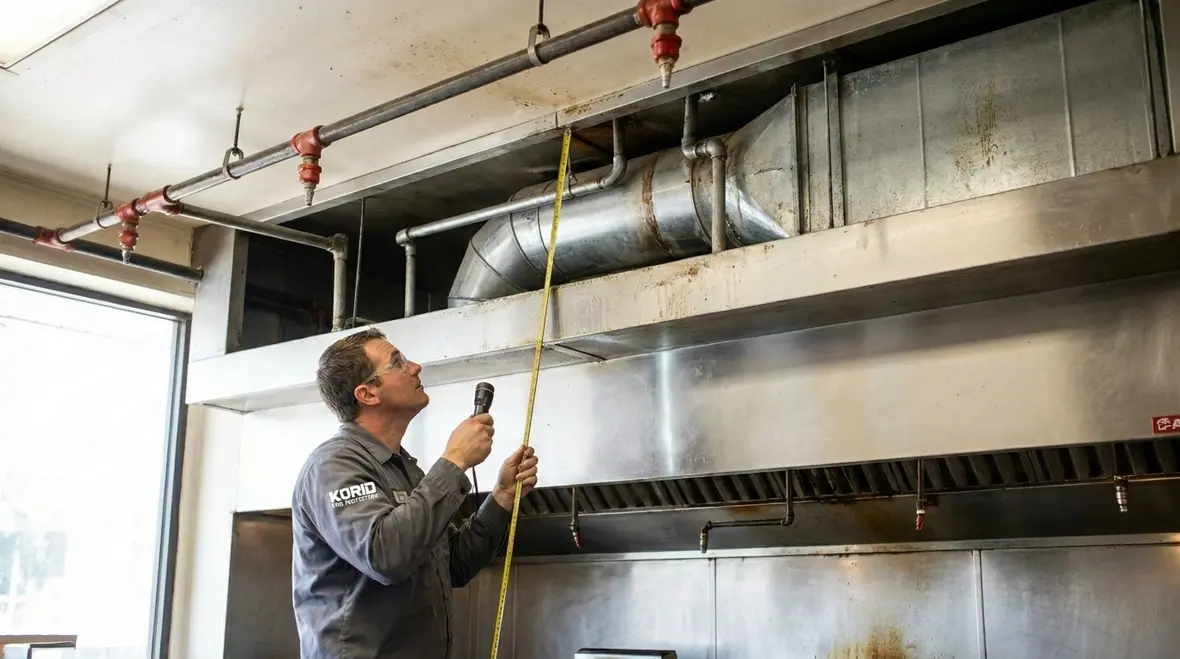
Coverage maps should change when the kitchen changes
This is where older assumptions can get very expensive very fast. A suppression layout that worked beautifully two remodels ago may no longer match the line today. Operators dealing with upgrades or changed appliance loads often benefit from reviewing Kord Fire Protection’s UL 300 upgrade checklist for commercial kitchens so changes do not quietly outrun protection.
Training and maintenance habits that turn up the odds of failure
Even when equipment stays in good condition, kitchen suppression deficiencies can still emerge from day to day habits.
For one, cooking staff may store combustible materials near discharge points. That creates risk during suppression and can worsen post incident cleanup. Also, after a minor event, some teams skip proper inspection and restoration. They may reset the system without verifying that components, indicators, and triggers still meet performance standards.
Then there is the “we will deal with it later” mindset. That mindset is basically the fire safety version of binge watching until 2 a m and then saying tomorrow will be better. Tomorrow rarely shows up better. Instead, it shows up louder.
Strong operations include clear reset procedures, documented checks, and training that covers how to respond after activation. That way, staff act quickly and correctly, not like they are guessing from a microwave beep.
How Kord Fire Protection becomes a vital partner
Kord Fire Protection can become a vital partner because it treats suppression readiness as a managed service, not a one time task. That approach matters because kitchen systems need ongoing attention as the environment changes.
First, Kord Fire Protection supports teams with inspection and service that focus on performance verification. Instead of relying on assumptions, the service emphasizes what the system can actually do under real conditions. Then, when parts need attention, the team identifies the gap, documents the issue, and moves to restore full function.
Second, Kord Fire Protection helps integrate suppression work with practical operations. That means the service aligns with how kitchens run, how exhaust systems operate, and how staff respond. In turn, businesses gain smoother coordination and fewer surprises during routine audits.
Third, Kord Fire Protection improves accountability by strengthening documentation and service records. Therefore, teams can prove compliance, track trends, and address problems early, before they become kitchen suppression deficiencies that cost time, revenue, and peace of mind.
If your operation needs a deeper service connection, this is also the right point to look at Kord Fire Protection’s dedicated UL300 Restaurant Systems page. It connects inspections, compliance, and system performance with the kind of practical support commercial kitchens actually need.

Best practices to reduce kitchen fire suppression failures
Businesses can cut risk with a few consistent habits that do not require heroic effort.
- Schedule inspections based on manufacturer guidance and local requirements, then follow the schedule without skipping.
- Clean and verify key components, including nozzles and detection areas, to prevent grease buildup from blocking response.
- Confirm control coordination so exhaust shutdown and damper operations match the suppression sequence.
- Update coverage after changes to the hood, appliances, ductwork, or layout, then re-check coverage effectiveness.
- Train staff clearly on reset procedures, evacuation expectations, and post activation steps.
- Maintain service records so teams can identify patterns and fix recurring kitchen suppression deficiencies early.
These steps reduce uncertainty. And when uncertainty drops, safety decisions improve. It is not dramatic, but it works.
FAQ
Conclusion
Kitchen fire safety should not rely on luck or last minute fixes. When kitchen suppression deficiencies build quietly, they steal response time and weaken agent delivery. Instead, businesses should verify performance, document service, and address issues early.
Kord Fire Protection can become your vital partner by bringing structured inspection, practical coordination, and reliable follow through. If you want fewer surprises and more confidence in every cook line, explore Kord Fire Protection’s fire suppression services and schedule a system review with Kord today.

Join Our Newsletter!
Get the latest fire safety tips delivered straight to your inbox From our Newsletter.



