
Inland Empire Warehouse Fire Protection Guide
Warehouses in the Inland Empire do not whisper. They hum. They buzz. They move pallets at dawn and ship freight long after sunset. And in the middle of all that motion sits one quiet, critical truth: fire does not care how busy the loading dock is.
This Warehouse Fire Protection Guide lays out what every warehouse owner, manager, and safety officer in Riverside and San Bernardino counties should know. From sprinkler design to code compliance, from employee training to system inspections, this guide walks through the layers of protection that keep buildings standing and people safe. Along the way, Kord Fire Protection technicians explain the why behind the what, translating complex systems into plain language that actually makes sense.
Because when it comes to fire protection, guessing is expensive. Preparation, on the other hand, is priceless.
Understanding Fire Risks in Inland Empire Warehouses
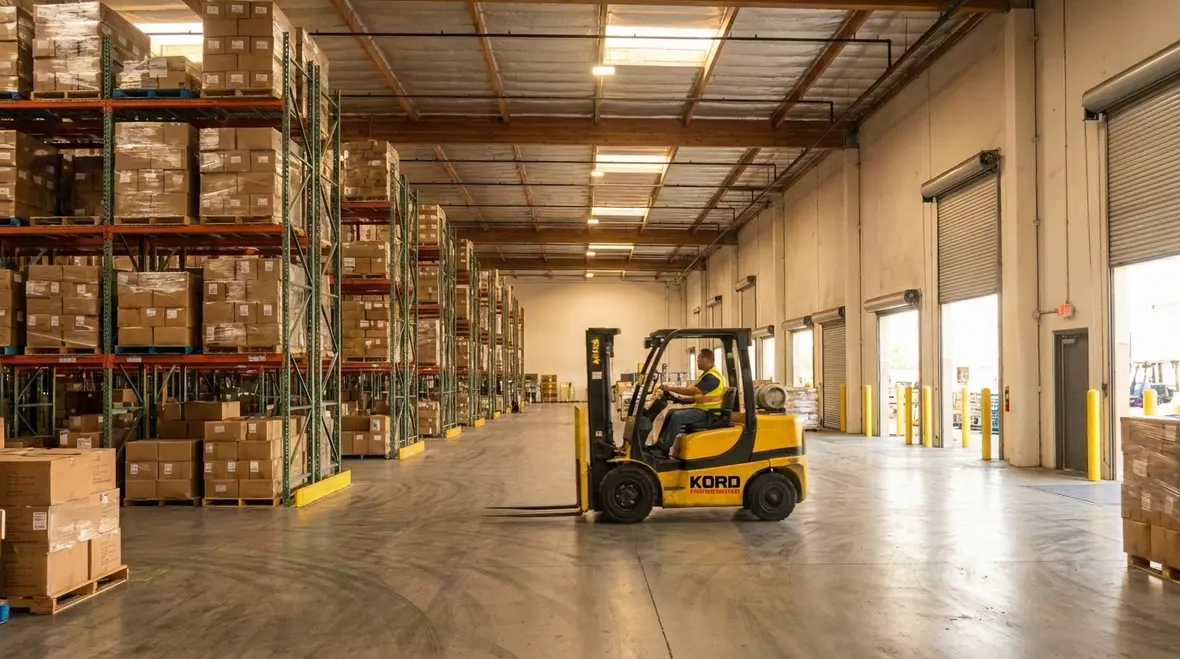
The Inland Empire is a logistics powerhouse. Massive distribution centers stretch across Moreno Valley, Ontario, Fontana, and beyond. Consequently, these buildings store everything from paper goods to lithium batteries to high rack plastics. Each product carries its own fire behavior.
High pile storage increases heat release rates. Plastic wrapped pallets burn hotter and faster than many expect. Meanwhile, lithium ion batteries introduce a different risk profile altogether. As Kord Fire Protection technicians often explain during site visits, the hazard classification of a warehouse drives everything else. It determines sprinkler density, system type, water supply demand, and even aisle spacing.
Furthermore, many warehouses operate around the clock. Continuous operations mean higher electrical loads, constant forklift traffic, and more human activity. Therefore, ignition sources multiply. A small spark from damaged wiring or a charging station fault can escalate quickly in a tightly packed storage environment.
However, risk does not equal inevitability. With the right warehouse fire safety plan in place, owners can control and reduce exposure before it turns into disaster.
If your operation uses tall rack storage, pairing this guide with a deeper dive into in-rack sprinkler systems for rack storage protection can help you understand how different suppression methods complement your overall strategy.
Building a Layered Warehouse Fire Protection Guide
A proper Warehouse Fire Protection Guide is not a single device bolted to the ceiling. Instead, it is a layered system designed to detect, control, and suppress fire at different stages.
Detection Systems
Early warning is the first line of defense. Smoke detection, heat detection, and in some cases air sampling systems provide fast alerts. In large open spaces, beam detectors often serve better than spot detectors. As technicians from Kord Fire Protection explain, choosing the wrong detection method is like bringing a flashlight to a stadium. It technically works, but it misses the big picture.
Automatic Fire Sprinklers
Sprinklers remain the backbone of warehouse fire defense. Depending on the commodity and storage height, designers may use:
- ESFR sprinklers for high pile storage
- In rack sprinkler systems
- Control mode density area systems
Moreover, the water supply must match the hazard. That means proper pipe sizing, fire pumps when needed, and tested backflow assemblies. For tanks feeding fire pumps, components like anti-vortex plates help keep suction reliable and code compliant, much like those described in Kord Fire’s guidance on anti-vortex plate specification and installation.
Fire Alarm Systems
Fire alarms tie everything together. They notify occupants, transmit signals to monitoring centers, and coordinate system activation. In addition, integration with voice evacuation can speed safe exit in large facilities.
Fire Extinguishers and Hose Stations
While sprinklers do the heavy lifting, portable extinguishers allow trained staff to address small incidents quickly. Of course, they are not meant for heroic movie moments. No one needs to reenact an action scene from Die Hard in aisle twelve.
Each layer supports the others. Therefore, a gap in one area weakens the entire system.
How Do You Choose the Right Fire Protection System for a Warehouse?
This is the question every owner eventually asks. The answer begins with data.
First, professionals evaluate commodity classification. Are goods Class II, Class III, Class IV, or high hazard plastics? Next, they measure storage height, ceiling height, and building construction type. Then, they analyze water supply availability and pressure.
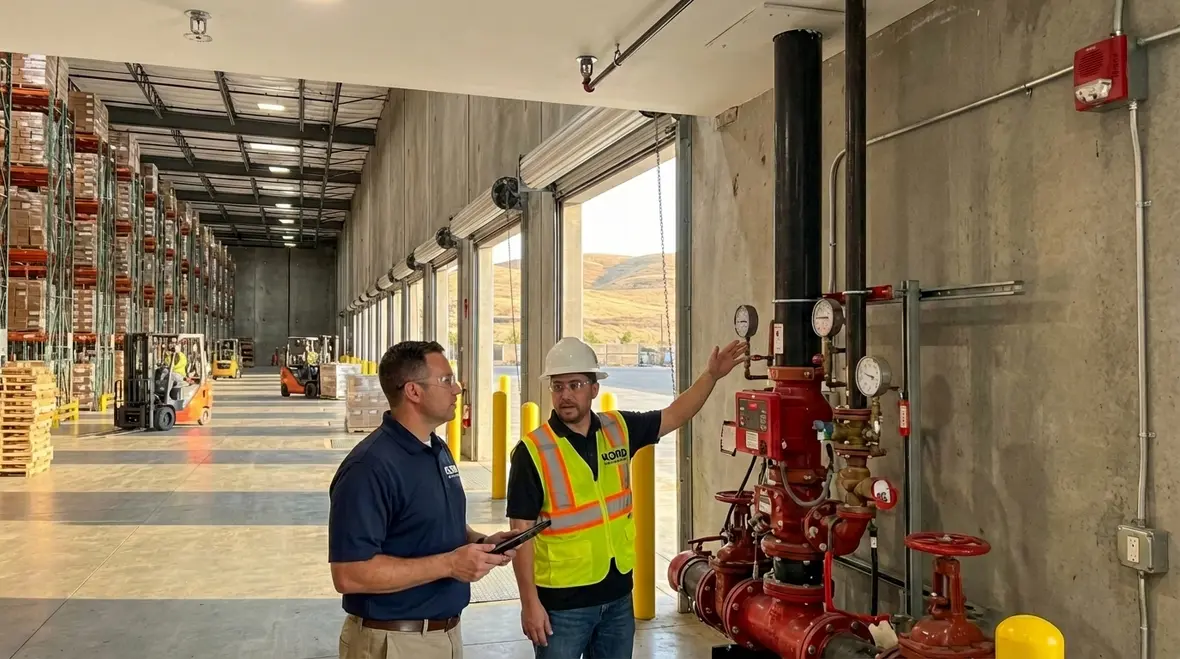
Kord Fire Protection technicians walk clients through these factors step by step. They often stand beneath the racking and point upward, explaining how heat collects at the ceiling and how sprinkler response time matters. As they put it, fire follows physics, not wishful thinking.
Additionally, local and state codes influence system design. California fire codes, NFPA standards, and local amendments all play a role. Therefore, selecting equipment without a full hazard analysis can lead to costly retrofits.
Ultimately, the right system balances safety, compliance, and operational needs. It protects inventory without disrupting workflow. And it passes inspection the first time, which is always a pleasant surprise.
Inland Empire Code Compliance and Inspections
In the Inland Empire, fire authorities take warehouse safety seriously. And rightly so. A single uncontrolled fire can impact supply chains across the region.
Regular inspections ensure systems perform as designed. These include:
- Annual sprinkler inspections
- Quarterly alarm testing
- Backflow device testing
- Fire pump flow testing
However, inspections should not feel like surprise quizzes. Instead, they should confirm that maintenance programs are working. Kord Fire Protection technicians emphasize documentation. They explain test results in plain terms and outline corrective actions without jargon.
Moreover, they help warehouse managers prepare for fire marshal visits. That preparation includes clear access to risers, unobstructed sprinkler heads, proper signage, and updated system tags. It may not sound glamorous, yet these small details prevent citations and delays.
Compliance is not about checking boxes. It is about ensuring that when a system activates, it performs exactly as engineered.
Maintenance Strategies That Protect Operations
A fire protection system is not a set it and forget it investment. Over time, dust accumulates, valves shift, and components wear. Consequently, proactive maintenance protects both safety and uptime.
Kord Fire Protection technicians often remind clients that warehouses are dynamic environments. Racking layouts change. Commodities shift. Storage heights increase. Therefore, fire protection systems must evolve alongside operations.
Key maintenance practices include:
- Routine valve inspections to confirm open positions
- Monitoring tamper switches and supervisory signals
- Checking sprinkler heads for damage or corrosion
- Verifying fire pump performance under load
In addition, managers should review storage configurations annually. A small layout change can alter sprinkler effectiveness. That conversation, handled early, prevents major redesign later.
Think of maintenance as a quiet guardian. It rarely makes headlines. Yet when fire strikes, it decides whether the story ends quickly or spirals out of control.
Employee Training and Emergency Response Planning
Even the best warehouse fire protection plan depends on people. Systems activate, yes. But human response shapes outcomes.
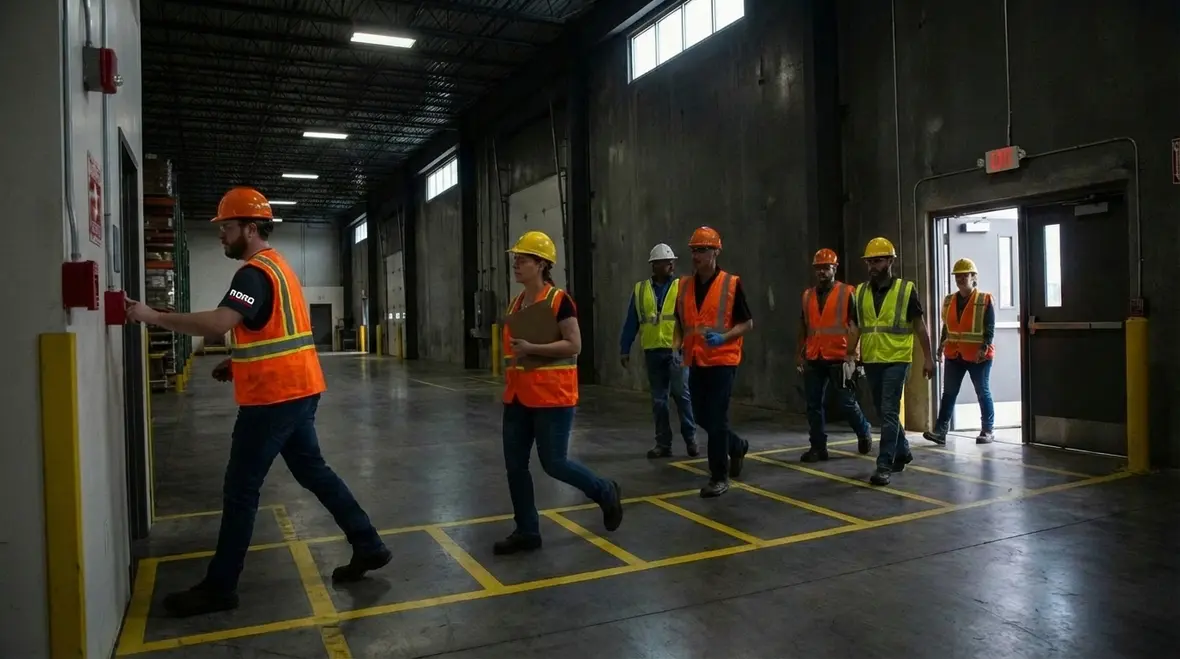
Clear evacuation routes must remain marked and unobstructed. Regular drills reinforce muscle memory. Staff should know where pull stations are located and how to report hazards.
Kord Fire Protection technicians frequently conduct walkthroughs with supervisors, explaining system components along the way. When employees understand what a riser room does or why certain valves must remain locked open, they treat the equipment with greater respect.
Furthermore, emergency action plans should define roles. Who contacts emergency services? Who meets the fire department at the gate? Who ensures all personnel are accounted for?
Preparation reduces panic. And in high square footage facilities, calm coordination makes all the difference.
Warehouse Fire Protection Guide for High Pile and Specialized Storage
High pile storage deserves special attention. As racks climb higher, fire behavior changes dramatically. Heat builds faster. Sprinkler activation timing becomes critical.
Below is a simplified comparison that Kord Fire Protection technicians often use when explaining system choices:
Standard Storage
Lower rack heights
Moderate heat release
Ceiling sprinklers often sufficient
Lower water demand
High Pile Storage
Tall racks exceeding 12 feet
Rapid heat buildup
May require ESFR or in rack sprinklers
Higher flow and pressure requirements
Additionally, specialized storage such as flammable liquids or battery systems may require foam systems or additional safeguards. These hazards demand careful engineering and clear separation from general commodities.
Because of these complexities, a detailed warehouse fire safety guide should always account for current and future storage plans. After all, warehouses grow. Inventory changes. Fire protection must keep pace.
FAQ About Warehouse Fire Protection
Protecting Your Warehouse Starts Now
Fire protection in the Inland Empire is not a background detail. It is a business decision that safeguards people, inventory, and reputation. With guidance from experienced professionals like Kord Fire Protection technicians, warehouse owners gain clarity, confidence, and compliance.
Do not wait for an alarm to test your systems. Schedule an evaluation, review your current setup, and strengthen your protection today. Because in this region of constant motion, safety should always stand still and steady.
If you are ready to take the next step, connect with Kord Fire’s full-service team through their fire protection and safety inspection services. From design and installation to ongoing inspections and maintenance, they support Inland Empire warehouses with code-compliant, warehouse-ready fire protection solutions.
Reach out today to build a custom plan for your facility, align with local authorities, and keep your operation moving safely—shift after shift.
Know Your Weapon Before You Fight the Flame
Kord Fire Protection is your go-to when it comes to all things fire protection. For over 20 years, we’ve been serving Southern California with the quality service and equipment to keep your home or business safe at all times. Our competitive prices reflect our unwavering commitment to protecting what matters most in the event of a fire emergency. Give us a call, send an email, or use that form!

Join Our Newsletter!
Get the latest fire safety tips delivered straight to your inbox From our Newsletter.


