Industrial Fire Protection Electrical Integration in Australia, Kord
Quick Answer: Integrating electrical infrastructure with industrial fire protection helps facilities avoid nuisance trips, improve detection and response, and keep code compliance on track. It also reduces downtime during upgrades. Kord Fire Protection can act as a vital partner by coordinating alarms, power feeds, testing, and documentation so the whole system behaves as one.
In large facilities across Australia, industrial fire protection electrical integration is not a side quest. It is the backbone that keeps detectors, panels, strobes, pumps, and controls working when conditions get serious. Early planning matters because electrical design decisions affect how fast devices activate, how reliably they report, and whether inspections go smoothly. When this work is coordinated properly, the fire system stops acting like a “mystery machine” and starts behaving like a well trained team.
Near the top of any serious upgrade conversation, it also helps to think bigger than a single component. Teams that need a broader life safety strategy can explore full fire protection services from Kord Fire Protection, especially when electrical coordination, alarms, pumps, and documentation all need to land in the same universe instead of four separate spreadsheets. Facilities that want a more electrical specific angle can also look at Kord Electric reliable electrical services, which fits naturally with integration planning and inspection readiness. ([kordfire.com](https://kordfire.com/full-fire-protection-services/?utm_source=openai))
Why electrical design and fire systems must share the same blueprint
Fire protection systems depend on power, supervision, and controls. Meanwhile, electrical infrastructure includes switchboards, distribution boards, cabling routes, grounding, and surge protection. When those two worlds stay separated, facilities often pay for it later with rework, expensive shutdowns, and sometimes, systems that pass testing but fail in real events.
Therefore, facilities should plan the electrical and fire alarm or fire suppression components together. For example, a fire pump controller that expects a specific supply configuration will not run correctly if the electrician installs the feed “close enough,” then moves on to the next job. Additionally, devices like sounders and beacons must receive power with the right reliability, wiring segregation, and supervision to match the intent of the design.
And yes, the irony is painful. Everyone loves “safe and code compliant,” but nobody loves re-pulling cables after discovery. Coordination fixes that before it becomes an after-hours drama plot.
Early coordination prevents late stage surprises
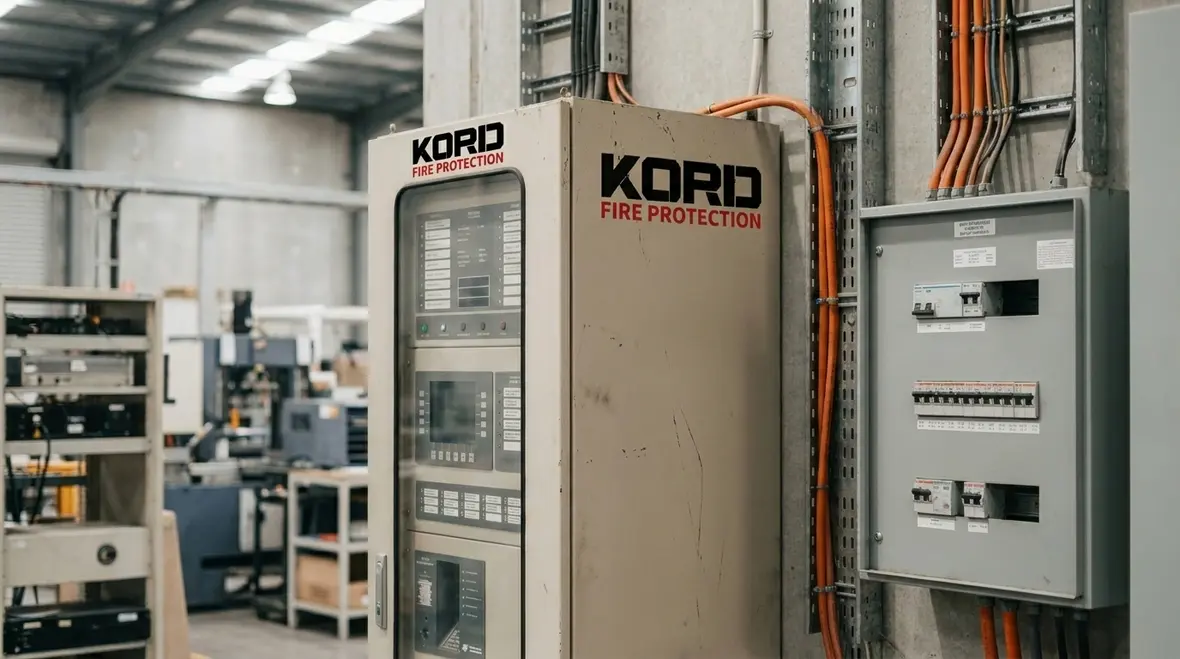
This is also where integrated planning saves real money, not theoretical money that only exists in meeting slides. When the fire contractor, electrical contractor, and facility team agree on routes, power sources, interfaces, and testing expectations early, the project has a much better chance of staying on schedule. It also makes shutdown planning more realistic, because nobody discovers at the eleventh hour that a critical circuit shares space with something it absolutely should not.
Electrical distribution decisions that affect detection and signaling
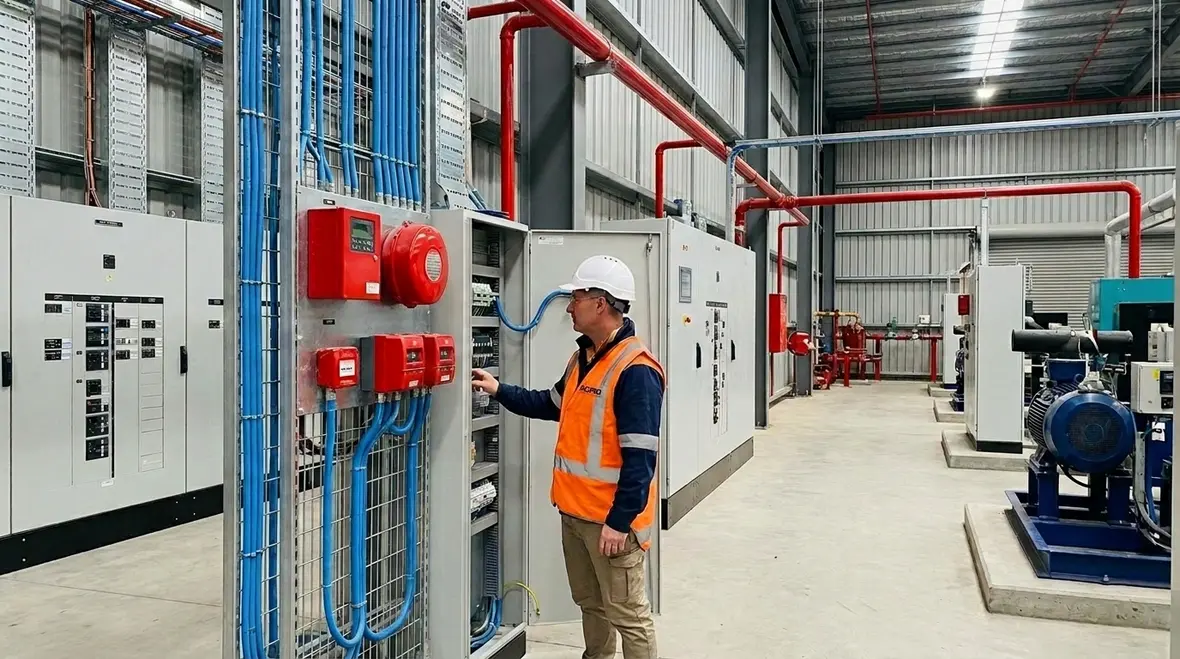
To make industrial fire protection electrical integration practical, design teams should map how power flows under normal and alarm conditions. Switchboards, isolators, and circuits should provide clear segregation between life safety and general power where required. In addition, the fire system typically needs reliable standby power concepts, so the electrical design should align with battery backup, charger capacity, and control panel load expectations.
Next, facilities should consider how cabling and pathways influence performance. Signal integrity, route protection, and avoidance of shared conduits with noisy power circuits can reduce unwanted faults. Furthermore, the electrical team needs to understand the difference between alarm signaling circuits and control power circuits, because these choices affect voltage drop, loop resistance, and supervision behavior.
Finally, commissioning should not be treated like a box to tick. During testing, the team should verify that the fire system receives stable power, that supervision functions correctly, and that alarm and fault signals behave as designed.
Signal quality is not a glamorous topic, but it matters
Nobody throws a parade for good circuit segregation, but good segregation quietly prevents chaos. Reliable signaling depends on pathways that protect communication quality and reduce electrical interference. In industrial sites with motors, drives, plant equipment, and heavy loads, that matters a lot. A tidy drawing is nice. A system that does not flood the panel with weird faults at 2:13 a.m. is nicer.
Fire alarm, suppression, and controls working as one system
Industrial facilities often run multiple layers of protection: detection, alarm signaling, fire suppression, emergency controls, and building management interfaces. In other words, the fire system rarely “lives alone.” For seamless operation, the electrical infrastructure must support the correct interfaces and control logic.
For example, when suppression systems activate, they require properly rated power and control signals. If an interface module receives power from a circuit that trips during startup loads, the system can lose control at the worst moment. Similarly, smoke control fans, damper actuators, and emergency door releases depend on electrical control outputs that must be coordinated with both the fire system logic and the electrical protection strategy.
Therefore, teams should document interlocks, control points, and acceptance test steps. This reduces confusion between contractors, keeps maintenance staff aligned, and makes audits far less stressful.
And if it feels like too much detail, remember: fire does not ask for “close enough.” It asks for “worked the way it was designed.”
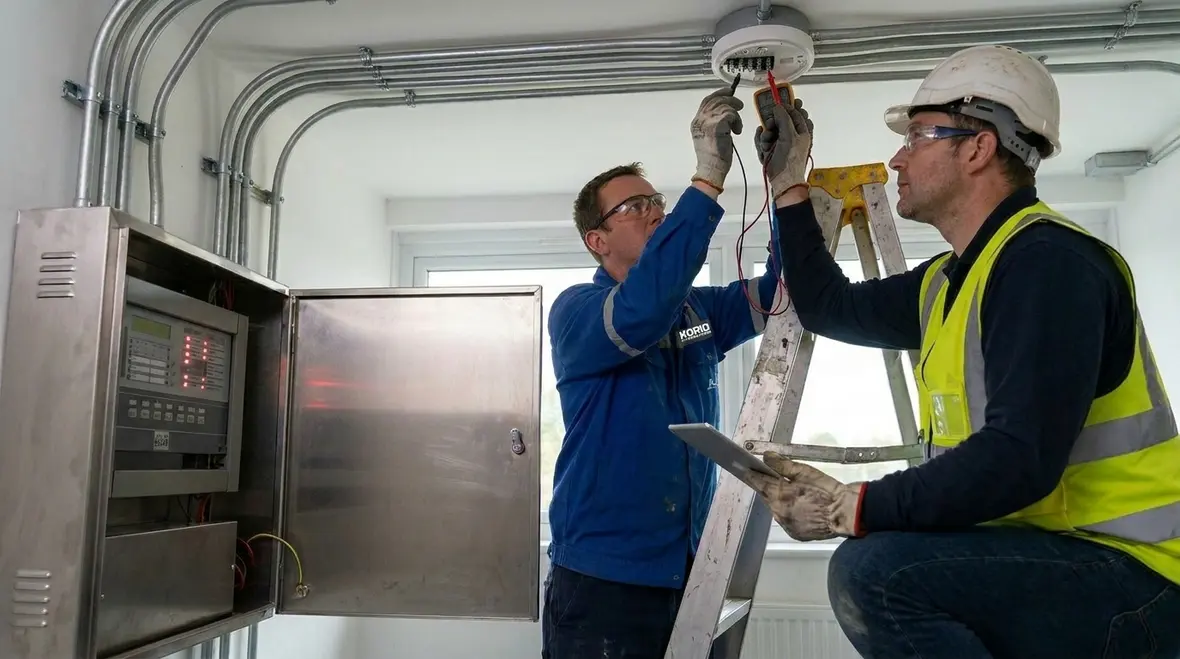
This is also why related topics like fire suppression system integration for life safety and fire protection system integration with building automation controls can provide useful context for teams mapping cross-system behavior from day one. ([kordfire.com](https://kordfire.com/fire-suppression-system-integration-for-life-safety/?utm_source=openai))
Power, grounding, and surge protection for dependable operation
When electrical and fire systems integrate, grounding and surge protection become more than good practice. They protect detection devices, control boards, and communication interfaces from voltage spikes, fault conditions, and interference that can cause intermittent issues.
Facilities in Australia often face harsh environments, from dust and humidity to plant vibration. Consequently, electrical design should account for cable sheaths, termination methods, and protective devices that match the risk profile. In addition, ground bonding should support stable reference points for control circuits, especially for supervised inputs and outputs.
To reduce downtime, teams should also plan for maintenance access. A grounding scheme that looks tidy but cannot be safely inspected becomes a recurring headache. Likewise, surge protection must be sized for the specific installation and coordinated so it protects without creating nuisance faults.
Reliable protection should also be serviceable
A system that is technically correct but miserable to maintain will eventually become everyone’s least favorite surprise. Service access matters. Labeling matters. Logical panel organization matters. If a technician has to play detective just to trace one supervised circuit, the facility is carrying hidden risk. Good integration does not only help the day the system is installed. It helps for years afterward, when inspections, upgrades, and troubleshooting become part of normal operations.
Compliance, documentation, and commissioning that stand up to scrutiny
Compliance is not only about installing equipment. It is about proving the system works as intended. That means clear documentation, test records, and as built drawings that reflect the final electrical configuration. When electrical infrastructure and fire protection integrate from the start, the commissioning process becomes smoother because the design intent stays intact.
During commissioning, teams should verify circuit identity, polarity, fault supervision, and response timing. They should also test emergency controls tied to the electrical system and ensure that protective devices behave correctly under fault scenarios. After testing, as built records should capture cable routing, labeling, panel configurations, and any changes made during construction.
This is where Kord Fire Protection can become a vital partner with the service/job. They help coordinate fire alarm and protection requirements with the electrical scope, so contractors do not trade assumptions like contraband. Kord’s role supports better handover, stronger documentation habits, and fewer “we thought someone else handled that” moments.

For teams that also manage pump infrastructure, Kord’s article on fire pump testing requirements can add useful operational context, especially where electrical supply and controller behavior affect test readiness and long-term performance. ([kordfire.com](https://kordfire.com/fire-pump-testing-requirements-things-to-know/?utm_source=openai))
Integration planning across industrial, retail, and facilities teams
Facilities rarely stay static. Warehouses expand, retail sites undergo refurbishments, and industrial plants add new equipment. Therefore, industrial fire protection electrical integration should include a change strategy, not just a one time build plan.
Teams can do this by creating a phased approach for upgrades. They should identify existing cable routes, confirm spare capacity in panels, and plan downtime windows that protect operations. In addition, they should review how new loads impact standby power and alarm signaling performance. If the facility adds motor drives, large refrigeration circuits, or new production lines, the electrical environment changes and the fire system must remain stable.
Also, maintenance staff need practical training. They should understand how electrical protection devices affect fire circuits and what to check during routine inspections. When everyone knows the same “operating story,” the system gets maintained, not guessed at.
Change management keeps good systems from drifting
A lot of integration problems do not begin with the original installation. They begin later, during expansions, retrofits, temporary fixes, or “we only moved one thing” projects. Change management helps teams review what is being added, what circuits are affected, what standby capacity is available, and whether documentation still matches reality. That is not bureaucracy for the sake of bureaucracy. That is how you stop one innocent change from turning the alarm panel into a storyteller.
How Kord Fire Protection supports electrical integration end to end
Kord Fire Protection helps facilities align the fire protection scope with the electrical infrastructure so the final system functions as one coordinated design. In practice, this can include reviewing interfaces, supporting commissioning activities, and ensuring that testing and documentation match what the equipment expects. Kord’s broader service approach emphasizes coordinated sprinkler, alarm, extinguisher, and pump support, while Kord Electric specifically highlights working alongside fire protection teams to keep projects compliant and inspection ready. ([kordfire.com](https://kordfire.com/full-fire-protection-services/?utm_source=openai))
Just as importantly, they help teams avoid the classic construction trap: the electrical contractor finishes the power side, the fire contractor installs devices, and the two groups meet later during testing like strangers on a train platform. When Kord supports the integration, the handover is cleaner, the acceptance testing becomes more predictable, and the facility reduces the odds of repeat visits.
Because in the end, business leaders want fewer disruptions, safety teams want reliability, and maintenance teams want systems they can actually service without a root canal. Kord aims to support all three.
FAQ
Final CTA: make integration the smart move
For Australian industrial, retail, and facilities teams, electrical infrastructure and fire protection must align from design to commissioning. Kord Fire Protection can act as a vital partner to coordinate the interfaces, support testing, and strengthen documentation so the system performs when it matters. Reach out to plan your next upgrade with confidence and avoid costly “surprise fixes” during inspections.
If your site is planning broader integration work, service upgrades, or cross-trade coordination, Kord’s full fire protection services provide a natural next step for turning isolated components into one coordinated safety strategy, with support that connects planning, testing, and handover into a cleaner outcome. ([kordfire.com](https://kordfire.com/full-fire-protection-services/?utm_source=openai))

Join Our Newsletter!
Get the latest fire safety tips delivered straight to your inbox From our Newsletter.