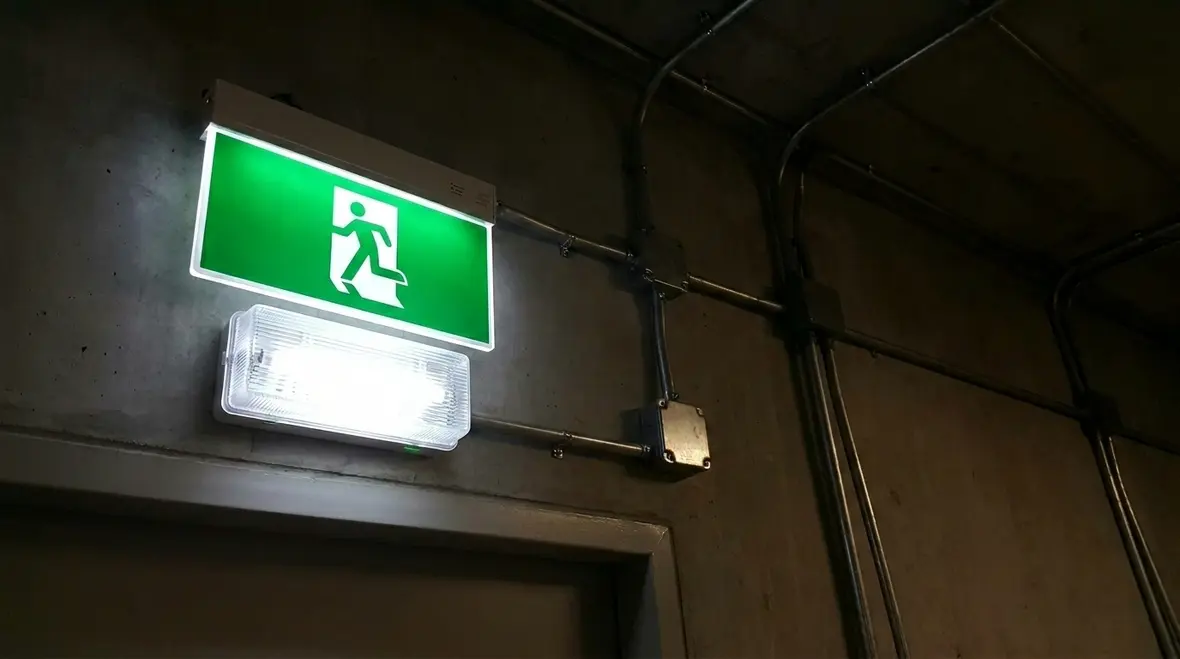
Electrical Requirements for Emergency Lighting Fire Exits
Quick Answer: Critical electrical requirements for fire exit emergency lighting focus on safe power, reliable controls, and fast operation during faults. Systems must meet Australian safety expectations for placement, wiring, testing, and maintenance, so occupants can exit in smoke or darkness. Kord Fire Protection can manage design, compliance support, and ongoing service for the whole installation lifecycle.
In Australia, Emergency lighting for fire exits is not a “nice to have” feature. It is a life safety system that helps people find exits when the building goes dark, smoky, or both. From industrial warehouses to high traffic retail corridors, facilities rely on correct electrical design so lights start when they must, not after everyone has already formed a very uncomfortable conga line toward the wrong door.
Below, this guide covers the electrical requirements that drive performance in real fire scenarios. It then explains how Kord Fire Protection can become a vital partner for the service and job delivery, so the work stays compliant, tested, and properly maintained. For facilities coordinating broader safety infrastructure at the same time, Kord Fire also supports emergency exit light services and related fire protection support across commercial and industrial properties.
Power supply rules for emergency lighting circuits
Emergency lighting for fire exits begins with the power story. If the lights depend on a circuit that fails during a fire, the system fails too. Therefore, facilities need a clear separation between normal lighting and emergency power sources. This usually involves dedicated circuits, protected wiring routes, and correct switchgear selection so the emergency function stays available.
In many commercial and industrial settings, the system may use maintained or non maintained operation. Maintained systems keep exit lighting on during normal operation, while non maintained systems activate only when normal supply fails. Either way, the electrical design must ensure the transition time is fast, and the monitoring method accurately detects faults. After all, nobody wants a system that behaves like a dramatic actor: “I will respond… eventually.”
To reduce risk, installers also plan for voltage drop limits and proper load calculations. For long corridors, multiple luminaires, or higher fault currents in industrial spaces, correct sizing prevents dim output at the worst moment. That sounds obvious, but in real projects the obvious things are usually the first to get bullied by rushed timelines and crowded ceiling spaces.
Why circuit separation matters in real buildings
Circuit separation is more than a paperwork exercise. It gives the emergency system a fair chance of surviving a fault that affects standard lighting. In warehouses, distribution centres, retail tenancies, and back of house plant rooms, normal lighting circuits often get modified during fitouts. If emergency exit lighting is tangled into the same logic without care, one innocent looking change can quietly compromise evacuation lighting. That is why documented circuit intent matters almost as much as the cabling itself.
Wiring, segregation, and protection against damage
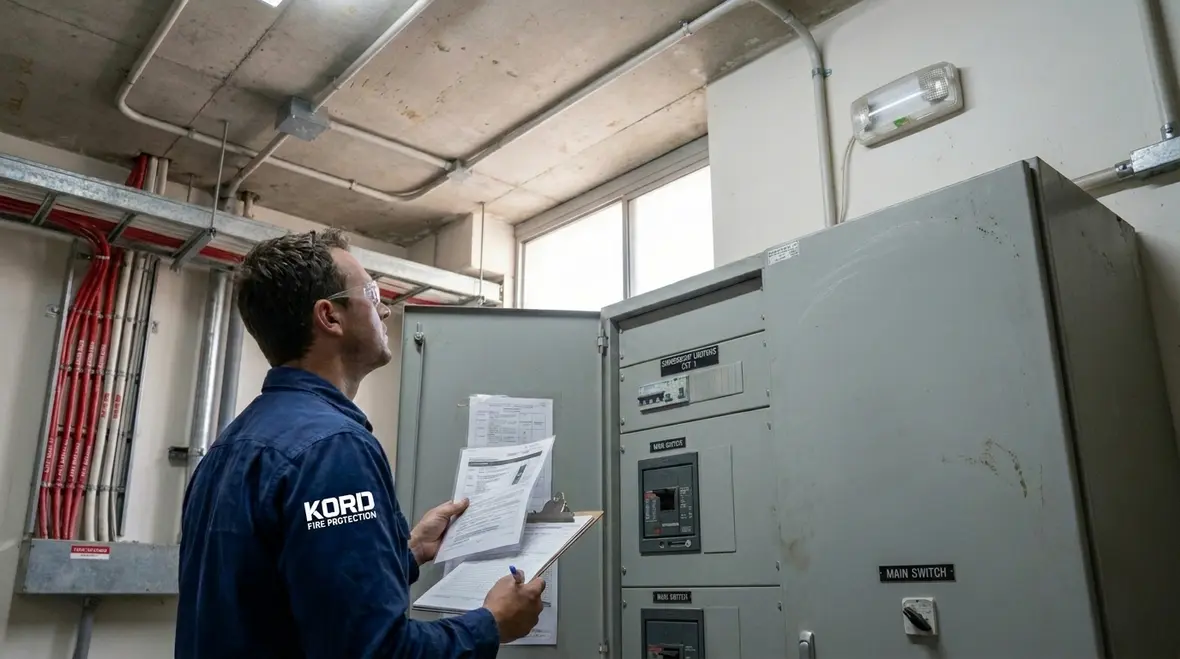
Next comes the wiring. During a fire, electrical pathways must resist heat and mechanical damage long enough to keep exit lighting operating. Facilities should use wiring practices that support fire integrity and reduce the chance that a single fault knocks out the entire circuit. This matters in retail fitouts, where ceiling spaces can be packed with services, and in industrial sites, where vibration and impact are common.
So, what does that look like in practice? It often includes:
- Proper cable routing that avoids unnecessary exposure
- Segregation from non essential services where required
- Use of appropriate protective devices and enclosures
- Lightning or surge considerations where sensitive controls exist
- Correct earthing and bonding to keep protective operation reliable
Then, they label and document the circuits. When the time comes for testing, maintenance, or troubleshooting, the team should not need a “treasure map” to find where the emergency feed actually runs.
Keeping a single fault from becoming a full corridor problem
Good segregation helps contain faults. If damage occurs in one ceiling void, one riser, or one branch circuit, the whole escape path should not instantly become a lighting blackout experiment. Protective enclosures, sensible routing, and clear isolation planning all support the same goal: make sure local damage stays local. This is especially useful in buildings that get frequent tenancy churn, because every renovation crew introduces new opportunities for accidental cable injuries.
Backup batteries, inverters, and runtime assurance
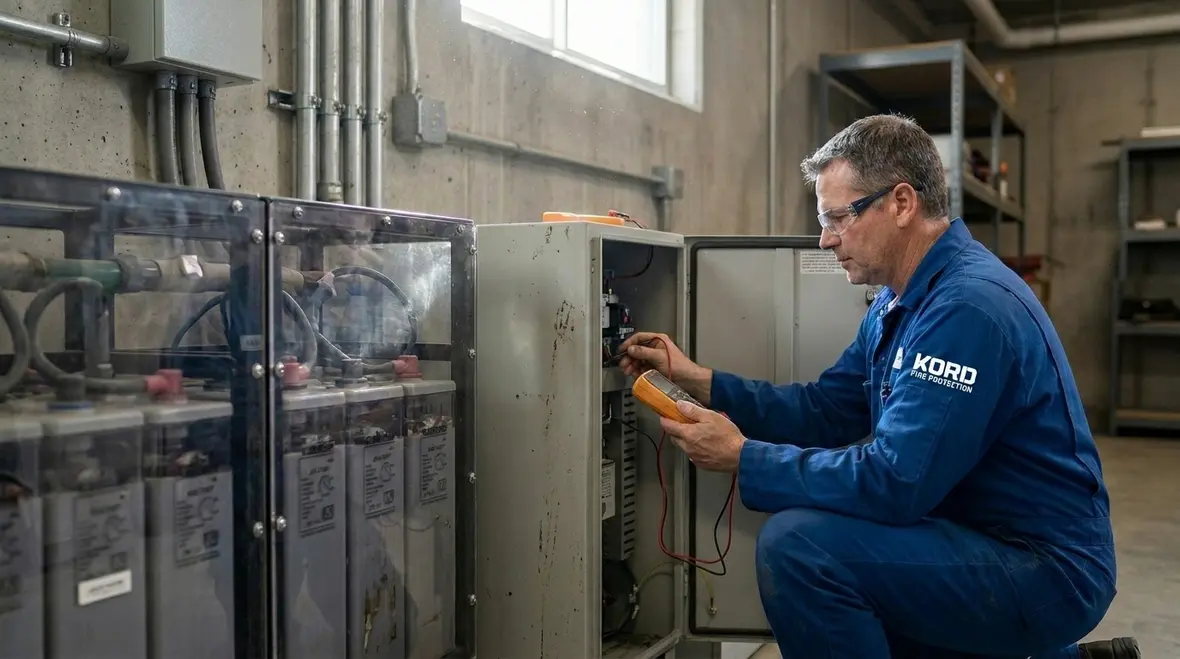
Many sites rely on battery backed systems, inverters, or central power units. These components must supply the luminaires for the required duration under defined conditions. Therefore, engineers and contractors verify battery capacity, charger performance, and discharge characteristics before commissioning.
Battery systems also require electrical supervision. That means the charger monitors health, the system detects faults, and the controls signal issues early. If batteries fail silently, the exit lighting for fire exits becomes a gamble, and gambling is not a strategy most facilities want to explain to an auditor.
For larger facilities, central systems can feed multiple zones. That makes electrical zoning even more important. A fault in one area should not rob other exit routes. Kord Fire Protection often supports this by reviewing the job approach and coordinating documentation and inspection steps so the commissioning story stays clean from day one.
Runtime is only useful if the system can actually deliver it
A battery label is not the same thing as real world runtime. Age, ambient temperature, charging health, and load growth can all eat into performance. If additional luminaires get added later without reviewing the original assumptions, the system may still power on, but not for as long or as evenly as intended. That is why service records, load reviews, and practical discharge testing remain such a big part of long term reliability.
Controls, signage interfaces, and testable performance
Electrical performance does not stop at power. Controls and testing features decide whether emergency lighting actually works when people need it. Systems should include automatic sensing of supply failure, and they should also provide a safe way to test function without disabling the safety outcome for long periods.
Where interfaces exist with fire alarm systems, the design must prevent unwanted states. For instance, a fire alarm activation might trigger wider building responses, but the emergency lighting should follow the correct logic for exit guidance. This reduces the chance of confusion during evacuation.
In busy retail or healthcare adjacent sites, maintenance staff also need access to test points, test modes, and clear indicators. If the electrical system hides everything behind sealed panels and mystery wiring, maintenance turns into a scavenger hunt. And while scavenger hunts are fun in pop culture, they are not fun at 2 am during a fault event.
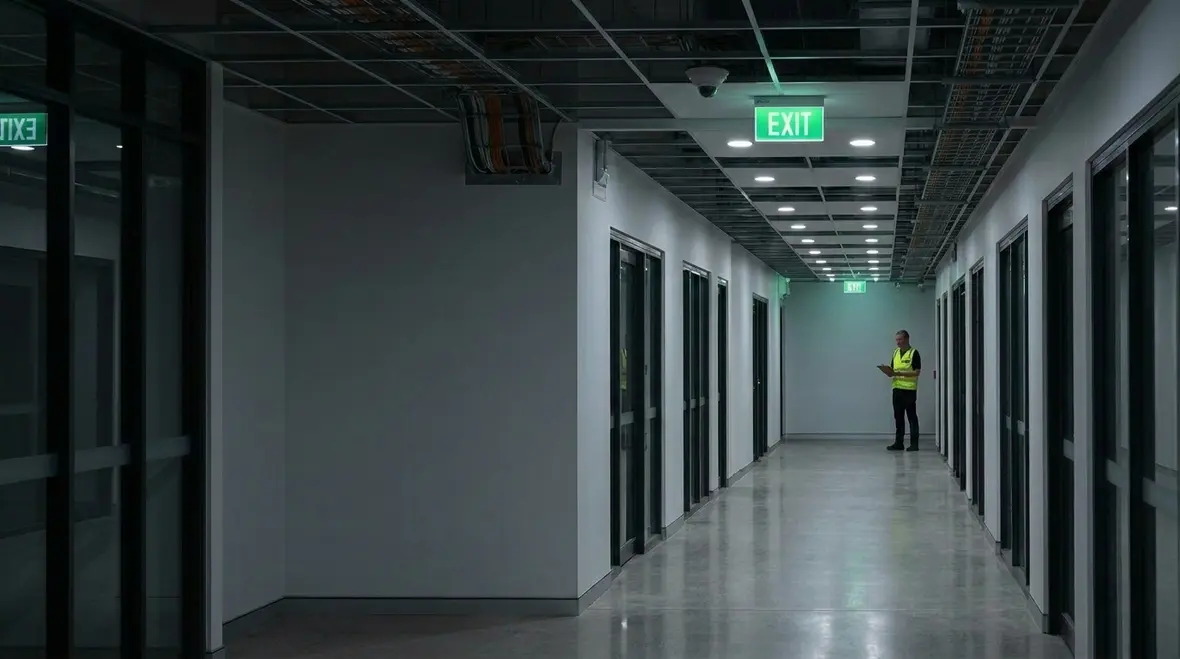
Placement meets electrical reality: load, voltage drop, and coverage
Placement requirements often get discussed as “where the lights go.” However, the electrical side ensures they function at that location. Coverage depends on the luminaires’ performance under emergency power, which means designers account for battery limitations, voltage drop, and luminaire loading.
Therefore, electrical calculations should consider:
- Distance and cable length to each luminaire
- System current draw at rated emergency conditions
- Voltage drop along runs to keep light output acceptable
- Thermal effects in ceiling voids or industrial plant rooms
- Zone distribution so lighting remains uniform across escape paths
This is where good partners matter. Kord Fire Protection can help facilities align the electrical design approach with the actual building layout, so coverage does not look right on paper but fail during commissioning. They can also support ongoing verification, so performance stays consistent after fitout changes, refurbishments, or equipment upgrades.
Design coverage should survive real building changes
Escape routes rarely stay frozen forever. New partitions appear, shelving moves, machinery grows, and tenants find creative new ways to block what once looked like a perfect path. Electrical design has to tolerate that reality. A strong maintenance plan checks that the installed coverage still suits the actual route people will take, not the route shown on a dusty drawing from two refurbishments ago.
Commissioning, inspections, and ongoing maintenance practices
Even a well designed electrical system can drift over time. That is why commissioning and inspections must include electrical checks, not just visual verification. Facilities should record insulation resistance where relevant, confirm correct polarity, validate emergency changeover, and confirm that supervision and monitoring works.
Then they schedule routine testing and functional checks. Regular testing protects reliability and helps detect creeping issues like battery degradation, charger faults, or damaged wiring routes from routine building works. Furthermore, maintenance should track results against acceptance criteria and ensure the emergency lighting for fire exits stays within required performance boundaries.
For multi site businesses across Australia, this becomes an operations problem as much as a technical one. Kord Fire Protection can become that practical bridge by delivering service planning, documentation control, and coordinated visits so facilities do not end up with half tested systems and a spreadsheet full of “we will look at it later.” Later usually arrives wearing a clipboard.
How Kord Fire Protection supports the electrical side of fire exit lighting projects
Kord Fire Protection can act as a vital partner because fire exit lighting is not only equipment selection. It is also compliance workflow, electrical readiness, and long term service structure. In real job conditions, teams face mixed trades, changing floor plans, and site specific constraints, especially across industrial, retail, and commercial environments.
When Kord Fire Protection supports a project, it helps ensure that electrical requirements connect to installation outcomes. This includes coordinating documentation needs, supporting commissioning readiness, and aligning service and testing schedules with the building’s operational demands. As a result, the facility gets a system that keeps performing, and a team that can explain the whole story clearly if questions arise.
For sites where pump performance also affects the broader fire protection strategy, it also makes sense to review the dedicated fire pump service page as part of a joined up system planning approach. Emergency lighting, pumps, alarms, and testing records all work better when they stop behaving like separate departments at a family barbecue.
Bonus reality check: If the system is not testable, it is not truly reliable. And if it is not maintained, it is not reliable at all.
FAQ
Conclusion
Critical electrical requirements for fire exit emergency lighting systems come down to one thing: dependable power, protected wiring, and verifiable performance. When facilities plan for segregation, monitoring, and routine testing, the system works when it matters. Kord Fire Protection helps teams deliver and maintain those outcomes across industrial, retail, and commercial sites in Australia. If a compliance question shows up, they bring answers, not guesswork.
Contact Kord Fire Protection to review your system approach, commissioning readiness, and ongoing service plan. A well documented emergency lighting setup is easier to test, easier to maintain, and much less likely to surprise anyone at exactly the wrong time.

Join Our Newsletter!
Get the latest fire safety tips delivered straight to your inbox From our Newsletter.