Fire Pump Motor Starter Maintenance for Reliable Readiness
Quick Answer: Essential electrical maintenance keeps fire pump motor starters reliable when seconds matter. It covers inspection, insulation checks, torque verification, contactor health, and control circuit integrity. With smart planning and proper testing, faults get found early. Kord Fire Protection can then coordinate these checks with full fire system oversight so the site stays ready.
In Australia, facilities across industrial, retail, and commercial sites depend on one idea: when a fire pump starts, it must start correctly. That is why Fire pump motor starter maintenance deserves more than a quick glance and a prayer. Over time, vibration, heat, moisture, and electrical aging quietly chip away at starter performance. As a result, what once worked smoothly can develop loose connections, worn contacts, degraded insulation, and control faults that only show up under stress.
However, this job does not need to live in a separate world from the rest of life safety. Kord Fire Protection’s full fire protection services can support facilities that want starter maintenance aligned with the broader fire protection program, site records, and compliance expectations. Think of it like having a reliable co pilot, not a passenger who only checks the map when the plane lands. Kord helps keep everything coordinated, documented, and test ready.
Essential electrical maintenance that protects pump performance
Fire pump motor starters perform like the control tower for a critical system. They manage starting currents, protect the motor, and provide the logic that keeps operations stable. When maintenance gets skipped, electrical problems can evolve from minor issues into failure points. Therefore, a solid program targets the parts that most often drift out of spec, including termination points, contactors, overload devices, and control wiring.
To keep performance steady, technicians typically focus on:
- Visual inspection of enclosures, signage, cable entries, and heat damage
- Torque checks on power and control terminals to address loosening from vibration
- Contact condition assessment to catch pitting, burning, or uneven wear
- Overload device verification to ensure proper protection
- Control circuit continuity and logic checks to prevent nuisance trips
And yes, terminals can loosen even when nobody touches them. Electricity does not care about good intentions. It cares about physics.

How technicians inspect starters without missing hidden faults
Many failures begin where they are least obvious: inside a starter cabinet, at the edges of control wiring, or at terminals that look fine from a distance. Next, teams use a blend of observation and testing so they can confirm both condition and function. For example, a contactor may look “okay,” but its contact resistance can still rise, causing heat and voltage drop during starts.
During inspections, the work often includes:
- Thermal evidence checks for browning, discolouration, and hot spots
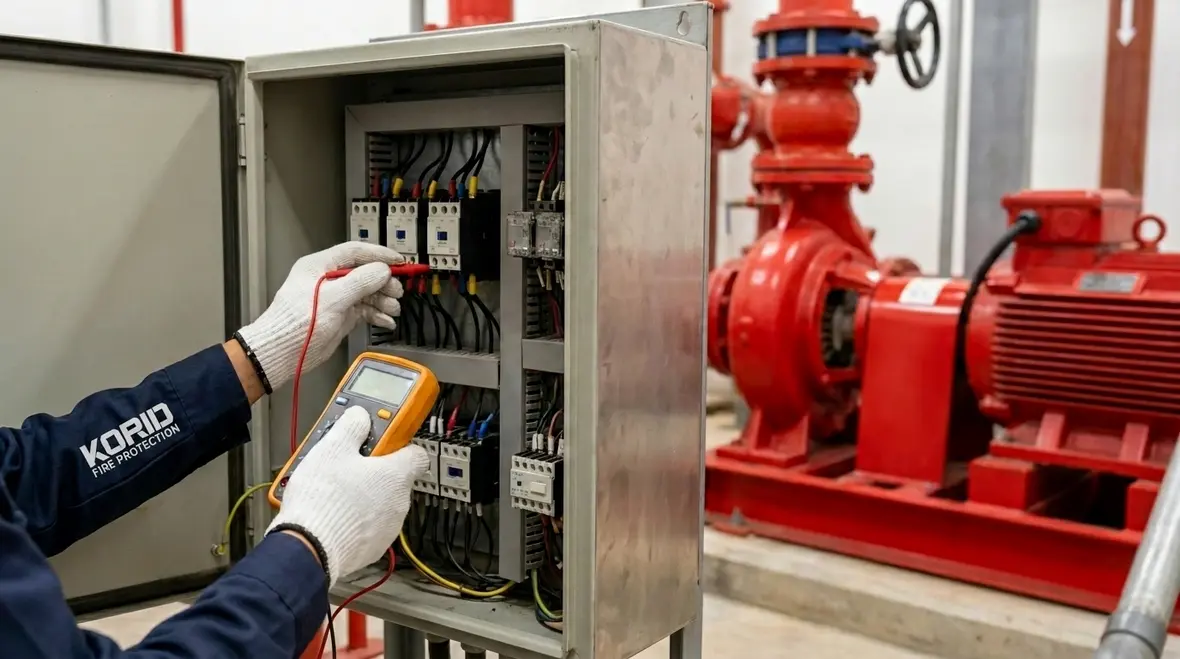
- Insulation resistance testing on motor circuits and control wiring
- Polarity and phase verification where applicable to avoid wrong connections
- Sequence and operation checks for start stop logic and interlocks
- Grounding and bonding review to support safe fault clearing
Because fire pumps may sit idle most of the year, condition can drift undetected. However, routine maintenance shrinks the gap between “seems fine” and “actually fine.” That is where careful inspection pays off.
Why hidden electrical faults love quiet equipment
Idle equipment can be sneaky. A starter that has not been challenged recently might still carry dust, humidity exposure, or subtle control wiring damage that does not announce itself until a real start command arrives. That is why a calm looking cabinet should never get a free pass. If anything, quiet gear deserves a little suspicion and a flashlight.

What electrical tests reveal before a start command arrives
When a site wants dependable operation, they need more than a checklist. They need tests that reveal risk before it shows up during an emergency. Moreover, the starter is only one piece of the system, so technicians also consider the motor, cable runs, and protective devices.
Common testing used during Fire pump motor starter maintenance includes:
- Insulation resistance tests to spot degraded insulation that can cause leakage or faults
- Contact resistance checks where methods allow, to confirm low resistance paths
- Functional testing of control logic, reset behavior, and alarm outputs
- Motor circuit verification including phase balance checks when required by the scope
- Protection verification to confirm overload and short circuit protection remains effective
Testing also creates evidence. And evidence matters when teams need to show due diligence to stakeholders, insurers, and internal governance. It is like keeping receipts, but for safety.
For teams that want a broader view of how the power side supports dependable fire pump operation, Kord’s guide on essential fire pump electrical requirements and design adds useful context. It helps connect maintenance findings back to the design decisions that make reliable starts possible in the first place.

Key maintenance steps for contactors, overloads, and control wiring
Starter reliability often comes down to three zones: the power path, the protection path, and the control path. Each has its own failure pattern, and each demands a disciplined approach.
Contactors usually wear through cycling and heat. Therefore, maintenance teams examine contact material, verify coil condition, and confirm mechanical operation stays smooth. Next, overload devices must match the motor’s needs and remain correctly set. If overload protection drifts out of alignment, it can either fail to protect the motor or trip incorrectly under demand.
Control wiring creates a different kind of risk. Moisture ingress, abrasion, and aged insulation can lead to intermittent signals that behave like a bad guest at a hotel. They appear briefly, cause trouble, then vanish, leaving staff guessing. To prevent that, technicians review cable routing, tighten terminations, and verify control circuit continuity and integrity.
Where appropriate, the team also updates labeling and documentation so the next visit does not start with detective work.
Small documentation fixes that save large amounts of time
Clear labels, current records, and consistent naming conventions do not sound glamorous, but they are often the reason a technician solves a problem in minutes instead of hours. Nobody wants a starter cabinet that reads like a mystery novel with the last three chapters missing.
Why coordination with Kord Fire Protection strengthens compliance
Fire systems often involve multiple vendors, multiple schedules, and multiple documents. That can create gaps, especially when an electrical starter gets serviced without alignment to fire system testing records. This is where Kord Fire Protection can become a vital partner with this service and job.
Kord helps facilities keep the fire pump system as a unified package, not a collection of disconnected tasks. As a result, Fire pump motor starter maintenance fits into the larger program that may include inspections, test planning, reporting, and ongoing life safety coordination across the site. That means fewer surprises, cleaner records, and faster responses when questions arise.
Think of it like managing a band. The starter service might handle the drums, but fire protection coordination keeps the whole performance in sync, so the show does not fall apart mid chorus.
Maintenance planning for multi site teams across Australia
Industrial and retail groups often manage multiple facilities with different ages, operating patterns, and environmental conditions. Therefore, maintenance planning must be practical, repeatable, and easy to track. When teams plan well, they can reduce downtime risks and avoid “rush maintenance” that happens after a problem is already loud.
A strong plan typically includes:
- Asset mapping so each starter, motor, and feeder is clearly identified
- Schedule alignment with other life safety tasks to reduce site disruption
- Site specific risk factors such as humidity, dust, and vibration exposure
- Clear scope definitions for testing, inspection, and corrective work
- Action tracking so defects do not disappear between reports
Next, leadership teams can set targets for response times, documentation quality, and repeat findings. That is how maintenance becomes a system, not a gamble.
FAQ about Fire pump motor starter maintenance
Call Kord and keep your fire pump ready
Fire pump systems cannot afford guesswork. By scheduling disciplined electrical work, teams can catch risks early, protect motors, and keep control logic dependable. Kord Fire Protection can coordinate this Fire pump motor starter maintenance effort with broader fire protection responsibilities, so reporting stays clean and readiness stays real.
Contact Kord Fire Protection to plan maintenance that fits your sites, your schedules, and your compliance needs. When the goal is reliable readiness, a well maintained starter is not a nice extra. It is part of the reason the whole system shows up ready to work.

Join Our Newsletter!
Get the latest fire safety tips delivered straight to your inbox From our Newsletter.