
Industrial Chemical Fire Suppression Guide for Sites
Understanding Chemical Fire Suppression for Industrial Sites
Every industrial site carries a certain level of risk. Sparks fly. Machines run hot. Chemicals react. And sometimes, unfortunately, things ignite. That is precisely why any serious facility needs a reliable industrial chemical fire suppression guide to shape its fire strategy from the ground up. In fact, this article builds on that guide, expanding it into a practical, real world discussion for plant managers, safety officers, and decision makers who prefer prevention over panic.
As Kord Fire Protection technicians often explain to site teams, fire protection is not about reacting heroically. It is about preparing intelligently. Because while firefighters may look great in action movies, no operations director wants to star in one. Instead, they want systems that work quietly, efficiently, and without drama.
The Science Behind Chemical Fire Suppression Systems
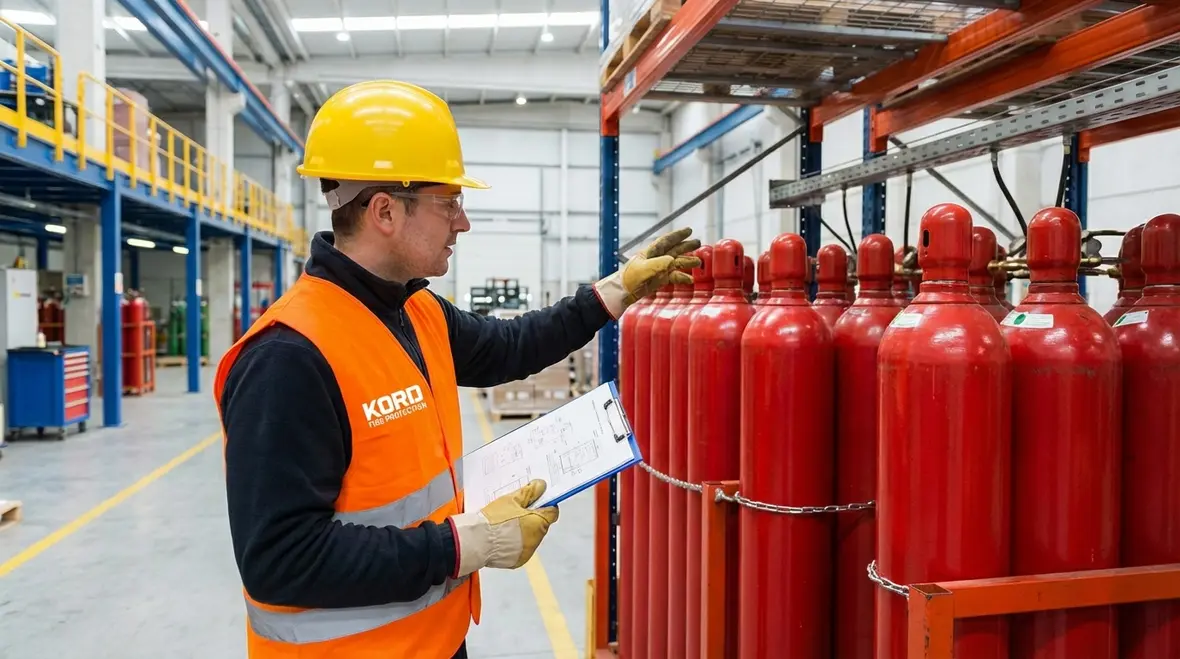
At its core, chemical fire suppression interrupts the fire triangle. Remove heat, fuel, or oxygen, and the fire collapses. However, in industrial settings, water alone often falls short. Electrical panels, flammable liquids, sensitive equipment, and chemical processes demand more precise solutions.
Chemical suppression systems release specialized agents designed to:
- Disrupt the chemical reaction of flames
- Smother oxygen around the fire source
- Cool surfaces without damaging equipment
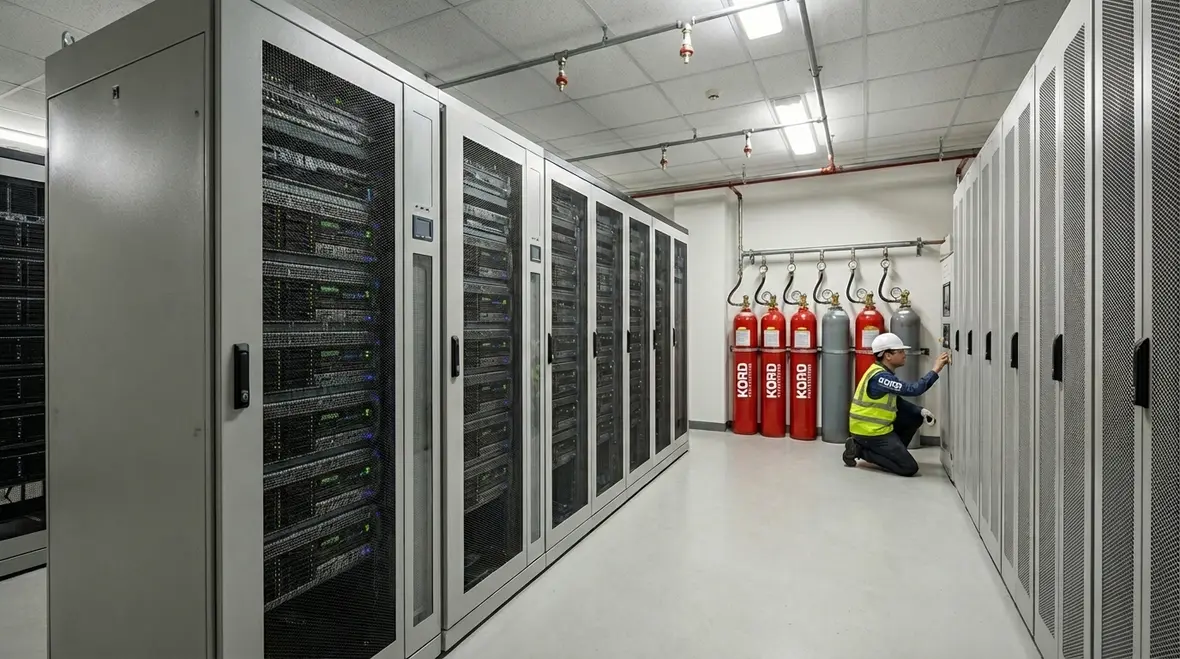
For example, clean agents such as FM 200 or Novec 1230 extinguish fires without leaving residue. That means production can resume faster. On the other hand, dry chemical systems work well in high hazard environments like fuel storage areas where rapid knockdown is critical. Kord Fire also designs modern clean agent systems such as Fluoro-K that replace legacy halon, FM-200, and Novec in many applications, giving facilities a cleaner, code-compliant way to protect sensitive spaces without messy discharge or water damage.
Moreover, these systems activate automatically through heat or flame detection. They detect danger early, release the agent precisely, and limit fire spread within seconds. Consequently, downtime decreases, asset loss shrinks, and safety improves.
Kord Fire Protection technicians often demonstrate this process during site evaluations. They walk managers through detection points, discharge timing, and containment strategy. And yes, they do it in plain English, not in a language that sounds like it was borrowed from a rocket launch manual.
Chemical suppression, oxygen, and occupied spaces
In gas-based systems, agents can displace or chemically interact with oxygen. That is why proper design and monitoring are non negotiable, especially in occupied rooms. Done right, clean agents absorb heat and slightly reduce oxygen levels while staying within safe exposure limits for people who may still be evacuating the area. Done wrong, they can create the kind of oxygen depletion scenario that safety teams absolutely do not want to discover the hard way.
Why Industrial Sites Require More Than Traditional Sprinklers
Sprinklers serve a purpose. They control many common fires. However, industrial environments rarely fit into the “common” category.
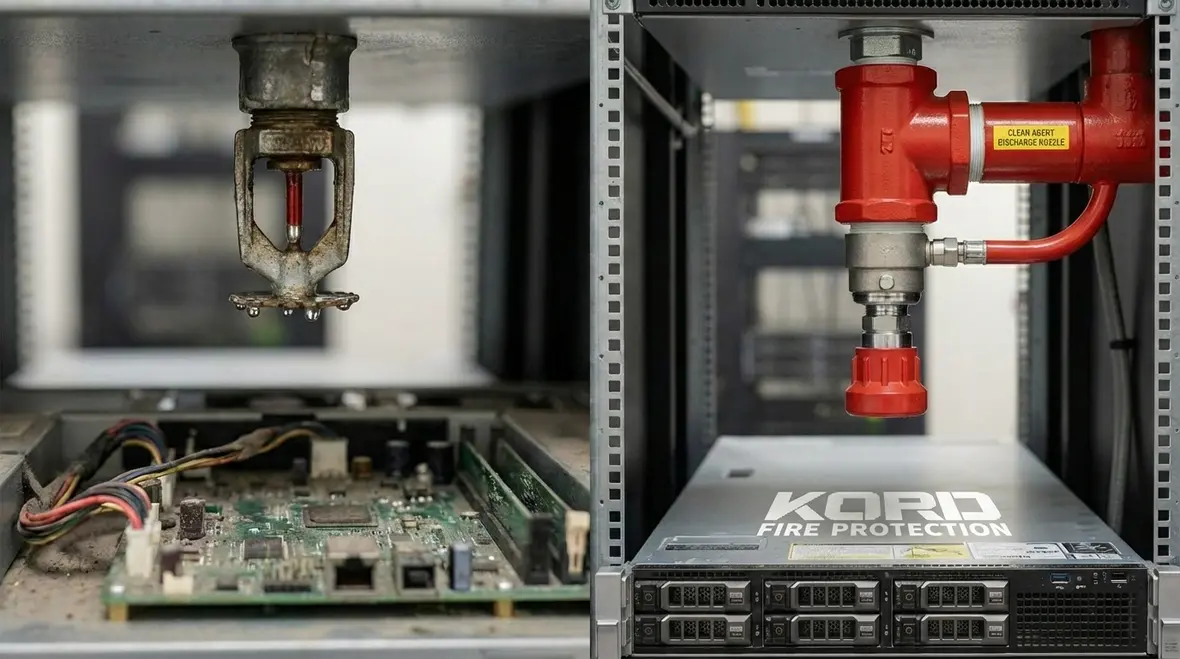
Consider a manufacturing facility handling solvents. Water could spread flammable liquids. In a data heavy plant, water could destroy control systems that cost more than a small yacht. Therefore, relying solely on sprinklers becomes a gamble.
Chemical suppression systems step in where water cannot. They:
- Protect sensitive electronics
- Contain flammable liquid fires
- Reduce cleanup time
- Minimize structural damage
Furthermore, they integrate with alarm panels, ventilation shutoffs, and emergency controls. So instead of one layer of defense, the site gains a coordinated response.
According to Kord Fire Protection technicians, layered protection defines modern safety planning. First detection triggers alerts. Next suppression activates. Then ventilation isolates the hazard. Each step works together like a well rehearsed orchestra. And unlike a garage band, this orchestra practices before the audience arrives.
When sprinklers and chemical agents work together
In many industrial facilities, the smart move is not choosing between water and chemical systems, but deciding where each is best deployed. High value control rooms may rely on clean agents, while production areas use sprinklers or water mist. Fuel storage may lean on foam or dry chemical. The industrial chemical fire suppression guide for your plant should spell out where each layer starts and where it hands off to the next.
How Does an Industrial Chemical Fire Suppression Guide Shape System Design
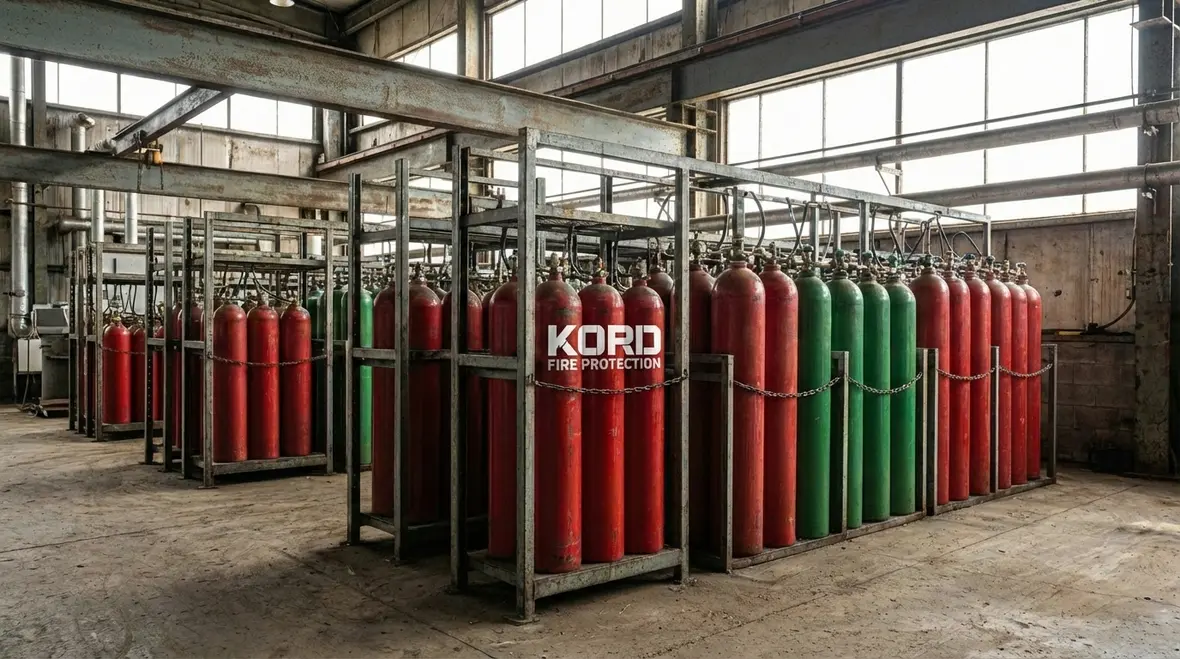
An effective industrial chemical fire suppression guide does not begin with equipment. It begins with risk assessment.
First, safety professionals evaluate fuel sources. Are there flammable gases, combustible dust, or reactive materials? Then they examine ignition risks such as machinery friction, electrical faults, or static discharge. After that, they assess building layout, airflow, and occupancy patterns.
Only then does system design begin.
Kord Fire Protection technicians frequently stress this order. If someone selects equipment before understanding hazards, they build a solution backward. And backward solutions tend to fail at the worst possible moment.
A comprehensive guide typically outlines:
- Hazard classification and fire load analysis
- Agent selection based on material compatibility
- Discharge calculations and coverage zones
- Compliance with national and local codes
- Ongoing inspection and maintenance schedules
In addition, system design must consider human factors. Clear signage, manual pull stations, and training ensure employees know what to expect. Because when an alarm sounds and a system discharges, confusion should not be part of the equation.
Tying design to real world standards and materials
That same guide should also connect directly to the codes governing your hazards. For example, flammable liquid handling should align with rules similar to NFPA 30, while clean agent design follows standards for total flooding systems and room integrity testing. Instead of a vague “we’ll be fine,” you get a documented playbook that matches actual code language, chemical properties, and your site conditions.
Common Chemical Agents Used in Industrial Facilities
Not all chemical agents behave the same way. Therefore, choosing the right one matters.
Clean agents
Clean Agents
These gaseous agents extinguish fire without residue. They suit data rooms, control centers, and laboratories. Since they evaporate quickly, cleanup becomes minimal. However, room integrity testing is essential to ensure proper concentration levels.
Dry chemical agents
Dry Chemical Agents
Often used in fuel storage or heavy equipment areas, these powders interrupt the combustion reaction. They act fast. Yet, they require post discharge cleanup. Still, when flames threaten large fuel loads, speed matters more than tidiness.
Foam systems
Foam Systems
Foam blankets flammable liquids, cutting off oxygen and preventing vapor release. Consequently, it works well in petrochemical plants or aviation facilities. It also prevents re ignition, which adds a layer of security.
Importantly, the selection process aligns with the industrial chemical fire suppression guide developed for the facility. Kord Fire Protection technicians analyze compatibility, storage requirements, and environmental impact before recommending any agent. Because choosing blindly is not strategy. It is guesswork wearing a hard hat.
System Integration and Compliance Standards
Industrial sites operate under strict codes. Therefore, compliance is not optional. It is foundational.
Chemical suppression systems must align with standards such as NFPA guidelines, insurance requirements, and local regulations. Additionally, documentation plays a major role. Inspection logs, testing records, and service reports demonstrate due diligence.
However, compliance extends beyond paperwork. Integration matters just as much.
Modern systems connect with:
- Fire alarm control panels
- Emergency power shutdown systems
- HVAC isolation mechanisms
- Remote monitoring platforms
Because of this integration, the moment a fire starts, the building responds as one unit. Detection triggers suppression. Ventilation shuts down. Alerts notify staff and emergency services. As a result, damage remains contained.
Kord Fire Protection technicians often compare this coordination to a well trained pit crew. Everyone knows their role. They move quickly. And the outcome depends on preparation, not luck.
What Should Facility Managers Ask Before Installing a System
When leaders evaluate fire suppression options, they often feel overwhelmed. Yet the right questions simplify the process.
They should ask:
- What specific hazards exist in each zone of the facility
- How quickly must the system respond
- Will the agent damage equipment or inventory
- How often will inspections occur
- Does the system allow future expansion
Moreover, they should request a clear explanation of maintenance commitments. Chemical systems require regular inspections, cylinder weighing, nozzle checks, and control panel testing. Without maintenance, even the best design loses reliability.
Kord Fire Protection technicians encourage transparency during these conversations. They break down technical details step by step. They outline long term costs. And they clarify regulatory responsibilities. Because informed managers make confident decisions. And confident decisions reduce risk.
Risk Assessment and Agent Selection at a Glance
Below is a simplified comparison used during early planning stages. While each site requires custom analysis, this overview highlights how risk type shapes system choice.
| Hazard Type | Recommended Approach |
|---|---|
| Flammable Liquids | Foam or dry chemical systems for rapid surface coverage |
| Electrical Control Rooms | Clean agent systems to avoid equipment damage |
| Fuel Storage Areas | High capacity dry chemical with fast discharge |
| Laboratories | Clean agents with precise concentration control |
| Heavy Manufacturing Floors | Zoned systems integrating detection and ventilation shutdown |
This structured approach ensures alignment with the broader industrial chemical fire suppression guide for the facility. It also supports budget planning and compliance review.
Long Term Maintenance and Performance Assurance
Installation marks the beginning, not the end.
Chemical suppression systems demand routine inspection. Cylinders must maintain proper pressure. Detection devices require calibration. Control panels need testing. Additionally, room integrity tests confirm that clean agents will hold concentration long enough to extinguish a fire.
Without maintenance, even advanced systems degrade. Valves corrode. Sensors drift. Batteries weaken. Therefore, scheduled service protects the investment.
Kord Fire Protection technicians conduct regular inspections, document findings, and recommend corrective action when needed. They also train on site staff to recognize early warning signs. Because a system that sleeps through a fire is not a system anyone wants.
Furthermore, ongoing review allows updates as operations evolve. If new machinery enters the facility or storage layouts change, suppression coverage may need adjustment. In that way, the safety strategy remains dynamic rather than static.
Frequently Asked Questions
Conclusion and Next Steps
Industrial safety does not happen by accident. It happens by design, planning, and disciplined maintenance. A well developed suppression strategy protects assets, people, and reputation. Kord Fire Protection technicians stand ready to assess risks, explain options, and implement dependable systems tailored to each facility. Connect with their team today and turn preparation into protection before the unexpected ever strikes.
If your site relies on sensitive controls, high value equipment, or complex chemical processes, now is the right time to update your industrial chemical fire suppression guide. Start by reviewing your hazards, then schedule a consultation for a clean agent or specialty suppression design that fits your exact risk profile. For facilities that need robust, residue free solutions, explore Kord Fire’s dedicated clean agent fire suppression services and broader fire suppression solutions for industrial properties so your operations stay protected, compliant, and ready for whatever comes next.
Know Your Weapon Before You Fight the Flame
Kord Fire Protection is your go-to when it comes to all things fire protection. For over 20 years, we’ve been serving Southern California with the quality service and equipment to keep your home or business safe at all times. Our competitive prices reflect our unwavering commitment to protecting what matters most in the event of a fire emergency. Give us a call, send an email, or use that form!

Join Our Newsletter!
Get the latest fire safety tips delivered straight to your inbox From our Newsletter.


