Huntington Beach Restaurant Fire Safety Laws Guide
Running a restaurant in Surf City comes with sunshine, sea breeze, and serious responsibility. Huntington Beach restaurant fire safety laws exist to protect guests, staff, and the dream behind every kitchen door. Within the first few months of opening, most owners discover that compliance is not just a checklist. It is a living system that requires inspections, maintenance, and a steady hand. Fortunately, local experts such as Kord Fire Protection technicians walk operators through each requirement, explaining the details in plain English and, occasionally, with the patience of a kindergarten teacher explaining why we do not microwave aluminum foil.
Understanding these regulations early keeps restaurants open, insurance costs manageable, and fire marshals smiling. So let us step into the kitchen and explore what truly matters.
Huntington Beach Restaurant Fire Safety Laws Every Owner Should Understand
At the core, local fire codes align with California Fire Code standards, yet Huntington Beach enforces them with particular attention to commercial kitchens. Because restaurants combine open flames, hot oil, electrical equipment, and human distraction, the city treats them as high risk occupancies.
Therefore, every restaurant must install and maintain approved fire suppression systems over cooking equipment. These systems automatically release extinguishing agents when heat sensors detect dangerous temperatures. In addition, portable fire extinguishers must be accessible and correctly rated for grease and electrical fires. For many operators, that means working with a team that understands UL 300 restaurant systems and commercial kitchen fire suppression design from top to bottom.
However, compliance does not stop at equipment. The law also requires clear exit pathways, illuminated exit signs, employee training, and routine inspections. Kord Fire Protection technicians often remind owners that equipment alone does not save the day. People who know how to use it do.
Moreover, permits must remain current. When a restaurant remodels or changes cooking equipment, it must update permits and sometimes upgrade suppression systems. Skipping this step may seem harmless, but inspectors tend to notice new six burner ranges the way food critics notice undercooked risotto. When in doubt, it is wise to have a fire protection specialist review any planned changes before they arrive on site with tools and ductwork.
If you are trying to sort out whether your existing hood system and suppression coverage still meet current best practices, resources like Kord Fire’s Commercial Kitchen Fire Suppression Systems Explained guide can help translate technical standards into real-world decisions for your kitchen line.
How Often Do Restaurants Need Fire Inspections in Huntington Beach
This question appears in search bars more often than one might expect. The answer is straightforward.
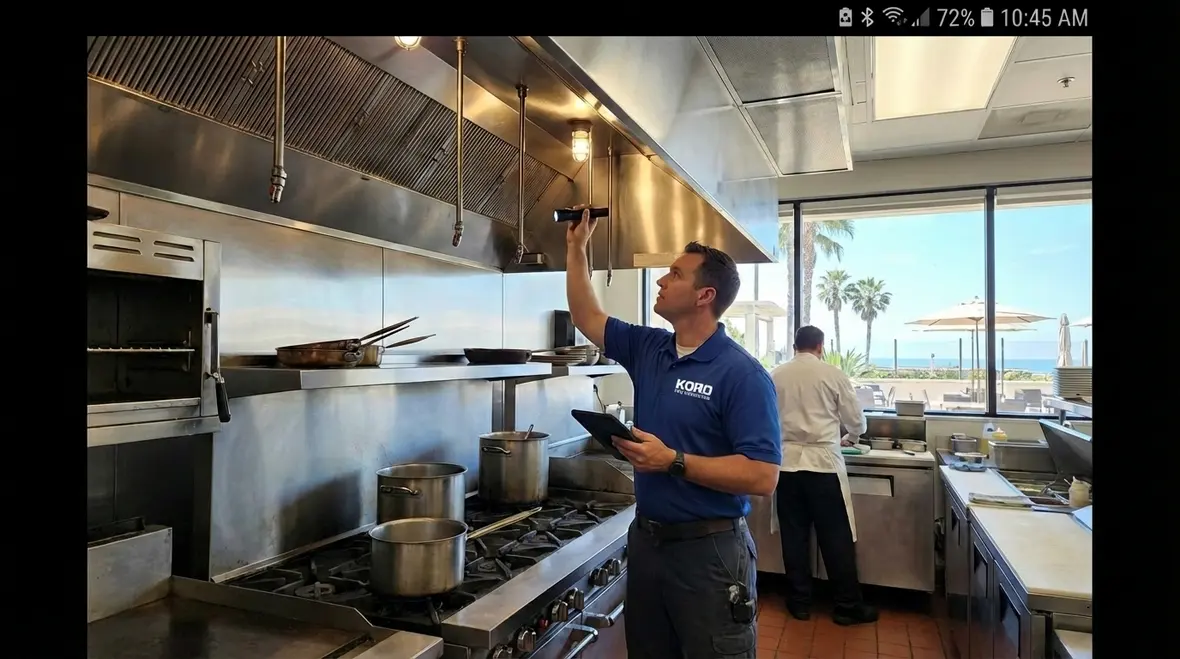
Restaurants in Huntington Beach typically undergo annual fire inspections. Yet high risk operations or establishments with prior violations may receive more frequent visits. Inspectors review suppression systems, extinguishers, hood cleanliness, alarm systems, and overall housekeeping.
Additionally, hood and duct systems must be professionally cleaned on a schedule based on cooking volume. For high volume frying or charbroiling, cleaning may occur quarterly. Lower volume kitchens may qualify for semiannual service. Still, the key lies in documentation. If it is not written down, it did not happen.
Kord Fire Protection technicians often coordinate inspection readiness visits before the city arrives. As a result, owners avoid last minute panic cleaning sessions that resemble reality cooking shows, minus the dramatic music.
Using a Fire Safety Calendar to Stay Ahead
A simple compliance calendar that tracks annual inspections, semiannual suppression service, and hood cleaning intervals keeps surprises to a minimum. Many owners tie this calendar to their broader maintenance plan for refrigeration, HVAC, and health inspections so nothing falls through the cracks when the dining room gets busy.
Commercial Kitchen Suppression Systems Explained Clearly
Every commercial kitchen in Huntington Beach must install an approved automatic fire suppression system. This system protects cooking appliances, hoods, and ducts. When heat triggers the system, it releases a wet chemical agent that suppresses grease fires and shuts off the fuel supply.
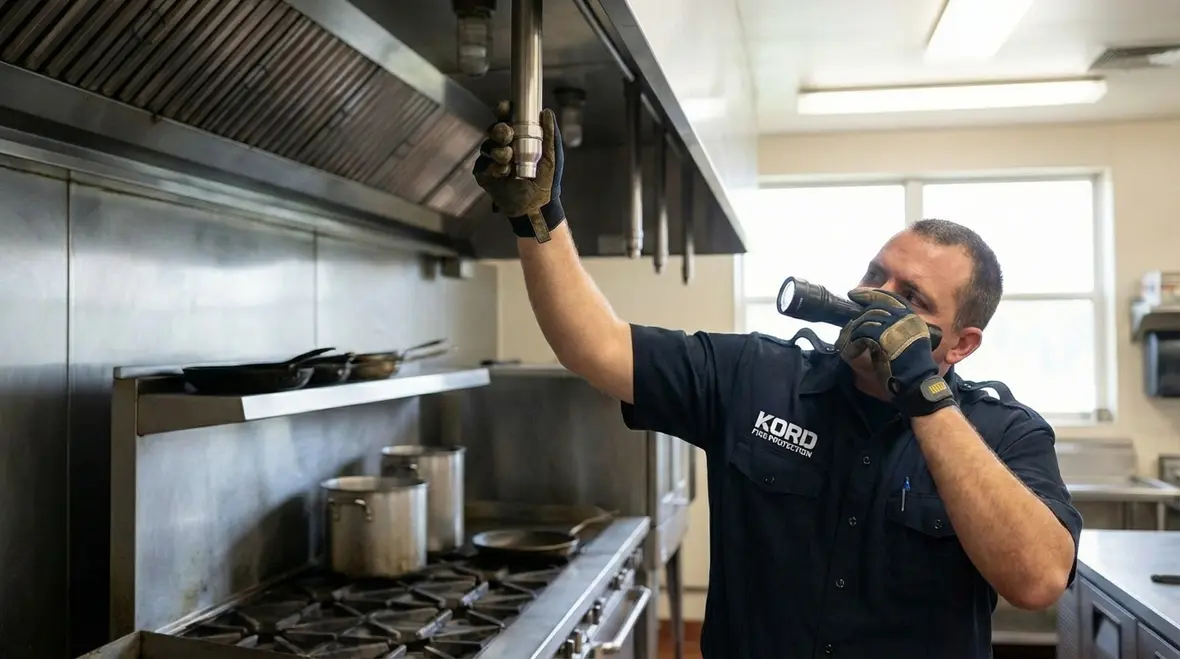
Importantly, technicians must inspect and service these systems at least every six months. During service, they check nozzles, detection lines, gas shutoff valves, and control panels. They also replace fusible links, which are small metal components designed to melt at specific temperatures.
Because grease builds up over time, even a small obstruction can prevent proper discharge. Therefore, regular maintenance is not optional. It is required under local fire regulations for restaurants in Huntington Beach.
Kord Fire Protection technicians take time to explain how each component works. They demonstrate manual pull stations and clarify how staff should respond during activation. In other words, they make sure no one stands there wondering if the alarm is part of the lunch special.
For owners who want a deeper dive into UL 300 restaurant systems and how modern hood suppression protects their line, Kord Fire’s dedicated UL300 Restaurant Systems page breaks down why these standards matter and how often they should be inspected.
Key Parts of a Restaurant Suppression System
- Nozzles positioned over fryers, grills, ranges, and inside hoods
- Detection lines or fusible links that sense high heat
- Wet chemical agent tanks ready to discharge on activation
- Fuel shutoff controls to kill gas or electric power to appliances
- Manual pull stations near exits for staff to trigger the system
Fire Extinguishers and Employee Training Requirements
Even the best suppression system cannot replace human awareness. Thus, fire extinguishers must be properly mounted, visible, and serviced annually. Kitchens typically require Class K extinguishers for grease fires and ABC extinguishers for general hazards.
Equally important, staff must know how to use them. Training should cover:
Key Training Elements
- How to identify different types of fires
- When to use an extinguisher versus evacuate
- How to activate the suppression system manually
- Where emergency exits are located
Furthermore, managers should conduct periodic drills. While no one enjoys interrupting dinner service with a practice scenario, preparation builds confidence. After all, in an emergency, muscle memory moves faster than panic.
Understanding Hood Cleaning and Grease Management
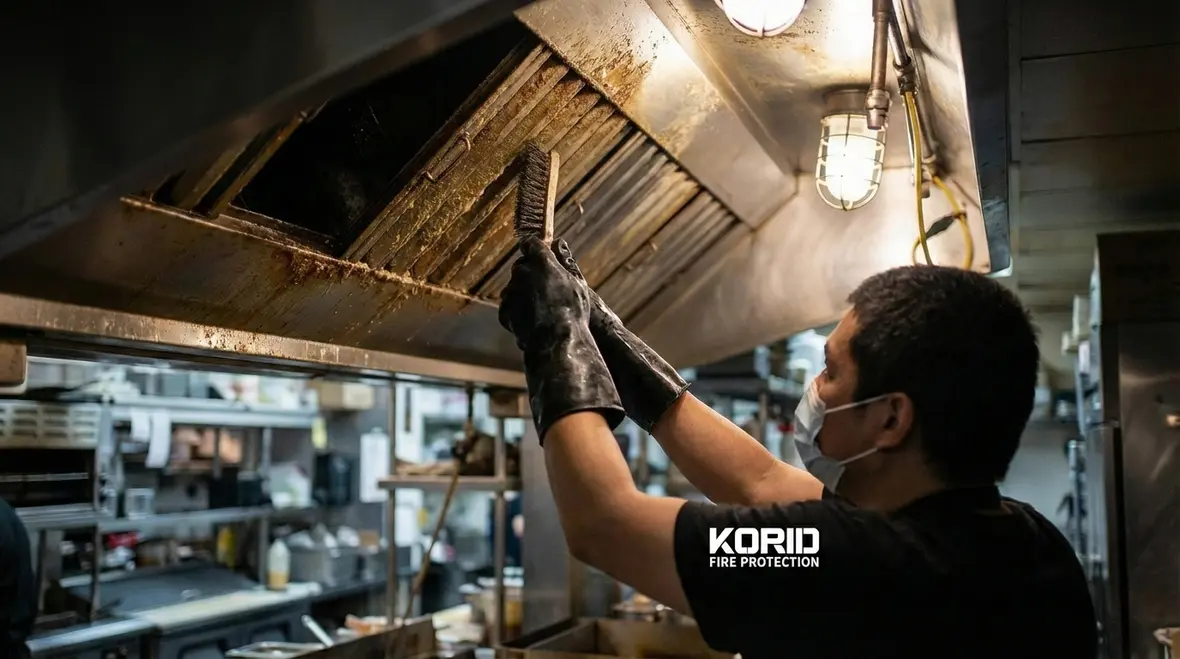
Grease is sneaky. It builds quietly, layer by layer, inside hoods and ducts. Over time, it transforms from minor residue into a serious fire hazard. Because of this, Huntington Beach enforces strict hood cleaning schedules.
The cleaning frequency depends on cooking type. Restaurants that rely heavily on frying, wok cooking, or charbroiling require more frequent service. Meanwhile, establishments with limited grease production may qualify for longer intervals.
To clarify these requirements, consider the following comparison.
| Cooking Volume | Typical Cleaning Frequency |
| High volume frying or charbroiling | Every 3 months |
| Moderate volume cooking | Every 6 months |
| Low volume or seasonal use | Annually, if approved |
After each cleaning, providers must place a service sticker indicating the date. Inspectors look for this label immediately. Consequently, missing stickers raise red flags faster than a smoke detector with fresh batteries.
Linking Grease Control to Overall Fire Safety
Grease control, hood cleaning, and suppression performance go hand in hand. If grease is allowed to accumulate around nozzles or inside ductwork, it can compromise even the best-designed system. That is why commercial kitchen fire safety plans often combine regular hood service with semiannual suppression inspections from a qualified provider.
Permits, Remodels, and Equipment Changes
Restaurant concepts evolve. Menus change. New ovens arrive. However, each change may trigger updated permit requirements under Huntington Beach restaurant fire safety laws.
For example, installing a new fryer might require recalculating suppression coverage. Expanding a hood line may require revised plans submitted to the fire department. Therefore, owners should consult fire protection professionals before making equipment purchases.
Kord Fire Protection technicians frequently review kitchen layouts and advise on compliance before contractors begin work. This proactive approach saves time, prevents costly corrections, and keeps grand reopening banners from turning into apology signs.
Moreover, inspectors evaluate storage practices during permit reviews. Flammable materials must remain properly stored, and electrical panels must stay accessible. In short, organization is not just good management. It is the law.
Common Violations and How Restaurants Avoid Them
Even experienced operators make mistakes. However, most violations fall into predictable categories.
Common issues include:
- Expired suppression system inspections
- Blocked fire exits
- Improperly mounted extinguishers
- Excess grease buildup in hoods
- Missing documentation for maintenance
Fortunately, these problems are preventable. First, owners should maintain a compliance calendar with reminders for inspections and cleanings. Next, managers should conduct monthly internal walk throughs. Finally, partnering with experienced professionals ensures nothing slips through the cracks.
Because Huntington Beach enforces fire codes consistently, repeat violations may lead to fines or temporary closure. And while a surprise day off sounds pleasant, it rarely feels that way when payroll still runs.
Frequently Asked Questions
Staying Ahead of Huntington Beach Restaurant Fire Safety Laws
Compliance works best when it becomes routine rather than reaction. Therefore, successful restaurant owners treat fire safety as part of daily operations. They train new hires immediately. They schedule inspections early. They keep records organized and accessible.
In addition, they rely on knowledgeable partners. Kord Fire Protection technicians not only service equipment but also explain why each requirement matters. They answer questions without jargon and help teams feel confident rather than overwhelmed.
Ultimately, fire safety protects more than property. It safeguards reputation, livelihood, and the community gathering around each table.
Building a Restaurant Fire Safety Plan
- Create a written fire safety and evacuation plan specific to your floor plan
- Outline inspection and cleaning intervals by month and vendor
- Assign a compliance lead on your management team
- Integrate fire safety topics into onboarding and ongoing staff meetings
- Review your plan at least once a year or after any major remodel
Conclusion and Next Steps
Restaurant owners in Huntington Beach carry both culinary ambition and legal responsibility. By understanding local fire codes, maintaining suppression systems, training staff, and partnering with experts like Kord Fire Protection technicians, they protect everything they have built. Do not wait for an inspection notice to take action. Schedule a professional review, update service records, and ensure full compliance today. A safe kitchen keeps the doors open and the guests coming back for seconds.
If your Huntington Beach restaurant needs a fresh look at its fire protection strategy, consider connecting with a full-service provider that understands commercial kitchens from hood to dining room. Kord Fire’s Fire Suppression Services team can help you design, install, inspect, and maintain UL 300 kitchen systems, extinguishers, and more, while their Contact page makes it easy to request a quote or schedule an inspection. Taking the next step now means fewer worries the next time a fire marshal walks through your door.
Know Your Weapon Before You Fight the Flame
Kord Fire Protection is your go-to when it comes to all things fire protection. For over 20 years, we’ve been serving Southern California with the quality service and equipment to keep your home or business safe at all times. Our competitive prices reflect our unwavering commitment to protecting what matters most in the event of a fire emergency. Give us a call, send an email, or use that form!

Join Our Newsletter!
Get the latest fire safety tips delivered straight to your inbox From our Newsletter.