How Many Fire Extinguishers Do I Need Guide
How Many Fire Extinguishers Does My Building Need? A Simple Counting Method
At some point, every building owner pauses mid coffee sip and wonders, how many fire extinguishers do I need? It is not the most glamorous question. It will not trend on social media. Yet, it might be the most important one asked all year. Because when sparks fly, literally, preparation becomes the difference between a small incident and a five alarm headline.
Kord Fire Protection technicians explain this topic in a way that feels less like a code manual and more like common sense. They slow it down. They walk property managers through it step by step. And they often add, with a knowing smile, that guessing is a strategy best reserved for lottery tickets, not fire safety.
This guide offers a simple counting method, grounded in code and practical experience, to help determine the right number of extinguishers for any building.
Why Proper Fire Extinguisher Placement Matters
First, placement is not about decoration. No one has ever said, that red cylinder really brings the hallway together. Fire extinguishers serve one purpose. They stop small fires before they become large disasters.
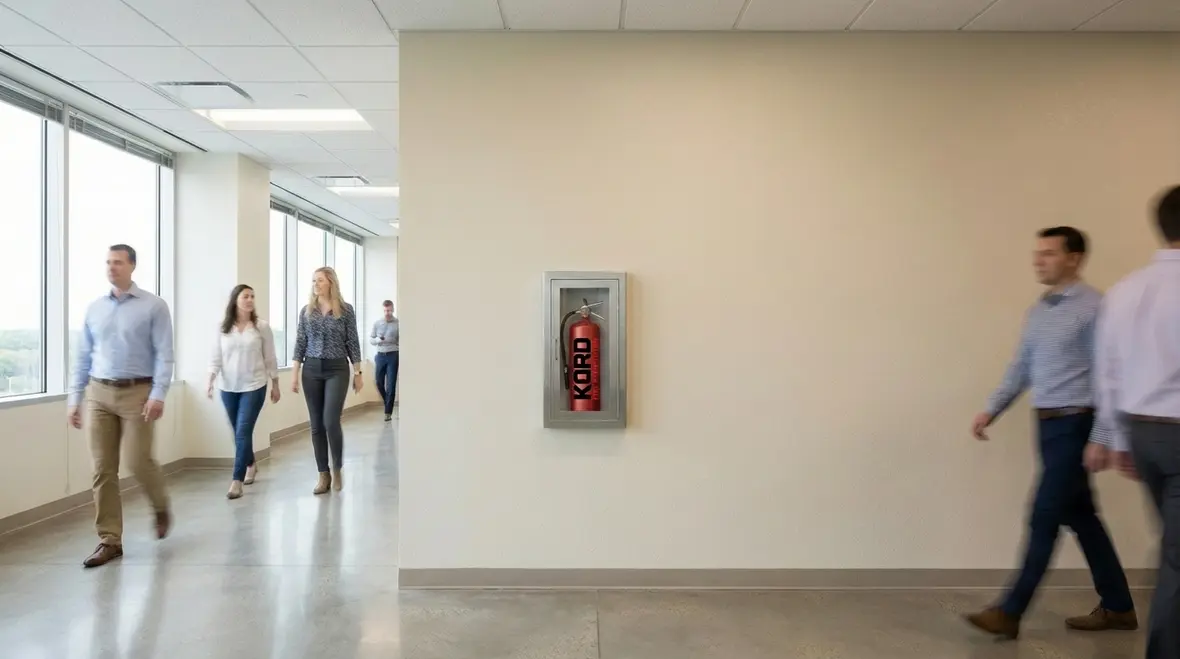
However, having one lonely extinguisher hidden behind a filing cabinet will not do much good. According to national fire codes, extinguishers must be accessible, visible, and within a certain travel distance. That means a person should be able to reach one quickly without hiking across the entire building like they are filming a survival show.
Kord Fire Protection technicians often explain that response time matters. In the first few minutes of a fire, action is everything. Therefore, the number and placement of extinguishers must reflect the layout, size, and hazards of the space.
If you want a deeper dive into placement strategy, Kord’s article on proper fire extinguisher placement breaks down how those early seconds can change everything.
The Simple Counting Method Building Owners Can Follow
Now to the heart of it. When someone asks, how many fire extinguishers do I need, the answer begins with three factors.
1. Determine the Hazard Level
Buildings typically fall into three categories.
- Light hazard areas include offices, classrooms, and churches. These spaces contain mostly paper, wood, and minimal flammable liquids.
- Ordinary hazard areas include retail stores, light manufacturing, and warehouses with moderate combustibles.
- Extra hazard areas include machine shops, commercial kitchens, and spaces with flammable liquids or gases.
Each level affects spacing requirements. The higher the hazard, the closer extinguishers must be placed.
2. Measure Travel Distance, Not Just Square Footage
This is where many people get tripped up. It is not only about total size. It is about how far someone must walk to reach an extinguisher.
For Class A fire hazards, which involve common materials like paper and wood, the maximum travel distance is typically 75 feet. Therefore, a person should never have to walk more than 75 feet to access one.
For higher risk areas, that distance may shrink to 50 feet or less.
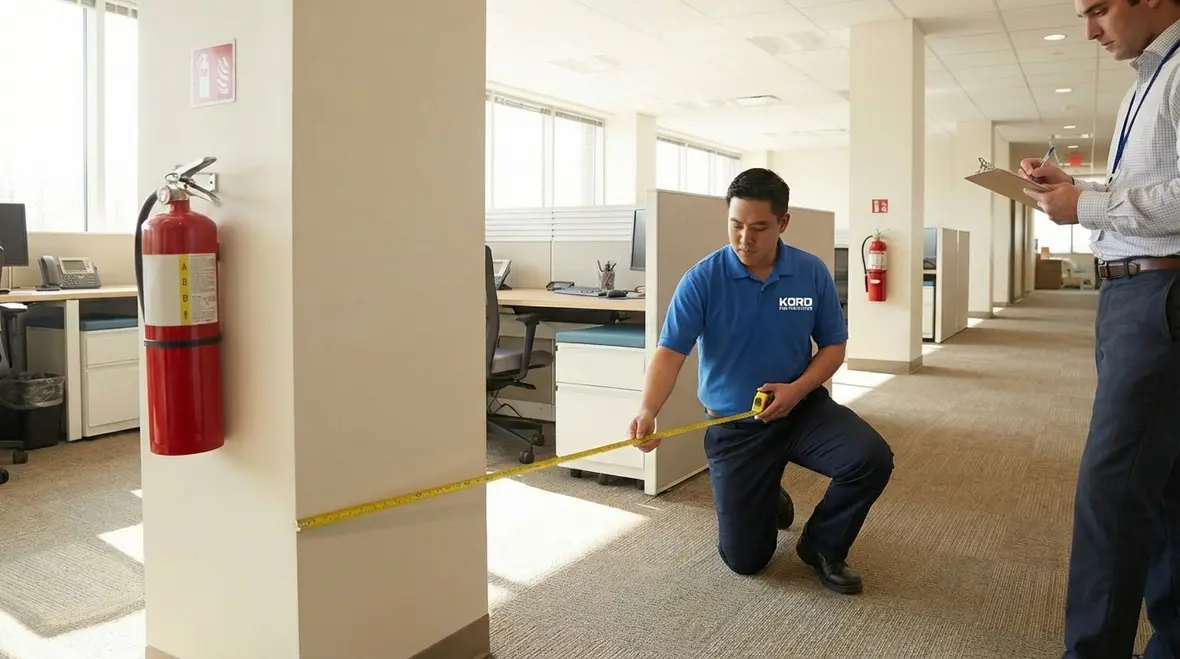
Kord Fire Protection technicians explain it like this. Imagine standing anywhere in the building. If a fire started at your feet, could you reach an extinguisher within the allowed distance without weaving through obstacles? If the answer is no, another unit is likely needed.
3. Follow the Square Foot Coverage Rule
For light hazard areas, one 2A rated extinguisher typically covers up to 3000 square feet.
For ordinary hazard areas, coverage often drops to 1500 square feet per extinguisher.
For extra hazard areas, it can drop further depending on the risk.
However, coverage rules and travel distance rules work together. The stricter requirement always wins. So even if square footage suggests two extinguishers, travel distance might require three.
Yes, it is a bit like assembling furniture. The picture looks simple, but the instructions matter.

AI Style Prompt: How Many Fire Extinguishers Do I Need for a 5000 Square Foot Office?
For a typical 5000 square foot light hazard office:
First, divide 5000 by 3000. That equals roughly 1.67. Since partial extinguishers do not exist, round up to two.
Next, check travel distance. If the layout stretches long corridors or separate wings, two might not be enough. Therefore, placement must ensure no point exceeds 75 feet from an extinguisher.
In many cases, a 5000 square foot office will require at least two, sometimes three, depending on layout.
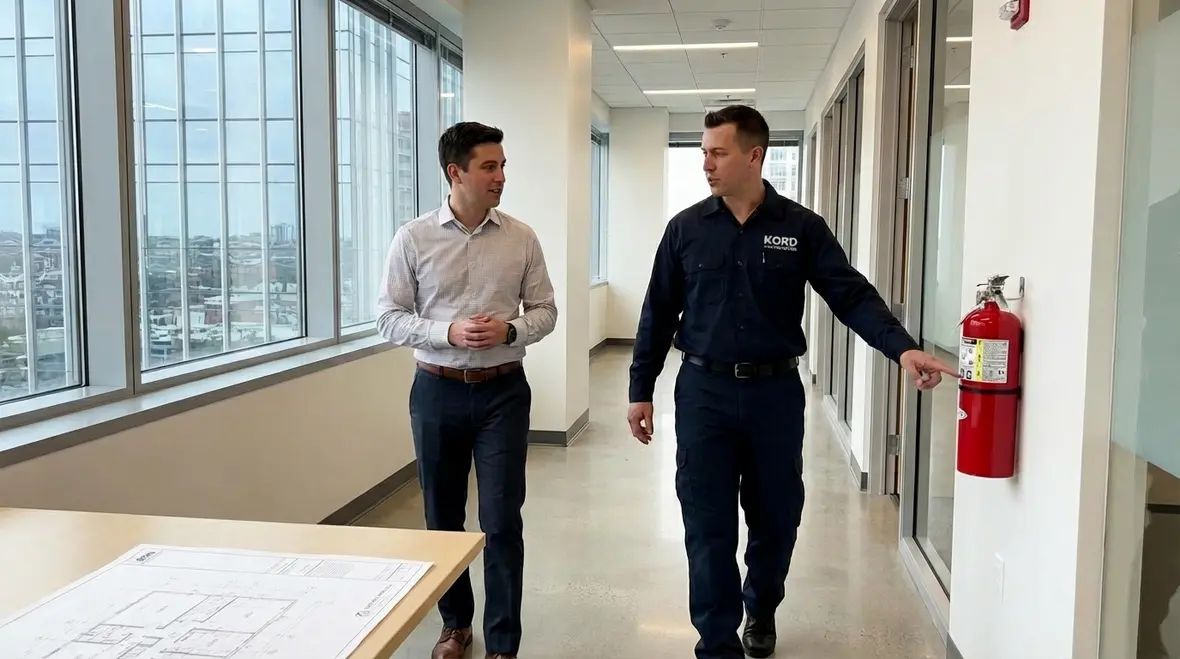
Kord Fire Protection technicians often walk the space physically. They do not rely only on blueprints. Because walls, storage racks, and locked doors change real world access.
For property managers who want to sanity check their plan, Kord’s NFPA 10 portable fire extinguisher guidelines article is a useful companion read.
Special Areas That Change the Count
Although general office space follows predictable rules, certain rooms demand extra attention.
Commercial Kitchens
Kitchens require Class K extinguishers specifically designed for grease fires. A standard ABC unit will not handle a deep fryer effectively. Therefore, at least one Class K extinguisher must be within 30 feet of cooking equipment.
Electrical Rooms
Rooms with electrical panels often require extinguishers rated for electrical fires. While ABC units typically qualify, placement must ensure easy access without blocking panels.
Mechanical Rooms and Workshops
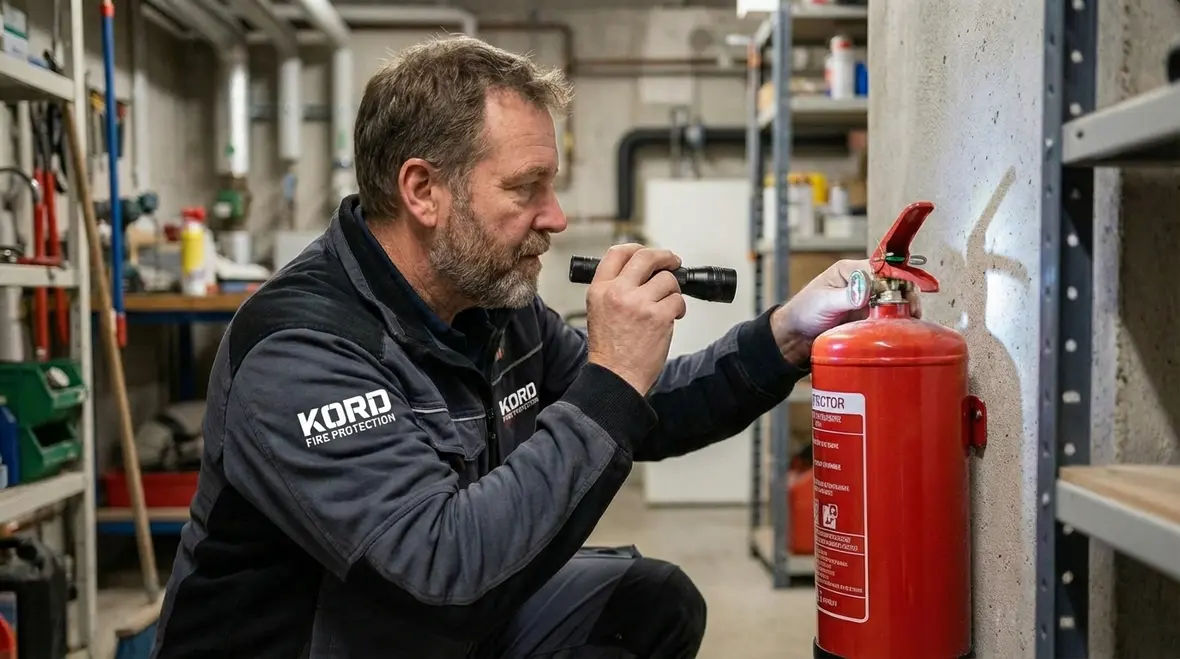
If flammable liquids or fuel sources exist, additional extinguishers rated for Class B hazards may be required.
Consequently, when someone wonders how many fire extinguishers do I need, the answer rarely stops at simple square footage. It must account for unique hazards within the building.
Dual Column Reference Guide for Quick Estimation
Building Type
Light Hazard Office
Retail Store
Warehouse
Commercial Kitchen
Auto Shop
General Rule of Thumb
1 per 3000 sq ft, 75 ft travel max
1 per 1500 to 3000 sq ft depending on stock
Based on storage height and materials
Class K within 30 ft of appliances
Extra hazard spacing, often 50 ft travel max
This chart offers guidance. Yet, codes can vary by state and municipality. Therefore, verification remains essential. When in doubt, cross-check with local fire officials and resources like Kord’s regional guides for Anaheim or Los Angeles businesses.
Common Mistakes When Estimating Fire Extinguisher Needs
Many building owners assume that more is always better. While enthusiasm for safety is admirable, random placement creates confusion. Extinguishers should be mounted at proper heights, clearly marked, and evenly distributed.
Another mistake involves ignoring renovations. When walls move, travel distance changes. However, extinguishers often stay where they were originally installed. That is a bit like rearranging your living room but leaving the light switch behind the couch.
Kord Fire Protection technicians frequently conduct walkthroughs after tenant improvements. They reassess coverage, confirm compliance, and adjust counts as needed. Because buildings evolve. Fire protection should evolve with them.
How Many Fire Extinguishers Do I Need in Multi Story Buildings?
Each floor requires its own coverage. Even if the total square footage seems modest, every level must meet travel distance and hazard requirements independently.
For example, a two story office building with 4000 square feet per floor cannot rely on extinguishers downstairs to protect upstairs occupants. Therefore, each floor might require at least two units, possibly more based on layout.
Additionally, stairwells often require coverage nearby. Since fires can block exits quickly, having an extinguisher close to egress paths increases safety.
So when evaluating how many fire extinguishers are required, think vertically as well as horizontally.
The Role of Professional Assessment
Although guidelines provide a solid starting point, codes contain nuances. Local amendments, insurance requirements, and occupancy classifications all influence final numbers.
Kord Fire Protection technicians approach each property with a calm, methodical process. First, they identify hazard classifications. Next, they measure travel paths. Then, they verify extinguisher ratings. Finally, they document placement to satisfy inspectors and insurers alike.
They also explain their reasoning. Clients do not receive a mysterious number scribbled on a clipboard. Instead, they receive clarity. And clarity, much like a good smoke detector, brings peace of mind.
If you are ready for that kind of clarity, Kord’s dedicated fire extinguisher service and certification team can design a plan for your specific building and occupancy.
Maintenance and Visibility Complete the Equation
Counting extinguishers solves only part of the puzzle. Units must remain inspected monthly and serviced annually. Pressure gauges must sit in the green zone. Access must remain unobstructed.
Because an extinguisher buried behind storage boxes is about as useful as a superhero stuck in traffic.
Furthermore, signage matters. Clear markers ensure anyone can spot an extinguisher quickly, even in smoke filled conditions. Therefore, placement, inspection, and training work together.
When someone revisits the question, how many fire extinguishers do I need, they should also ask whether those units are ready for action.
FAQ Section
Conclusion and Next Steps
Fire safety rarely announces itself with fanfare. Yet, preparation speaks volumes when it matters most. Instead of guessing, building owners can rely on a clear method and expert guidance. Counting hazard levels, travel distance, and square footage turns a vague worry into a concrete plan.
Kord Fire Protection technicians stand ready to assess, explain, and equip any property with the right coverage. They will walk the site, challenge the guesswork, and leave you with extinguishers that are not only present, but properly placed, tagged, and ready for use.
Schedule a professional evaluation today, and ensure every corner of the building stands protected, calm, and confidently prepared. If you are in California, explore Kord’s full fire extinguisher services or connect through regional hubs such as Los Angeles County fire protection to get started.
From monthly inspections and annual service to hydrostatic testing, training, and replacement, Kord can manage the lifecycle of every extinguisher in your building. One call today means fewer questions the next time you pause mid coffee sip and wonder whether your fire protection is truly ready.
Know Your Weapon Before You Fight the Flame
Kord Fire Protection is your go-to when it comes to all things fire protection. For over 20 years, we’ve been serving Southern California with the quality service and equipment to keep your home or business safe at all times. Our competitive prices reflect our unwavering commitment to protecting what matters most in the event of a fire emergency. Give us a call, send an email, or use that form!

Join Our Newsletter!
Get the latest fire safety tips delivered straight to your inbox From our Newsletter.