NICET Level 1 Fire Alarm Certification Starter Guide
NICET Level 1 Fire Alarm Certification: The Starter Guide by Kord Fire Protection Technicians
For beginners, the fire protection nicet certification can feel like a maze built by someone who enjoys fluorescent lighting just a little too much. However, Kord Fire Protection Technicians explain the path in a clear, calm way, so newcomers know what to do next and why it matters. In this guide, third person readers will learn the practical basics of NICET Level 1 for fire alarm systems, what to study first, how to think on test day, and how real jobsite experience connects to the paperwork. Along the way, Kord makes the details make sense, instead of turning learning into a horror movie with no exit.
What NICET Level 1 Covers for Fire Alarm Work
NICET Level 1 focuses on foundational knowledge for fire alarm systems and related installation and inspection tasks. Typically, a person at this level understands basic system components, common layouts, and the standards that guide proper design and behavior of fire alarm equipment. In other words, they know what the system must do, not only what the components look like.
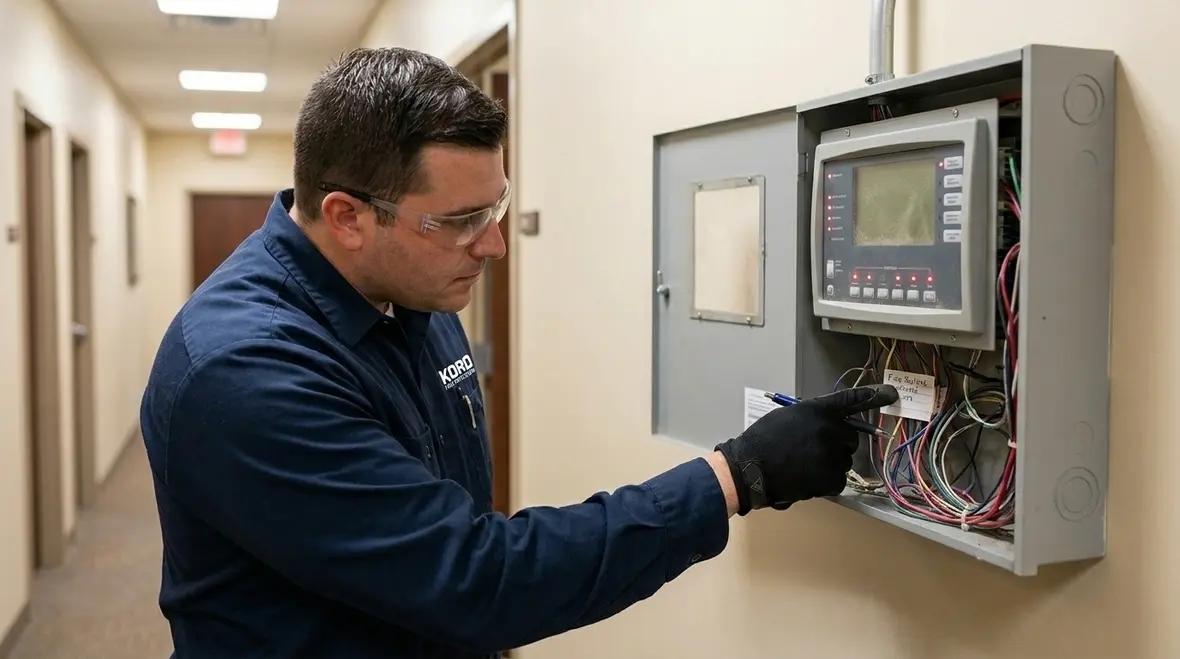
Meanwhile, Kord Fire Protection Technicians explain that Level 1 supports day to day field work. For example, they may help interpret system documentation, verify device placement for code needs, and understand how initiating devices send signals through the system. Then, they apply that understanding when troubleshooting basic issues.
Also, the exam expects a test taker to recognize terms and typical system behavior. If someone thinks fire alarms are “just horns and strobes,” well, that person has never met a trouble condition. Fire alarms do a lot of quiet work behind the scenes.
That basic understanding becomes more useful when it is tied to how complete systems coordinate in the field. Kord’s article on fire protection systems components and coordination is a helpful internal read for beginners who want a clearer picture of how alarms, supporting equipment, and life safety functions work together.
Why this level matters for beginners
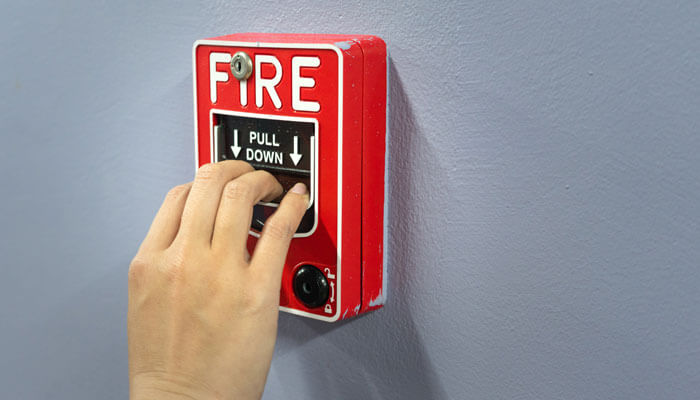
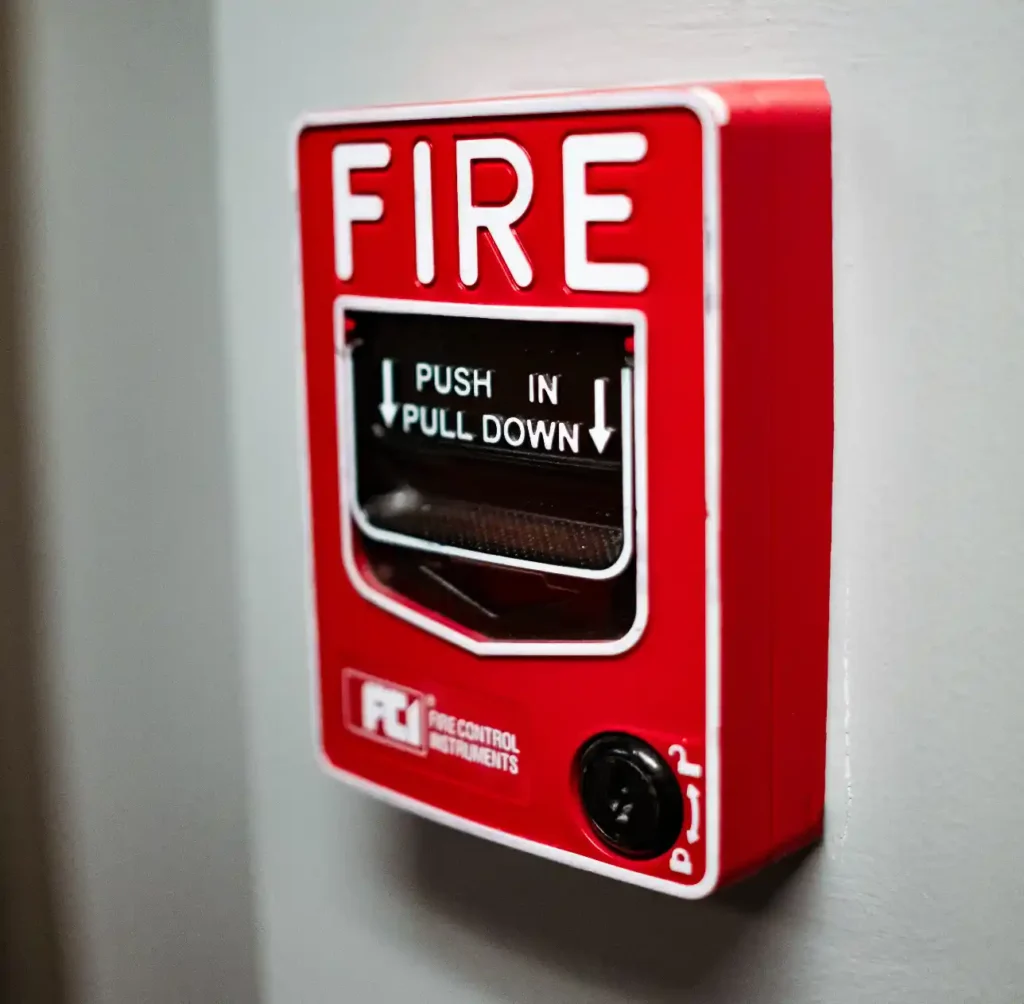
Level 1 is where a newcomer stops seeing devices as random red boxes and starts seeing a logic chain. A smoke detector is not just mounted hardware. A pull station is not just a rectangle waiting for a dramatic movie moment. Each device has a role, a signal path, a response, and a reason it must be installed and supervised correctly. That shift in thinking is what makes early certification prep so valuable.
Key Terms and Components Beginners Must Recognize
Before test prep, beginners should build a mental map of the main parts. That means learning how initiating devices, notification appliances, and control equipment work together. Additionally, they should understand typical power and supervision ideas that keep systems reliable. Kord Fire Protection Technicians often say the fastest way to learn is to connect each term to a real jobsite example.
Component
- Control panel
- Initiating devices
- Notification appliances
- Power supply
- Supervision
What It Usually Does
- Monitors inputs and coordinates alarm outputs
- Trigger the system based on smoke, heat, or manual pull
- Alert occupants with audible and visual signals
- Provides normal and emergency power with proper supervision
- Ensures wiring and circuits signal faults instead of going silent
Then, readers can connect the dots. For instance, if a circuit reports a fault, the system should not behave like everything is normal. Instead, it should indicate trouble so people can respond before the worst day arrives. In fire protection, “surprises” usually mean someone failed to check the basics.

Terms beginners should keep seeing until they feel normal
A beginner does not need to become a code wizard overnight, but they do need to get comfortable with language like alarm, trouble, supervisory, circuit integrity, battery backup, compatibility, annunciation, and documentation. The more often those terms are connected to actual field conditions, the less the exam feels like it was written by a panel with a grudge.
How Kord Fire Protection Technicians Recommend Studying
Studying should not feel like cramming for a quiz in the back of a school bus. Instead, Kord Fire Protection Technicians recommend a steady plan that matches how the job actually works. First, beginners should review system basics and learn how fire alarm operation connects to standards. Next, they should practice reading questions slowly, then pick the answer that best matches how the system is supposed to behave.
After that, they should focus on scenarios. Fire alarm questions often test what happens when something triggers, when a switch changes state, or when a supervised circuit detects a problem. Therefore, learners should train themselves to imagine cause and effect rather than memorize random facts.
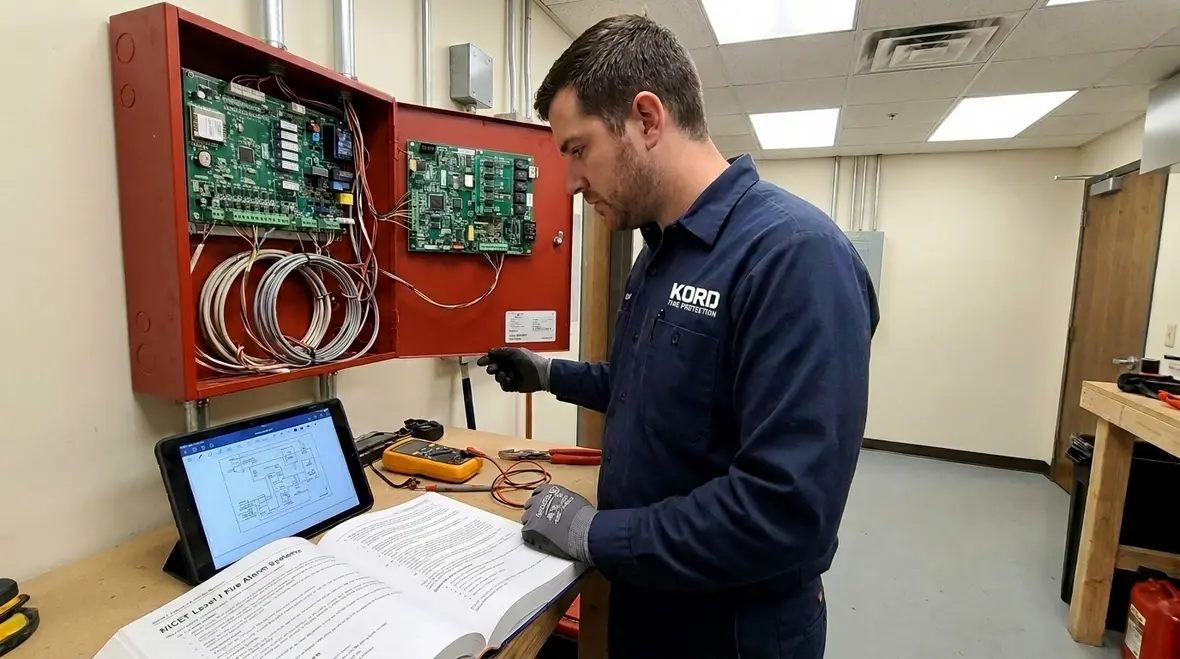
Also, using field notes helps. When a technician documents device locations, panel behavior, or wiring observations, that real context strengthens the fire protection nicet certification knowledge base. It is like learning a song by performing it, not just reading sheet music.
A practical study rhythm that actually sticks
- Spend one session reviewing core system components and signal paths.
- Spend the next session reading scenario questions and explaining the answer out loud.
- Use a notebook for terms that show up repeatedly on jobsites and in study material.
- Review common alarm, trouble, and supervisory differences until they become automatic.
- Pair study time with observation in the field whenever possible.
Kord’s blog also has a useful internal piece on fire alarm system reliability and battery health, which reinforces the kind of system thinking that helps beginners remember why backup power, supervision, and equipment condition matter so much in both real buildings and exam questions.
Testing Strategy and What to Expect on Exam Day
On exam day, confidence comes from process. A beginner should read each question fully and identify the goal. Then, they should eliminate answers that do not fit system behavior or safety intent. In addition, they should avoid rushing, because many questions reward careful reading more than “gut instinct.”
Kord Fire Protection Technicians also suggest a simple routine. First, map the question to a category such as initiating devices, notification, supervision, or panel functions. Then, recall the most likely outcome. If the question mentions alarm, trouble, or supervisory conditions, learners should pay attention to how those states typically differ.
And yes, the exam can feel like a pop quiz from a universe that runs on smoke detectors. Still, most test takers succeed when they treat the exam like a practical check of knowledge they already earned.
Simple ways to stay steady under pressure
- Read the full question before looking for the fastest answer.
- Underline or mentally tag words that point to system state changes.
- Watch for answer choices that sound plausible but ignore supervision or safety logic.
- Move on when needed, then return with a clearer head.
- Trust process over panic.
Jobsite Experience That Reinforces NICET Level 1 Skills
Real experience turns theory into competence. Beginners who build habits on the job tend to understand fire alarm systems faster during the fire protection nicet certification journey. For example, they learn how to confirm device compatibility, how to recognize wiring practices that affect supervision, and how to ensure documentation matches what gets installed.
Kord Fire Protection Technicians explain that apprentices should also observe how teams handle inspections and basic troubleshooting. During those tasks, someone learns how systems respond in alarm and trouble states, how panels show indicators, and how corrective actions restore proper operation.
Additionally, beginners should practice clear communication. When they document what they find, they strengthen their understanding. Then, when they talk through problems, they learn the language that standards and test questions use. Fire alarm work is not only technical, it is also teamwork under pressure.
For readers who want a broader foundation, Kord’s article on what counts as a fire protection system helps connect fire alarm duties to the wider life safety picture. That kind of context often makes Level 1 concepts easier to remember because the system stops feeling abstract and starts feeling real.

FAQ About NICET Level 1 Fire Alarm Certification
Next Steps: Start Strong With Kord Fire Protection Support
Beginners who want an easier path should start planning today. They should review fire alarm fundamentals, study with scenario thinking, and lean on guidance from experienced Kord Fire Protection Technicians when concepts feel stuck. Then, they should map what they learn to real job observations so the knowledge sticks.
When readers are ready to connect study knowledge to real world fire alarm support, Kord offers dedicated fire alarm services as part of its broader full fire protection services. That makes the next step simple: learn the concepts, see how they apply in the field, and work with a team that understands how compliance, inspections, maintenance, and system readiness all fit together.
A strong start with NICET Level 1 is not about trying to memorize every possible detail in one heroic weekend. It is about building a repeatable way of thinking. Learn the parts. Learn the signals. Learn what normal looks like so abnormal stands out fast. That is how technicians grow from beginners into reliable people others want on the job.
If someone wants help choosing a study approach or understanding what Level 1 expects in practice, they should reach out to Kord Fire Protection and get a clear, business friendly plan that moves them forward. The path is much less intimidating when experienced people have already mapped the turns, including the ones hidden behind fluorescent lighting.

Join Our Newsletter!
Get the latest fire safety tips delivered straight to your inbox From our Newsletter.