
How Fire Hydrants Are Supplied with Water
When people see a bright red hydrant standing guard on a street corner, they rarely stop to ask how fire hydrants are supplied with water. They assume, quite reasonably, that when firefighters twist the cap and connect a hose, water simply appears. However, beneath that cast iron shell lies a carefully engineered system of underground mains, calculated pressure zones, and controlled flow rates. It is not magic. It is design, planning, and maintenance working in harmony.
According to Kord Fire Protection technicians, understanding this system changes how people view fire safety. After all, a hydrant is not just a pipe sticking out of the ground. It is the final access point to a citywide network built to deliver life saving water at a moment’s notice. So let us slow things down and walk through the pipes, valves, and pressure that make it all possible.
The Underground Network: Where the Water Begins
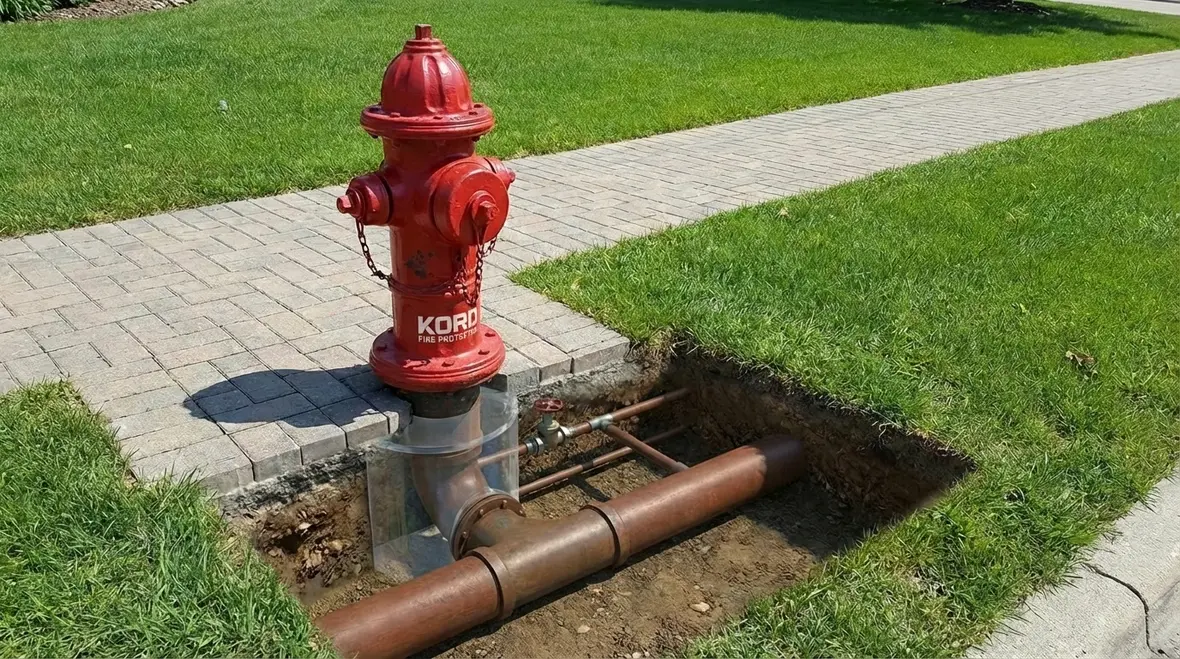
To understand hydrant supply, one must first look underground. Beneath streets and sidewalks runs a grid of water mains. These large diameter pipes carry treated water from pumping stations and storage tanks throughout a city.
Typically, municipalities install primary mains along major roads. From there, smaller distribution lines branch into neighborhoods. Hydrants connect directly to these distribution mains. Therefore, when firefighters open a hydrant, they are tapping into the same public water system that supplies homes and businesses.
Kord Fire Protection technicians often explain it this way. If the city water system were a tree, the treatment plant would be the roots, the large mains the trunk, and hydrants the sturdy branches ready to serve. It is simple, yet powerful.
However, the size of the main matters. Larger pipes allow higher volumes of water to move with less friction loss. Consequently, industrial areas and high density zones often sit on larger mains than quiet residential streets. This planning ensures the system can meet fire demand without draining pressure from nearby buildings.

Water Pressure: The Hidden Force Behind Every Hydrant
Water does not leap out of a hydrant on its own. It relies on pressure. In fact, pressure is the driving force that pushes water through miles of pipe and into a firefighter’s hose.
There are two primary sources of pressure in a municipal system.
1. Gravity fed systems
Many cities use elevated water tanks or reservoirs placed on higher ground. Because water naturally flows downhill, gravity creates steady pressure. The higher the tank, the greater the pressure at ground level.
2. Pump driven systems
In flatter areas, electric pumps maintain pressure throughout the network. These pumps adjust based on demand, ensuring consistent service during both normal use and emergencies.
As Kord Fire Protection technicians explain during inspections, maintaining correct pressure is a balancing act. Too little pressure and firefighters struggle to reach upper floors. Too much pressure and pipes risk damage. Therefore, engineers divide cities into pressure zones. Each zone regulates its own levels to maintain safe and reliable performance.
It is a bit like Goldilocks. The pressure must be just right. Except in this story, the bears are commercial buildings and they are not amused by burst pipes.
How Flow Rate Determines Firefighting Power
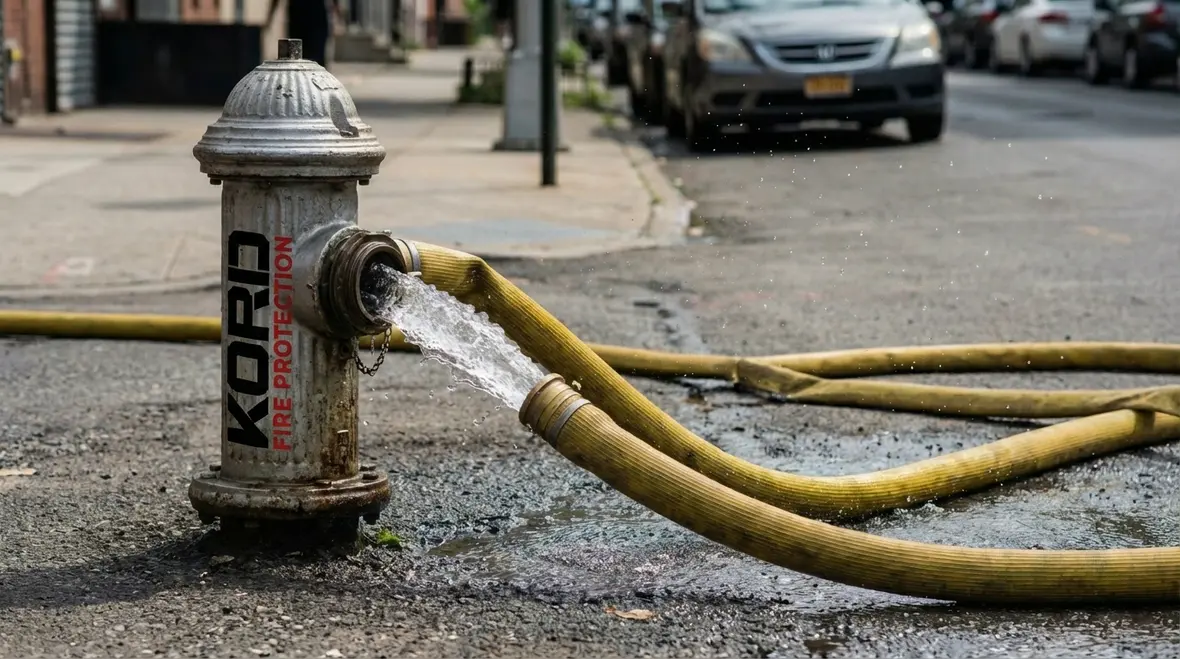
Pressure moves water. Flow rate determines how much water arrives.
Flow rate measures the volume of water delivered over time, often expressed in gallons per minute. When discussing how fire hydrants are supplied with water, flow becomes a central piece of the puzzle. After all, a hydrant that provides high pressure but limited volume will not support large scale firefighting efforts.
Several factors influence flow rate:
- Pipe diameter
Larger pipes allow more water to pass through with reduced friction. - System demand
If multiple hydrants operate simultaneously, available flow divides between them. - Valve condition
Partially closed or aging valves restrict movement and reduce output.
During routine testing, Kord Fire Protection technicians measure both static pressure and residual pressure. Static pressure reflects the system at rest. Residual pressure shows performance while water flows. The difference reveals how well the system sustains demand.
In short, flow rate determines whether a hydrant can support a single hose line or an entire ladder truck operation. And when flames climb skyward like a summer blockbuster explosion scene, volume matters.
What Happens When Firefighters Open a Hydrant?
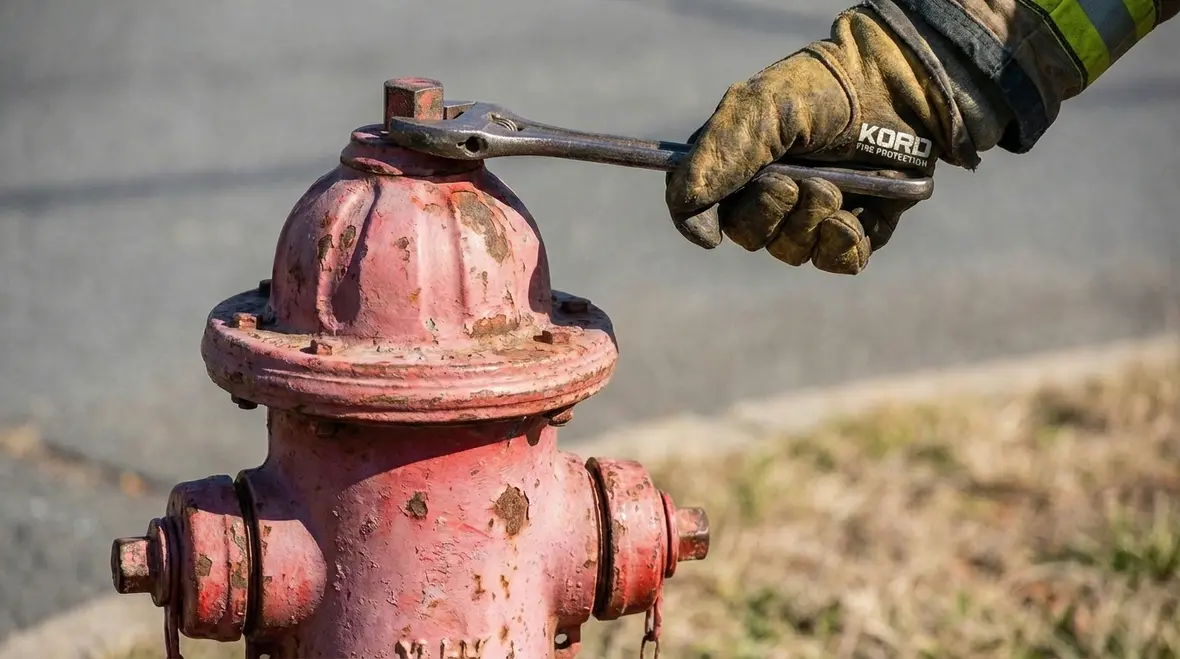
Picture the moment. A wrench turns. A valve stem rises. Water surges upward from the main into the hydrant barrel.
Most modern hydrants are “dry barrel” designs in colder climates. This means the main valve sits below the frost line. When closed, water drains from the upper barrel, preventing freezing. When opened, the valve allows pressurized water to fill the hydrant and exit through side outlets.
In warmer regions, “wet barrel” hydrants remain filled with water at all times. Each outlet has its own valve. While this design simplifies operation, it requires climates where freezing is not a threat.
As firefighters connect hoses, the system responds instantly. Pressure drops slightly due to increased demand. Pumps may activate. Water towers begin releasing stored supply. In a matter of seconds, the broader network shifts to support that single hydrant.
It is teamwork on a municipal scale. No applause. No spotlight. Just steel, water, and physics doing their job.
Factors That Affect Reliability and Performance
Even the best systems face challenges. Therefore, cities and fire protection professionals monitor several key elements to ensure hydrants perform when needed.
Age of Infrastructure
Older pipes may corrode internally. Over time, mineral buildup reduces effective diameter, which limits flow.
Closed or Improperly Positioned Valves
Construction projects sometimes require temporary shutoffs. If valves are not fully reopened, hydrant output suffers.
Seasonal Demand
Summer irrigation use can strain water systems. As a result, available fire flow may drop during peak consumption periods.
System Leaks
Underground leaks reduce pressure and waste treated water.
Kord Fire Protection technicians routinely conduct hydrant flow tests to identify these issues before emergencies occur. By measuring output and inspecting components, they help property owners and municipalities maintain dependable fire protection coverage.
After all, discovering a weak hydrant during a fire is like finding out your phone battery is at one percent during an emergency call. Timing could not be worse.
At a Glance: Mains, Pressure, and Flow Working Together
Water Main
- Large underground pipe network
- Delivers treated water across zones
- Size impacts available flow
Pressure Source
- Gravity tanks or pump stations
- Maintains steady force in pipes
- Divided into regulated zones
Flow Rate
- Measured in gallons per minute
- Influenced by pipe size and demand
- Verified through hydrant testing
Together, these elements explain how water reaches a hydrant and why performance varies by location. It is not random. It is engineered coordination.
Inside the Hydrant: Components That Control Supply
While the underground system does the heavy lifting, the hydrant itself plays a vital role. Each unit contains:
- Main valve assembly
This controls the connection to the water main. When closed, it seals tightly to prevent leakage. - Operating nut and stem
Turning the top nut raises or lowers the internal valve. - Outlet nozzles
These threaded ports allow hose connections of different sizes. - Drain system
In dry barrel models, drains empty standing water after use.
Proper lubrication and inspection keep these parts functional. Over time, neglect can lead to seized stems or damaged valves. Therefore, maintenance is not optional. It is essential.
Kord Fire Protection technicians emphasize that a hydrant’s bright paint does not guarantee readiness. Performance depends on internal condition and verified supply. In other words, it is what is inside that counts. A lesson both hydrants and superheroes understand well.
How Engineers Calculate Required Fire Flow
Engineers do not guess how much water a building might need during a fire. They calculate it based on structure size, occupancy type, and construction materials.
For example, a warehouse storing combustible goods demands higher fire flow than a small office building. Consequently, planners evaluate whether nearby hydrants can deliver sufficient volume and pressure.
If existing infrastructure falls short, solutions may include upsizing mains, adding fire pumps within buildings, or installing additional hydrants. These decisions occur long before an emergency happens.
This planning directly ties back to how fire hydrants are supplied with water. The hydrant must connect to a system capable of meeting calculated fire demand. Otherwise, it becomes little more than a decorative lawn ornament. And while red is a lovely color, decoration is not its purpose.
Maintenance and Testing: Keeping the System Ready
Routine testing ensures hydrants remain reliable year after year. During a flow test, technicians attach gauges to measure static and residual pressure. They open the hydrant fully, record readings, and calculate available gallons per minute.
Additionally, crews check for leaks, damaged caps, and obstructions around the hydrant base. Even landscaping can become a hazard if it blocks access.
Regular inspection also protects water quality. When hydrants are flushed, sediment and stagnant water clear from the lines. As a result, both fire protection readiness and public water standards improve.
It may not be glamorous work. No one writes action movies about valve lubrication. Yet, in the quiet rhythm of preventive care lies the strength of the entire system.
FAQ: Fire Hydrant Water Supply Explained
Conclusion: Confidence Begins Beneath the Surface
Understanding hydrant supply brings clarity to fire safety planning. Mains deliver the water. Pressure moves it. Flow determines its strength. When each element works in harmony, communities gain dependable protection. Kord Fire Protection technicians stand ready to inspect, test, and guide property owners toward stronger systems.
For those seeking assurance beneath the surface, professional evaluation is not just wise. It is essential. Schedule fire hydrant testing services with Kord Fire Protection today and ensure every hydrant nearby stands prepared to perform. If you manage a broader fire protection system, explore our local fire protection services to keep sprinklers, pumps, and hydrants working together when it matters most.
Know Your Weapon Before You Fight the Flame
Kord Fire Protection is your go-to when it comes to all things fire protection. For over 20 years, we’ve been serving Southern California with the quality service and equipment to keep your home or business safe at all times. Our competitive prices reflect our unwavering commitment to protecting what matters most in the event of a fire emergency. Give us a call, send an email, or use that form!

Join Our Newsletter!
Get the latest fire safety tips delivered straight to your inbox From our Newsletter.


