
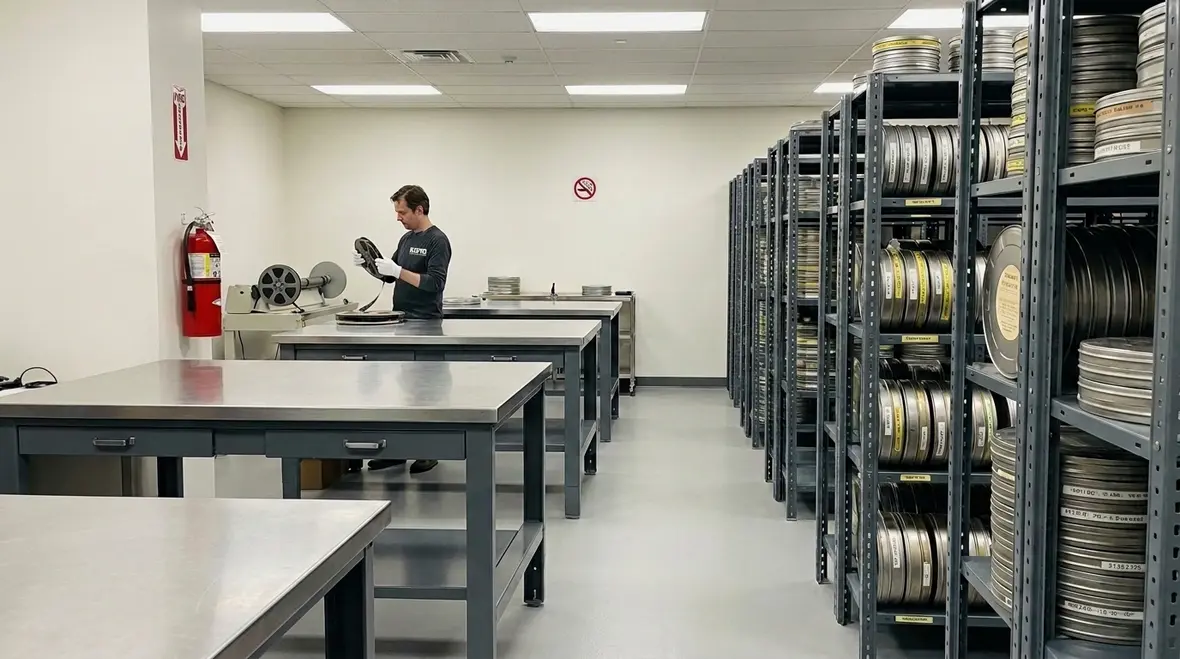
NFPA 40 Section 4.5: Tables and Racks in Nitrate Film Handling Areas
Quick Answer: NFPA 40 Section 4.5 sets specific expectations for how tables and racks must support safe nitrate film handling, storage, and segregation. Compliance focuses on construction, placement, accessibility, and maintenance to reduce ignition, contamination, and fire spread risks in film processing and storage spaces.
If you’re reviewing nitrate film compliance more broadly, it helps to start with NFPA 40’s fire protection goals for nitrate film operations, since Section 4.5 makes a lot more sense when you look at the bigger safety intent behind the standard.
Why NFPA 40 Section 4.5 Matters for Nitrate Film Storage
Facilities that process or store nitrate film must control ignition sources, limit fire growth, and ensure operational readiness during emergency or maintenance conditions. The NFPA 40 tables racks requirements nitrate film guidance in Section 4.5 ties directly to how equipment supports safe workflows, including staging, handling, and protected storage. When tables and racks fail to meet the intent of Section 4.5, the risk profile increases in common commercial scenarios such as reprocessing schedules, tenant turnover, and delayed corrective maintenance.
From a practical standpoint, commercial and industrial operators often discover gaps during inspections: improper rack configuration, missing clearances, incompatible finishes or materials, damaged supports, or blocked access routes. These issues can create both safety hazards and operational downtime when correction is required on short notice.
What Section 4.5 Covers: The Purpose Behind Tables and Racks
NFPA 40 Section 4.5 addresses tables and racks used in nitrate film handling areas. The core objective is to prevent conditions that could allow nitrate film to contribute to rapid fire development, spread heat or flame to adjacent combustibles, or complicate evacuation and emergency response.
In real facilities, tables and racks influence outcomes in four recurring ways:
- They shape the handling workflow. Poor placement or configuration increases handling time and the chance of mishandling.
- They affect heat and fire spread paths. Materials and design can accelerate involvement or trap heat near stored film.
- They control access. Emergency access routes and maintenance clearances must remain available without obstruction.
- They determine long term reliability. Wear, corrosion, loose components, and damaged surfaces can undermine safe operation.
For organizations seeking a systematic compliance approach, Kord Fire Protection supports ongoing code-aligned inspection readiness through documentation support, impairment tracking, and maintenance coordination for fire safety systems serving these high risk spaces.
Common Compliance Requirements for Nitrate Film Tables and Racks
While specific provisions depend on the exact system layout and how nitrate film is managed in the facility, Section 4.5 requirements generally drive design and operational controls. The most frequent compliance themes include the following.
1) Construction and Compatibility With Nitrate Film Areas
Tables and racks used in nitrate film handling areas must not introduce unacceptable ignition or fuel load conditions. Operators should verify that surfaces, coatings, and components meet the intent of safe performance and do not increase fire growth or create additional hazards during normal handling and abnormal events.
Common failure points include:
- Racks with damaged or peeling coatings that expose unapproved substrates.
- Non compliant replacement parts sourced from general shelving suppliers.
- Improvised modifications that bypass the approved rack configuration.
2) Arrangement, Clearances, and Access Path Integrity
Even when equipment is technically compatible, arrangement can still violate the intent of Section 4.5 if clearances and access routes become compromised. Facilities should evaluate whether racks maintain required spacing from key safety elements and preserve access for routine work and emergency response.
In commercial operations, this often occurs during renovations or storage rebalancing when racks shift to maximize capacity. Kord Fire Protection commonly supports facilities by reviewing layout changes for safety impacts and advising on documentation and inspection readiness steps before installation or reconfiguration.
3) Stability, Load Support, and Damage Control
Tables and racks must maintain stable performance under expected loads and operational movement. Loose fasteners, bent frames, uneven bases, and corrosion can create a cascading failure mode where film handling becomes riskier and where emergency response access may be impeded.
Inspections should include:
- Visual checks for distortion, rust-through, cracks, or missing components.
- Confirmation that rack leveling and anchorage remain intact.
- Review of maintenance records to ensure corrective actions are tracked to closure.
Operational Procedures: Handling, Loading, and Maintenance Practices
NFPA 40 compliance depends on more than equipment. It depends on consistent procedures around equipment use. Tables and racks should support safe handling with controlled staging and clear responsibilities.
Handling workflows that reduce risk
Operators should implement practices that minimize unnecessary movement, avoid overstacking, and prevent film from contacting inappropriate surfaces. The goal is to keep nitrate film organized for safe transfer and to reduce the likelihood of damage to the film that can create additional fire loading concerns.
Maintenance requirements that prevent drift out of compliance
Maintenance drift is a common commercial challenge. Over time, racks and tables accumulate wear, and staff may replace damaged components with similar looking but non equivalent parts. A formal maintenance and inspection plan should define:
- Inspection frequency for rack integrity and surface condition
- Authorized replacement parts and approval workflow
- Impairment reporting thresholds
- Re verification steps after repairs or layout changes
Facilities that want a structured approach often benefit from partnering with Kord Fire Protection for ongoing compliance support, including coordination of inspection activities with facility operations to reduce disruption while maintaining documentation quality.
Inspection and Enforcement: How Failures Show Up During Reviews
When authorities having jurisdiction evaluate nitrate film handling areas, they frequently focus on observable conditions that correlate with risk. Tables and racks become visible evidence of whether the facility manages nitrate film hazards through disciplined control.
Typical inspection findings tied to Section 4.5 intent
- Blocked or reduced access paths caused by tight spacing or poorly arranged racks
- Equipment degradation including corrosion, loose hardware, or damaged surfaces
- Unapproved modifications added by contractors without fire safety review
- Maintenance documentation gaps where corrective actions lack closure proof
Operational readiness improves when facilities connect their fire safety program to routine maintenance and layout controls. Kord Fire Protection supports that connection by helping facilities maintain consistent inspection outputs, impairment tracking, and corrective action follow through.
Implementation Playbook: Getting Tables and Racks Right in Real Facilities
Commercial, industrial, and retail operators often manage multiple trades, schedules, and competing priorities. The fastest route to compliance uses a stepwise implementation plan.
Step 1: Inventory and classification
Create an inventory of every nitrate handling table and rack in the hazard area, including model, construction material, age, maintenance history, and any field modifications.
Step 2: Validate layout against access and spacing expectations
Confirm rack arrangement supports safe handling and preserves access for emergency response and maintenance. Document the results and keep the layout current when changes occur.
Step 3: Establish a maintenance and replacement standard
Define authorized repair methods and parts. Require approvals for replacements that differ from original equipment specifications.
Step 4: Build inspection readiness into routine operations
Use checklists that mirror inspection priorities. Ensure findings are tracked and corrected on a defined schedule.
For organizations seeking a partner to coordinate compliance work and ongoing testing support, Kord Fire Protection helps streamline documentation, maintenance alignment, and readiness across high risk spaces.
Frequently Asked Questions
Conclusion and Call to Action
NFPA 40 Section 4.5 requires facilities to treat tables and racks as controlled life safety components, not general storage furniture. Operators should verify equipment suitability, protect access and clearances, prevent unauthorized modifications, and maintain documented inspection and repair discipline. If your facility needs expert support to reduce inspection risks and maintain ongoing compliance, contact Kord Fire Protection to review your nitrate film handling area controls and align maintenance and readiness with NFPA 40 expectations.

Join Our Newsletter!
Get the latest fire safety tips delivered straight to your inbox From our Newsletter.



