
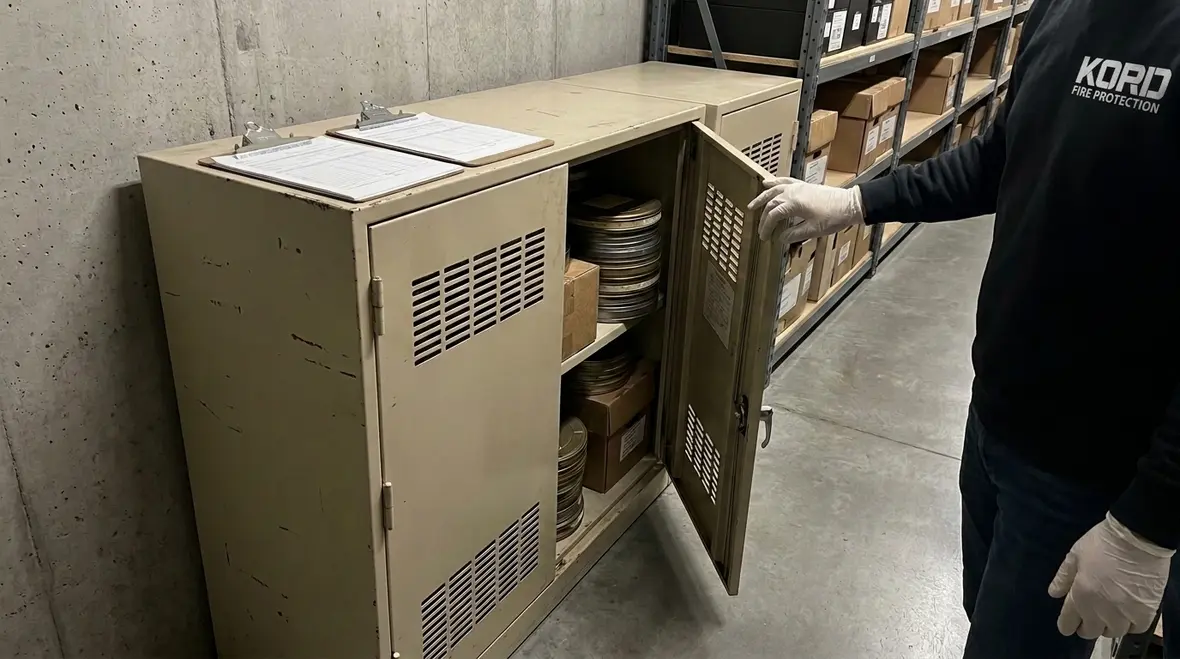
NFPA 40 Section 6.2: Film Cabinet Requirements for Nitrate Storage
Quick Answer: NFPA 40 Section 6.2 defines how film cabinets must be constructed, protected, and used for nitrate storage to reduce ignition, limit fire spread, and support safe handling. Compliance centers on approved cabinet design, correct segregation, and disciplined inspection and maintenance.
What NFPA 40 Section 6.2 Requires for Nitrate Film Cabinets
NFPA 40 Section 6.2 establishes performance and construction expectations for film cabinets used to store nitrate film. For facilities planning or upgrading storage, the key practical focus is meeting NFPA 40 nitrate film cabinet requirements in a way that holds up under real-world use: frequent access, aging film, and day-to-day housekeeping. This section does not treat the cabinet as a simple storage container. It treats it as a safety system element that must remain reliable over time.
In commercial operations such as film archives, production support facilities, museums, and retail backrooms serving film and imaging inventories, compliance failures usually show up in three places: cabinets installed without confirming listing or construction criteria, inadequate segregation and labeling, and weak maintenance programs that ignore seals, closures, and internal clearances.
If you’re planning storage changes, it also helps to understand NFPA 40 plan approval requirements for nitrate film storage so cabinet decisions are documented correctly before they become inspection problems.
NFPA 40 Section 6.2 Cabinet Design: How Compliance Is Evaluated
Although interpretation varies by cabinet listing documentation and authority having jurisdiction review, NFPA 40 Section 6.2 focuses on the cabinet’s ability to resist fire effects long enough to protect occupants and reduce exposure. From an operational perspective, compliance typically evaluates whether the cabinet meets the required construction intent for nitrate film storage and whether it maintains that intent after installation.
Construction integrity and protective features
Film cabinets used for nitrate storage rely on controlled construction features that limit flame and heat transfer during abnormal events. Facilities should expect evaluation of the following operationally sensitive items during plan review or inspection preparation:
Door and closure performance: Doors, latching, and sealing components must function consistently. Any gap or misalignment can undermine protective performance.
Internal retention and spacing: Racks and internal components must preserve designed storage conditions and prevent film packages from contacting unintended surfaces.
Surface and material condition: Corrosion, warping, or damage to protective finishes can change how a cabinet performs under heat exposure.
Installation conditions that commonly trip facilities
Even when a cabinet is correctly selected, installation conditions can break compliance. Common failure points include blocked clearances needed for safe operation, cabinets placed too close to ignition sources, and incorrect wall or enclosure interfaces that prevent the cabinet from achieving the intended protection.
Commercial facilities should treat cabinet installation like a life safety system placement, not routine storage placement. Kord Fire Protection supports compliance outcomes by coordinating documentation review, installation checks, and maintenance planning across busy environments.
Operational Controls: Using Nitrate Film Cabinets Safely
Cabinet construction matters, but safe outcomes also depend on how staff operates the system. NFPA 40 Section 6.2 requirements are only effective when the cabinet stays accessible for intended use and controlled for nitrate storage.
Access and handling procedures
Facilities should implement written handling steps that prevent unsafe behavior such as storing mixed materials in nitrate cabinets, overloading compartments, or leaving doors open during extended work. Key procedures typically include:
Controlled access: Limit cabinet access to trained personnel. Use sign-in practices where feasible.
Correct storage state: Store film in approved containers and maintain the cabinet’s designed storage arrangement.
Return-to-cabinet discipline: Prevent accumulation of nitrate film on benches, in hallways, or near office heat sources.
Segregation and inventory management
Nitrate film requires disciplined inventory control because deteriorating film can change the risk profile over time. Operators should maintain current inventories, deterioration tracking, and removal or transfer procedures aligned with organizational fire safety policies and applicable regulatory expectations.
This is where many organizations struggle during routine operations. The cabinet becomes a “temporary holding” location when workflows get busy. Strong compliance programs eliminate that drift through scheduling, accountability, and periodic verification.
Inspection, Testing, and Maintenance: What to Verify on a Schedule
NFPA 40 nitrate film cabinet requirements are not a one-time pass. The cabinet must remain in compliant condition. Inspections should verify that the cabinet continues to perform as installed and as listed or approved.
Core inspection items to prioritize
For commercial, industrial, and retail facilities, a practical inspection checklist should focus on components that degrade with use:
Door seals and latching: Confirm proper closure and latch engagement after daily use.
Racks, supports, and internal components: Look for deformation, missing parts, or improper reconfiguration by staff.
Surface condition: Identify corrosion, dents, impact damage, or missing protective coatings.
Access clearances: Ensure the surrounding area supports safe door operation and evacuation needs.
Common failure points seen during field support
When fire protection teams evaluate nitrate storage environments, they often find the same patterns:
Unapproved storage substitutes: Using non-rated containers inside the cabinet.
Untracked cabinet modifications: Staff “rearranges” internal racks to fit inventory and inadvertently changes spacing and performance.
Maintenance gaps: Deferred replacement of damaged hinges, misaligned doors, or degraded seal elements.
Kord Fire Protection helps facilities sustain compliance by building maintenance programs around real cabinet wear patterns, verifying records, and aligning inspection frequency with the facility’s operational tempo. If you need broader nitrate storage or film safety support, Kord can assist with risk-informed planning across the storage and handling workflow.
For related compliance context, teams also benefit from reviewing how NFPA 40 retroactivity affects existing nitrate film storage, especially when cabinets have been in service for years and operating conditions have drifted.
Documentation and Audit Readiness: Prepare Like an Inspector Is Coming Tomorrow
Inspections tend to reward facilities that treat cabinet compliance as a documentation-driven program. During audits, authorities typically look for evidence that the cabinet is the correct unit, located correctly, maintained properly, and used according to the safety plan.
Recommended compliance documentation pack
A practical audit-ready package often includes:
Cabinet identification and listing documentation: Manufacturer details, model numbers, and any approval or listing references.
Installation verification records: Placement details, clearances, and any relevant sign-off documentation.
Inspection and maintenance logs: Door seal condition, latch checks, internal component condition, and repair history.
Training records: Proof staff understands cabinet access and nitrate handling controls.
Inventory and deterioration workflow: How the facility tracks film condition and removes deteriorating material.
How commercial facilities should integrate cabinet controls
In mixed-use environments like retail and industrial support spaces, cabinet requirements can get diluted by competing priorities. Strong compliance integration includes aligning cabinet access with receiving schedules, controlling storage during peak periods, and ensuring housekeeping does not block operations or leave combustible materials near cabinets.
Frequently Asked Questions
Conclusion: Take Action on Compliance Before It Becomes a Finding
NFPA 40 Section 6.2 demands more than purchasing a cabinet. Facilities must confirm the unit meets the applicable approval intent, verify correct installation and clearances, and maintain closure and internal components through a disciplined inspection program. Kord Fire Protection can help commercial teams build inspection readiness, maintenance schedules, and documentation that withstands audit pressure. Schedule a compliance review to identify gaps in nitrate film cabinet use and maintenance today.

Join Our Newsletter!
Get the latest fire safety tips delivered straight to your inbox From our Newsletter.



