
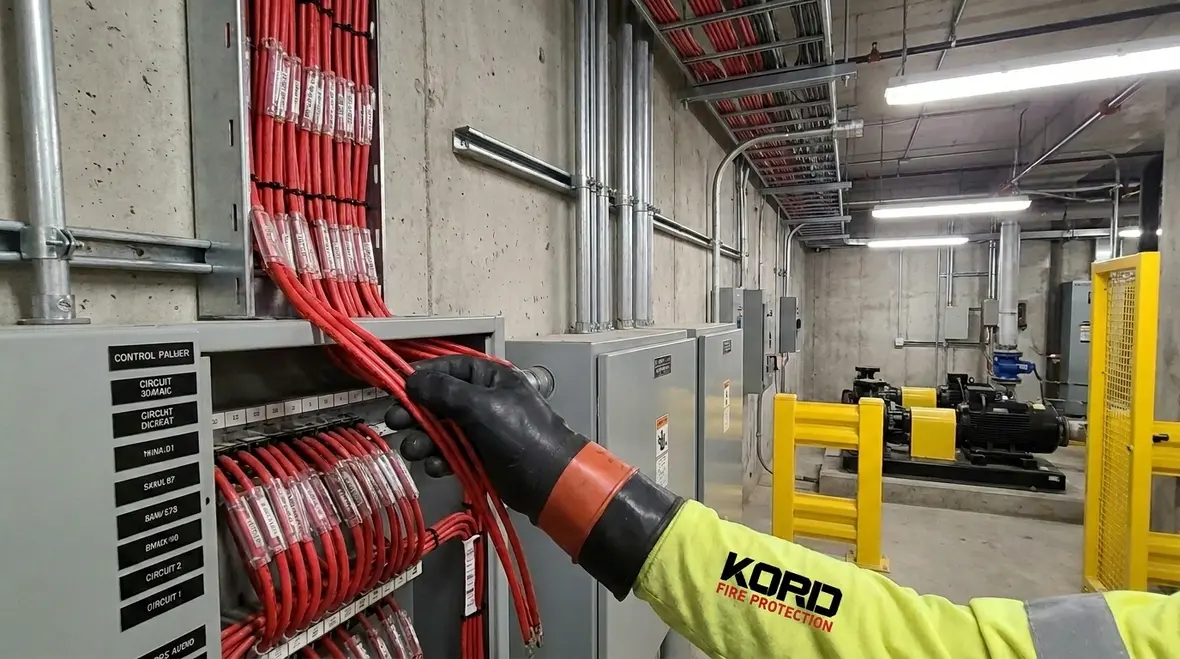
Fire Suppression System Wiring Safety Best Practices Australia
Quick Answer: Best practices for wiring industrial fire suppression systems start with clear design, correct component selection, proper grounding, neat routing, and strict compliance with Australian standards. Installers should test loops, verify polarity, document changes, and commission the system end to end. Kord Fire Protection can support every step.
When teams plan Fire suppression system wiring safety, they should treat it like the opening scene of a safety training video: boring if done right, dangerous if done wrong. In industrial facilities across Australia, fire protection wiring affects detection, actuation, and control reliability. That is why Fire suppression system wiring safety belongs in the first 100 to 150 words of any serious job plan. Then the work moves from theory to practical steps: layout, cable choice, termination discipline, testing, and documentation. Kord Fire Protection can act as a vital partner, helping organisations reduce risk and avoid rework that eats timelines and budgets. Teams planning broader support can also explore fire suppression system integration for life safety to connect wiring decisions with system performance from the start. No one wants to debug a system that refuses to behave, like a temperamental smoke alarm in a comedy sketch.
Why wiring discipline matters for industrial coverage
In commercial and retail sites, downtime becomes expensive fast. Meanwhile, in factories, warehouses, and mixed-use facilities, an incomplete wiring pathway can delay alarm signals or stop a release sequence from triggering. Therefore, installers need wiring discipline that supports three goals at once: correct function, repeatable performance, and safe installation. When wiring follows the approved scheme, the system performs when it matters most, and inspections go smoother.
Teams also benefit from understanding the system’s intent. For example, control panels may supervise circuits, so a loose connection can appear as a fault. Furthermore, field devices can require specific voltage ranges and polarity. If someone treats the wiring like “close enough,” the system will respond like a strict supervisor: it will fail the test and demand answers.
Plan the route before the first cable moves
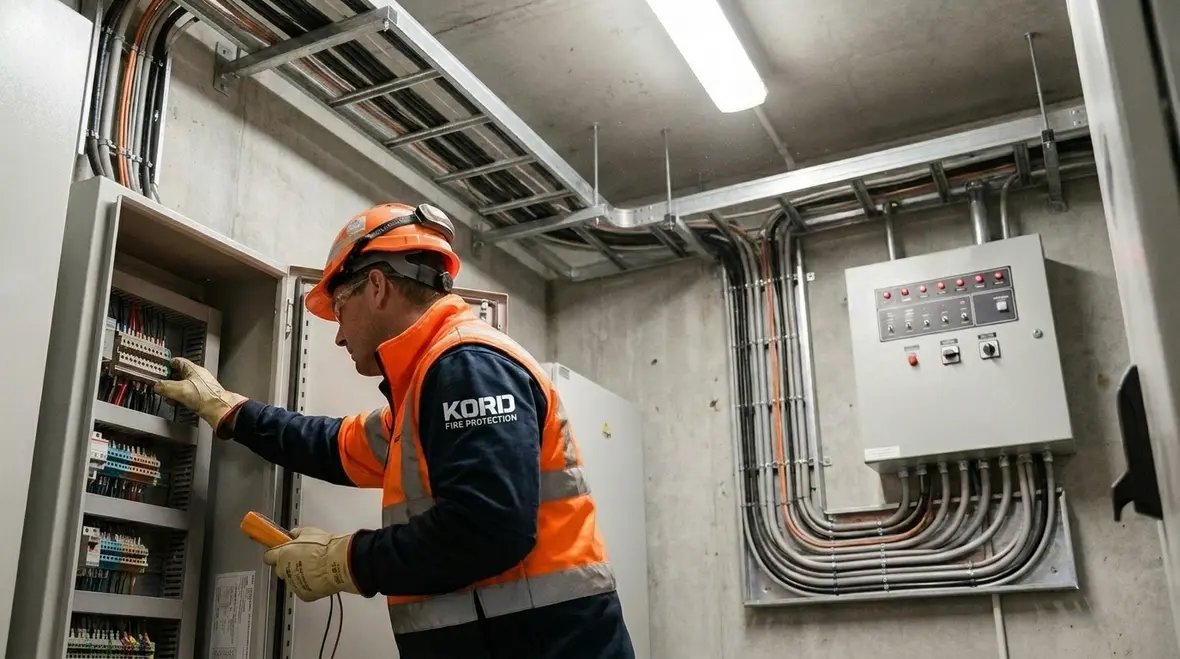
Before any cable gets pulled, a competent team plans the route, zones, and device placement. They should confirm the equipment layout against the as built drawings and the fire engineering intent. Then they should map cable paths to avoid sharp edges, heat sources, moving parts, and water ingress points. In industrial spaces, this step prevents damage that can be hidden behind panels until commissioning day.
Next, they should design access and separation. For example, maintain separation where standards require it, and keep circuits managed so installers can trace them later. This also helps future maintenance teams, because troubleshooting without a clear pathway turns into a scavenger hunt. Finally, they should plan for cable support spacing and bend limits. Small choices at this stage prevent big failures later.
Routing choices that save time during testing
A tidy route does more than look professional. It makes continuity checks faster, device tracing cleaner, and later fault finding far less painful. In busy plant areas, cable pathways should stay readable enough that the next technician does not need detective skills and a lucky guess. Good routing also reduces the chance that later trades lean on, cut through, or casually redecorate the fire system with avoidable damage.
Choose the right cable and termination approach
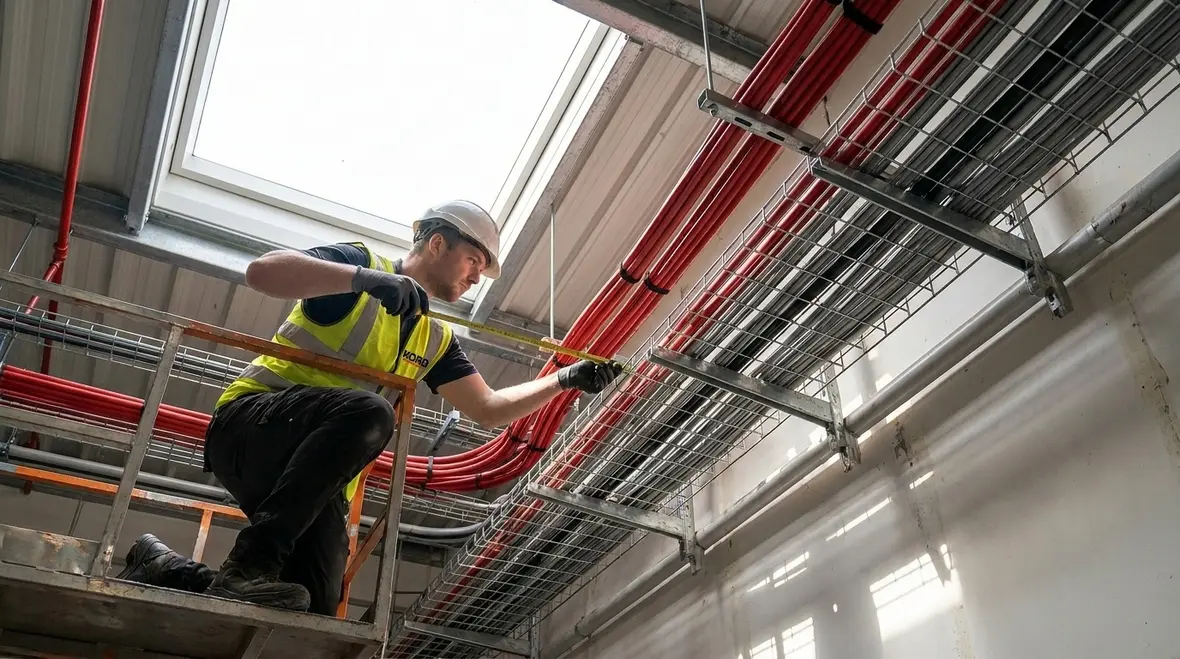
Fire suppression systems do not share the same wiring needs as “general power,” even when they live inside the same tray. Therefore, the team must select cable types that match the system design and environmental conditions. They should confirm temperature rating, fire performance requirements, and suitability for the installation method. Then they should use gland systems and fittings that maintain the intended protection level.
For terminations, they should keep it consistent. That means using correct lugs, ferrules where required, and torque procedures that prevent loose conductors. If a team skips documentation for termination details, the next crew may struggle to interpret what was done. Additionally, they should label conductors so polarity and circuit ID stay clear during testing and handover.
And yes, it helps to resist the urge to “make it fit” with random adapters. Fire wiring safety is not a DIY project. It is more like aviation: standard steps, measured outcomes, and no improvisation.
Why power planning belongs in the wiring conversation
Cable selection and termination also connect directly to stable system power. If teams want a deeper look at backup supply and AC considerations, they should review Fire Alarm Power Requirements: Reliable Backup and AC. That topic fits naturally here because wiring quality is only half the story if the system’s power plan cannot support supervision, alarm transmission, and control functions under pressure.
Follow isolation, segregation, and grounding requirements
Proper segregation helps prevent interference and unintended control behaviour. In facilities with multiple services, routing and separation protect signal integrity and reduce the chance that a fault in one area cascades into another. Additionally, correct grounding supports safe operation and helps control panels interpret signals accurately.
Installers should verify earthing points, bond continuity, and the integrity of metallic pathways. Then they should confirm that isolation devices match the design. During commissioning, they should test for correct supervision behaviour and ensure that fault states respond as expected. This approach supports reliable operation during alarms, supervisory conditions, and maintenance activities.
When teams align these steps with their approved documentation, they reduce surprises. Kord Fire Protection often supports organisations by reviewing design assumptions, coordinating field requirements, and ensuring that wiring practices match the intended performance goals. In many cases, this partnership prevents rework that would otherwise appear after inspection.
How to reduce faults with clean labeling and supervision testing
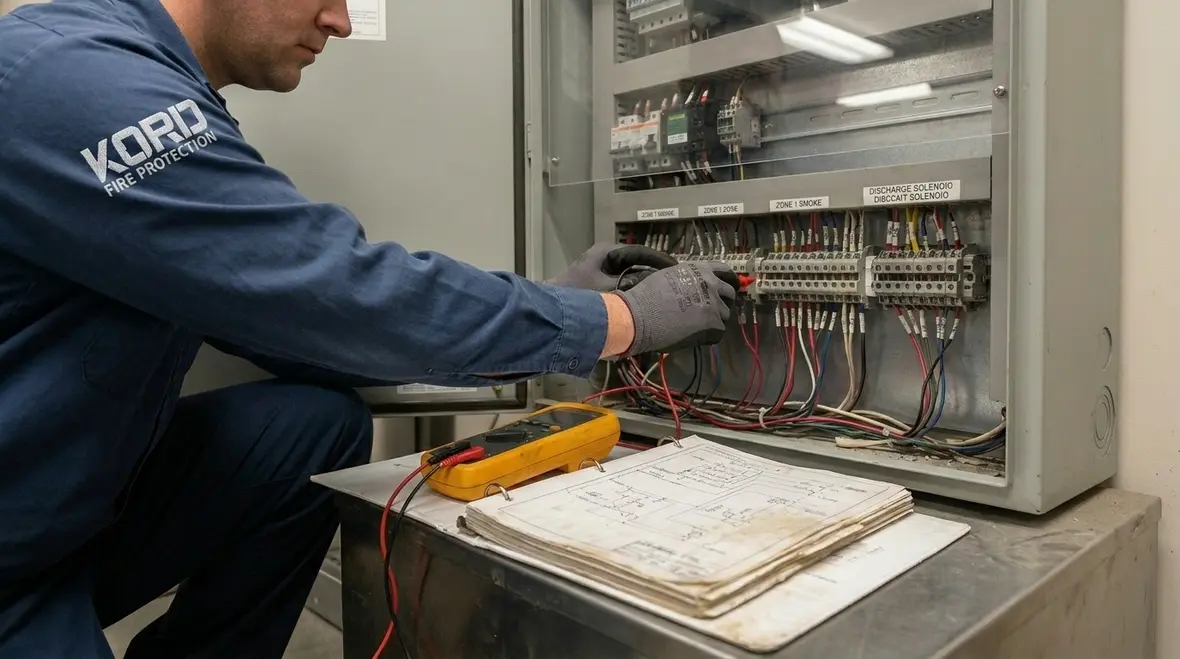
After wiring is installed, the job shifts to verification. First, they should inspect for physical defects: damaged insulation, incorrect conductor routing, and loose terminations. Then they should verify circuit IDs, polarity where applicable, and device addressing. If a system uses supervised circuits, they must confirm that each device appears as expected and that no unexpected resistance or open conditions occur.
Next, they should perform functional tests in a logical order, such as verifying panel status indications before initiating any release sequence. They then conduct endurance and alarm transmission checks where the design calls for them. Document every result and keep test records aligned with what the panel software or test meters show. This avoids the classic problem of having paperwork that says “all good,” while the system says “not today.”
Kord Fire Protection can act as a vital partner here by supporting commissioning planning, helping teams set up test procedures, and providing guidance that keeps the handover package complete. When a partner knows what auditors and inspectors expect, the team saves time and keeps risk low. For more context around signal behaviour and testing logic, teams can also review suppression system alarm signal explained and tested.
Documentation that actually helps later
Labels should stay legible, logical, and consistent with drawings. Test sheets should match actual circuit names, not a mystery shorthand invented at 4:45 on a Friday. If a panel message, loop ID, or device reference changes during commissioning, that update should appear everywhere it needs to appear. Otherwise, the maintenance team inherits a puzzle with live consequences, which is nobody’s favourite sequel.

Commissioning, documentation, and change control
Commissioning does not end when the installer walks away. Teams should confirm the system performs under controlled conditions and that all interlocks operate as designed. They should also verify that documentation reflects the final installation, not the draft drawings. This includes wiring diagrams, as built updates, device lists, and test results.
Then they should implement change control. Industrial sites rarely stay still. If someone alters a tray, adds a device, or modifies a plant layout, the fire system wiring plan must update accordingly. Therefore, teams should avoid informal “quick fixes” and instead route changes through the approved process.
When documentation stays accurate, future maintenance teams work faster. Furthermore, accurate records help Kord Fire Protection coordinate inspections and ongoing service without guessing. That partnership can turn a reactive maintenance culture into a planned, scheduled one.
Working with Kord Fire Protection to strengthen compliance across Australia
Many organisations treat wiring as a standalone task. However, fire suppression system wiring safety depends on a full chain of responsibility: design intent, compliant installation practices, commissioning discipline, and service follow through. Kord Fire Protection supports facilities across industrial, retail, and commercial environments by helping teams align wiring practices with performance requirements and inspection expectations.
They can help coordinate planning, review details before the job ramps up, and support commissioning outcomes that hold up under scrutiny. Additionally, they can assist with service planning so the system stays reliable after handover. In a busy Australian facility, reliability is the real product, not just the hardware.
In short, Kord Fire Protection becomes the partner that keeps the process from turning into a “who forgot what” meeting.
FAQ
Call Kord Fire Protection for a safer, smoother handover
Industrial, retail, and commercial facilities need fire suppression systems that work the first time and keep working after change. Therefore, teams should plan wiring routes, follow termination and segregation discipline, and commission with documented proof.
Kord Fire Protection can strengthen the whole workflow, from practical wiring checks to complete handover support. If you want fewer faults, faster inspections, and reliable performance, contact Kord Fire Protection today.

Join Our Newsletter!
Get the latest fire safety tips delivered straight to your inbox From our Newsletter.



