Commercial Fire Extinguisher Placement Guide for Australia
Quick Answer: Strategic placement of fire extinguishers reduces response time, improves reach, and helps staff stay safe during the first critical minutes. A strong plan follows the Commercial fire extinguisher placement guide, matches equipment risk levels, and accounts for travel paths, visibility, and obstructions. Kord Fire Protection can partner to keep compliance tight and coverage practical.
Fire risk does not care about good intentions. It only cares about speed, access, and where people can actually grab the right extinguisher when the moment hits. That is why the Commercial fire extinguisher placement guide focuses on practical coverage: correct mounting height, smart spacing, clear travel paths, and placement near hazards without blocking exits. And yes, people still get this wrong, usually after the “we’ll fix it later” meeting that everyone attends but nobody owns.
For industrial, retail, and facilities teams across Australia, the goal stays simple: place extinguishers so they work when they are needed, not just when an inspector asks for a map. Kord Fire Protection can become a vital partner by translating risk into real-world layouts, documenting decisions, and helping facilities keep everything consistent across sites. For teams that want one provider coordinating inspections, service, and broader life safety planning, Kord also offers full fire protection services that fit naturally alongside extinguisher placement strategy.
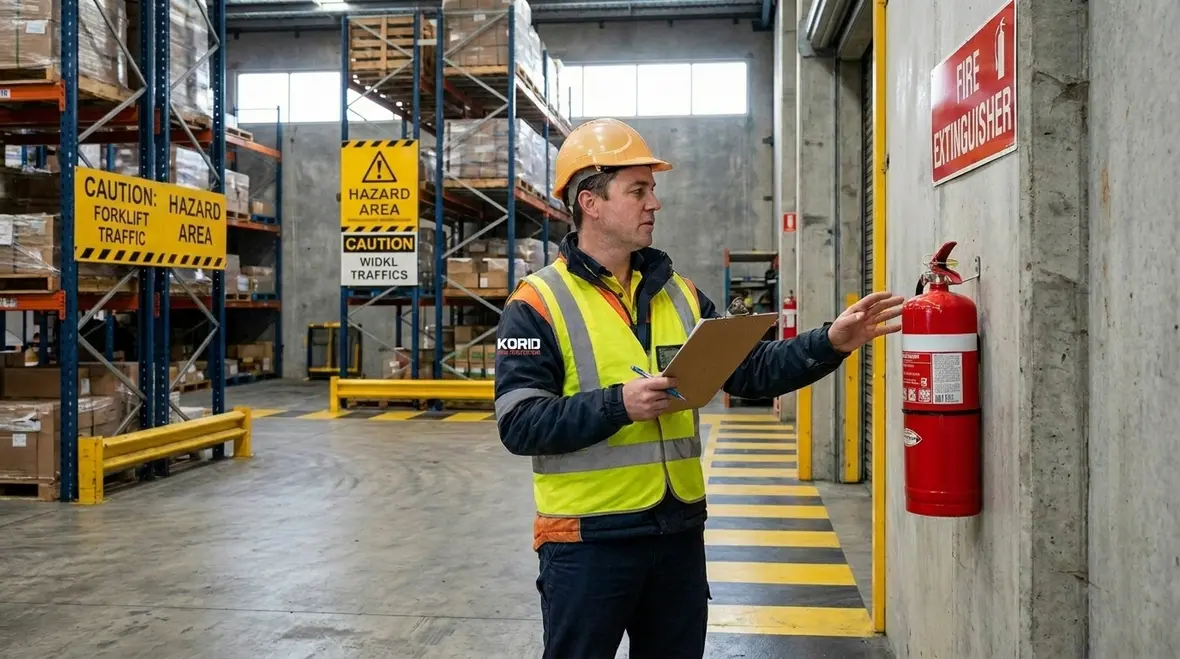
Fire extinguisher placement starts with hazard mapping and travel paths
To place extinguishers for maximum coverage, teams must map hazards first, then plan the routes people will use under stress. In warehouses, the hazard is rarely one thing. It can be stored combustibles, powered equipment, vehicle traffic lanes, flammable liquids areas, or workshop activity that changes by the week. Therefore, facilities should review how fire could start and where it could spread before staff ever reach for an extinguisher.
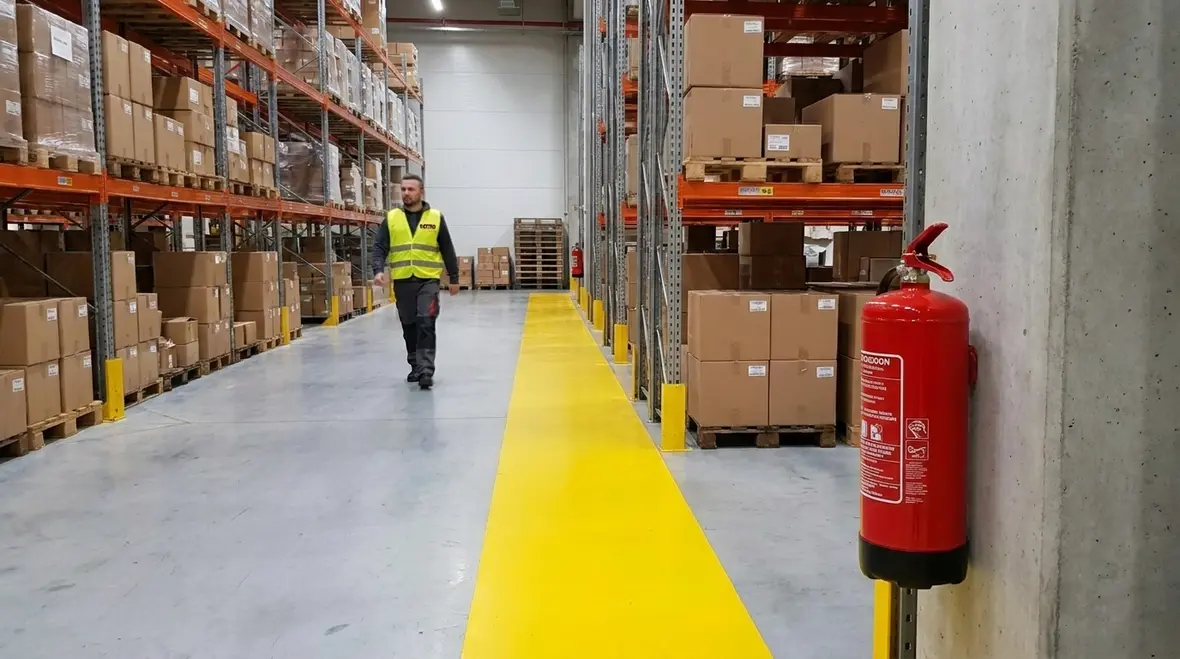
Next, the plan must follow travel paths. People do not walk in a straight line when they are alarmed. They move toward exits, around smoke, or away from danger. Consequently, extinguishers should sit along the path staff already uses, not only at “ideal” spots on a floor plan. If a unit must be reached through a blocked corridor, it might as well be locked in a cupboard.
Kord Fire Protection helps teams link risk to layout. As a result, placements follow real operations, not just a template that looks good on paper. Like Batman with a checklist, facilities get a system, not a hope. If you want related reading on the same theme, Kord’s fire extinguisher placement guide basics for safety reinforces why visibility, travel distance, and common sense beat decorative symmetry every time.
Why real movement patterns matter more than perfect diagrams
A floor plan can look beautifully balanced and still fail an actual person trying to respond in a hurry. Staff do not teleport across a building, and they definitely do not glide politely through smoke while admiring the layout. They follow familiar routes. They cut around stock. They avoid whatever looks unsafe. Placement decisions should respect that reality from the beginning.
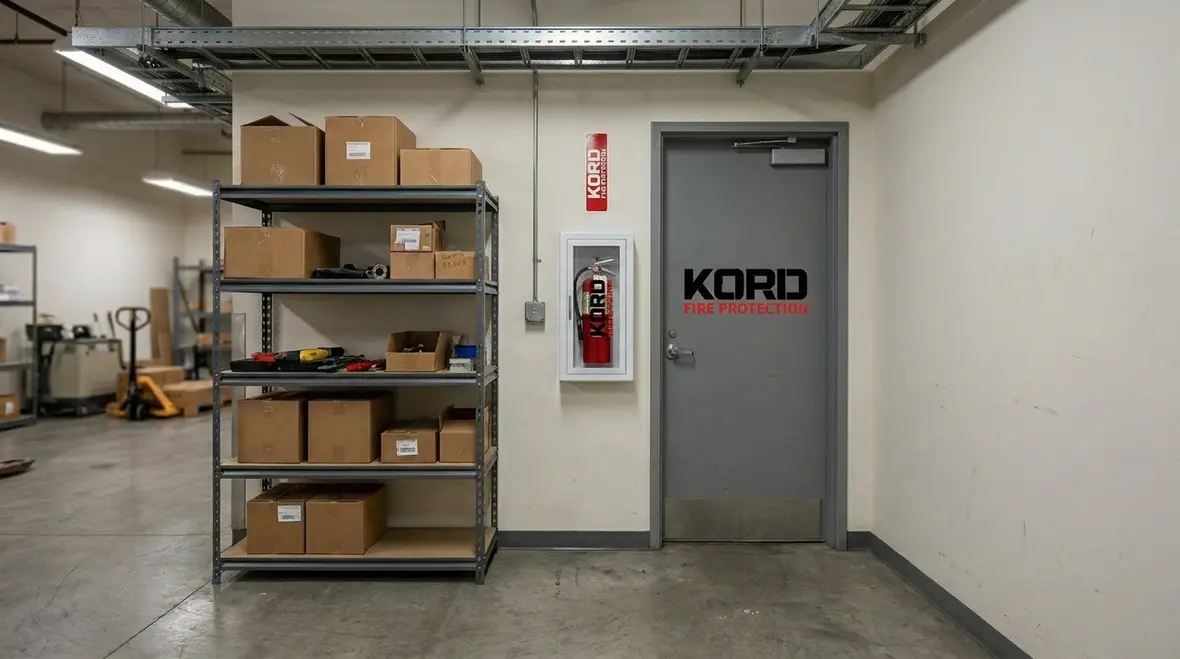
How location affects first-minute response and effective reach
In the first minutes of an incident, response time matters more than brand loyalty or the story someone tells later. Extinguishers placed too far from the likely start point force staff to choose between protecting themselves and grabbing equipment. Meanwhile, incorrect positioning can lead to poor reach, especially in aisles, under mezzanines, or around tall shelving.
Effective placement considers the distance a person can cover quickly while keeping the extinguisher usable. It also accounts for turning points, bends, and doorways. For example, if a door swings into the access area, a staff member might not reach the extinguisher without first removing obstacles. That is a delay. That is risk.
Therefore, facilities should check sightlines. Staff must see the extinguisher even when attention shifts to smoke, alarms, and a suddenly crowded exit route. Clearly visible signage helps. However, signage does not fix a bad spot, so both visibility and access must work together.
This is also where consistency pays off. When units are mounted in predictable, highly visible spots throughout a facility, staff spend less time thinking and more time acting. In a stressful moment, familiar placement is not a luxury. It is a shortcut for the brain, which is helpful because panic is not exactly famous for its project management skills.
Spacing and mounting height in practice, not just theory
Spacing and mounting height determine whether extinguishers become immediate tools or stubborn obstacles. The Commercial fire extinguisher placement guide supports consistent decisions on where units go, but real sites add real variables: warehouse racking height, shelving density, mezzanines, and wall layouts full of pipes and cable trays.
Mounting should keep the handle reachable without requiring a ladder in an emergency. At the same time, the unit must not sit so low that it gets knocked, hit by trolleys, or blocked by boxes. In retail spaces, this includes end-caps and display changes. In industrial spaces, it includes forklift traffic and rotating equipment zones.
Spacing also must reflect how people move. A long corridor should not be treated like a single straight hallway if the workflow changes at bay entrances, loading docks, or safety gates. Instead, placements should follow how the site functions. Because if staff typically move around one side of an aisle, the extinguisher should support that reality.
Kord Fire Protection can assist by reviewing site constraints and helping facilities adopt placement rules that remain stable even as layouts evolve. In other words, they help keep your coverage current, not outdated like an old promotional poster. For a closer look at mounting logic, Kord’s where to mount fire extinguishers height guide is a useful companion when teams need placement details to stay practical.
Theory is tidy. Operating sites are not.
That is the real tension in extinguisher planning. Standards point the way, but walls get cluttered, racks move, doors swing wide, and someone always finds a new place to park something inconvenient. Good placement programs survive those changes because they are built around usage, not wishful thinking.
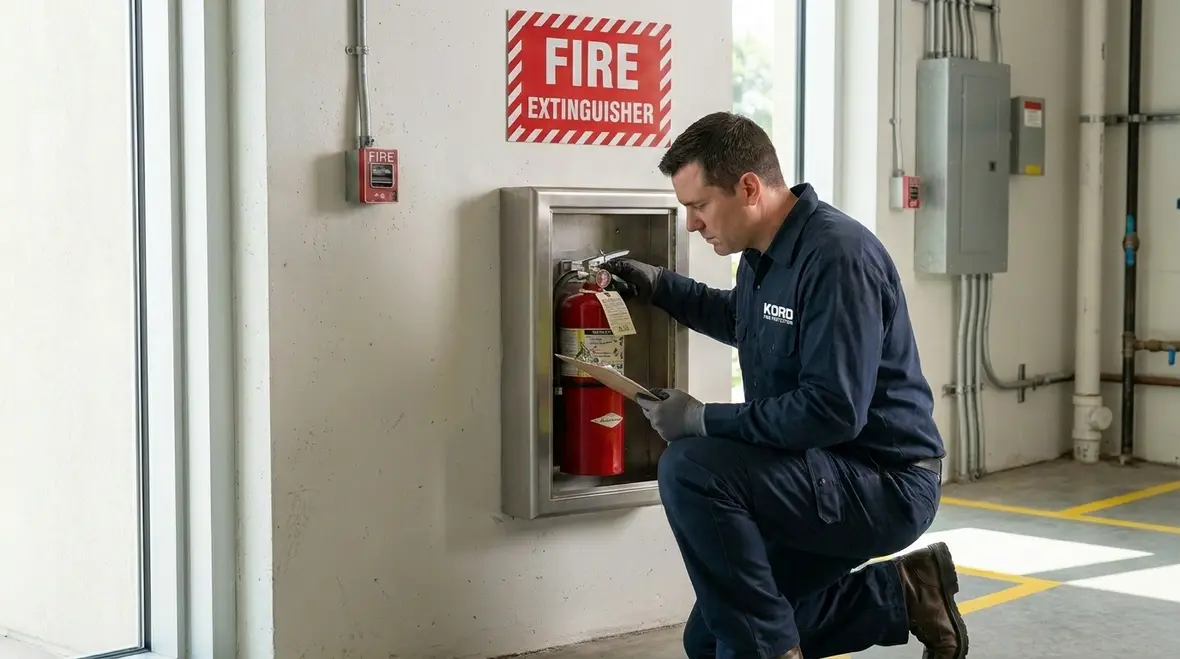
Choose the right extinguisher type, then place it near the risk
Placement without correct extinguisher type is like putting a seatbelt sign next to a steering wheel you removed. Fire classes and fuel types matter. A facility that stores flammable liquids needs access to suitable extinguishing media near the hazard. A workshop with electrical risks needs equipment designed for that scenario. Then, placements must support safe approach.
To do this well, facilities should align extinguisher selection with the risk register and the actual material flow. In a retail site, that can include stock categories and back-of-house handling. In a facility with multiple zones, it can include different hazards per department. Even within a single room, risk can change based on storage habits and the way staff conduct tasks.
Once the right type is selected, placing it near the risk means balancing proximity with safe access. A unit should support rapid first response, but it should not be positioned where the person must enter the worst of the flame to get to it. Ideally, the extinguisher sits where someone can approach from a safer side, with a clear line to retreat.
Kord Fire Protection strengthens this step by coordinating risk understanding and installation planning. As a result, placements support both the correct response and the correct human behavior under pressure. Teams dealing with specialized hazards can also explore related Kord resources, including the commercial kitchen fire extinguisher requirements article for a good example of how hazard type drives location decisions.
Clear signage, access control, and real-world obstructions
Even when placement is correct on paper, obstructions can ruin the plan. Facilities should look for common blockers: storage bins placed “temporarily,” cables running across wall space, storage stacking near cabinets, and access routes blocked by maintenance work orders that last longer than expected. Those are not minor issues. They turn equipment into guesswork.
Therefore, clear signage must match the placement. Signage should point staff to the correct extinguisher without forcing them to walk into hazards. It should also work in low light conditions, including areas where forklifts operate and lights dim during certain shifts.
Access control also matters. If extinguishers sit behind doors, those doors must remain accessible and functional. Self closing doors, locked cabinets, or “only authorized staff” barriers can cause delays. In emergencies, authorization becomes a luxury, not a feature.
To stay ahead, facilities can schedule walkthrough checks that include day-to-day operations. Kord Fire Protection can support these practices by helping teams review coverage and access integrity across multiple departments, not just a one-time install. The difference is simple: a visible extinguisher behind clutter is not really visible, and an accessible extinguisher hidden behind process friction is not really accessible.
Maintenance, inspections, and keeping coverage consistent as the site changes
Fire safety is not a “set and forget” program. Sites evolve. A warehouse expands. Retail layouts change for seasonal stock. Industrial lines shift. When the layout changes, extinguisher coverage can quietly degrade even if nothing seems “wrong.” That is how gaps appear: a new work zone blocks access, a new cabinet hides a sign, or a moved racking line increases distance from the hazard.
To prevent this, facilities should treat inspections as feedback, not paperwork. They should confirm that extinguisher access stays clear, that signage remains visible, and that placements still make sense for new risk patterns. Additionally, any replacement or relocation should follow the same decision logic used during the Commercial fire extinguisher placement guide planning stage.
When Kord Fire Protection partners with a facility, they help connect installation decisions with ongoing compliance and service. That matters in Australia where multi-site operations can face varied layouts, shift patterns, and changing hazards. Kord can bring consistency, while still respecting local site realities.
How Kord Fire Protection supports maximum coverage across Australia
Strategic placement is a service and a mindset. Kord Fire Protection can become a vital partner by helping facilities align risk, access, and compliance into one coordinated plan. Instead of treating placement as a checkbox, they support thoughtful deployment that fits how the site runs.
In practice, that means better site review, clearer documentation, and service planning that keeps extinguishers ready when they must be. It also means the facility spends less time arguing about where units “should have gone” after the fact, which is a favorite pastime of every meeting room.
With Kord, teams can improve coverage across industrial, retail, and facilities environments, while maintaining the control needed for audits and ongoing operations. If that broader support is the goal, Kord’s full fire protection services page shows how extinguisher planning fits within a wider, coordinated safety program.
FAQ
Conclusion and call to action
Strategic placement of fire extinguishers turns safety from a poster into a plan that people can use. By following the Commercial fire extinguisher placement guide principles, mapping hazards to travel paths, and keeping access clear as your site changes, you strengthen first-minute response across Australia.
Kord Fire Protection can help assess coverage and support installation and service. Reach out today for a practical review that fits your real operations and connects extinguisher planning with full fire protection services built for long-term readiness.

Join Our Newsletter!
Get the latest fire safety tips delivered straight to your inbox From our Newsletter.