Fire Suppression Release Panel Indicators Guide
Fire suppression release panel indicators are the silent storytellers of a building’s safety system. Those glowing lights, labeled buttons, and occasional buzzers are not there for decoration. They speak in color and tone, telling trained eyes whether a system stands ready, senses trouble, or has already acted. Within the first glance, a green light might signal normal status, a red light could warn of discharge, and an amber glow may point to a fault. Kord Fire Protection technicians often explain that understanding these signals is less about memorizing colors and more about knowing the story behind them. And once that story makes sense, the panel stops looking like a spaceship dashboard and starts feeling like a trusted guard standing watch.
Understanding a Fire Suppression Release Panel at a Glance
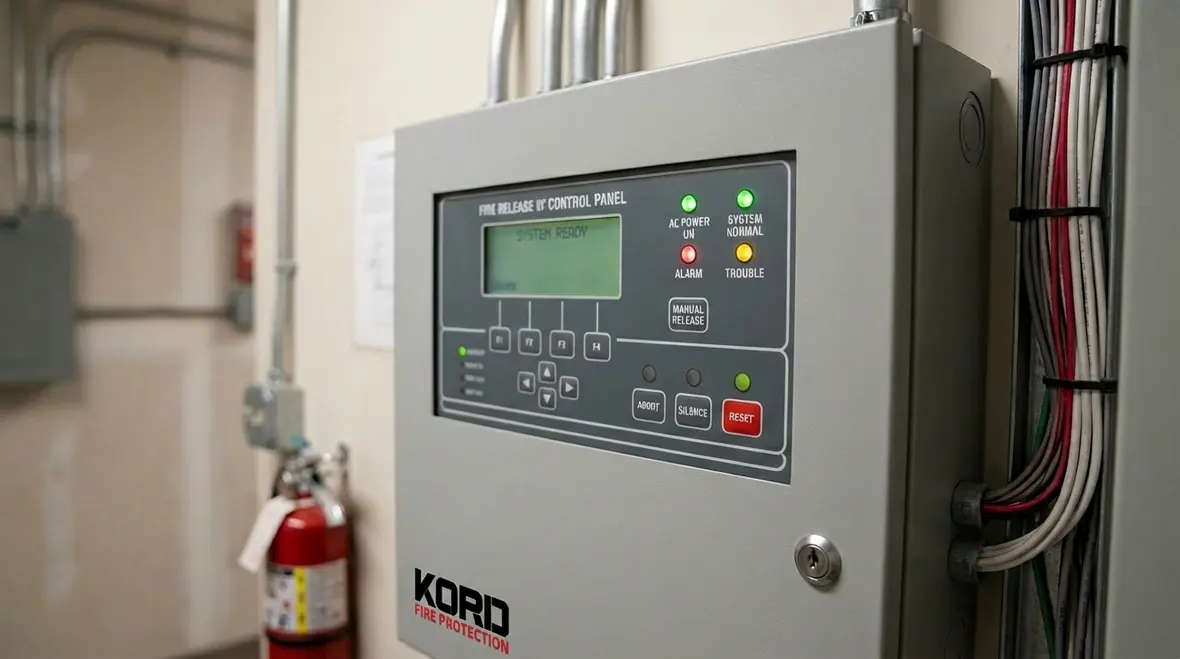
A fire suppression release panel serves as the command center for a suppression system. It monitors detection devices, controls alarms, and releases the extinguishing agent when needed. In other words, it connects the dots between detection and action.
Most panels share a similar layout. They include status lights, control buttons, a display screen on advanced models, and audible alerts. While designs differ by manufacturer, the purpose remains consistent. The panel must communicate system health clearly and act without hesitation.
Kord Fire Protection technicians often compare the panel to an air traffic controller. It does not fight the fire itself. Instead, it directs signals, confirms conditions, and gives the final clearance for agent discharge. Without it, the system would be a collection of parts without coordination.
Additionally, modern panels include programmable features. These allow technicians to set time delays, cross zone detection requirements, and manual override functions. As a result, building owners gain both flexibility and reliability.
Understanding the basics first makes the lights and buttons far less mysterious. And once that mystery fades, confidence replaces confusion.
In facilities protected by clean agent systems like Fluoro-K, the release panel is the brain coordinating detection, timing, and discharge to protect sensitive equipment without water damage. That’s why many owners pair panel training with services like Fluoro-K clean agent system design and maintenance to keep both brains and “muscle” of the system in sync.
Fire Suppression Release Panel Indicators Explained Clearly
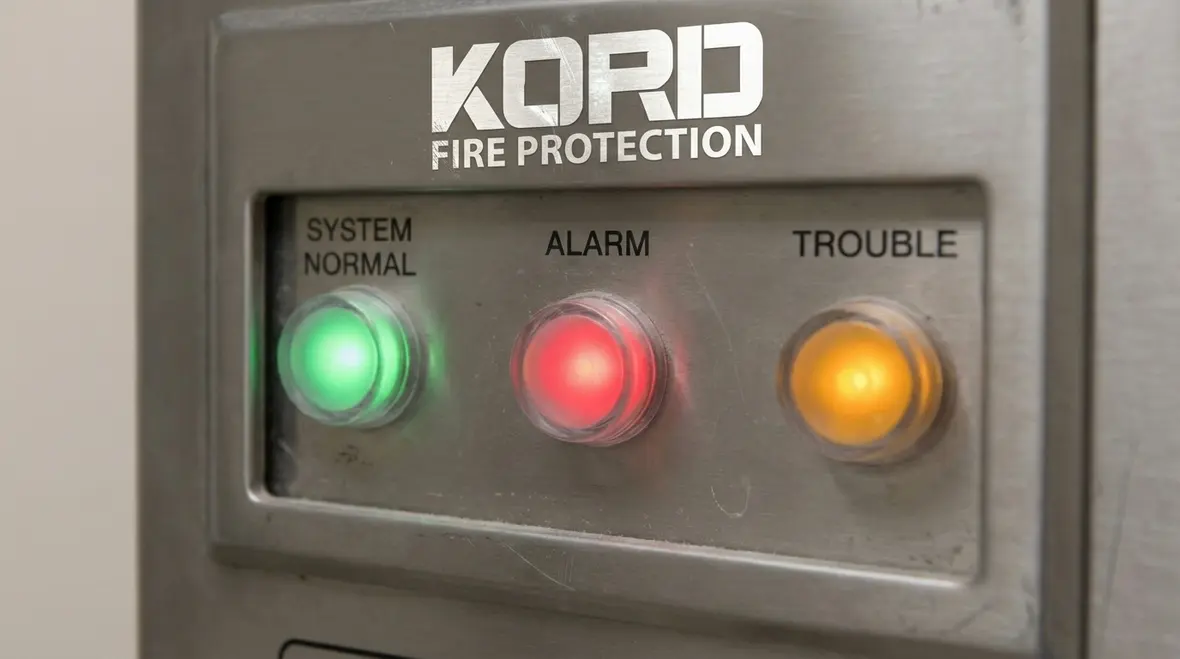
When someone searches for fire suppression release panel indicators, they usually want a simple answer. What do the lights mean, and what should they do about them? The good news is that most panels follow a logical color system.
Green Light
The green indicator typically signals normal operation. Power is present. Circuits are intact. The system stands ready. If this light turns off unexpectedly, it often points to a power issue.
Red Light
Red usually means action or alarm. This could indicate that the system has detected a fire condition, released agent, or entered alarm mode. When red appears, it demands attention. It does not whisper. It announces.
Amber or Yellow Light
This color often signals a fault or trouble condition. A disconnected wire, low battery, or device issue may trigger it. While it does not mean the system has discharged, it does mean something needs service.
Blue or White Light
On some advanced panels, additional colors indicate supervisory conditions or system status updates. These vary by model, so reading the manufacturer guide matters.
However, lights alone do not tell the full story. Audible tones accompany certain conditions. A steady tone might signal alarm. An intermittent beep often points to trouble. Kord Fire Protection technicians emphasize listening as much as looking. The panel communicates in layers.
Therefore, when someone sees a new light appear, the best response is not panic. It is observation. Identify the color, note any sound, and contact a qualified technician if the meaning is unclear.
What Do the Buttons Actually Do
Now comes the part that makes people nervous. Buttons. Because pressing the wrong one feels like launching a rocket in a movie scene. Fortunately, these controls are designed with safety in mind.
Manual Release
This button allows a user to discharge the suppression agent manually. It typically requires a deliberate action, such as lifting a cover first. This prevents accidental activation.
Abort Button
The abort function delays or stops discharge while pressed, depending on programming. In areas where false alarms carry high cost, this feature adds a layer of control. However, it must be used responsibly and only when a trained person confirms no fire exists.
Silence or Acknowledge
This button silences audible alarms while leaving the system active. It does not reset the panel. It simply quiets the noise so staff can communicate.
Reset
After an alarm condition clears and the issue resolves, the reset button restores the panel to normal status. Yet resetting without fixing the cause leads to recurring trouble signals.
Kord Fire Protection technicians often explain that these buttons work like tools, not toys. Each has a purpose. And while Hollywood loves dramatic red button scenes, real life requires calm judgment and training.

How Kord Fire Protection Technicians Interpret Panel Signals
Reading a panel involves more than matching colors. Experienced technicians look for patterns. They review event history logs. They test circuits. They verify battery voltage. In short, they investigate.
For example, if an amber light appears alongside a slow beep, a technician may check for ground faults or disconnected devices. If a red alarm triggers without visible fire, they inspect detectors for contamination. Dust and grease can mimic smoke, especially in kitchens and industrial spaces.
Furthermore, technicians examine release circuits carefully. A suppression system must discharge only when required. Therefore, wiring integrity and programming accuracy matter greatly.
Kord Fire Protection technicians also educate building managers during service visits. They explain what normal looks like. They review what to do if certain indicators appear. This proactive approach reduces panic and prevents unnecessary downtime.
Because at the end of the day, a well informed team responds faster and smarter. And in fire protection, time is not just money. It is safety.
If a Light Is Flashing on a Fire Suppression Release Panel What Should Be Done
This question appears often in online searches and late night phone calls. The answer depends on the color and pattern, but several steps apply in most situations.
First, stay calm. A flashing light does not automatically mean discharge has occurred.
Second, identify the indicator. Note its color and whether an audible signal accompanies it.
Third, check the panel display if available. Many modern units provide text descriptions of the issue.
Then, notify maintenance or a licensed fire protection company. Avoid attempting internal repairs without training. Fire suppression systems involve electrical components and pressurized agents. Guesswork does not belong here.
Finally, document the event. Keeping records helps technicians diagnose recurring issues quickly.
Although the flashing light may feel urgent, structured action prevents mistakes. Think less action movie panic and more steady detective work.
Common Indicator Meanings in Dual View
This side by side view simplifies complex information. However, exact meanings depend on system configuration. Therefore, always refer to system documentation and trained professionals for confirmation.
Why Regular Inspections Keep Indicators Honest
Indicators reflect system health, but only if the system receives proper care. Regular inspections ensure that lights tell the truth.
During maintenance visits, technicians test detectors, inspect releasing devices, verify battery strength, and confirm programming accuracy. They also simulate alarm conditions to ensure proper response. As a result, when a real event occurs, the panel reacts correctly.
Without inspections, small issues grow quietly. A weak battery may trigger intermittent trouble signals. Corroded wiring might delay release. Over time, neglected systems lose reliability.
Kord Fire Protection technicians stress scheduled service because prevention costs less than emergency repair. Moreover, compliance with fire codes requires documented inspections. Insurance carriers often expect the same.
Regular testing also builds familiarity. Staff members who see panels during routine checks feel more comfortable if a real alarm appears. Confidence replaces fear.
For facilities protected by clean agent or special hazard systems, services like periodic room integrity testing help confirm that when the panel finally sends the discharge command, the agent will stay in the space long enough to do its job.
Integrating Panels with Building Systems
Modern suppression panels rarely operate alone. They often connect with fire alarm systems, building management software, and even remote monitoring services.
When integrated properly, a single detection event can trigger multiple responses. Doors close. HVAC systems shut down. Alerts reach monitoring centers. This coordinated reaction limits fire spread and speeds emergency response.
However, integration increases complexity. Therefore, programming must align across systems. A misconfigured relay can create confusion instead of clarity.
Kord Fire Protection technicians approach integration methodically. They verify communication pathways. They test signal transfer. They confirm that each connected system responds as intended.
Although advanced technology adds layers of sophistication, the goal remains simple. Detect early. Act fast. Protect people and property.
FAQ About Fire Suppression Release Panels
Conclusion and Next Steps
A fire suppression release panel does not exist to confuse. It exists to communicate. When its indicators glow, they tell a clear story about readiness, trouble, or action. With guidance from experienced professionals like Kord Fire Protection technicians, building owners gain confidence in reading those signals. Do not wait for a flashing light to raise questions. Schedule an inspection, request training, and ensure the system stands ready. Because when safety speaks, it deserves to be understood.
If your facility relies on clean agent, CO2, or another special hazard suppression system, pairing panel training with services like system design, room integrity testing, and ongoing maintenance keeps every indicator honest. When you’re ready to align your release panels, suppression equipment, and code requirements under one roof, explore Kord’s full range of fire suppression and fire protection services and request a tailored service plan for your building.
Know Your Weapon Before You Fight the Flame
Kord Fire Protection is your go-to when it comes to all things fire protection. For over 20 years, we’ve been serving Southern California with the quality service and equipment to keep your home or business safe at all times. Our competitive prices reflect our unwavering commitment to protecting what matters most in the event of a fire emergency. Give us a call, send an email, or use that form!

Join Our Newsletter!
Get the latest fire safety tips delivered straight to your inbox From our Newsletter.