Fire Suppression Electrical Hazards Causing False Discharges
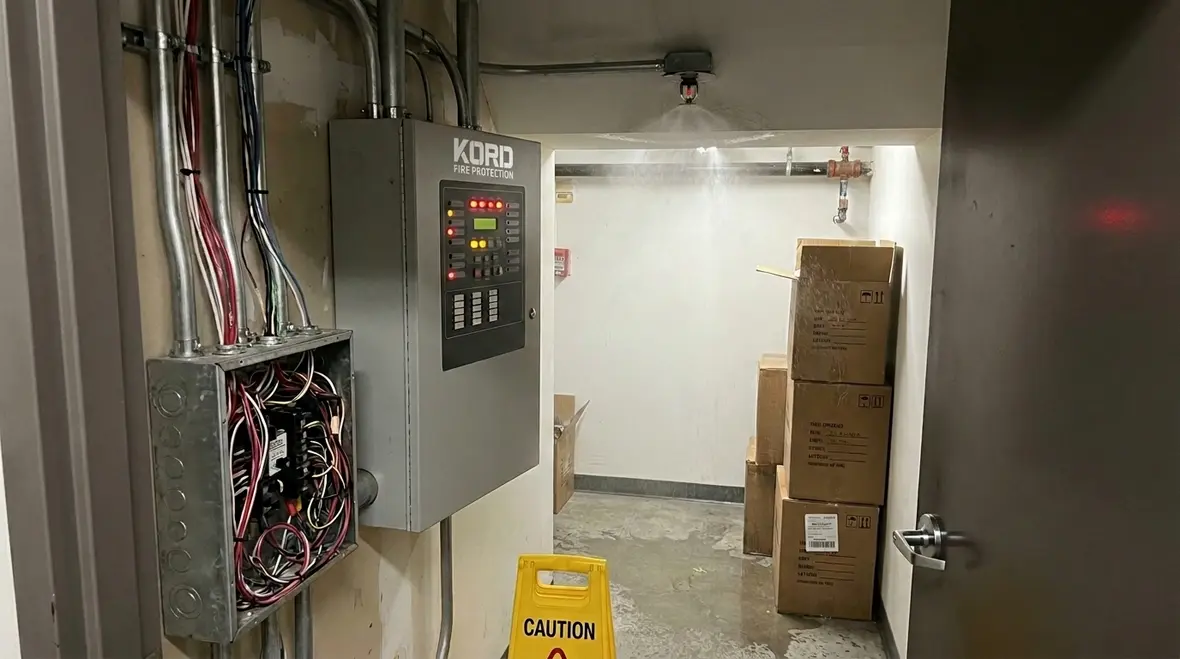
Fire suppression electrical hazards can quietly turn routine building systems into an unexpected emergency. When electrical faults hit wiring, panels, or sensors tied to suppression equipment, they can trigger conditions that make a system act like it just saw a real fire. Then, instead of waiting for heat, smoke, or flame, the equipment deploys and discharges agent into spaces where people were just trying to work, shop, or sleep.
In this article, Kord Fire Protection technicians explain how these unintended releases happen, why they start, and what smart owners and managers do to reduce risk. Because honestly, no one wants their fire system to “overreact” like a dramatic roommate who thinks toast equals disaster.
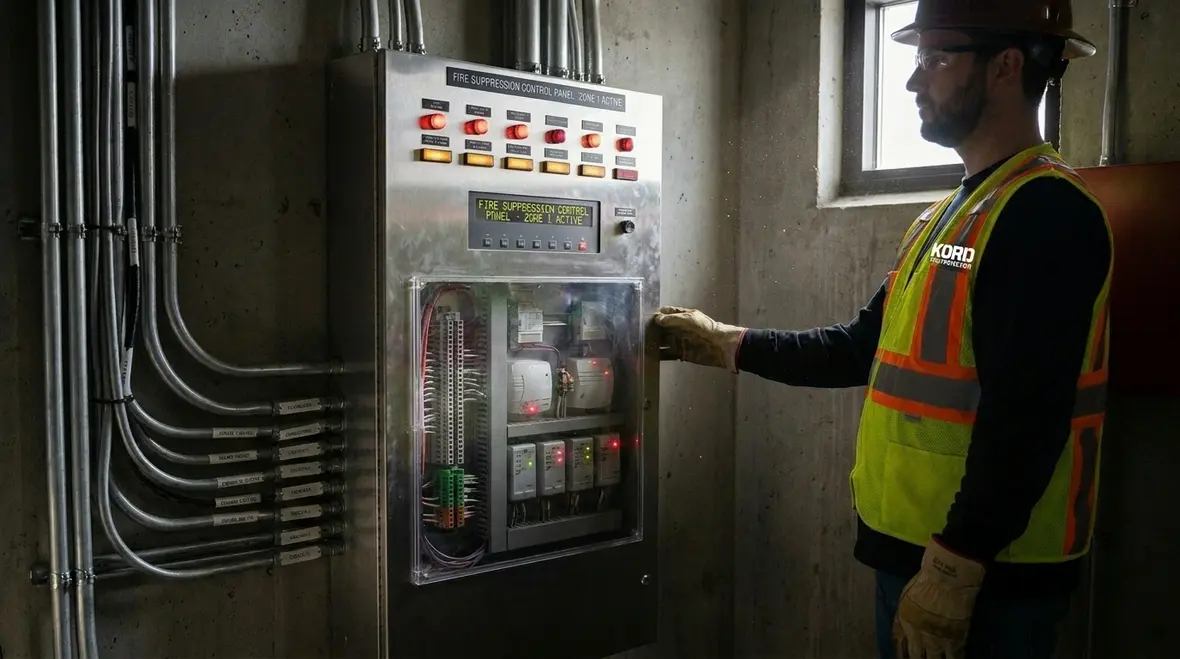
How electrical faults lead to unintended suppression releases
Electrical faults can cause a suppression system to misread the environment. For example, a fault might create false signals on detection circuits, disturb power quality, or interrupt communication between control components. As a result, the control panel can interpret the wrong information as a valid alarm and start the discharge sequence.
First, the system relies on inputs like smoke detection, heat detection, water flow, and device status. Next, it uses that data to decide whether to activate releasing controls. If a wiring insulation failure introduces stray current, or if a ground fault creates an unintended path, the panel may receive a signal that looks “real enough” to trigger a release.
In addition, the system often uses supervision circuits to ensure wiring is healthy. However, some faults can change circuit behavior in ways supervision does not fully catch. Then the logic process moves forward, step by step, until the release output energizes.
Why panel logic gets fooled
The frustrating part is that control panels do not interpret context the way people do. They react to voltage, continuity, state changes, and timing. So when bad wiring produces patterns that resemble alarm behavior, the panel is not being dramatic on purpose. It is simply following the signals it sees. That speed is useful during a real emergency, but it becomes a problem when the electrical pathway itself is the liar in the room.
Where faults usually start in the electrical pathway
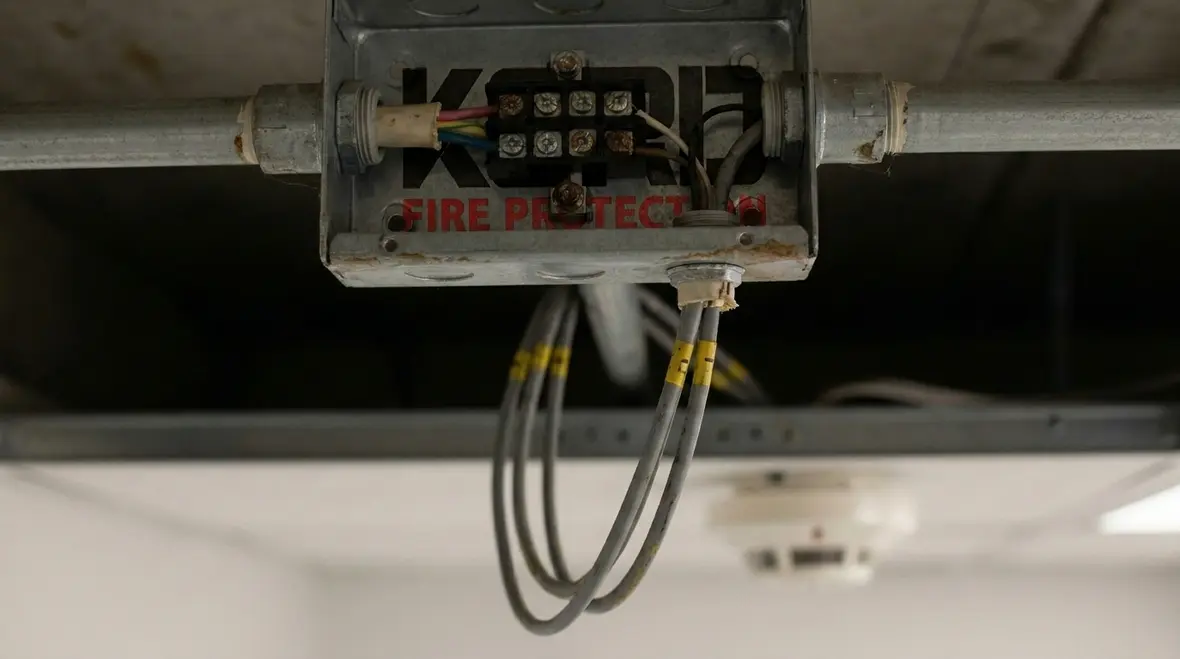
Kord Fire Protection technicians often point out that most problems begin in the parts people do not see. That includes junction boxes, terminal blocks, control wiring runs, and interfaces between detection devices and releasing controls. Over time, vibration, moisture, pests, or construction damage can weaken insulation or loosen connections.
- Moisture intrusion in conduits that carry detection or releasing wiring
- Loose terminations that create intermittent contact and “flicker” signals
- Short circuits that blend signals between circuits
- Ground faults that shift voltages and confuse the panel’s interpretation
- Damaged control wiring during renovations or tenant fit outs
Meanwhile, even small issues can build up. A failing connection may act stable for weeks, then suddenly heat up during a heavier electrical load. Then it fails harder, and the system starts doing things nobody ordered.
Why detection logic can misread fault conditions as fire
Modern fire suppression control logic uses thresholds, delays, and verification steps. However, verification does not always mean “it’s definitely fire.” It means “the system believes the inputs match a fire scenario.” When electrical faults distort sensor signals, the logic may still meet the activation criteria.
For instance, a compromised sensor circuit can produce voltage patterns that resemble a true alarm. Also, the system may treat a loss of supervision in a way that escalates states. Then, depending on programming and device types, the panel can enter a pre action or release-ready mode.
To be clear, this does not happen because the technicians want it to. It happens because the system is fast, and it makes decisions from signals it cannot “understand” like humans can. A technician may look at a sensor and say, “That’s water damage.” The panel looks at a voltage line and says, “That’s alarm behavior.”
A practical note on staged logic
This is also why staged logic deserves respect. When one odd signal pairs with another odd signal, the panel may think it has confirmation. In the field, that can look like a mystery. In the logs, it looks like a sequence. And once the sequence lines up, the system does exactly what it was built to do, even if everyone nearby is standing there wondering why the room suddenly got a lot more exciting than planned.
Dual column snapshot: common fault causes and typical symptoms
The following is a practical mapping Kord Fire Protection technicians often use during troubleshooting walks. It helps teams connect electrical hazards to what operators actually see on panels.
| Electrical fault cause | Typical system symptom |
|---|---|
| Loose terminal at a releasing circuit | Intermittent trouble states, then sudden release initiation |
| Moisture in a detection circuit junction | False alarms, repeated supervison faults, unstable device readings |
| Short between alarm output and input | Panel shows alarm even without local detection events |
| Ground fault on supervised wiring | Device appears active, then drops out, leaving inconsistent logs |
| Panel power quality issue or brownout | System resets, then enters alarm sequences based on stored states |
And yes, the logs can look messy. Electrical problems rarely schedule themselves politely. So teams need a careful approach that avoids guesswork.
How pre action and releasing sequences increase the risk
Some systems use stages, such as pre action or staged release controls. These designs can reduce accidental discharges when used correctly. However, electrical faults can still push the system through steps faster than operators can respond.
For example, a pre action system expects an initial detection event and may then wait for a confirmation event like another alarm or a valve status change. If a wiring fault simulates multiple confirmation signals, the system may treat the sequence as valid. As a result, the release can happen even when no real fire exists.
Similarly, releasing circuits need correct supervision and correct device mapping. If wiring is swapped or a terminal is mislabeled during installation, an electrical hazard may point the panel at the wrong device. Then the system counts the wrong data and proceeds.
That is why Kord Fire Protection technicians emphasize labeling, documentation, and verification testing. It is the difference between “we think it’s right” and “we can prove it’s right.”
Practical prevention and inspection steps that reduce false discharges
Prevention starts with controlling the root causes of electrical faults, then confirming that the suppression system reacts the right way. First, owners should maintain proper environmental control: keep moisture out, protect conduits, and manage condensation where equipment runs hot.
Next, they should treat wiring integrity like a living asset. That means checking terminal tightness, inspecting cable jackets, and verifying conduit seals. Also, teams should review changes from renovations, tenant work, and equipment upgrades. Many unintended activations trace back to work performed “somewhere else” that still touched the fire system wiring.
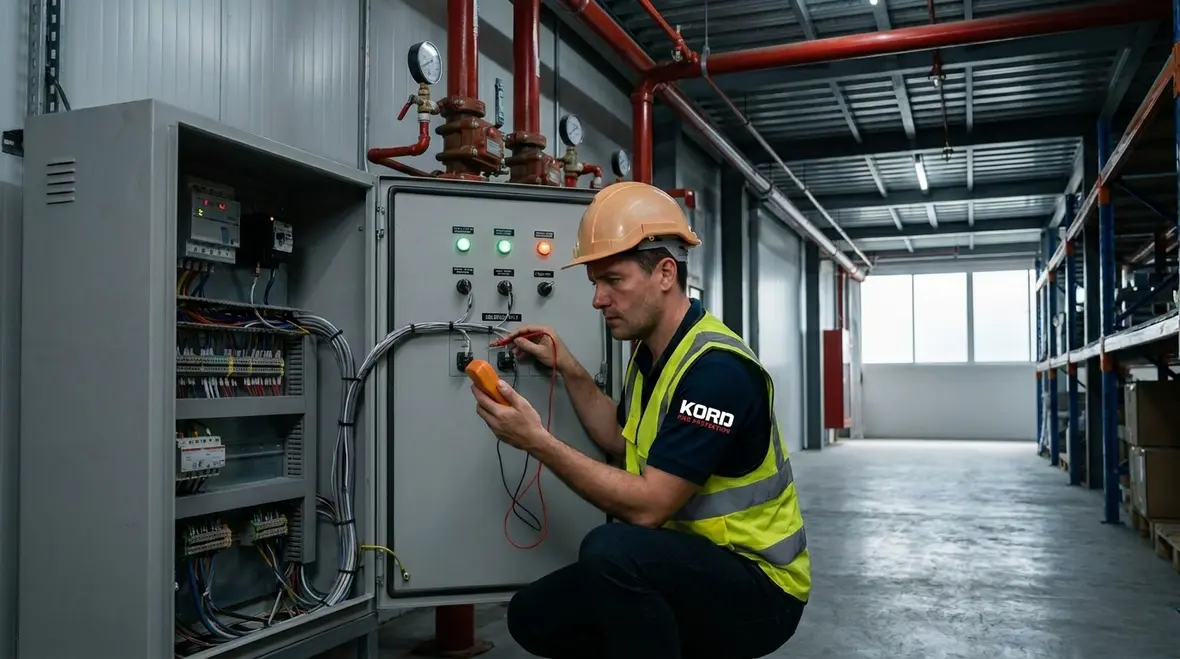
Finally, Kord Fire Protection technicians recommend targeted testing that focuses on electrical pathways and panel behavior. This can include checking supervision values, validating alarm and release circuit mappings, and confirming that programming includes reasonable delays and verification steps. When teams do this consistently, fire suppression electrical hazards shift from “surprise events” to “find and fix items.”
One more thing, said with affection: if a contractor bypasses labeling to “save time,” the building will repay that time with interest. Fire systems do not forgive shortcuts.
Facilities that want a stronger technical baseline can also review related design considerations in Essential Fire Pump Electrical Requirements and Design. While fire pumps and suppression release controls are not the same thing, both depend on electrical reliability, clear wiring paths, and logic that behaves the way the drawings say it should.
FAQ: electrical faults and unintended fire suppression
Next steps: protect people, protect property, call Kord Fire Protection technicians
Unintended fire suppression deployments can drain operations, damage spaces, and create real safety risk. Therefore, building owners should treat suppression electrical pathways with the same seriousness as the nozzles and cylinders themselves. Kord Fire Protection technicians can review wiring integrity, confirm releasing logic behavior, and validate supervision and device mapping before a problem turns into a discharge event.
If your panel shows troubling states or if renovations touched the system, now is the right time to act. Explore Fire Suppression Services or reach out through the Contact Us page to schedule a professional inspection and stop the “false alarm drama” before it starts.

Join Our Newsletter!
Get the latest fire safety tips delivered straight to your inbox From our Newsletter.