Fire Sprinkler Valve Identification in Orange County
Introduction
In the world of fire protection, clarity matters. Within the first moments of any inspection, professionals focus on fire sprinkler zone valve identification in Orange County because it sets the tone for safety and control. While the term may sound dry, the practice saves lives and property every single day. Kord Fire Protection technicians often explain it with calm confidence, the kind that slows the room and makes even the most complex system feel understandable. Therefore, this article walks through sectional drain and floor control valve assembly requirements with steady guidance, a touch of humor, and practical insight. Think less snooze fest, more fireside chat, minus the fire.

Why Sectional Drain and Floor Control Valves Matter
Control, Uptime, and Risk Reduction
Every fire sprinkler system relies on control. Sectional drain and floor control valves exist to isolate water flow during testing, repair, or emergencies. Without them, a small adjustment could turn into a full building shutdown. Moreover, these assemblies protect uptime and reduce risk.
Kord Fire Protection technicians often compare these valves to the pause button on a remote. You would not unplug your television to stop a movie, and similarly, you should not drain an entire system to fix one area. Because of this, codes demand precision in how these components are installed and labeled.
Clear Identification Under Pressure
Additionally, clear identification supports faster response. When firefighters or inspectors arrive, they need to act quickly. A well marked assembly guides them like a street sign at night. Meanwhile, poor labeling causes delays, confusion, and yes, a few choice words nobody wants on a report.
For building owners in Orange County, this is not just a box-checking exercise. It is about keeping occupants safe while keeping operations running, even when something needs repair or testing.

Fire Sprinkler Zone Valve Identification in Orange County Basics
Local Expectations and Core Principles
Fire sprinkler zone valve identification in Orange County follows strict local and state codes. These rules ensure that each floor and section has a clear control point. Therefore, inspectors expect signage, accessible placement, and proper drainage paths.
Kord Fire Protection technicians explain that identification means more than a tag. It includes visible signs, durable materials, and consistent language. Moreover, Orange County inspectors look for uniformity across facilities. A hospital, office tower, or warehouse all follow the same core logic.
Seismic Stability and Access
Because of seismic considerations in California, valve assemblies must also remain stable. This means bracing, proper supports, and clear access. Think of it as earthquake ready common sense, not Hollywood disaster drama.
Proper identification and bracing work together. When a valve assembly is both clearly labeled and physically secure, first responders can trust that what they see is what they get, even after a jolt.
For a broader look at how components and valves fit into overall water-based system maintenance, many Orange County owners also reference guides like NFPA 25 system overviews, which Kord Fire Protection breaks down for California properties.
Related reading: NFPA 25 Overview: Complete Water-Based Fire Protection Systems Maintenance Breakdown from Kord Fire Protection.
How Do Sectional Drains Actually Work
Targeted Water Removal
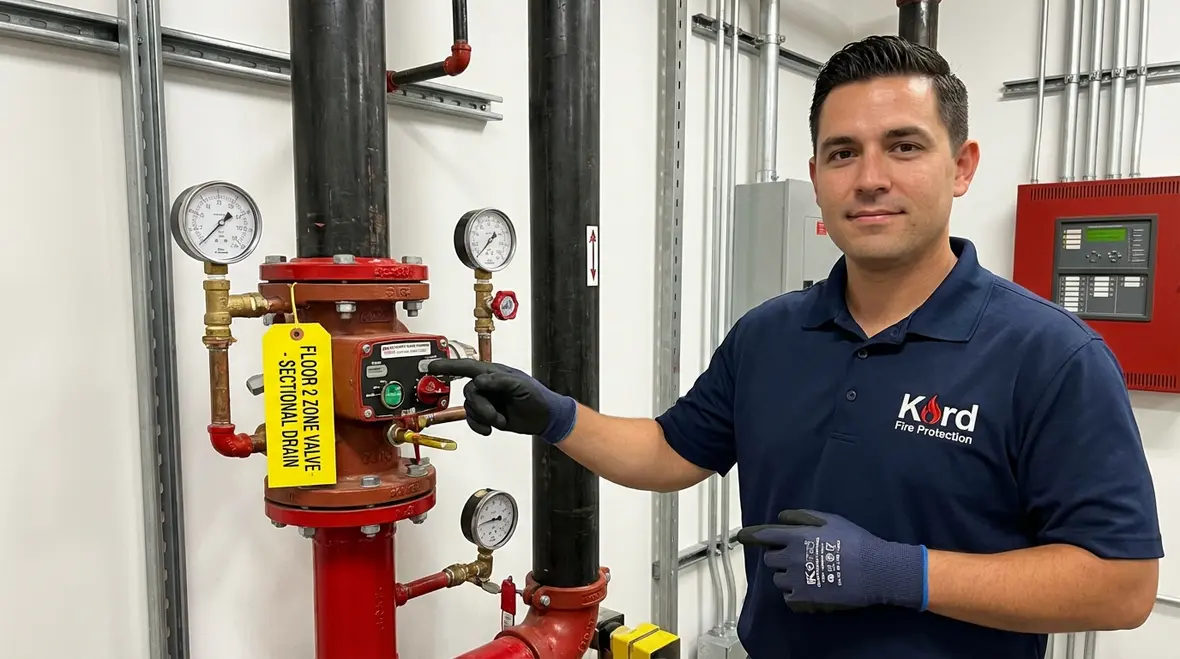
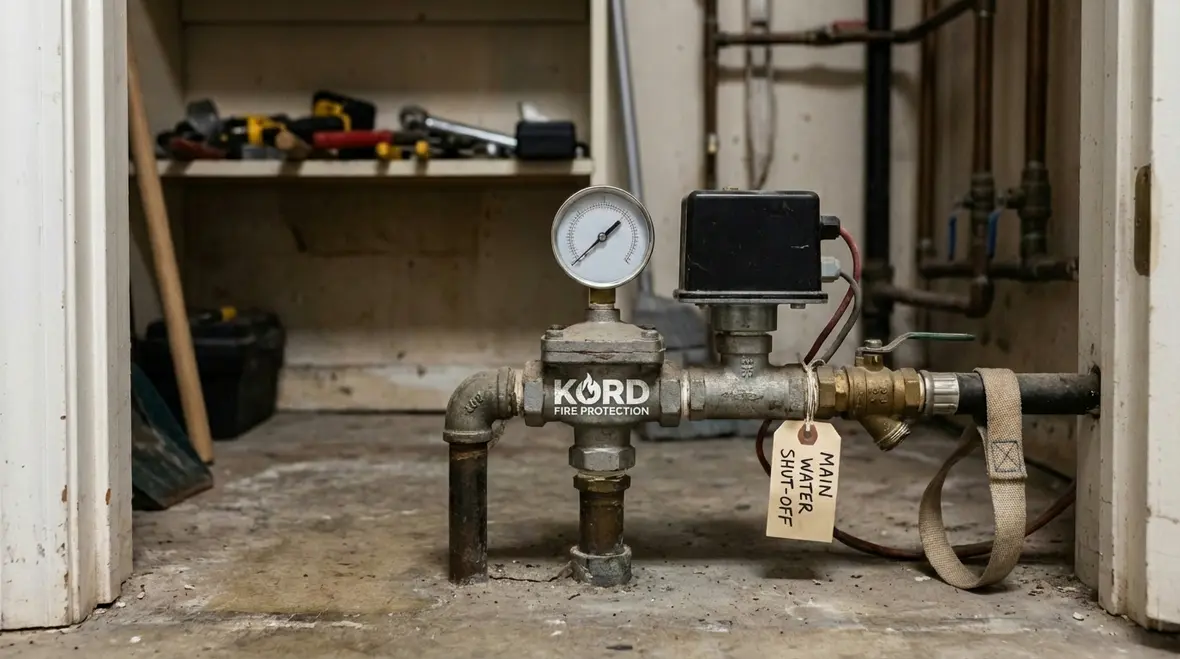
Sectional drains remove water from a specific portion of the sprinkler system. They connect downstream of the control valve and discharge safely to a drain. Therefore, technicians can test flow without flooding a hallway.
These drains also support routine inspections. When water flows freely, it confirms that pipes remain clear. However, if flow slows, it signals debris or corrosion. Kord Fire Protection technicians often joke that drains are like a system checkup. Nobody loves them, yet everyone benefits.
Slope, Sizing, and Discharge
Proper slope and pipe size matter here. Water must move efficiently. Moreover, discharge locations must avoid damage. No one wants a surprise indoor waterfall unless they paid for a resort.
When sectional drains are aligned with code, routing, and building use, they quietly do their job in the background so that testing and repairs feel routine instead of dramatic.
Floor Control Valve Assemblies Explained Simply
The Control Hub on Every Level
Each floor control valve assembly manages water to a single level. It usually includes a control valve, flow switch, pressure gauge, and drain. Together, these parts form a control hub.
Because buildings rise vertically, isolating floors reduces impact during maintenance. Therefore, if work occurs on the fifth floor, the other floors stay protected. Kord Fire Protection technicians explain this with a calm tone that says, trust the process.
Accessibility and Real-World Use
Assemblies must remain accessible. Locked closets, blocked hallways, or creative storage ideas do not impress inspectors. Meanwhile, clear signage and lighting make identification easy during stress.
The best designs are the ones nobody notices until it really counts. Well-placed floor control valve assemblies fit that category perfectly.

Installation Requirements and Code Alignment
Visibility, Operation, and Identification
Codes outline where and how assemblies install. They require visible placement, proper clearance, and permanent identification. Moreover, valves must open fully and close smoothly.
In Orange County, inspectors expect alignment with California Fire Code and NFPA standards. Therefore, installers must follow manufacturer instructions closely. Deviations invite reinspection and delays.
Kord Fire Protection technicians often say codes are not suggestions. They are guardrails. Following them keeps everyone safe and projects on schedule. Also, it avoids the dreaded phrase, “please correct and resubmit.”
When it comes to valves, piping, and related components, owners who want a deeper dive into installation concepts often explore NFPA 13 overviews that explain how sprinklers, piping, and valves work together as one system.
Related reading: NFPA 13 Overview: Automatic Fire Sprinkler System Installation by Kord Fire Protection.
Dual Column Overview of Key Assembly Elements
Component
Control Valve
Flow Switch
Pressure Gauge
Sectional Drain
Purpose
Stops or allows water flow to a zone
Detects water movement during activation
Shows system pressure at a glance
Drains water for testing or repair
Common Mistakes and How Professionals Avoid Them
Labeling, Access, and Drainage
One common mistake involves poor labeling. Handwritten tags fade, fall, or confuse. Therefore, professionals use durable signage.
Another issue is blocked access. Storage creeps into valve rooms like clutter in a garage. However, Kord Fire Protection technicians stress routine checks to keep paths clear.
Improper drain routing also causes trouble. Water must exit safely. Because of this, professionals plan discharge points early. Think ahead now, relax later.
Fire Sprinkler Zone Valve Identification in Orange County During Inspections
Mock Walkthroughs and Real Inspections
Fire sprinkler zone valve identification in Orange County becomes critical during inspections. Inspectors verify signage, operation, and accessibility. Therefore, preparation matters.
Kord Fire Protection technicians walk clients through mock inspections. They explain what inspectors see and why it matters. Moreover, this approach reduces surprises.
During an inspection, clarity wins. When labels match drawings and valves work smoothly, the process moves fast. It is like showing up to a pop quiz with the answers already in hand.
For properties with more complex suppression needs, such as foam-water or water mist systems, Kord Fire Protection also helps interpret standards like NFPA 16 and related water mist system guidelines so everything plays nicely together during inspections.
FAQ
Conclusion and Call to Action
Clarity, Calm, and Compliance
Fire protection thrives on clarity, calm planning, and expert guidance. Sectional drains and floor control valve assemblies play a quiet yet vital role in that mission. When Kord Fire Protection technicians explain these systems, they bring confidence and precision that inspections demand.
From zone valve identification to drainage routing and floor isolation, each detail adds up to a safer building that is easier to inspect, easier to maintain, and easier to trust when it matters most.
Your Next Step in Orange County
Now is the time to review your system, confirm proper identification, and ensure compliance. Reach out to experienced professionals today, because preparedness always beats panic, and safety never goes out of style. Ever.
If your property also relies on jockey pumps, standpipes, or specialized systems, Kord Fire Protection can align all of those moving parts with your fire sprinkler valve identification strategy so your next inspection feels more like a formality than a cliffhanger.
Know Your Weapon Before You Fight the Flame
Kord Fire Protection is your go-to when it comes to all things fire protection. For over 20 years, we’ve been serving Southern California with the quality service and equipment to keep your home or business safe at all times. Our competitive prices reflect our unwavering commitment to protecting what matters most in the event of a fire emergency. Give us a call, send an email, or use that form!

Join Our Newsletter!
Get the latest fire safety tips delivered straight to your inbox From our Newsletter.