Fire Sprinkler System Electrical Interlocks for Coordination
Quick Answer: Modern projects coordinate fire protection and electrical activation with tight design, tested interfaces, and clear commissioning steps. The goal is simple: when life safety needs to act, every device wakes up in the right order. For facilities across Australia, kord fire protection helps teams plan and verify that coordination with precision.
In an ideal world, every alarm, fan, damper, and power source follows the same script. In the real world, facilities teams juggle trades, schedules, and last minute changes that show up like villains in a late episode. That is exactly why fire sprinkler system electrical interlocks matter. They help ensure the fire sprinkler activation and the electrical system response occur in the intended sequence. And when the coordination is done right, operations stay calm, safety stays real, and downtime stays shorter than a bad sitcom run.
Near the start of planning, teams often pair sprinkler coordination with broader fire alarm monitoring systems strategy so alarms, supervision points, and emergency response paths support the same life safety logic. That early alignment keeps the project from turning into a guessing game halfway through commissioning.
It also helps to connect the interlock conversation with a wider protection plan. On projects where several systems overlap, many facilities benefit from reviewing Kord Fire’s perspective on how fire alarm monitoring works, because the same chain of signals and responses often intersects with sprinkler flow, supervisory points, and electrical outputs.
Why fire sprinkler system electrical interlocks prevent chaos in Australian facilities
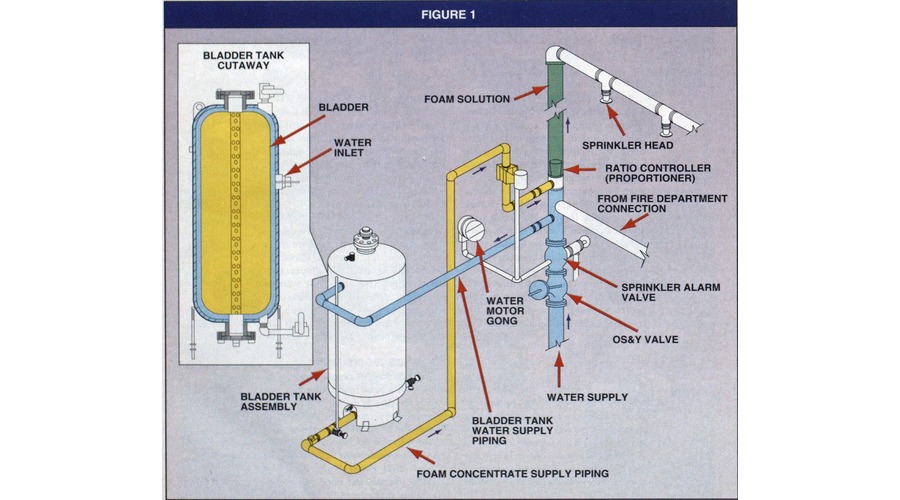
Fire sprinkler activation should trigger the right electrical outcomes, such as starting pumps, controlling power to smoke control fans, releasing door functions, or managing auxiliary equipment. However, without proper interlocks, electrical systems can behave unpredictably. For example, a control panel might wait for feedback that never arrives, or an interlocked circuit might energise too early. As a result, the facility can lose time during a critical event.
Modern solutions focus on logic, timing, and verification. First, teams map every device and pathway so the control sequence becomes clear. Then, they design the electrical interlocks so signals only transfer when the fire condition proves true. After that, commissioning confirms the behavior in the field. Finally, documentation keeps future maintenance from turning into guesswork.
kord fire protection can become a vital partner in this service job by bringing practical coordination experience from projects across industrial, retail, and commercial sites. In other words, they help the team move from “we think it works” to “it does work, every time.”
How modern coordination design ties alarms, power, and sprinklers into one sequence
Facilities in Australia face different building layouts, plant equipment, and tenancy patterns, so a one size approach rarely holds. Instead, modern coordination starts with a single sequence document that defines what should happen and when. Teams then translate that sequence into field interfaces.
Core design steps that keep the sequence honest
Key design steps typically include the following:
- Sequence of operations: A clear order for sprinkler water flow, fire alarm logic, and electrical actions, including supervision points.
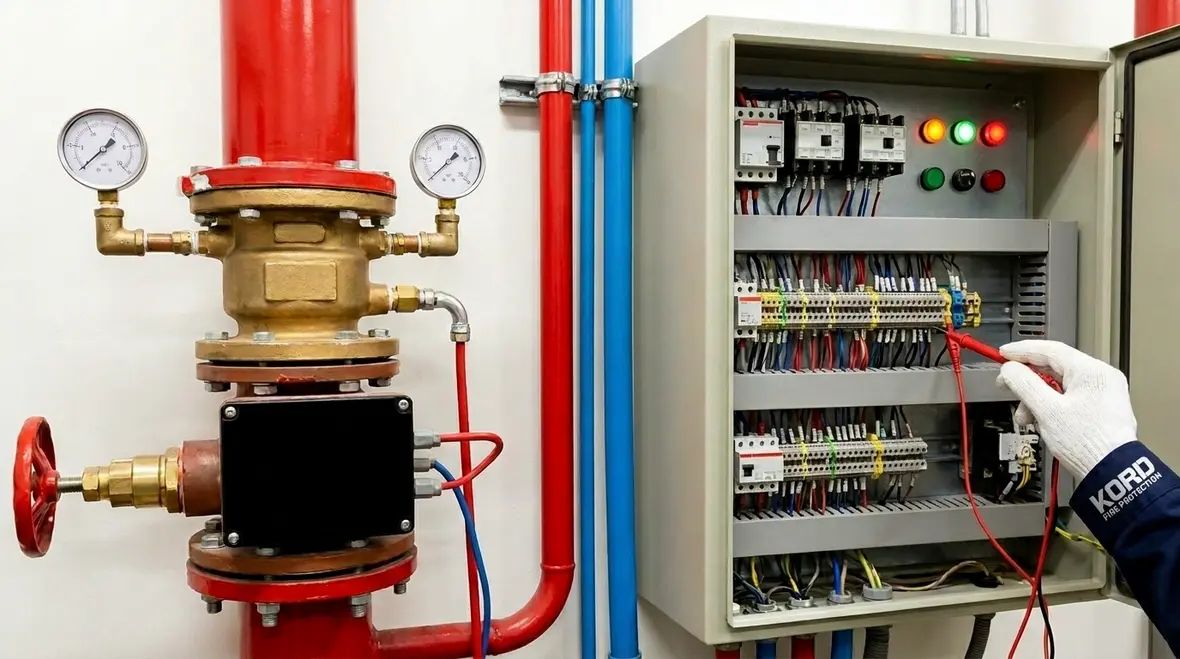
- Interface points: Identification of where the fire panel communicates with starters, relays, contactors, or control modules.
- Supervision and fail safe behavior: Verification that loss of signal, wire breaks, or device faults lead to a safe state.
- Compatibility checks: Alignment of voltage ratings, input types, output ratings, and signal delays.
- Control panel integration: Confirmation that the fire alarm system can accept the required feedback and control outputs.
Meanwhile, electrical engineers often work from drawings that focus on power distribution. In contrast, fire protection teams focus on detection and activation. Coordinating both views early prevents costly clashes later. And yes, it saves money. Not “theoretically” saves money, but actually saves it. Like finding spare change in an old jacket, it feels surprisingly good.
This is also the stage where teams benefit from understanding the panel side of the equation. Kord Fire’s article on advanced fire alarm control panel technology fits naturally here because interlocks are only as dependable as the logic platform receiving, supervising, and acting on those field signals.
Field testing and commissioning for reliable activation every time
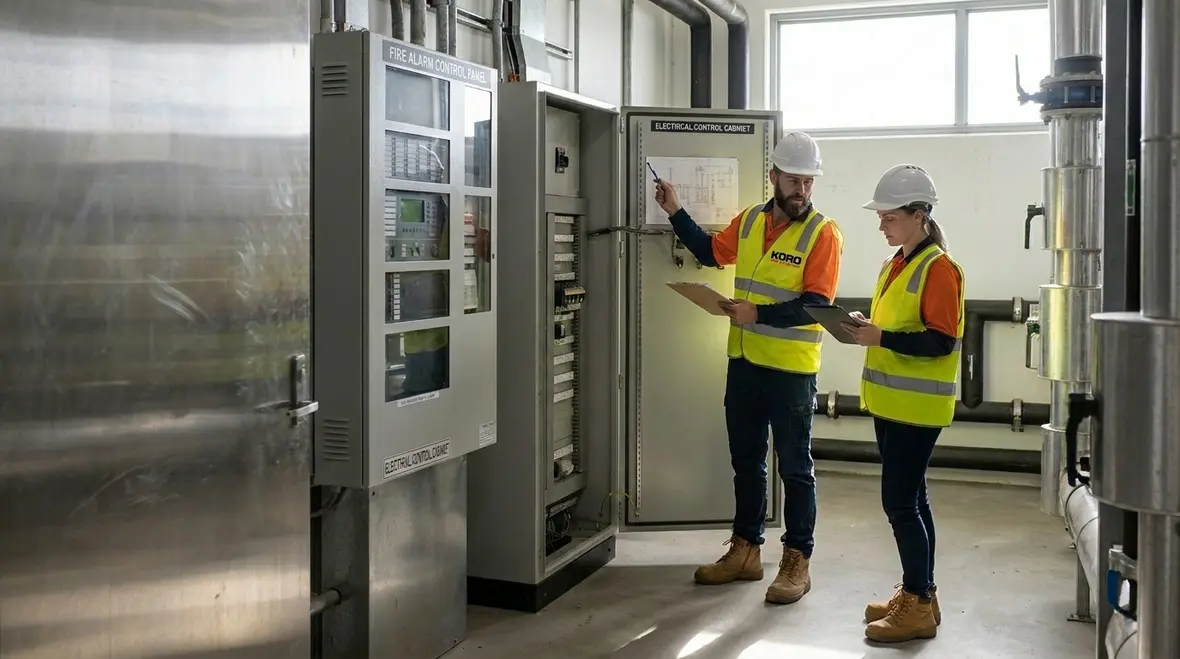
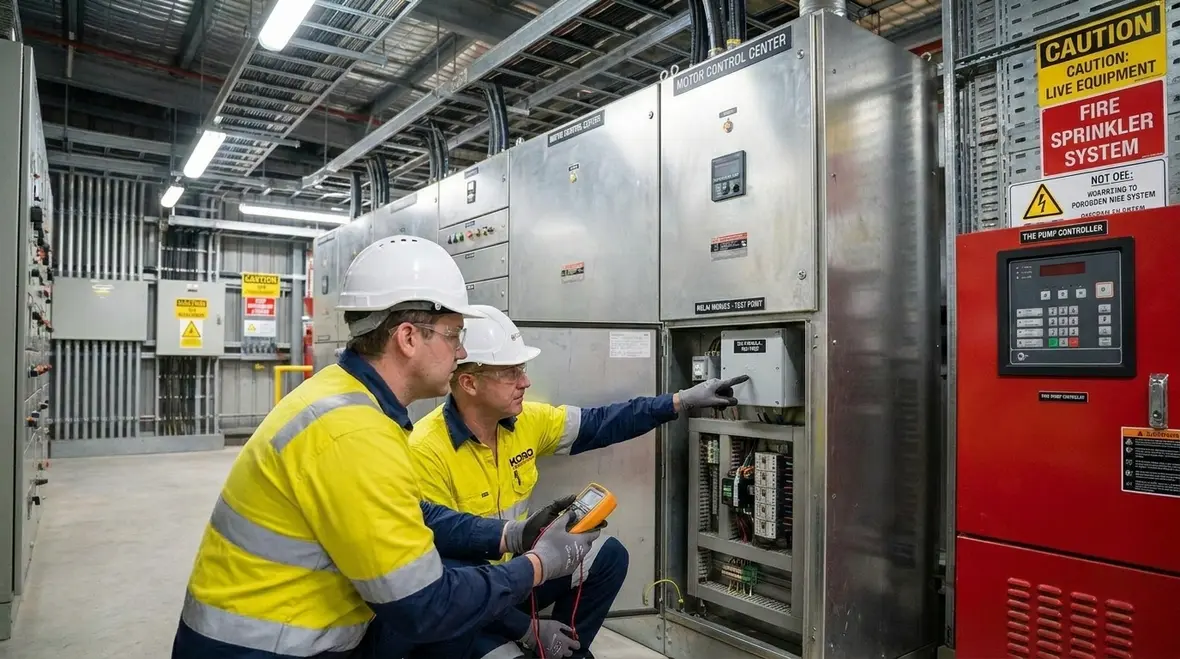
Design is the plan, but commissioning is where the plan earns its paycheck. During commissioning, teams test the actual behavior of the interlocked systems under controlled conditions. They confirm that signals transfer in the correct order, that alarms communicate as expected, and that equipment receives control where it should.
What effective commissioning usually includes
- Step by step verification: Each action in the sequence gets tested, including feedback from electrical devices.
- Timing review: Teams check delays, hold times, and reset conditions so nothing happens too soon or too late.
- Interlock fault testing: They simulate loss of supervision, short or open conditions, and incorrect device states.
- Documentation updates: They capture results, then update labels, point lists, and as built records.
In facilities that operate around the clock, commissioning must also consider impact. Therefore, good teams schedule tests to reduce interruptions and coordinate with operations staff. Additionally, they prepare quick restoration steps if a device needs adjustment. kord fire protection can support this phase by guiding the coordination logic, validating device interfaces, and helping teams avoid the classic problem: “It worked on paper, until it met reality.”
For owners and facility managers, this is usually the moment where confidence gets built or broken. A clean test script, labeled field points, and properly verified feedback make the whole system easier to trust later, especially when maintenance teams inherit the documentation months after the original contractors have packed up and vanished into the sunset.
Electrical interlock strategies that protect equipment and people
Modern electrical activation strategies do more than trigger equipment. They also protect assets and limit secondary risks. When a fire condition occurs, systems should move into safe and intended states without causing new hazards.
Common strategies used on well coordinated projects
- Controlled start of fire pumps and related equipment: Interlocks ensure pumps start only under verified conditions and receive the needed power.
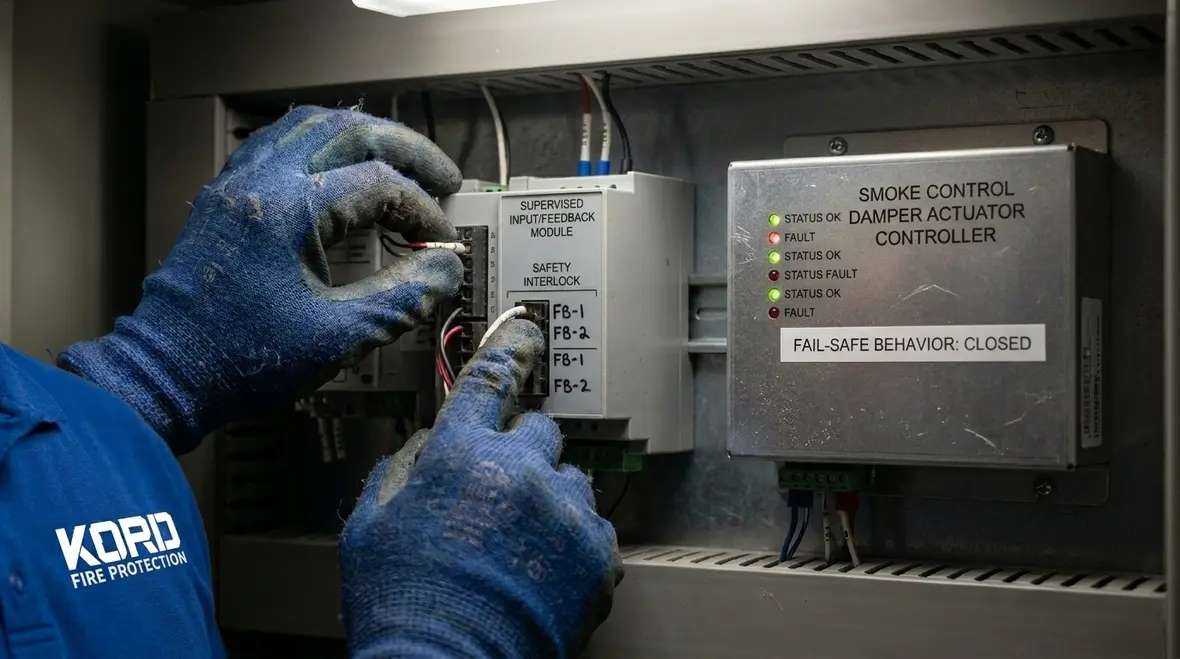
- Smoke control coordination: Electrical outputs can control fans and dampers so they operate according to the intended smoke management plan.
- Isolation of unsafe circuits: Some electrical loads may require disconnection or inhibition during a fire scenario to prevent conflict.
- Feedback confirmation: The system confirms equipment status using monitored contacts, so the control logic stays accurate.
Furthermore, good projects consider maintenance and upgrade paths. If a facility later replaces a controller, improves automation, or modifies a plant panel, the interlock points should remain clear. That is where strong documentation and labeling matter. After all, a fire protection system should not depend on “memory.” Memory fails. Wiring does not.
Where sprinkler flow supervision is part of the sequence, teams can also connect the discussion to Kord Fire’s article on sprinkler system water flow monitoring. It fits neatly because water flow signals often act as the handshake between sprinkler activation, alarm reporting, and electrical response.
Common coordination mistakes and how teams avoid them
Teams often run into predictable issues when they coordinate sprinkler and electrical activation. However, these problems usually come from process gaps, not from bad intentions.
Mistakes that create big headaches later
- Missing or unclear feedback points: Electrical logic expects a signal that never gets provided.
- Uncoordinated timing settings: Delays clash between panels and result in unstable sequencing.
- Inconsistent device labeling: Commissioning teams test one device, but maintenance later changes another.
- Late design changes: Site changes occur after interface design, leaving interlocks incomplete.
- Overlapping control responsibilities: Two systems attempt to control the same equipment without a clear priority.
To avoid these, facilities teams should implement coordination reviews at key points: design approval, pre commissioning, and closeout. Additionally, they should use a single owner friendly sequence document and keep it updated through changes. kord fire protection can help reduce confusion by aligning fire protection intent with electrical implementation details, especially when multiple contractors touch the same control pathways.
A surprisingly common issue is that everyone assumes someone else owns the interface. The electrician expects the fire contractor to define it. The fire contractor expects the controls vendor to pick it up. The controls vendor expects a consultant note to magically solve the mystery. Meanwhile, the building just wants the sequence to work. Clear ownership beats heroic last minute troubleshooting every single time.
Supporting service jobs across Australia: what good partnerships look like
In industrial settings, the electrical environment can be complex, with motor control centers, variable speed drives, and multiple power sources. In retail and commercial sites, the challenge often involves staged fitouts, varying tenancy interfaces, and strict operating hours. Across all these types, coordination must remain consistent.
That is why a partner approach works well. A strong team handles coordination from planning through testing, and they communicate in practical terms for site stakeholders. They also bring an understanding of typical interface methods and verification needs, so the fire sprinkler system electrical interlocks remain reliable as systems evolve.
In practical terms, kord fire protection can contribute by supporting sequence review, interlock design intent, field validation, and documentation practices that maintenance teams can follow. In other words, they help keep life safety systems from becoming an “everybody’s problem,” which is the fastest route to delays.
FAQ
Call to action: make coordination feel simple again
Modern coordination works best when fire protection intent and electrical activation stay aligned from the first interface drawing to the final test. If an Australian facility needs dependable sequence control, kord fire protection can support the planning, verification, and commissioning steps that keep systems reliable.
Reach out to discuss the job scope and interlock coordination needs, and move forward with confidence. When the sequence is clear, the interfaces are tested, and the documentation actually makes sense, life safety becomes a lot less dramatic for everyone involved.

Join Our Newsletter!
Get the latest fire safety tips delivered straight to your inbox From our Newsletter.