Backup Power for Emergency Power Fire Safety Systems in Australia
Quick Answer: Backup power keeps emergency power fire safety systems running when utility power fails, so alarms, smoke control, pressurization, and evacuation signaling stay reliable. It also protects inspections, nuisance-free testing, and mission critical operations across Australian industrial, retail, and commercial sites.
When the lights go out, the clock doesn’t. In Australian facilities, emergency power fire safety systems must keep doing their job, even during blackouts, brownouts, or damaged utility supply. Yet many people treat backup power like an afterthought, the way some companies treat “we’ll fix it later” maintenance. The trouble is, fire life safety does not care about later. It cares about seconds.
Therefore, this article explains how backup power sustains critical fire life safety operations, what facilities should verify, and how Kord Fire Protection can act as a vital partner to keep systems dependable across industrial, retail, and commercial environments. Near the top of that strategy, many facilities benefit from keeping their fire alarm service systems aligned with backup power planning, because reliable signaling and reliable power belong in the same conversation.
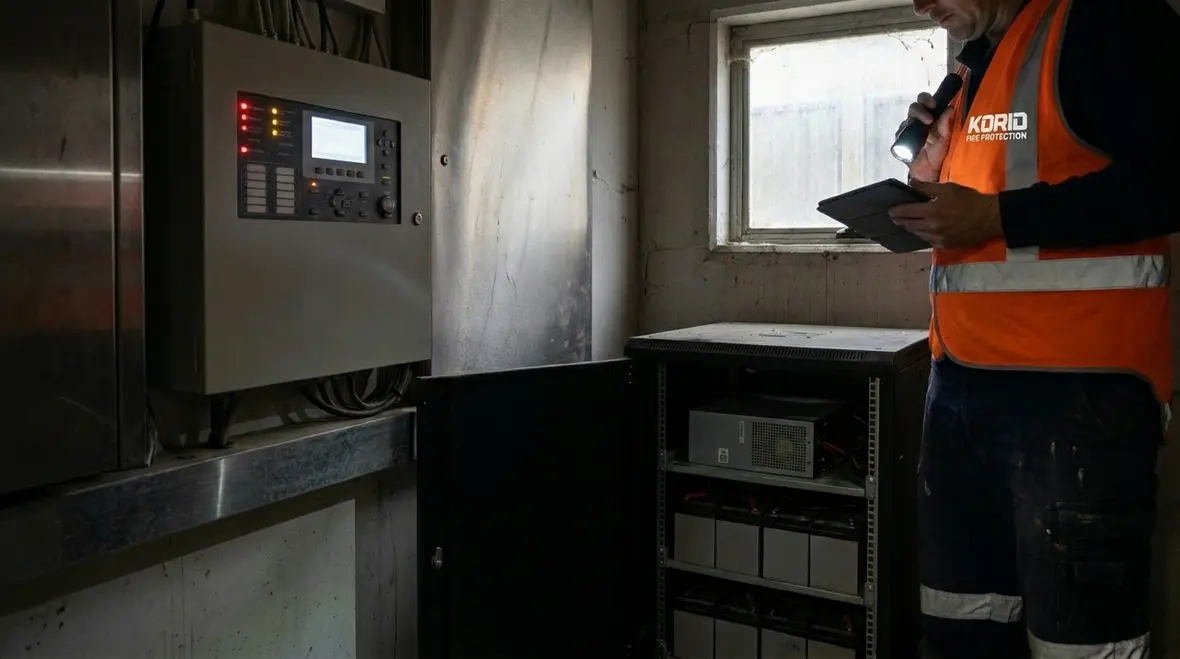
How backup power supports fire life safety operations in real outages
Backup power acts like a stabilizing heartbeat for safety systems. When utility power drops, fire life safety relies on energy sources that can start quickly and continue running long enough for the emergency to be managed. As a result, devices stay live: fire alarm control panels, detector circuits, notification appliances, and any linked interfaces that manage evacuation and response.
Furthermore, many sites use connected life safety functions that do not operate well on “maybe” power. Smoke control fans, fire pump controllers, door hold-open releases, and emergency lighting may integrate with the overall safety strategy. Because these functions support safe movement and reduce smoke spread, the correct backup solution directly improves outcomes during an incident.
Also, backup power supports operational continuity for staff. Instead of guessing what systems powered down, facility teams can follow known states and verified sequences. And yes, that means fewer late night “Is it working?” calls that sound like a detective show. But with less glamour.
Why stable changeover matters more than people think
A lot of risk hides in the handoff itself. If the transition from utility power to backup power is delayed, noisy, or poorly coordinated, a system can momentarily lose its place right when everyone needs it to stay calm and orderly. That can affect annunciation, supervision, and the dependable behavior of connected equipment. A facility may have plenty of backup capacity on paper and still struggle in practice if transfer performance is sloppy. That is why the backup conversation should never stop at “Do we have a generator?” The better question is “Will everything critical keep behaving properly during the switch?”
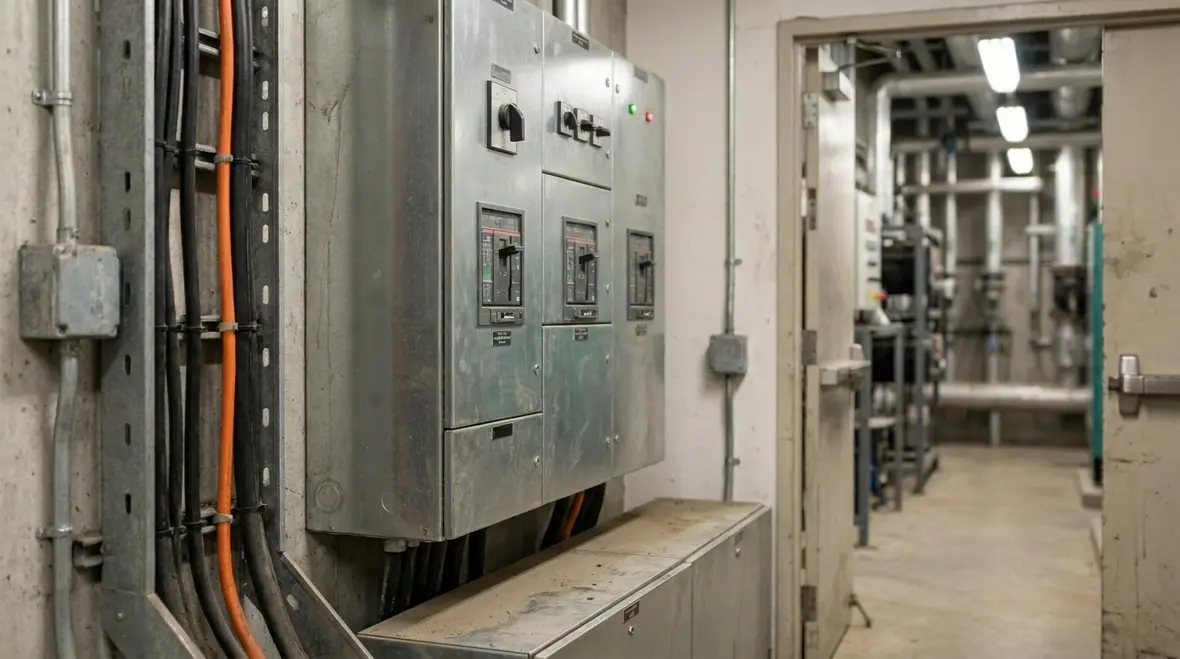
What backup power must do during the first 10 minutes
In many emergencies, the first minutes decide everything. So backup power has to meet several practical requirements quickly. First, it must transfer power without creating unsafe gaps. If circuits reboot mid-event, panels may delay signaling or reset. Next, it must sustain output for the configured duration, including alarm loading and any supervisory circuits that remain active.
Additionally, the system must handle real-world loads. Notification appliances can draw significant current, and some facilities add pressure and control loads that increase starting and running demand. Consequently, backup sizing needs to reflect how the system actually performs under alarm conditions, not how it looks on paper.
Finally, backup power systems must stay stable under test conditions. If testing causes unexpected faults, the team loses confidence and may defer corrective actions. In other words, a backup system that “works in theory” turns into a problem during the one moment it matters.
The first 10 minutes are a truth serum
Those opening minutes reveal whether the design assumptions were realistic. They show whether batteries are healthy, whether controls were integrated correctly, and whether site teams really know what normal emergency behavior looks like. If the first ten minutes feel chaotic, the issue is usually not bad luck. It is usually a planning gap that has been quietly waiting for a dramatic entrance.
Battery systems, generators, and interfaces: selecting the right reliability layer
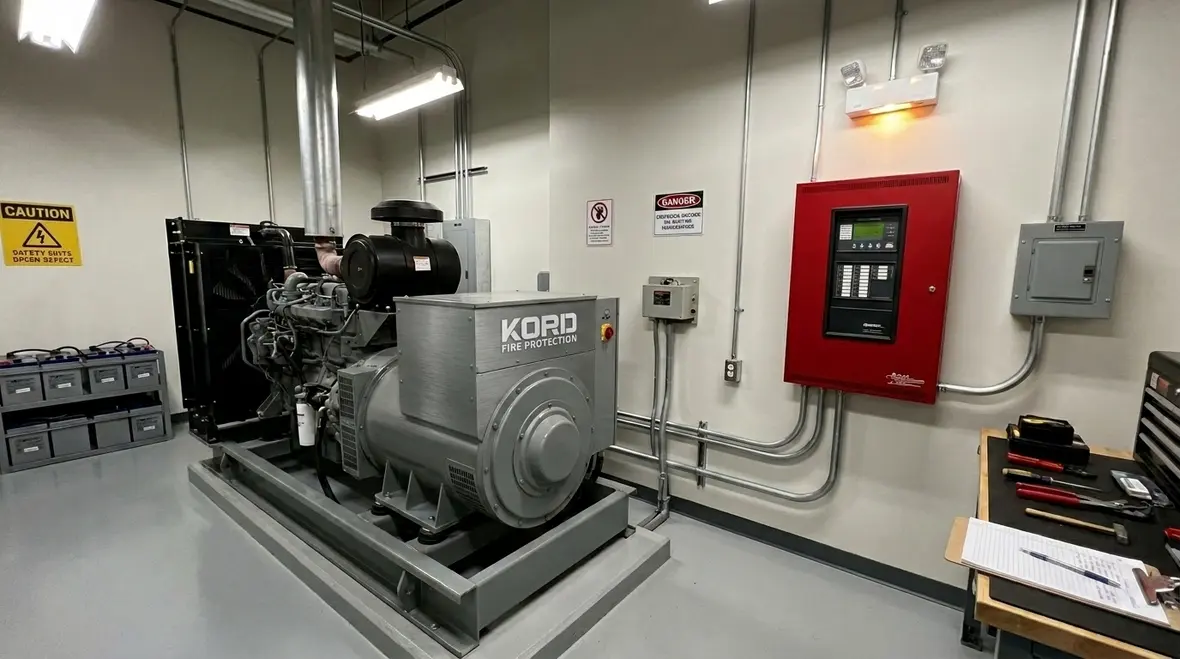
Different backup technologies serve different roles. Batteries often handle short to moderate runtimes and can transfer instantly. Generators typically cover longer runtimes, especially for sites that require sustained operation of pumps and other heavy loads.
However, the selection process should start with the life safety load profile. For example, some retail sites rely heavily on alarm and voice evacuation, while industrial sites may require additional interfaces for control equipment, signage, and even life safety related processes. Then, engineers must consider transfer time, load demand, temperature performance, and maintenance access.
Moreover, interfaces matter just as much as the power source. If control wiring, monitoring points, and changeover devices do not meet the correct signaling requirements, fire life safety systems may not report faults correctly. That affects response and can delay corrective actions.
To keep things calm and controlled, facilities should document performance assumptions and verify them through commissioning. During this step, technicians simulate power loss and check that emergency power fire safety systems respond exactly as intended. No dramatic suspense endings, just verified operation.
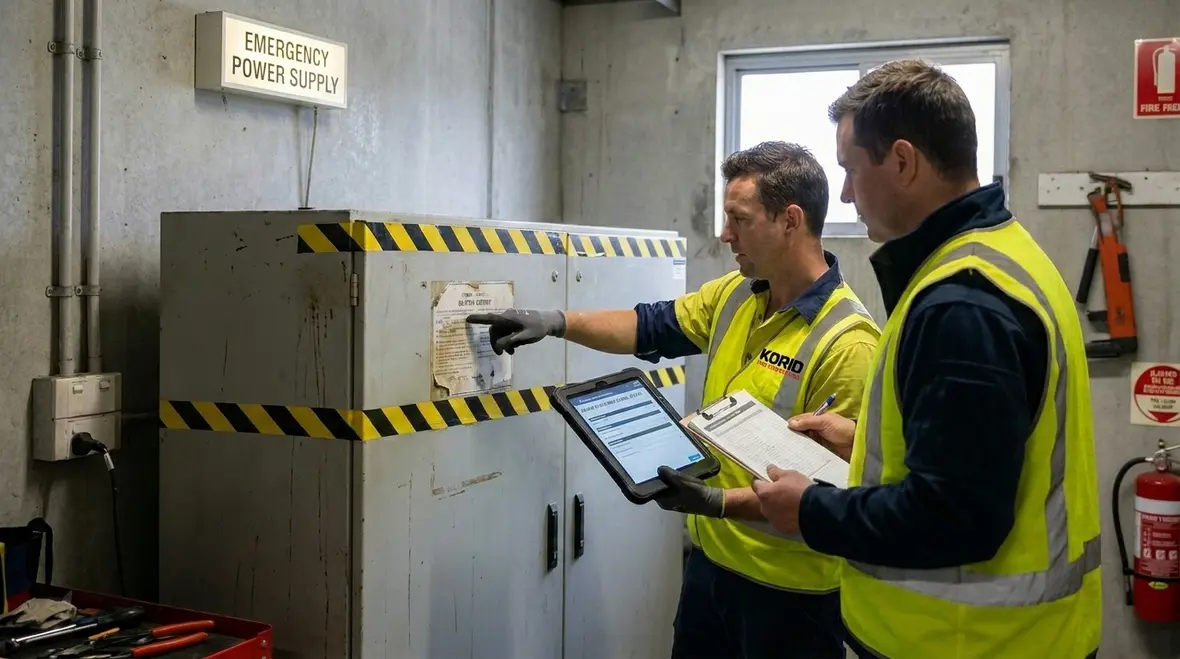
Maintenance and testing that keeps life safety dependable
Backup power does not stay reliable on trust alone. It needs a maintenance cycle that matches the device type and the site risk level. Battery systems require scheduled testing for capacity, health, and float charge behavior. Generators require load testing, fuel quality checks, and inspection of starting circuits and controls.
In addition, the facility must keep monitoring pathways clean. Supervisory signals, fault reporting, and interlocks need to remain accurate. Therefore, teams should verify that alarms display correctly at the panel and that notifications operate as designed.
Also, testing should align with operational reality. Many Australian sites cannot shut down. So planning matters. Proper scheduling reduces disruption, supports compliance, and ensures the test environment reflects the actual emergency power fire safety systems configuration. And when tests happen smoothly, stakeholders stop treating them like a yearly annoyance and start treating them like risk control.
Here, partnered service becomes a big advantage. Kord Fire Protection can help align maintenance, documentation, and verification so the right people get the right information at the right time. Facilities that already rely on broader fire protection services often find it easier to keep backup readiness connected to day to day operations instead of letting it drift into a forgotten corner of the maintenance plan.
Testing should feel boring, and that is a compliment
The best test is not the one that creates excitement. It is the one that confirms expected behavior, surfaces small issues early, and gives everyone confidence that the site can perform under pressure. If a scheduled backup power test feels like a surprise party nobody wanted, the process probably needs work.
Designing for compliance and practical uptime across multiple facility types
Across Australia, facilities vary widely. Some have complex plant rooms and dense service pathways. Others sit in retail centers where tenants share building services. Industrial and commercial sites often experience harsher conditions such as vibration, heat, and frequent process interruptions.
Therefore, backup power design should reflect these realities rather than relying on generic assumptions. For example, ventilation and accessibility around generator sets must support safe maintenance. Battery cabinets should consider heat management and physical protection. Wiring runs and termination points must maintain integrity under both normal and emergency power conditions.
At the same time, compliance must integrate with day to day management. Site managers need clear guidance on what to monitor, how to respond to faults, and who to call. This is where a service partner helps turn checklists into a system that people actually use.
Kord Fire Protection supports facilities by coordinating life safety service outcomes with real operational needs, so backup solutions stay aligned with fire alarm and related life safety strategies rather than becoming isolated assets.
How Kord Fire Protection strengthens backup power performance
Backup power works best when it is managed as part of the full fire protection ecosystem. Kord Fire Protection can become a vital partner by supporting assessment, service, and ongoing verification across industrial, retail, and commercial environments.
In many cases, facility teams already have equipment installed. Yet performance gaps still show up during real events and even during routine testing. So the partnership typically focuses on quality checks, fault analysis, and improvements that reduce repeat issues. As a result, emergency power fire safety systems stay dependable and documentation remains up to date.
Additionally, Kord Fire Protection helps facilities standardize how they manage reliability across multiple assets. Instead of each site operating like a separate universe, they can follow consistent practices for monitoring, testing, and corrective action.
To keep the process straightforward, the service workflow often includes evaluation of system health, review of the backup power configuration, then targeted actions based on risk and observed performance.
| Reliability Need | What a Strong Fire Protection Partner Does |
|---|---|
| Transfer performance | Verifies changeover behavior so signaling stays continuous |
| Capacity and runtime | Confirms batteries or generator capability under expected load |
| Fault reporting | Ensures supervision and alarms communicate the right status |
| Ongoing testing | Plans and executes tests that match real site conditions |
| Maintenance coordination | Reduces downtime and improves response to findings |
FAQ: Backup power and emergency life safety systems
Final word: protect the seconds that protect lives
Backup power sustains critical fire life safety operations by keeping emergency power running when utility power fails. Yet reliability depends on correct design, real load verification, and disciplined maintenance. Kord Fire Protection helps facilities in Australia align emergency power fire safety systems with day to day risk control, so teams can respond with confidence, not confusion.
Contact Kord Fire Protection to review your backup power readiness and strengthen performance before the next outage shows up uninvited. The goal is simple: protect the systems that protect people, and make sure those systems keep their footing when the grid doesn’t.

Join Our Newsletter!
Get the latest fire safety tips delivered straight to your inbox From our Newsletter.