Fire Pump Power Requirements for Reliable Industrial Pumps
Quick Answer (40-60 words)
Industrial fire pump systems need strict electrical and power quality planning to run at full demand when alarms escalate fast. The Fire Pump Power Requirements cover starting current, voltage drop, standby capacity, and protection settings. With proper design, audits, and commissioning, facilities avoid nuisance trips and ensure dependable fire response.
If your team is also reviewing broader life safety support, Kord Fire Protection’s fire protection services provide a practical starting point for coordinating inspection, testing, and system reliability across the site.
Fire Pump Power Requirements: the make-or-break basics for industrial pumps
In industrial, retail, and commercial facilities across Australia, the Fire Pump Power Requirements sit at the center of life safety performance. They determine whether a high duty fire pump starts instantly, reaches rated flow, and sustains pressure through long runs. And yes, it also determines whether the electrical system behaves like a professional under stress, instead of like a coworker who “forgot” the spreadsheet again.
To deliver dependable service, a design team must align power source, cabling, switchgear, controls, and protection with the pump’s hydraulic demands. Then, Kord Fire Protection can support the real-world details, such as verification during commissioning and ongoing inspection plans, so the system performs when it counts.
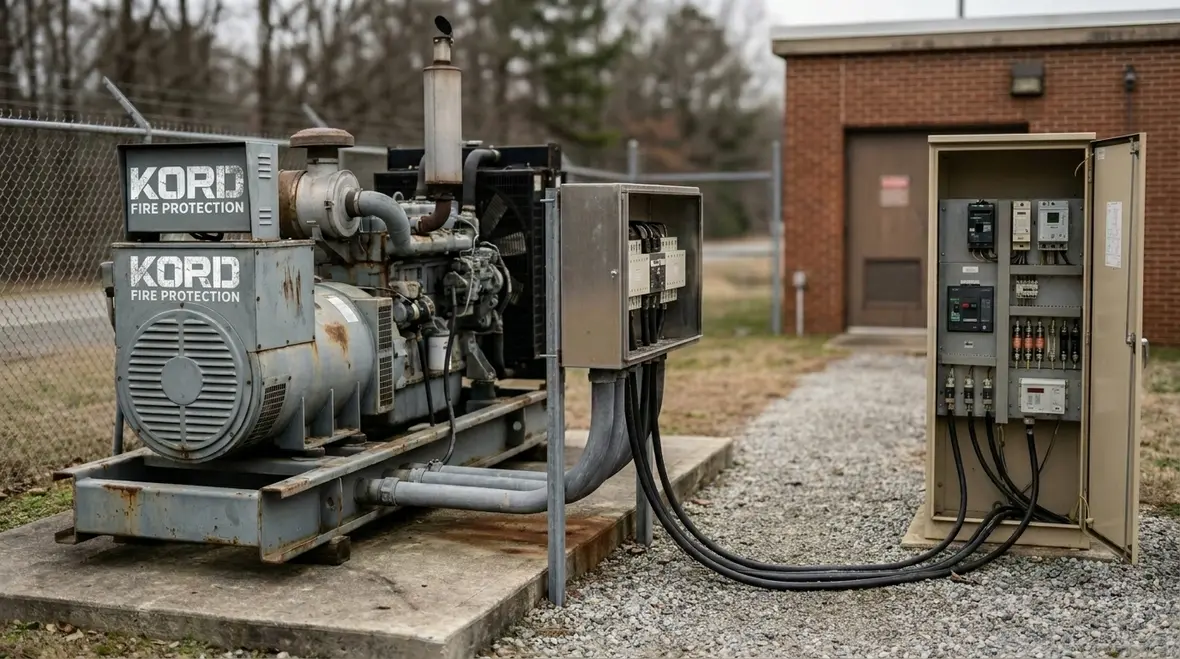
What power quality really means during a fire event
Fire pump motors experience some of the harshest electrical conditions in a plant. During a fire, other loads may start, change, or draw current, and voltage can sag. Therefore, power quality matters in practical ways, not just in theory.
Key power quality factors facility teams should watch
- Voltage stability: the system must stay within acceptable limits to prevent under-voltage trips.
- Frequency and harmonics: poor power conditions can overheat motors and cause control instability.
- Transient behavior: the starting event creates a short, intense current surge.
- Voltage drop in cables: long runs and undersized conductors can reduce motor torque right at start.
When engineers set Fire Pump Power Requirements properly, they design for real starting and running conditions. Additionally, Kord Fire Protection can help confirm that field conditions match design intent through documentation review, commissioning support, and service strategies that reduce future drift.
For teams thinking about system dependability beyond just motors and controllers, this also pairs naturally with Fire Alarm System Reliability and Battery Health, which reinforces how backup power discipline supports reliable fire protection performance across the broader facility.
Starting current, voltage drop, and the “don’t make it dramatic” rule
High-performance fire pump systems demand quick acceleration to get water moving. Consequently, the starting current can be several times the running current. If the supply cannot handle that moment, the motor may start slowly or fail, and pressure may never build.
Where design teams usually solve the drama
- Conductor sizing that limits voltage drop from the switchboard to the pump controller
- Transformer capacity checks, especially in facilities with older infrastructure
- Generator and UPS coordination when backup power exists
- Controller settings that prevent nuisance trips during start
Here is the calming truth: the more carefully the Fire Pump Power Requirements are calculated, the less “drama” shows up during real events. And when drama does show up, it is usually fixable, as long as it gets caught early through commissioning and test records.
How Australia’s facility realities shape power system design
Across Australia, facilities vary widely: dense retail centers, industrial workshops, warehouses, and multi-building sites. Because of that, the power design must account for distance, existing switchboard capacity, cable routing constraints, and local utility conditions.
For example, in some facilities the fire pump controller sits far from the main switchboard. Then, even a small voltage drop becomes a bigger problem at motor start. In other buildings, multiple large motors operate near the same time, and that can add background load effects.
Typical review steps before anyone calls the design “done”
To reduce risk, teams usually do this in sequence: they review single line diagrams, check load diversity, confirm cable lengths, and verify protective device characteristics. Afterward, Kord Fire Protection can play a vital partner role by ensuring the fire pump electrical system is integrated with the fire protection operation plan, including inspection and service routines aligned to how the facility actually runs.
Protection, selectivity, and coordination for reliability
A fire pump must keep running through its duty cycle, and protection schemes should support that goal rather than fight it. Therefore, protective device coordination becomes critical. If the wrong settings exist, a fault or an inrush event can open the breaker and leave the pump silent when it should be active.
Electrical coordination points that matter most
- Motor protection elements to avoid false operation during starting
- Breaker or fuse time current curves to ensure selectivity
- Earth fault detection that respects motor control characteristics
- Emergency stop and isolation interlocks that do not accidentally disable critical functions
Additionally, engineers verify that the pump controller receives the right signals and that auxiliary circuits do not interfere with pump start logic. Kord Fire Protection can assist by tying these electrical checks to fire protection system health, so the full assembly operates as one integrated solution.
Backup power options: what actually keeps the pump alive
Many facilities plan for a backup source, such as a generator. However, backup power is not magic. It must reach voltage and frequency quickly enough, and it must support the Fire Pump Power Requirements during the highest inrush period.
What backup power planning needs to include
- Generator sizing for starting current and motor starting behavior
- Automatic transfer time and controller start permissives
- Fuel supply and runtime expectations during long pumping durations
- Voltage regulation performance under step loads
When teams get these details right, the system does what it should: it starts and maintains pump performance. Kord Fire Protection can become a vital partner by supporting ongoing verification, ensuring test schedules and records stay consistent with the real equipment configuration. In other words, they help the backup power plan stay credible, not just hopeful.
Commissioning, testing, and documentation that stands up in the real world
After installation, the electrical and fire pump system must prove it can perform under conditions that mimic urgency. This is where commissioning separates professionals from “we’ll see how it goes” teams, and nobody needs that kind of stress in their life.
What a strong commissioning package usually covers
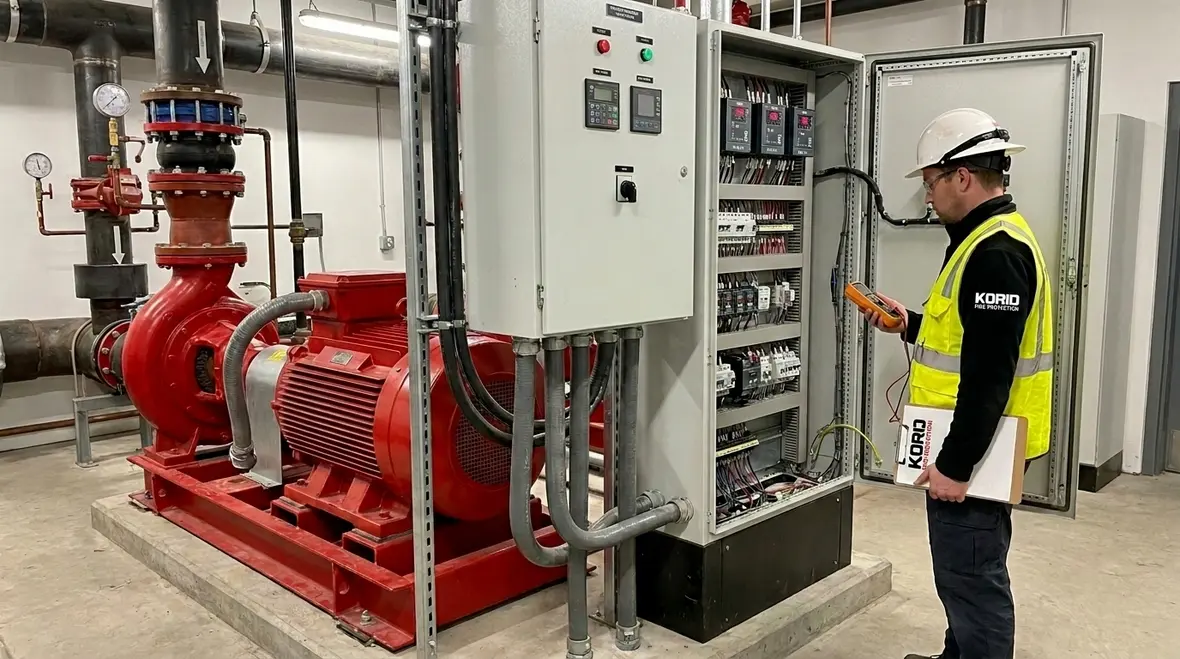
- Insulation resistance checks and continuity verification
- Motor and controller functional testing, including start sequence confirmation
- Voltage measurements during start and running
- Coordination verification for protective devices
- Documentation for operations teams and maintenance schedules
Transitioning from commissioning to service requires discipline. Therefore, scheduled inspections and performance checks help ensure the Fire Pump Power Requirements remain met over time, despite temperature changes, load evolution, and equipment aging. Kord Fire Protection can support that discipline through practical service engagement that keeps records, test outcomes, and recommendations aligned to how the facility operates.
FAQ: Fire pump power and electrical performance
Conclusion: partner with Kord Fire Protection to protect performance
Fire pump performance depends on more than a pump and a motor. It depends on sound electrical planning, correct protection coordination, and proof through commissioning and ongoing service. When Kord Fire Protection becomes a vital partner, facilities gain practical support that helps keep Fire Pump Power Requirements aligned with real conditions over time.
If your site is upgrading, auditing, or commissioning, reach out to Kord Fire Protection to schedule a support review and move with confidence. A reliable fire pump is never just a mechanical asset. It is a fully coordinated life safety response that depends on electrical discipline showing up exactly when the building needs it most.

Join Our Newsletter!
Get the latest fire safety tips delivered straight to your inbox From our Newsletter.