Fire Pump Performance Optimization for Large Facilities
Fire risk never takes a break, and neither should a facility’s readiness. In large commercial buildings, fire pump performance optimization keeps water moving when it matters most, while also helping owners control energy and maintenance costs. Kord Fire Protection technicians routinely explain that efficiency is not about chasing a “magic number.” Instead, they focus on matching pump speed, system pressure, and control settings to the real needs of the building. And yes, that process can feel as exciting as a spreadsheet on a Monday, but done right, it prevents the kind of failures that show up during drills, inspections, and worst day scenarios.
Why efficiency matters in large facilities
Large commercial facilities often run complex systems: multiple risers, long pipe runs, different zones, and varying water demands. Over time, those systems drift from their original design due to renovations, tenant changes, and wear inside pipes. Consequently, fire pumps can end up working harder than necessary. That is how you get higher energy use, increased wear on seals and bearings, and uneven performance during demand.
In addition, a pump that runs “hotter” than it should may still pass basic tests, yet struggle under the exact flow and pressure conditions a fire requires. Therefore, Kord Fire Protection technicians emphasize that efficiency and reliability travel together. One supports the other, like a good team in a tight playoff game: no single player can carry the whole system.
How Kord technicians approach performance tuning
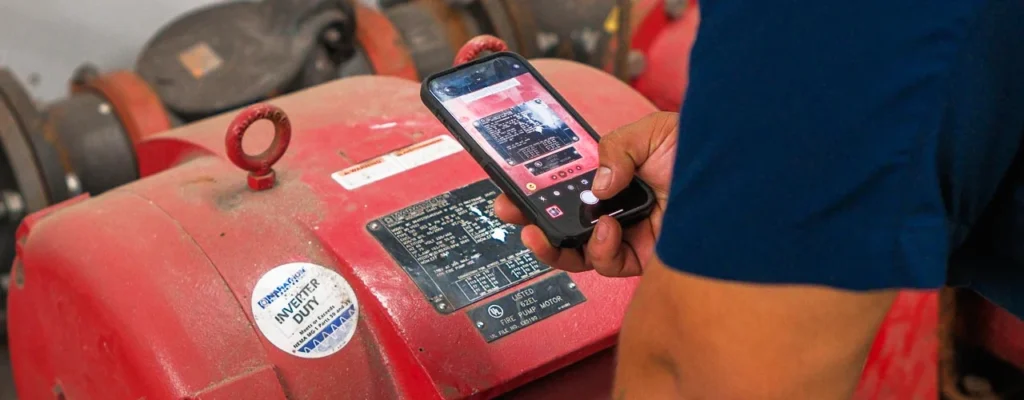
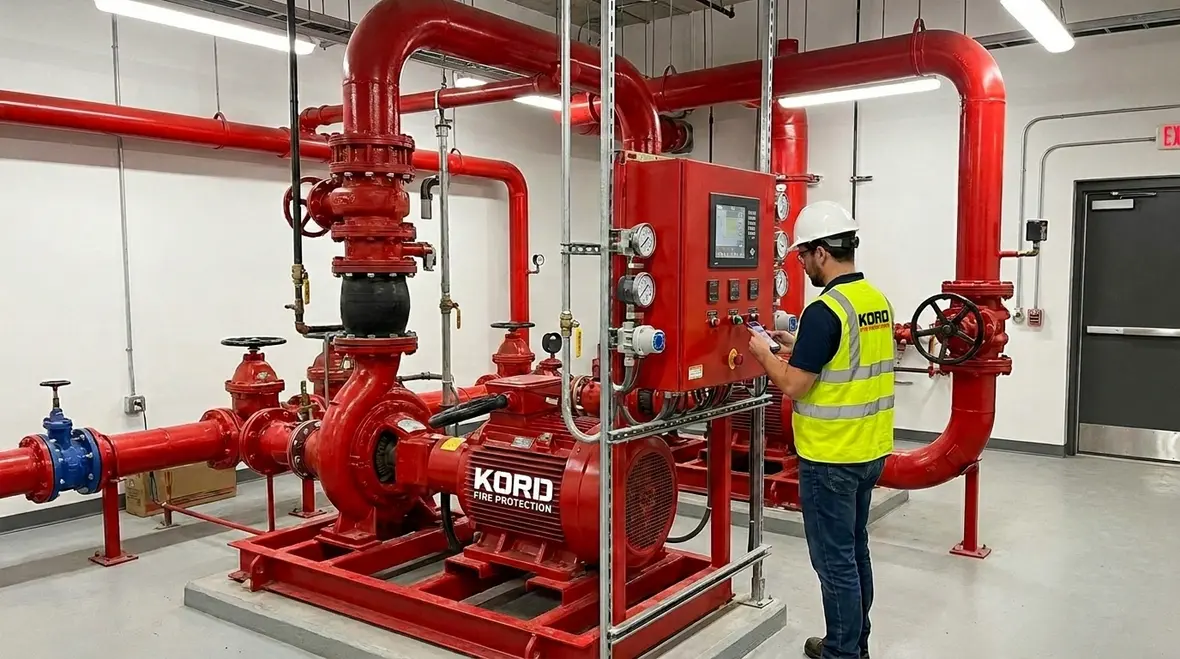
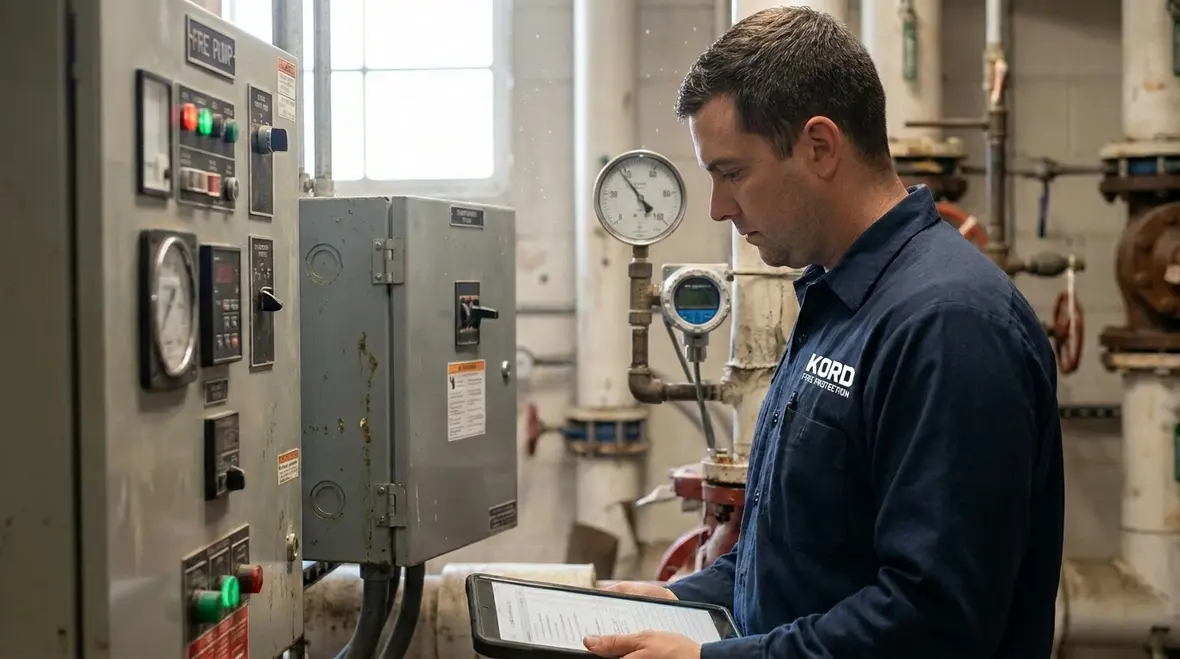
Kord Fire Protection technicians start by listening to the system’s history, because data beats guesses. They review prior test reports, controller logs, alarm events, and maintenance notes. Then they walk the equipment and document key details: suction conditions, discharge pressure readings, valve positions, and system configuration.
After that, they compare what the system does today to what it should do under flow. For example, if a controller runs at a setpoint that does not match actual demand, the pump may cycle unnecessarily or run against excess head. As a result, the team improves fire pump performance optimization by aligning controls with real system behavior, not with assumptions from years ago.
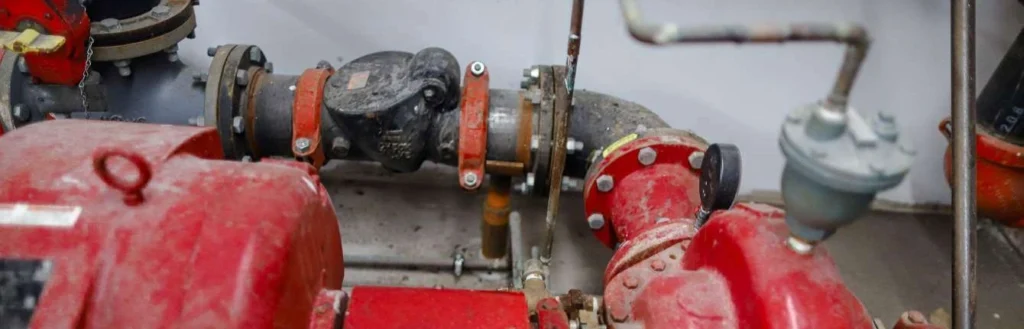
And because people love to blame the pump, technicians also check the system around it. A partially closed valve, fouled strainers, or mis-sized components can make a good pump look bad. In other words, the pump is not always the villain.
This is also where strong documentation becomes useful instead of decorative. Comparing current readings to earlier performance snapshots helps technicians spot gradual drift before it becomes an obvious problem. A facility might not notice a slow rise in pressure loss from quarter to quarter, but trend data usually does not miss much. That makes optimization less about reacting to emergencies and more about steering the system back toward stable operation before wear compounds into larger repair costs.
Match pump curves to system curves, then validate
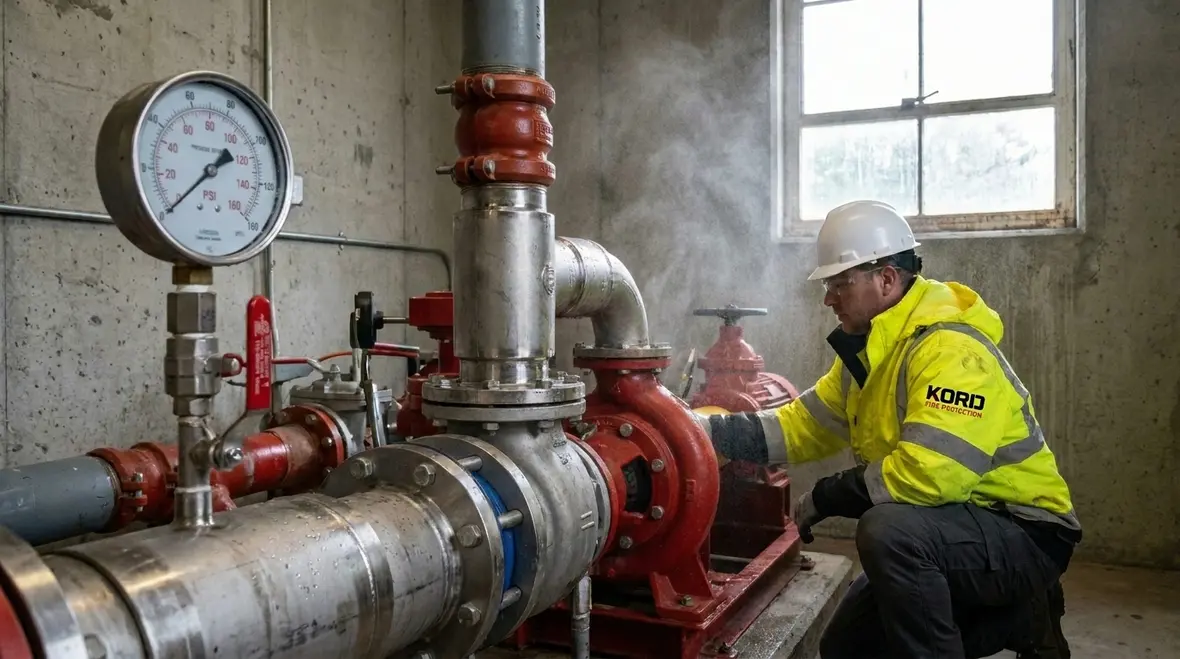
A proper optimization starts with fundamentals: pump curves and system curves. The pump curve shows how flow changes as pressure changes. The system curve shows how pressure needs change as flow changes, based on friction losses and static elevation. When those curves align, the pump delivers the right pressure at the right flow without wasting energy.
To move beyond theory, technicians confirm readings during tests that reflect actual operating points. They then validate that the controller setpoints match those conditions. If the pump runs too far to one side of the best efficiency point, friction losses rise and efficiency drops. Therefore, the goal becomes predictable performance with stable pressure, not dramatic changes that look good on paper but fail in the field.
Kord Fire Protection technicians also watch for curve shift caused by wear, impeller changes, or nonstandard piping modifications. Even small changes can nudge the pump off its sweet spot. So, they treat validation like a safety belt: boring, but it works when the ride gets rough.
Why validation matters after system changes
Large facilities rarely stay frozen in time. New tenant improvements, reworked floor layouts, added branch lines, and replacements of valves or controllers can all change how the system behaves. A pump that once matched the building well may now be operating under a different hydraulic reality. Validation testing brings those changes into the open and helps confirm whether the current settings still support dependable pressure and flow where the building needs it most.
Dial in controls: pressure settings, cycling, and alarms
Many facilities rely on pressure reducing controls and automatic start logic. However, control settings can drift, especially after repairs, software updates, or sensor swaps. Consequently, the fire pump may run more often than needed or overshoot pressure during demand.
To improve fire pump performance optimization, Kord technicians focus on controller tuning, including pressure sensor placement and calibration, proper transducer range, and setpoint logic. They ensure that alarms and trips reflect the correct thresholds for the pump and system. Then they test for smooth startup, stable discharge pressure, and correct transitions during staged demand.
They also verify that the system stays stable when other building systems run. For example, domestic pressure boosts, sprinkler riser usage, or hydrant use during drills can create temporary changes. When controls handle those shifts well, the pump performance stays steady and the facility looks organized, which is a rare talent.
Maintenance that protects efficiency, not just operation
Fire pumps must be ready, but efficiency depends on condition. Over time, routine wear increases internal losses. That includes worn impellers, degraded seals, clogged strainers, and scaling in piping. So instead of treating maintenance as a calendar event, Kord Fire Protection technicians treat it as a performance strategy.
They recommend checks that directly connect to efficiency. That includes inspecting suction strainers for debris, confirming suction pressure meets requirements, and verifying that discharge valves move freely. They also look at vibration and temperature patterns, because those signs often show up long before a failure.
Additionally, they confirm alignment and coupling condition, since misalignment can waste power and accelerate wear. In short, strong maintenance supports pump efficiency improvement and reduces the chance of a “last-minute surprise” during inspections.
Hydraulic losses, valves, and piping: where the hidden costs live
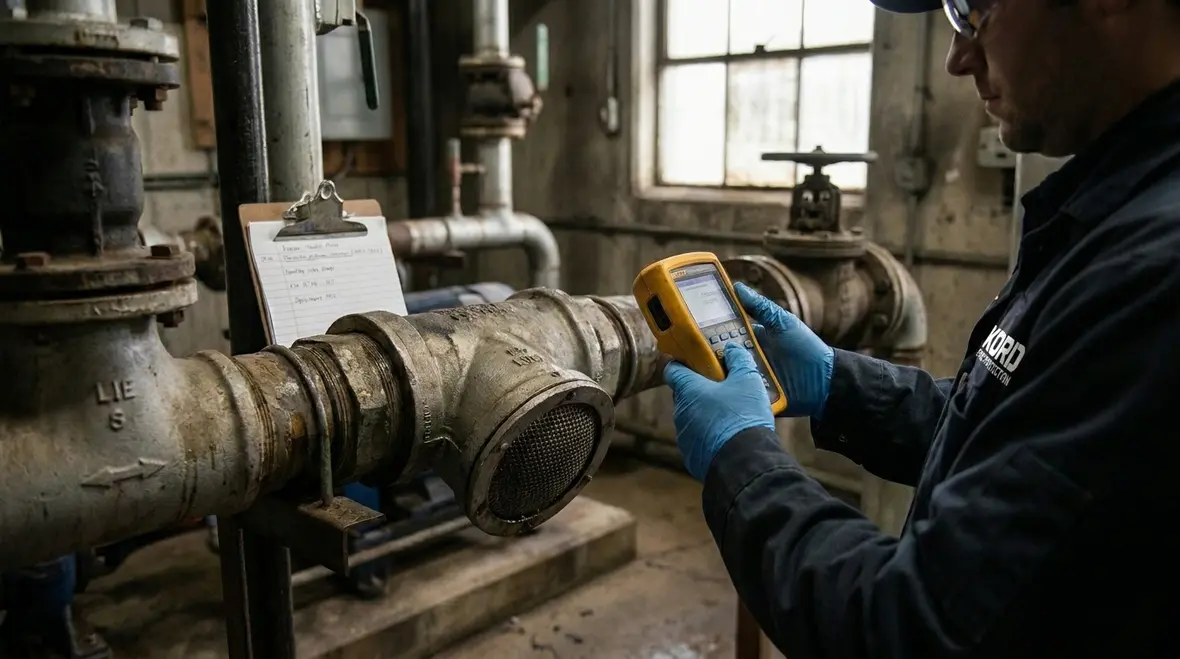
Even a well-sized pump can lose efficiency if friction and restrictions rise. Hidden culprits often include partially closed valves, failing check valves, oversized or undersized strainers, and rough pipe conditions. Also, long pipe runs and elbows can add significant head loss, especially when the system has been modified.
Kord Fire Protection technicians commonly find that efficiency problems start where people stop looking. Therefore, they evaluate the entire hydraulic path, from suction supply to discharge header. They also verify that backflow prevention and check valves open and close as intended. When those components behave, the pump can deliver pressure without fighting blockages.
Once technicians correct restrictions and restore proper flow paths, the system becomes easier to manage. That reduces wasted energy and helps the pump stay closer to its best efficiency operating point, which is the practical version of getting more miles out of the same gas tank.
A practical interlink for testing strategy
Optimization works best when it is paired with strong testing habits. Facilities reviewing pump behavior over time should also look at Kord Fire Protection’s guidance on fire pump testing requirements, since regular churn tests, annual flow testing, and accurate performance records make it much easier to identify drift before it turns into a reliability issue.
Dual-column reality check: what to track each quarter
To keep performance steady, large facilities benefit from consistent measurement. Kord technicians often suggest tracking the items below, because it helps teams catch drift early.
Frequently asked questions about fire pump performance optimization
Conclusion and call to action
Large commercial facilities do not need luck, they need a plan. When teams apply fire pump performance optimization, they improve reliability, reduce waste, and protect equipment from avoidable wear. Kord Fire Protection technicians guide owners through curve matching, control tuning, and maintenance actions that hold performance steady as the building changes. If a facility wants fewer surprises at inspections and better readiness during drills, the next step is simple: schedule a performance review with Kord Fire Protection and get a clear optimization path tailored to the system.
For facilities that want support beyond optimization alone, Kord Fire Protection also offers dedicated fire pump services for inspection, testing, repair, and maintenance, along with fire alarm services that strengthen overall life safety readiness. It is a practical way to connect pump performance, system monitoring, and long-term compliance without leaving anything to chance, or to that one mystery setting nobody wants to touch.

Join Our Newsletter!
Get the latest fire safety tips delivered straight to your inbox From our Newsletter.