Advanced Warehouse Fire Suppression Strategies for High Bays
Modern high bay warehousing depends on warehouse fire suppression strategies that protect people, product, and operations without turning the facility into a flood zone. Therefore, this article explains advanced suppression methods that help firms control fire growth fast, reduce damage, and keep airflow and access paths usable. Kord Fire Protection technicians walk through why design details matter, how inspection results guide upgrades, and what to expect when a system must work under real warehouse pressure. And yes, the systems must work even when someone leaves a forklift near a pallet like it is starring in a slow motion action movie.
A strong strategy also depends on how well suppression ties into alarm logic, inspections, and facility changes over time. That is why many warehouse teams pair suppression planning with related system reviews such as warehouse fire alarm design for high-ceiling facilities and broader readiness planning through full fire protection services. When the aisles get taller, the storage gets denser, and the airflow gets weird, the plan has to get smarter too.
What modern high bay risks require smarter suppression
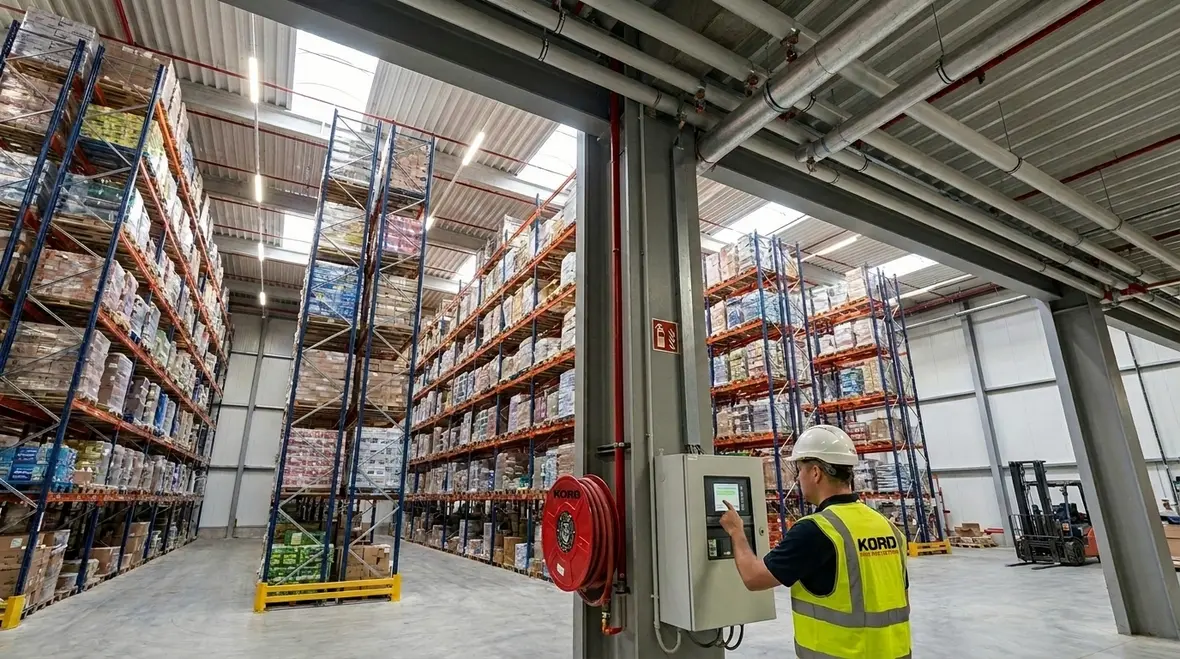
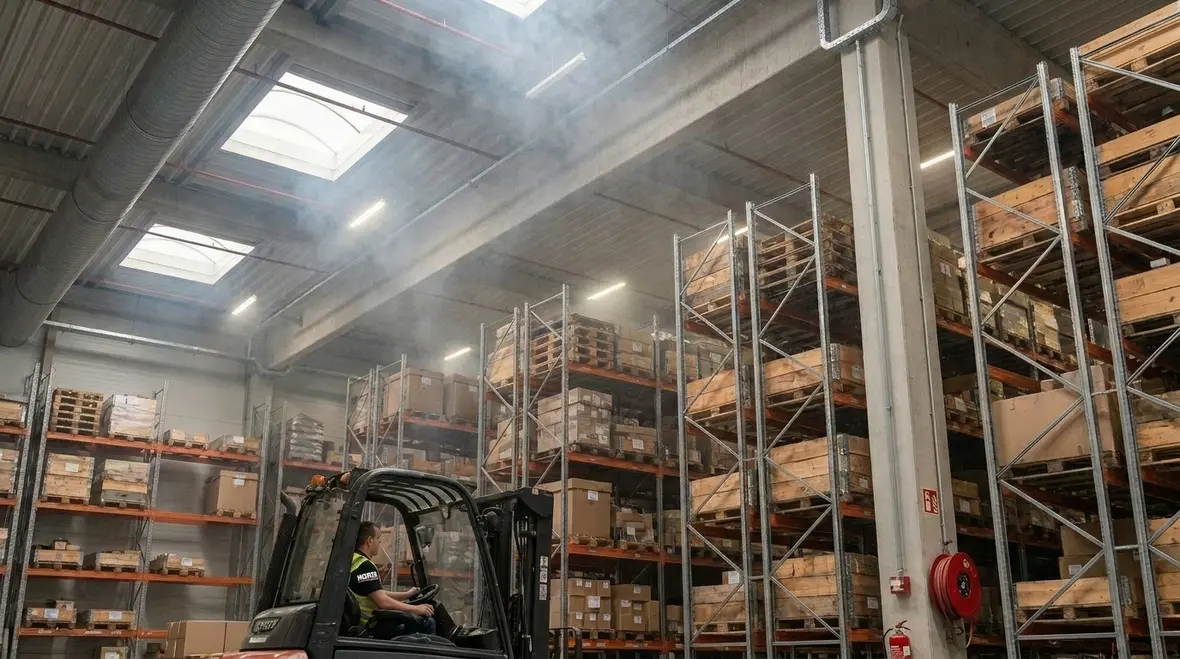
High bays change the fire story. Heat stratifies higher up, smoke travels long distances, and flames can grow before anyone sees a problem. For that reason, a modern plan does more than install and forget. It maps ignition sources, storage density, racking geometry, and how smoke moves across aisles and mezzanines. Kord Fire Protection technicians often start by measuring real conditions, not assumptions, because airflow patterns can shift with ceiling fans, dock doors, and even loading schedules.
Additionally, today’s warehouses carry more plastics, packed cartons, and mixed materials that burn hotter and faster than older inventory. As a result, suppression must react quickly and deliver the right discharge pattern where fire spreads, not where it seems to be. A delay of a few minutes can matter, and a misplaced discharge can waste coverage. This is one reason warehouse operators often benefit from comparing suppression planning with specialized layout thinking in highbay warehouse sprinkler layout guidance, especially when racking and ceiling height create unusual reach problems.
Why storage geometry changes response time
Storage geometry is not just a drawing problem. It affects whether suppression gets a clean shot at the fire or spends precious seconds fighting around product, shelving, and framing. Narrow aisles, tall pallet loads, and uneven rack heights can interrupt spray patterns and make smoke behavior less predictable. If the building has been expanded in phases, the older assumptions may not match the current layout at all. That is how a once decent design starts lagging behind reality.
Design the detection network to trigger the right system fast
Advanced suppression starts with detection. Yet detection in high bays needs careful spacing, sensor type, and placement that match ceiling height and air movement. Kord Fire Protection technicians explain that combining different detection styles helps avoid false alarms and improves reliability.
Common tactics include
- Using beam smoke detection to cover large open spaces where point sensors leave gaps
- Placing aspirating smoke detection where airflow carries smoke early, even before visible flames
- Linking detection zones to specific control logic so the response targets the right area
Then, they confirm performance with testing that reflects real airflow and seasonal changes. In practice, this means scheduling tests during typical dock traffic days and verifying the system responds as expected when doors cycle. Otherwise, the system might behave like a smoke alarm that only works during quiet hours, which is great for naps and awful for fire response.
Detection is also where coordination with service and monitoring matters. Teams that need upstream support can tie upgrades into fire alarm service systems so notification, testing, and response pathways work together instead of living in separate silos that only meet during a bad day.
Zone logic should match the building, not the brochure
A high bay warehouse rarely behaves like a clean diagram in a product sheet. Doors open, fans shift layers, forklifts move stock, and temporary storage somehow becomes permanent storage with suspicious speed. Good zone logic accounts for those realities. It identifies what should happen first, what needs confirmation, and which suppression zone actually serves the affected area. If logic is vague, the building pays for it in slower response and more confusion.
Water based suppression upgrades for high ceiling performance
Water systems remain popular because they manage fire by cooling and controlling spread. However, high bay design often needs upgrades so water reaches the right layers and surfaces. Kord Fire Protection technicians focus on coverage, discharge rate, and how quickly water starts flowing.
Depending on risk, they may evaluate
- Specialty sprinklers designed for high challenge areas, where heat and smoke behavior differ
- Improved hydraulic calculations that consider obstructions from lights, ducts, and cable trays
- Flow and pressure monitoring that helps prevent underperformance
Moreover, they pay close attention to water supply reliability. If a pump cycles late, or a valve sticks, the system cannot compensate. Therefore, they also review alarm switches, supervisory signaling, and backup power. After all, the best sprinkler head in the world cannot hit a target if the water never arrives on time.
Water supply reliability decides whether upgrades actually matter
It is easy to get excited about hardware and forget the supply side. Yet in real incidents, reliability at the pump, valve, and supervisory level often separates effective suppression from a very expensive lesson. Testing routines, churn reviews, and correction of small mechanical issues keep the glamorous parts from being let down by boring parts. Fire protection has a way of rewarding boring competence.
Clean agent and inert options where water damage cannot happen
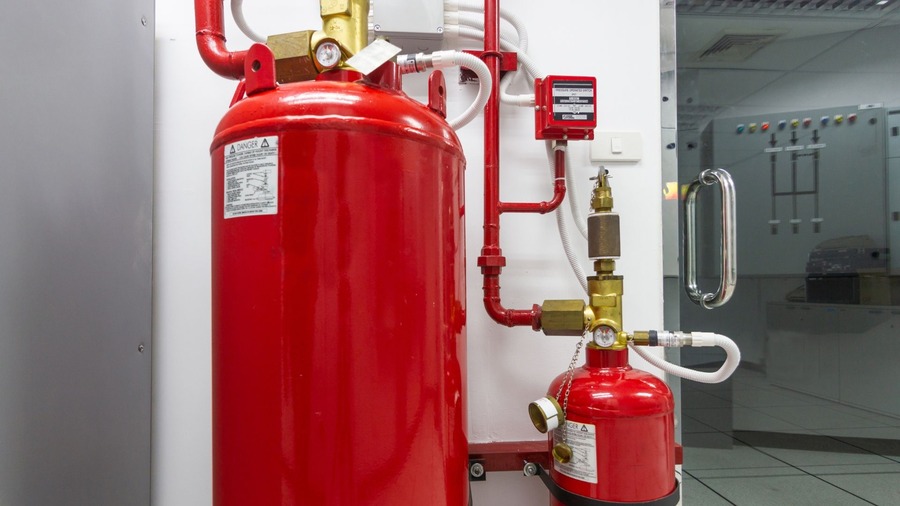
Some warehousing includes inventory, electronics, or packaging processes where water damage creates major downtime. In these cases, operators use gaseous or clean agent approaches. Kord Fire Protection technicians explain that these options depend on enclosure control, system integrity, and verified coverage.
To make this work, designers typically
- Define protected areas with realistic leakage assumptions
- Size cylinders, piping, and nozzles for discharge performance
- Coordinate ventilation shutdown so the agent stays in the protected zone
Additionally, staff training matters. The safest agent is the one that gets used correctly during a confirmed fire. Thus, Kord technicians often help draft clear operating steps so teams do not guess under stress. Because in an emergency, guessing feels like playing roulette with a fire load that always wins.
Facilities that combine water based protection with special hazard coverage often benefit from reviewing related suppression capabilities through Kord’s broader service offerings, especially when certain rooms, equipment zones, or process areas cannot tolerate a soaking.
Pre action and deluge tactics for fast control in storage aisles
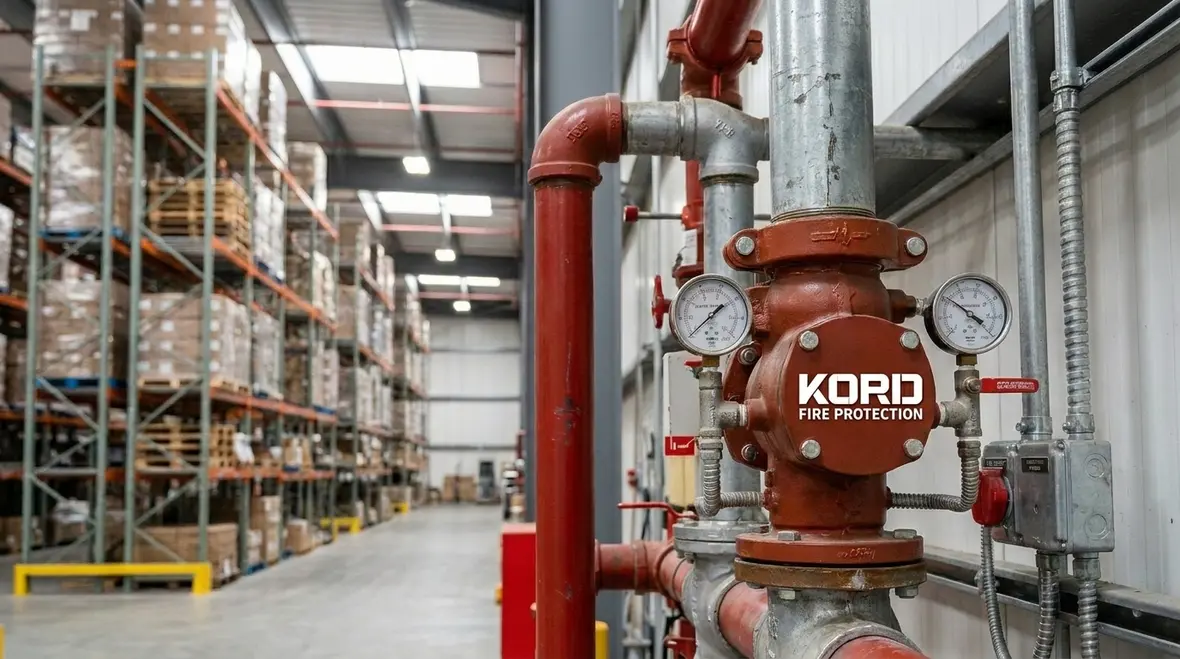
Where fires can start behind racks or hidden in dense storage, pre action and deluge systems provide staged or immediate discharge based on detection input. These methods reduce accidental water discharge while still enabling quick suppression when conditions confirm a fire. Kord Fire Protection technicians often emphasize that the logic sequence must match the site behavior, not the brochure.
Pre action systems typically require a confirmed detection step before water flows. Deluge systems can release water based on detection events, targeting rapid control. Then, engineers coordinate with fire compartment layout to limit spread and protect key corridors.
In high bay aisles, they also verify how heat affects the system. Sprinkler operation and valve actuation must remain consistent under expected thermal conditions. Therefore, they use test results and maintenance records to adjust schedules, not just follow a generic calendar.
When staged release is better than immediate discharge
The right tactic depends on what the aisle holds and how expensive a false release would be. Pre action helps where accidental discharge could interrupt operations or damage valuable goods. Deluge makes more sense when a fire can outrun hesitation. Neither option is universally right. The useful answer comes from how the building is used, how the commodities burn, and how quickly the system must move when the evidence is real.
Integrated plans: coverage mapping, obstruction rules, and zone logic
Advanced warehouse fire suppression strategies fail when crews assume the ceiling is empty and the plan is close enough. In reality, warehouses hold lights, ducts, signage, and cable runs that block water and influence smoke paths. Kord Fire Protection technicians stress that coverage mapping and obstruction rules should stay current as the facility changes.
They often use a practical workflow
- Survey the current layout and confirm rack height and aisle obstructions
- Update drawings after renovations, new lighting, or changes to stacking
- Run focused inspections on the highest risk zones and transitions
- Verify that control panels link detection to the correct suppression zone
Next, they align suppression with other safeguards like emergency access and smoke control. This matters because a system can suppress, but if smoke control fails, visibility drops and escape routes suffer. In short, the best design treats detection, suppression, and building systems as one coordinated response.
That coordination is often easier when one provider can see the whole picture. Kord’s full fire protection services page is a useful reference for teams trying to connect suppression upgrades with alarms, extinguishers, inspections, and site readiness rather than patching each issue one by one.

Maintenance, testing, and technician led inspections that keep systems ready
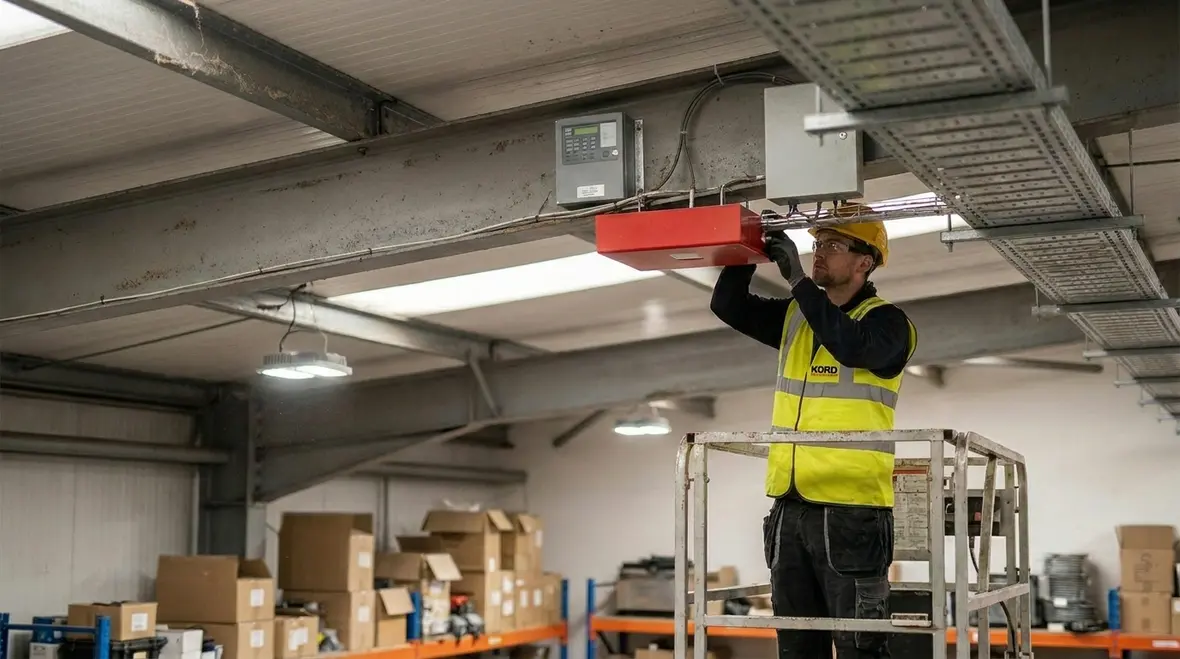
Technology matters, but performance depends on maintenance. Kord Fire Protection technicians often say that a system is only as good as its inspection history. Therefore, they emphasize routine testing, record review, and targeted correction of small issues before they become expensive failures.
Key tasks usually include
- Testing alarms and confirming supervisory signals reach the panel as designed
- Verifying pump and power backup function under scheduled conditions
- Inspecting valves, strainers, and alarm devices for blockage and wear
- Reviewing last discharge test results and applying lessons learned
Additionally, they help teams document changes in storage practices. If pallet types, pack density, or rack configurations shift, suppression performance can change too. And yes, that means the we have always stored it this way statement sometimes needs a reality check, like comparing old movie special effects to today’s standards.
Inspection trends usually reveal trouble before failure does
The biggest advantage of technician led inspections is not paperwork. It is pattern recognition. Small valve issues, delayed signals, drifting pressure trends, and layout changes often show up long before a true system failure. Catching those changes early saves money, reduces downtime, and makes the next code review feel a lot less dramatic.
FAQ
Call Kord Fire Protection technicians for a suppression plan built for real aisles
Advanced suppression for modern high bay warehousing should match the way fires grow in your specific racks, airflow, and storage patterns. Kord Fire Protection technicians help teams map coverage, refine detection and zone logic, and confirm that water or clean agent performance meets real conditions, not guesswork. If you want fewer surprises during inspections and faster, more targeted fire response, contact Kord Fire Protection today and schedule a site evaluation.
For teams ready to connect warehouse suppression upgrades with alarm support and ongoing service, visit Fire Alarm Service Systems or explore Full Fire Protection Services to build a more complete plan. Then watch your plan move from seems fine to ready, which is the only version that matters.

Join Our Newsletter!
Get the latest fire safety tips delivered straight to your inbox From our Newsletter.