Automatic Fire Suppression Activation Sequence in Australia
Quick Answer: Automatic fire suppression systems activate by detecting heat or smoke, confirming a fire condition, releasing an extinguishing agent, and then monitoring the area until the risk is controlled. When businesses in Australia need reliable performance, Kord Fire Protection helps design, install, service, and keep the protection sequence ready to go, every time.
In a real incident, an automatic system does not “guess.” It follows an automatic fire suppression activation sequence: detection triggers, logic verifies, the control panel commands release, the agent floods or coats the hazard, and the system monitors until conditions stabilize. Then people can focus on safety and evacuation, not on playing hero with a fire extinguisher from behind the counter. And yes, that extinguisher should still be there, because even smart systems deserve backup.
For industrial, retail, and commercial facilities across Australia, the mechanics behind this process matter. Because when a system acts fast and correctly, it can reduce downtime, limit damage, and protect lives. Near the start of that protection chain, reliable fire alarm service helps ensure the system can detect trouble clearly before suppression has to do the heavy lifting. Now the calm part: this article explains how the activation works, what can cause delays, and how Kord Fire Protection becomes a vital partner before, during, and after commissioning.
1) How detection starts the automatic release process
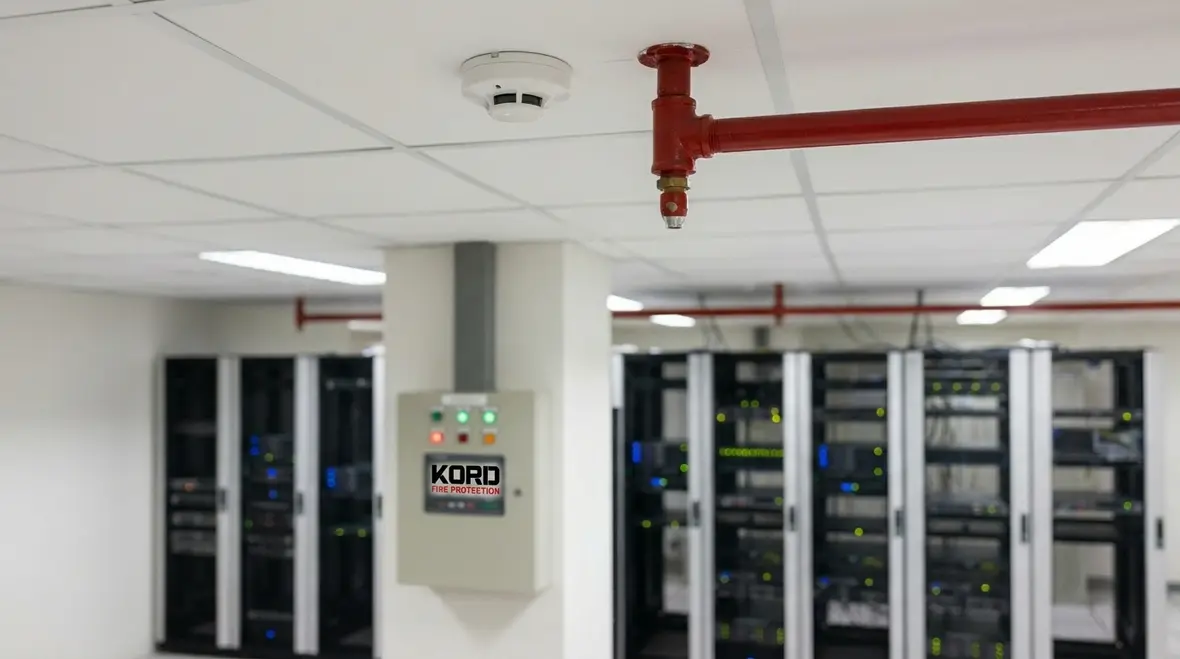
Most automatic systems begin with one of two detection styles. First, they monitor heat through thermal elements like fixed-temperature sensors or rate of rise devices. Second, they monitor smoke using photoelectric or aspirating detection. In industrial spaces, this choice matters because each hazard behaves differently. For example, a packaging line may produce visible smoke patterns, while a flammable liquid area may create rapid heat rise.
Once detection occurs, the system does not immediately flood the space on a “single belief.” Instead, it typically sends signals to the control panel, and then the control logic checks whether the event meets defined criteria. This reduces false trips caused by steam, cooking vapors, or nuisance dust, which is great news for facilities that already run hard and fast, like it is their full time job to be busy.
Additionally, well planned detection layouts help the system “see” the hazard where it matters. That means the sensing devices use correct spacing, mounting height, and zoning. If the system cannot properly identify where smoke or heat rises, the rest of the activation sequence becomes paperwork, not protection. Kord Fire Protection also covers this broader relationship between sensing and suppression in its article on fire detection and suppression systems, which fits naturally with how activation logic is built in the real world.
Why early detection has to be precise
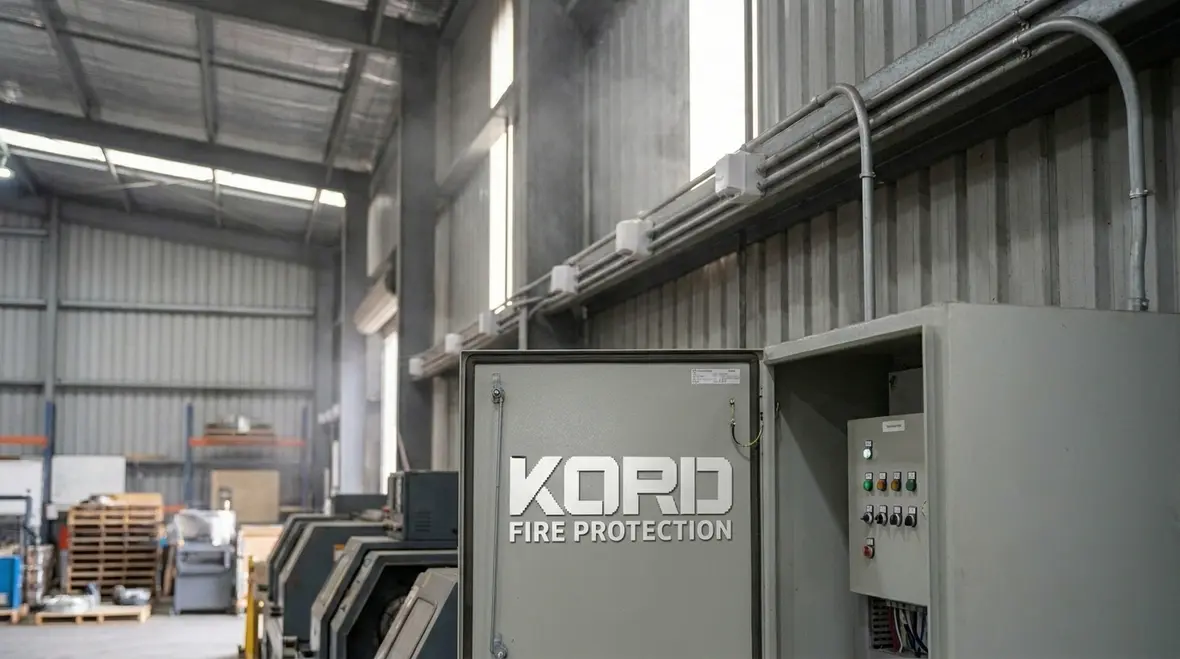
Detection is the first domino. If it tips too late, the fire grows. If it tips for the wrong reason, the site deals with nuisance alarms, downtime, and a whole lot of annoyed people asking why production stopped for steam that looked dramatic for no reason. That is why precision matters just as much as speed.
2) What control logic and interlocks do before discharge
After the initial detection signal, the control panel processes alarms and verifies conditions. Here, automatic fire suppression activation sequence mechanics shift from “detect” to “confirm.” Depending on the system type, the panel may require multiple inputs such as two detector zones, a verified signal from a second type of detector, or a manual abort requirement.
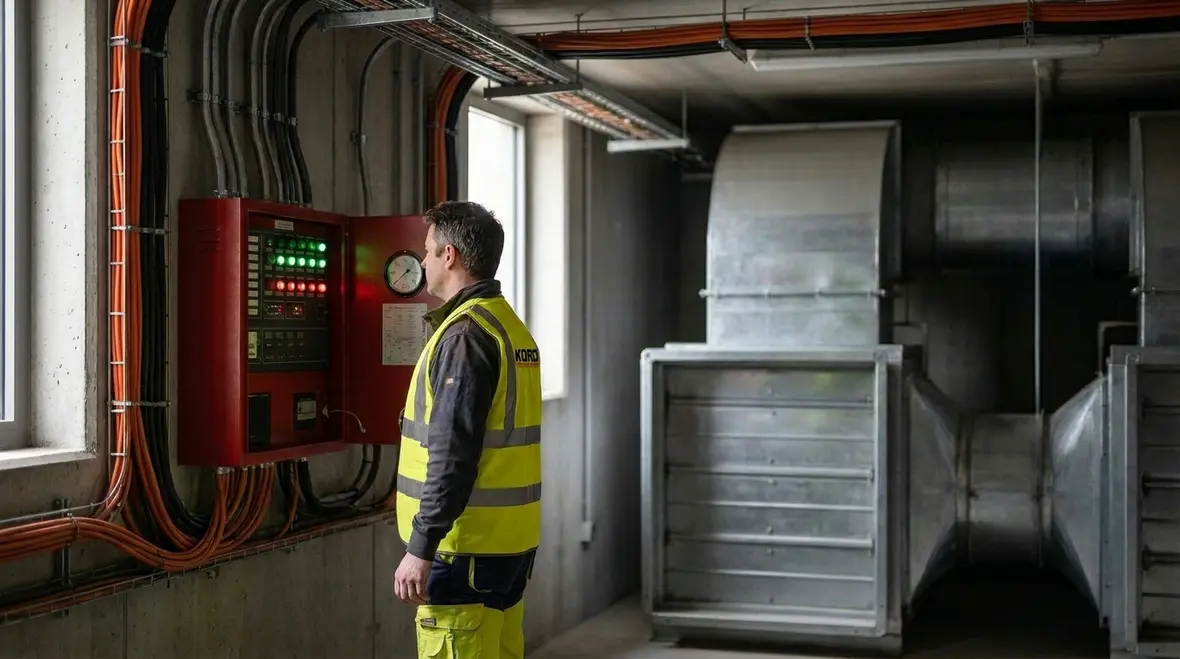
Next, interlocks and outputs prepare the environment. This often includes shutting down ventilation fans that could push fire byproducts into other areas. It may also include closing dampers or activating alarms to clear occupants. For gas based systems, it can also trigger time delays so a protected release does not catch people in the zone.
This part prevents chaos. Imagine a system that dumps agent while a team is still investigating. That is not “modern safety.” That is chaos with a green button. Control logic keeps the sequence deliberate, so the agent goes where it needs to go and when it should. It is also why integrated planning matters, and Kord Fire Protection’s piece on fire alarm system integration for smarter building response is a useful related read for teams thinking beyond standalone devices.
Interlocks are the quiet problem-solvers
When interlocks work properly, nobody celebrates them, because everything simply happens in the right order. Fans stop. Signals transfer. Occupants get warned. The panel behaves like the adult in the room. That quiet coordination is exactly what keeps a suppression release from becoming a badly timed surprise.
3) How agent release works in real conditions
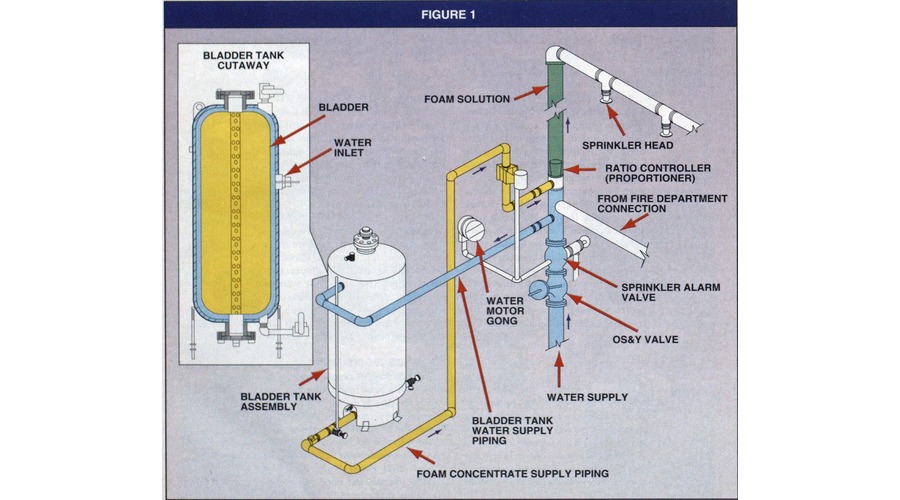
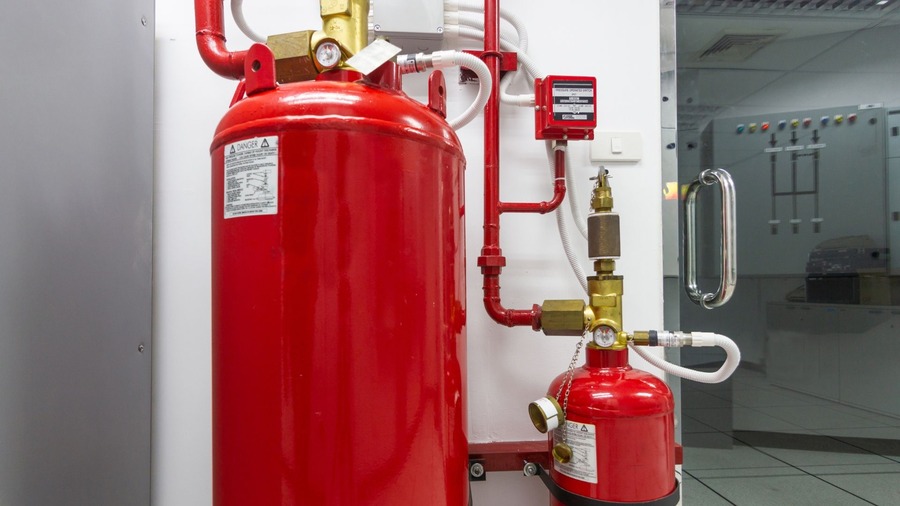
When the system reaches the discharge command, it uses one of several release methods. Some systems use stored pressure to push agent through piping. Others use cylinders that discharge into distribution networks. In both cases, the release path must match the hazard design so the agent reaches the protected volume effectively.
During discharge, valves open in a controlled order. Then the system starts moving the extinguishing agent into the correct distribution pattern through nozzles or outlets. Meanwhile, any delay stages for staff egress and verification keep the process safe for occupants.
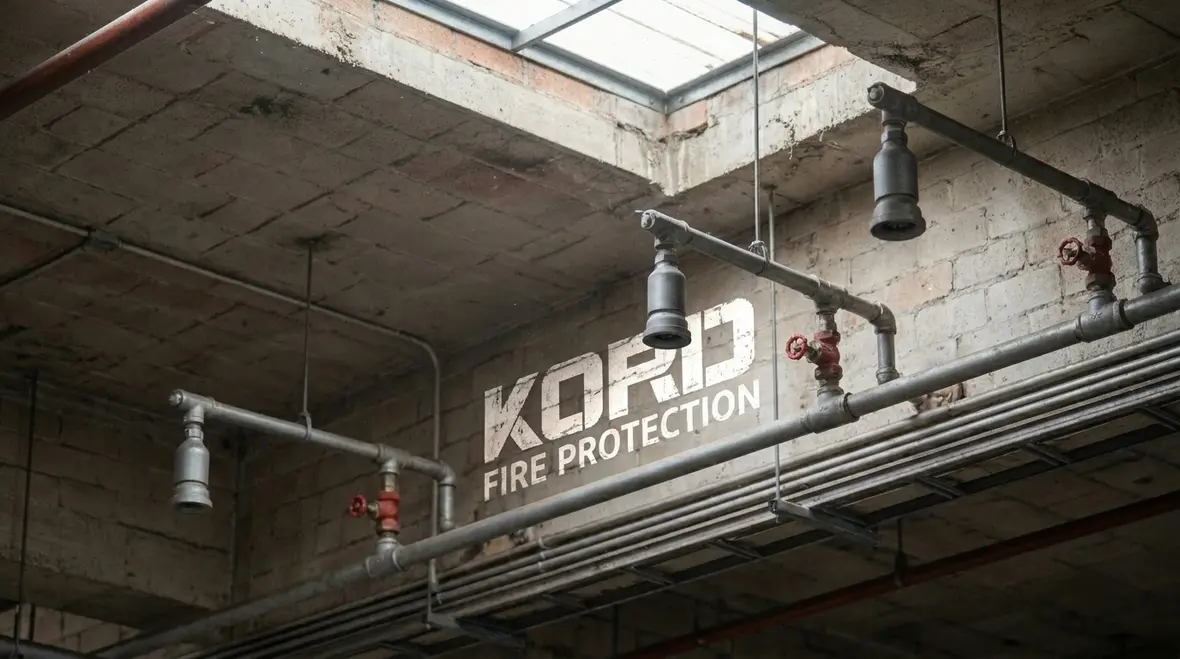
After the agent begins to flow, the design goal is either quick knockdown or sustained control, depending on the hazard type and fuel load. For example, extinguishing gases aim to reduce oxygen availability, while water mist or sprinkler related systems focus on cooling and suppression. Foam systems handle liquid fuel surfaces by forming a barrier. In each scenario, the “mechanics” are about correct flow rates, correct pipe sizing, and correct outlet placement, not luck.
Real world discharge is about distribution, not drama
Movies love a giant burst and instant success. Real suppression systems are less theatrical and much more disciplined. The result depends on whether the agent reaches the hazard the way the design intended. If distribution is wrong, the system can be technically active and still underperform, which is a very expensive way to learn that nozzle placement is not decorative.
4) Monitoring, reset, and why system health matters
Automatic fire suppression activation sequence mechanics do not end at discharge. The system continues to monitor. It checks for alarm confirmation, supervises pressure where relevant, verifies integrity of detection loops, and watches for conditions that indicate sustained risk.
Then maintenance teams handle reset and rearm. That might involve replacing discharged cylinders, restoring low pressure readings, testing detection response, and confirming valves operate smoothly. If a facility skips these steps, the next incident may not follow the plan. Instead, it may follow the plot twist nobody ordered.
System health also includes checking wiring, inspecting nozzles for blockage, verifying hydraulic performance where water is used, and testing control panel functions. In busy Australian sites, this matters because dust, vibration, and temperature swings can all affect components over time. Facilities that want stronger coordination between panel activity and ongoing response may also find value in Kord Fire Protection’s overview of what fire alarm monitoring is and how it works.
5) Common reasons activation fails and how to prevent them
Even the best design can struggle if the site changes. First, physical modifications can block access to piping runs or shift airflow patterns. Second, poorly maintained detection zones can create nuisance alarms or reduce sensitivity. Third, delayed approvals during commissioning can leave interlocks unverified.
Another frequent issue involves storage and layout changes in warehouses and retail back-of-house areas. People move pallets. They add shelving. They reroute cables. And suddenly, the system thinks the fire behaves like last year’s inventory. It rarely does.
To prevent these failures, facilities benefit from structured inspections, testing, and documentation. Kord Fire Protection supports this with practical service planning across industrial, retail, and commercial environments, helping businesses keep their suppression systems aligned with how the site operates today, not how it operated in the original drawings. If the site also depends on linked alarms, panels, and related components, Kord Fire Protection’s fire alarm service systems page is a natural service reference point for ongoing support.
Most failures start long before a fire
Suppression systems usually do not fail because they forgot what their job was. They fail because something changed, something drifted, or something got ignored. The fire merely exposes that neglect at the worst possible moment. That is why inspections and updates are not administrative filler. They are part of the activation sequence long before detection ever starts.
6) Why Kord Fire Protection becomes a vital partner
Choosing a fire safety provider is not just about installing hardware. It is about long term performance, compliance readiness, and fast response when something needs attention. Kord Fire Protection positions itself as a vital partner because it focuses on the entire life cycle, from design assistance to commissioning support and ongoing service.
For Australian businesses, that partnership matters because the “mechanics” only work when the system stays healthy. That means periodic testing, proper record keeping, and corrective action when inspections find wear, tampering, or component drift.
Also, the operational reality in many facilities requires clear communication. Kord Fire Protection helps stakeholders understand what triggers the automatic fire suppression activation sequence, what staff should do during pre discharge delays, and how to maintain safe operations around the system.
In other words, Kord helps protect people and property, while keeping the facility from turning fire protection into a mystery show where the ending depends on luck.
7) Dual column guide: what to check before an event
Area to verify
- Detection zones
- Control panel logic
- Agent distribution
- Supervision and pressures
- Maintenance records
Why it affects activation
- Correct sensing placement helps the system confirm a hazard instead of guessing.
- Proper confirmation and interlocks keep discharge timed and safe for occupants.
- Correct pipe sizing, outlet spacing, and nozzle condition help the agent reach the target.
- Low pressure or faulty supervision can stop or delay release.
- Documented tests prove readiness and prevent “we thought it was fine” situations.
FAQ
Conclusion
Automatic systems protect at speed, but they rely on correct mechanics, healthy components, and verified logic. For industrial, retail, and commercial sites across Australia, Kord Fire Protection helps keep the suppression plan aligned with real operations, not just original drawings.
If a system is due for inspection, or a layout change is underway, they can review readiness and support safe performance. Reach out to Kord Fire Protection to get your next service plan locked in.

Join Our Newsletter!
Get the latest fire safety tips delivered straight to your inbox From our Newsletter.