Fire Alarm Cabling Standards for Commercial Installations
Quick answer: Commercial fire alarm cabling succeeds when teams plan the route, spec the right wire and devices, install with proper segregation, and test everything before handover. The best results come from following proven fire alarm cabling standards, documenting changes, and keeping inspections tight.
Fire safety systems do not forgive shortcuts, and nowhere is that more obvious than during cabling. In the first place, teams should follow the site aligned fire alarm cabling standards for wire type, separation rules, enclosure practices, and labeling. Next, they must coordinate with architects, mechanical trades, and electricians so the system works on day one and day one hundred. Meanwhile, the install still needs to be readable, testable, and maintainable, not a spaghetti bowl disguised as “future flexibility.”
For properties that need broader system support beyond cabling alone, Kord Fire Protection’s fire alarm services fit naturally into projects where installation quality, inspections, maintenance, and compliance all have to line up without drama.
Fire alarm cabling standards that reduce risk in commercial sites
In commercial, industrial, retail, and multi site facilities, the cabling job often decides whether the fire alarm system performs when it actually matters. Therefore, the system should receive consistent electrical behavior from panel to device. Teams typically build that consistency using the right cable selection, correct polarity and loop configuration, and installation methods that prevent damage from heat, moisture, and mechanical strain.
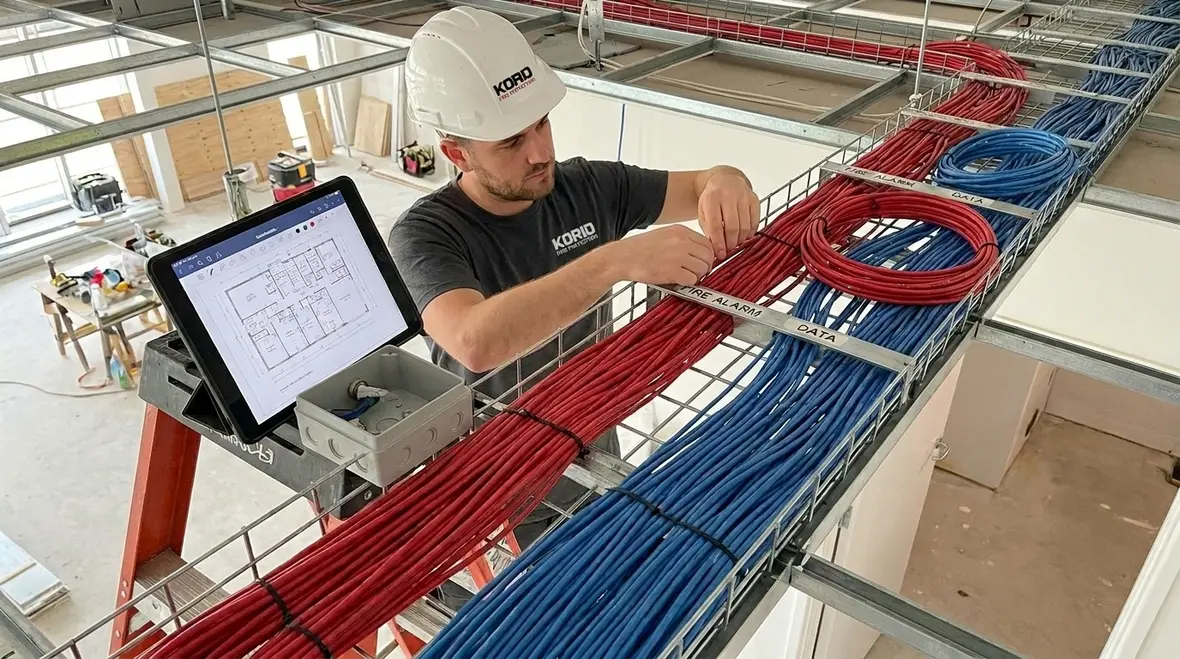
Additionally, professionals apply segregation between fire alarm circuits and other power or data wiring. This is not “belt and suspenders” behavior, it is basic engineering hygiene. If the cables run too close to high noise sources, false events become the uninvited guest at every test. And yes, the client will notice, even if it feels like nobody wants to talk about it.
Planning routes and cable schedules before the first drill hit
Map the route before the ceiling closes
Before any conduit is set, a project team should map the pathway from panel to detectors, call points, and sounders. Consequently, the design should show cable routes, entry points, junction locations, and device spacing impacts. When teams plan properly, they avoid mid job redesigns that create delays and change risk profiles.
They also develop a cable schedule that states conductor count, cable diameter, insulation type, color codes, and expected loop length behavior. This schedule helps avoid two common problems. First, installers end up swapping cable types because “it’s close enough.” Second, they run cables without allowing for expansion joints, ceiling access, or future maintenance.
Use coordination meetings to stop avoidable surprises
To keep it business friendly, teams should hold a short coordination meeting with facilities staff, electricians, and other affected trades. They often know where future plant changes will occur, where access gets tight, and which ceiling areas already have too many services competing for the same real estate. That knowledge prevents last minute surprises and saves everyone from pretending a bad route was the plan all along.
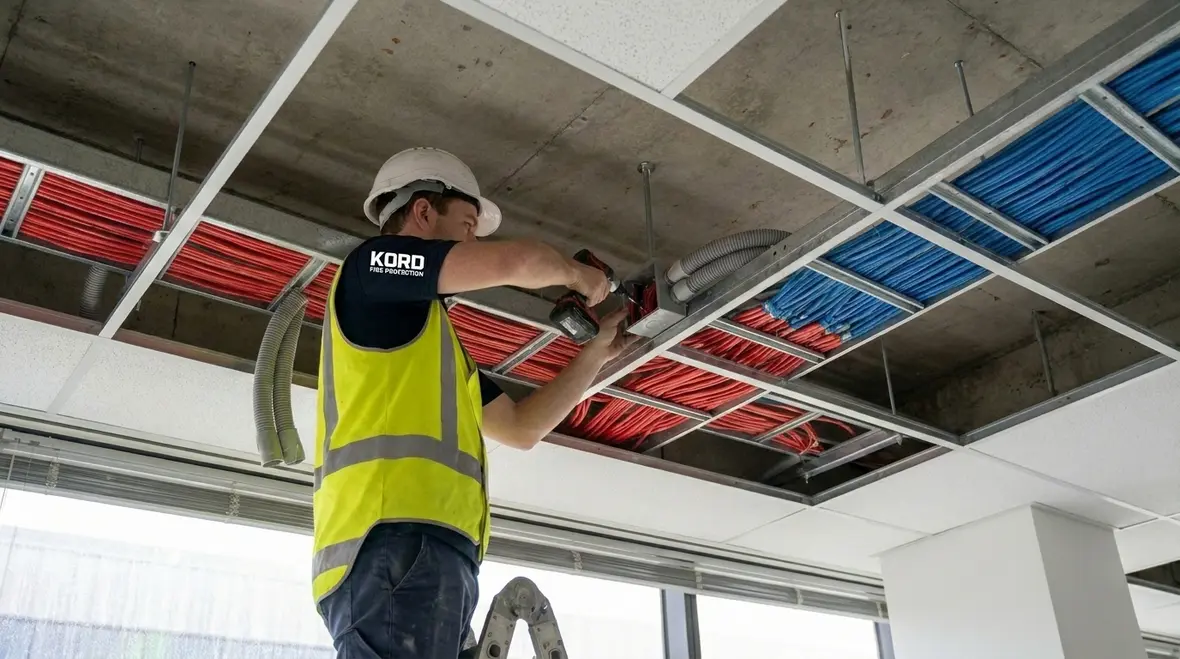
How to install and protect loops, splices, and terminations
Protect the cable before the panel ever sees a signal
Once routes are approved, the crew should install cabling using stable support spacing, correct bend radii, and secure fixing methods. In addition, they should protect cable during pulling to avoid insulation cuts. Cable pulling is where many systems quietly lose performance, because damage may not show until later testing or commissioning.
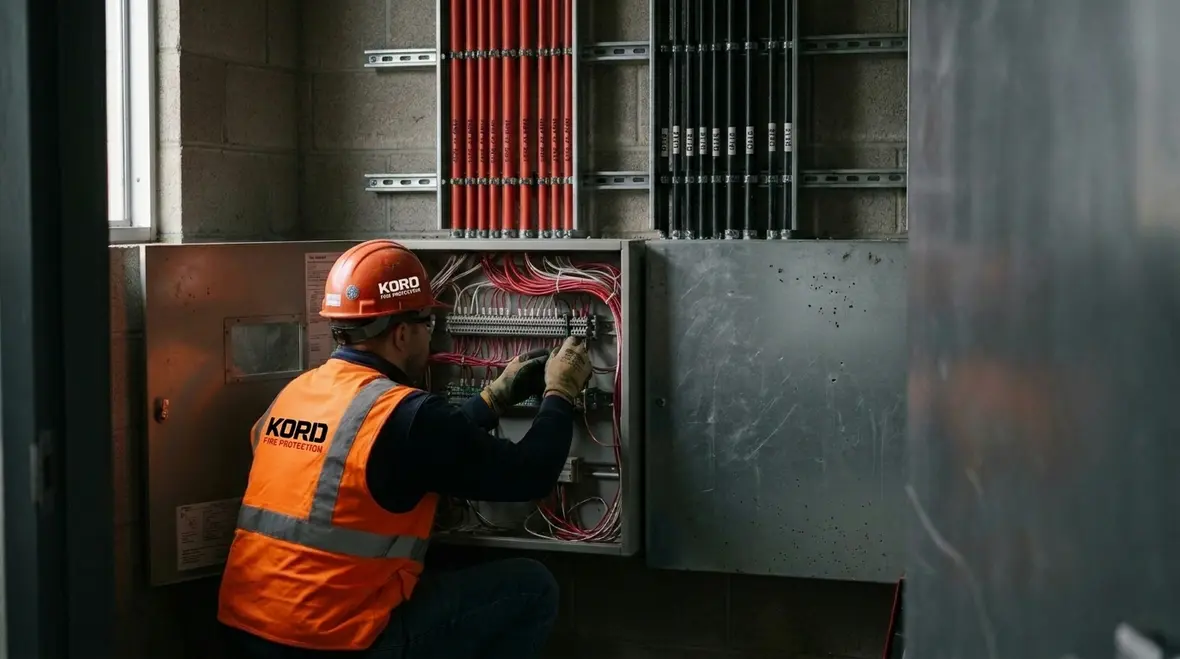
For splices and junctions, teams should use approved methods and keep them accessible where the standards require. Furthermore, splices should not become “hidden decisions.” Every connection should maintain continuity and withstand the environment. Poor terminations can also lead to intermittent faults that appear only under load, which is the electrical equivalent of a prank that lasts weeks.
Label like a future technician will need answers fast
Good labeling is not paperwork theater. It is what turns a stressful service call into a controlled process. Panels, loops, field devices, and junction locations should be marked clearly enough that a technician can trace the system without detective work. When labels are clean and documentation matches the field, troubleshooting gets faster, handover gets smoother, and nobody has to guess which cable was “probably” meant for that circuit.
Segregation and separation rules for clean signaling
Fire alarm signaling needs a calm electrical environment. Therefore, teams separate fire alarm cabling from other services that can introduce interference. They also manage pathways so heat sources, water risk areas, and mechanical traffic do not attack the cable.
In a typical commercial floor, separation affects how trays are laid out, how conduits are routed, and how penetrations are sealed. As a result, installers should plan tray sharing early. When crews decide later, they often rework walls and ceilings, and that rework can become expensive fast.
Environmental conditions matter too. Coastal corrosion, hot warehouse roofs, wet service areas, and rooftop UV exposure all change what “good enough” looks like. Teams should align cable protection with site conditions and make sure penetrations through rated elements are sealed correctly so the pathway does not become the weak link in an otherwise solid system.
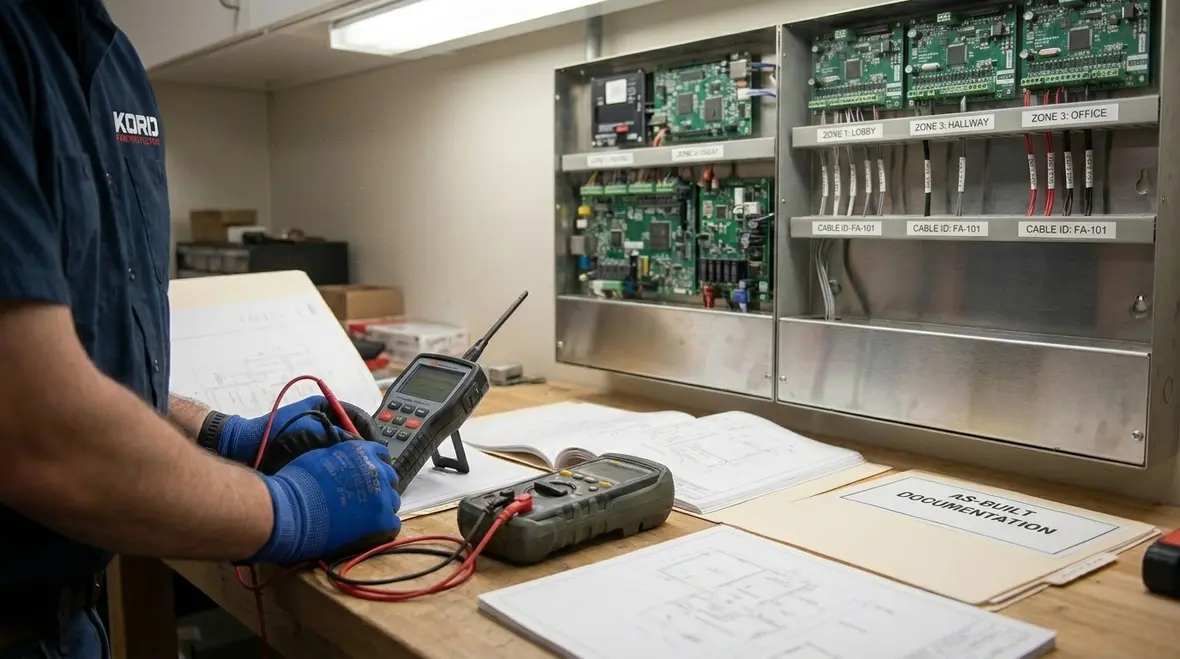
Testing, documentation, and handover that keep operations smooth
Stage the testing so problems show up early
Even the best install fails if testing and records fall short. To avoid that, crews should test circuits using the commissioning procedures required for fire alarm systems. They should verify continuity, polarity, insulation resistance where applicable, and device address mapping. After testing, they should record results in a format that maintenance teams can actually use.
Documentation should include as built cable routes, labeling, panel prints, zone information, and any deviations from design. Consequently, maintenance technicians can locate faults quickly and replace devices without guesswork. It is the difference between “we’ll sort it out” and “we fixed it in thirty minutes.”
Also, teams should confirm that pathways remain accessible for future work. If a cable route blocks access to dampers, plant access, or ceiling tiles, the system may still function, but the organization will hate the maintenance phase. And in facilities, hatred is expensive.
If your team is tightening up testing workflows, Kord Fire Protection also has a useful article on fire alarm inspection and testing for commercial buildings that pairs well with a cabling-first discussion like this one.
Why Kord Fire Protection can be a vital partner for cabling projects
Commercial cabling projects run across multiple trades and tight schedules. In that reality, Kord Fire Protection becomes valuable when it supports the job beyond install labor. Kord Fire Protection can help teams align fire alarm design intent with practical cabling execution, so standards do not get lost between drawings and reality.
Specifically, a coordinated partner helps review cabling requirements, validate segregation plans, and support correct device placement so the system meets performance expectations. Then, during commissioning, they can guide testing and documentation practices that help facilities pass inspections with confidence.
If a facility team wants fewer surprises during compliance checks, the cabling partner should also help manage change control. After all, the biggest cabling problems often start as “small adjustments” during construction. Kord Fire Protection helps keep those adjustments aligned with fire alarm cabling standards and overall system behavior.
Dual view: standards details and execution checks that matter
Common mistakes in commercial fire alarm wiring and how teams avoid them
Even experienced crews run into predictable issues. One common mistake involves inconsistent cable type usage, where “available on site” becomes the deciding factor instead of spec compliance. Another involves routing fire alarm cables too close to power conduits without adequate separation. Consequently, crews sometimes see false alarms during commissioning or early operation, then spend days chasing ghosts.
Teams also forget about physical protection. Without proper conduit, tray barriers, and penetration sealing, damage can occur during installation and later during maintenance work. Furthermore, poor cable labeling causes delays during tests because technicians cannot confirm circuit identity quickly.
To avoid these issues, leaders should require a pre pull checklist and a post pull verification. Then, they should conduct staged testing so problems surface early, not after the ceiling is closed. That one decision alone can save a budget that would otherwise get eaten like a lunchtime snack.
FAQ
Conclusion: choose a partner that installs and stands behind the outcome
Commercial fire alarm cabling should not be treated like an afterthought. When teams follow fire alarm cabling standards, plan routes early, protect cables well, and document everything, the system performs when it matters. Clean routing, correct separation, and disciplined testing are not glamorous, but they are exactly what keeps a project from turning into a long list of avoidable callbacks.
Kord Fire Protection can act as a vital partner to support alignment, testing, and commissioning confidence. If your next project needs fewer surprises and a cleaner handover, explore Kord Fire Protection’s full fire protection services and get the right team involved before small cabling decisions become expensive problems.

Join Our Newsletter!
Get the latest fire safety tips delivered straight to your inbox From our Newsletter.