Fire Protection System Connectivity with Smart Building Integration
When a business connects its fire protection system connectivity to smart building controls, the whole facility starts to behave like a well trained team, not a bunch of separate departments playing their own games. Kord Fire Protection technicians often explain this shift in a calm, practical way, because the goal is simple: detect earlier, communicate faster, and respond with less guesswork. And while some people imagine “smart” means flashy apps and neon dashboards, the real win comes from reliable data, clear alerts, and tighter coordination between life safety systems and building operations.
Below, the team at Kord Fire Protection walks through how smart technology fits commercial fire protection systems without turning safety into a science project that fails at rollout. After all, nobody wants a fire alarm that acts like a temperamental phone charger.
How smart tech upgrades commercial detection and monitoring
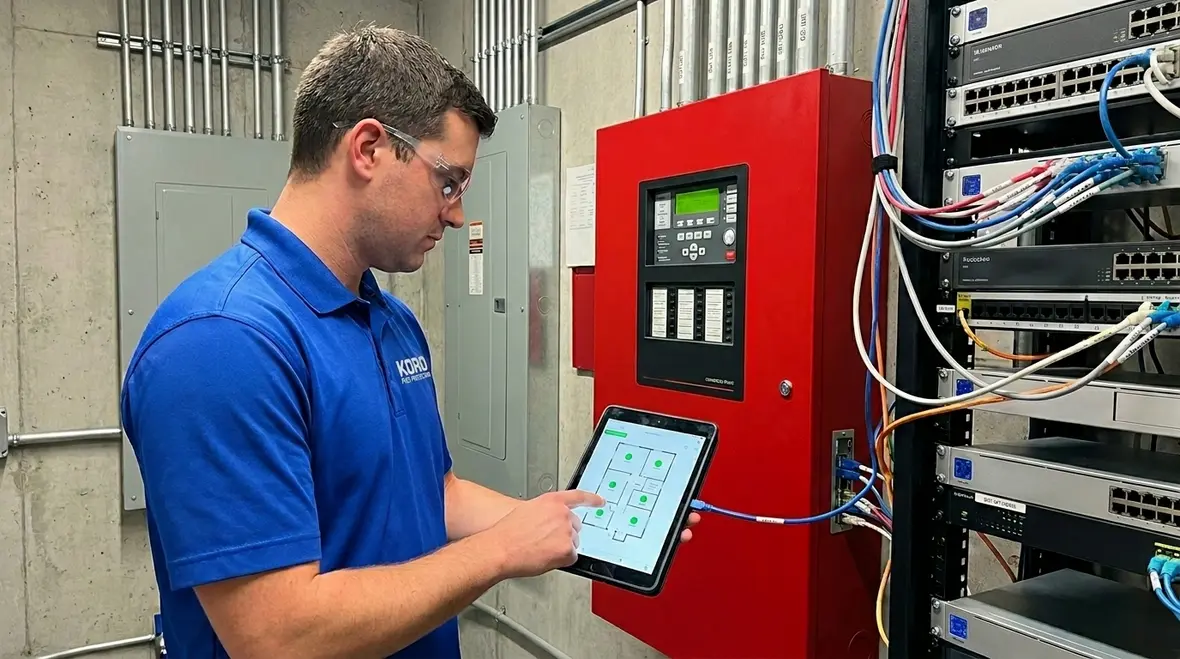
Commercial buildings already use alarms, detectors, panels, and monitoring services. Smart tech adds a layer of intelligent reporting and better system awareness. For example, a connected fire panel can share status, device health, and alarm events with a central platform used by facilities managers, security staff, and service teams. As a result, technicians avoid long site hunts and can narrow down issues quickly.
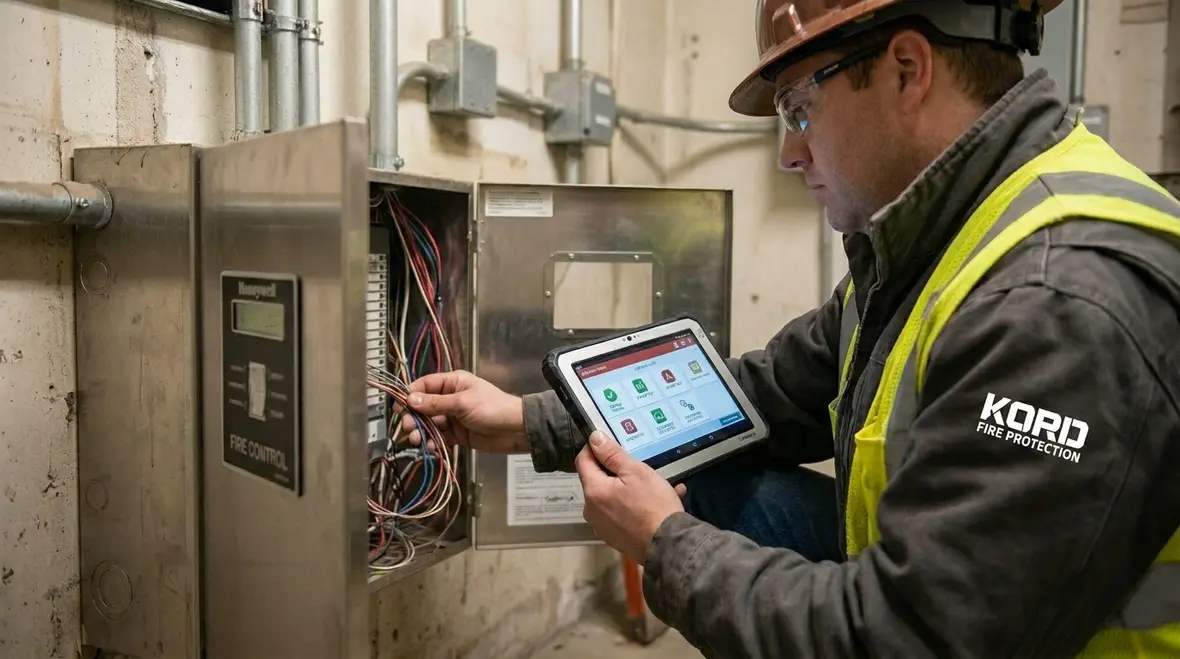
Additionally, smarter monitoring supports trends over time. Instead of “something is failing, good luck,” facilities get signals like drift in detector sensitivity, increasing nuisance alarms, or wiring problems that appear early. Kord Fire Protection technicians often say, “If you can see the pattern, you can fix the cause before it becomes a crisis.” And honestly, that is how adults handle problems, not like someone pressing the snooze button forever.
That practical visibility matters because modern facilities are already juggling HVAC controls, access systems, tenant expectations, vendor schedules, and the occasional mystery problem that nobody claims ownership of. A connected fire system helps cut through that chaos. It puts the right information in front of the right people, so a trouble signal does not become a building wide scavenger hunt with clipboards and crossed fingers.
Why early data beats late panic
Early data lets teams move from reactive maintenance to targeted action. If a detector starts drifting, if a circuit becomes unstable, or if repeat nuisance events keep showing up in one area, the pattern gives technicians a starting point. That saves labor, reduces downtime, and lowers the odds that a small issue turns into a larger reliability problem. It is a lot easier to fix a trend than to explain a preventable failure after the fact.
Fire protection system connectivity in alarms, panels, and sensors
In most commercial setups, smart features work through the fire alarm control panel and approved interfaces. These components translate events into usable messages: alarm, trouble, supervisory, and device status. Then the data travels to an operations dashboard, a monitoring station, or a building management system.
Because fire systems must stay dependable, integration typically follows strict rules. Kord Fire Protection technicians emphasize that the smart layer must never reduce life safety performance. Therefore, the system design keeps fire logic inside the certified equipment and uses smart connectivity to share information, not to replace core functions.
To keep things smooth, they also map which signals should be visible to whom. Security teams might need alarm notifications and location details, while maintenance teams need device-level trouble alerts. That separation prevents alarm fatigue. And yes, alarm fatigue is real, even if your building staff pretends it is not.
This is also where thoughtful programming pays off. Not every event deserves the same level of urgency on every screen. A supervisory condition should not be treated like a confirmed alarm, and a low priority maintenance warning should not be blasted to every department like the building is starring in an action movie. Clean signal mapping creates cleaner responses.
Keeping certified control where it belongs
The fire panel remains the adult in the room. Smart platforms can display, forward, organize, and help interpret data, but the certified fire alarm equipment still handles the actual life safety control logic. That distinction matters. It protects reliability, helps maintain code aligned performance, and keeps the building from depending on a side platform to do a job it was never meant to own.
Integrating with building automation and access control
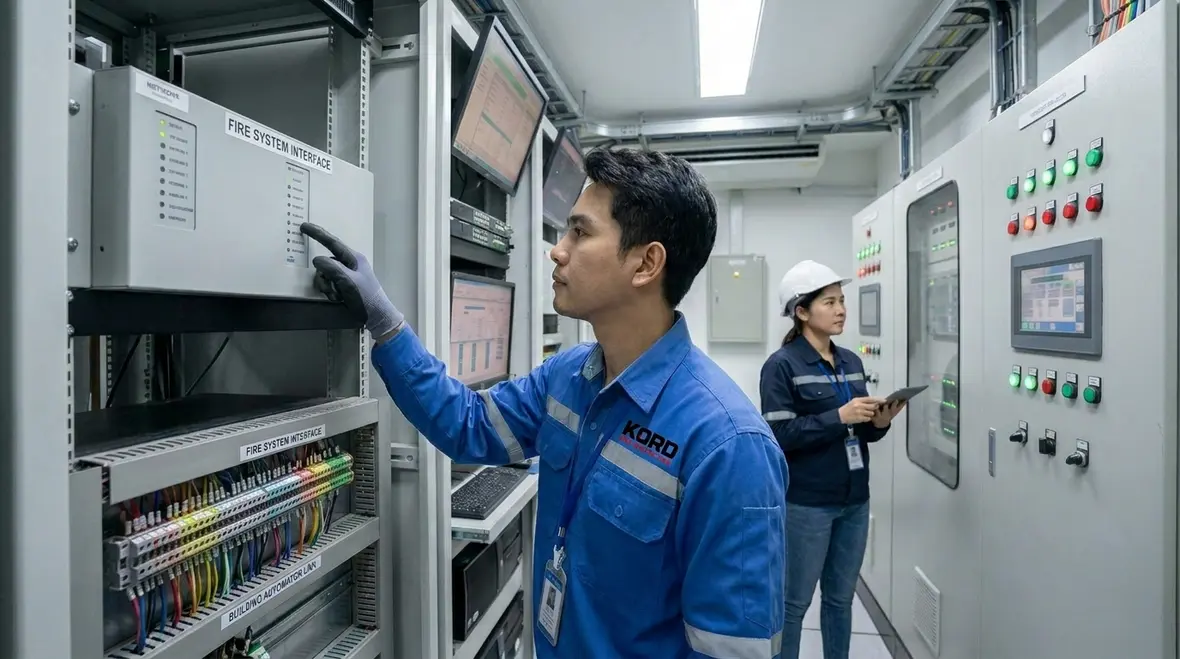
Smart fire integration does more than send messages. It can coordinate with building automation in a controlled way. For instance, when an alarm activates, the system can trigger building responses that support evacuation and firefighting. These actions can include unlocking egress paths, adjusting smoke management controls, and shutting down air handling equipment when required by the design.
However, Kord Fire Protection technicians stress that this must follow approved sequences. The integration should follow the life safety plan and local code requirements, not what “seems helpful.” In other words, the system should not improvise like a sitcom character. It should act like a professional.
They also help facilities define triggers and response timing. If the building automation system reacts too early or too late, it can create confusion for occupants or crews. So the integration process includes careful testing, clear labeling, and documented handoff from the fire team to the building team.
Access control is another piece that has to behave correctly under pressure. Doors may need to unlock for egress while certain areas remain controlled according to the approved sequence. That is why coordination meetings matter. Fire, security, facilities, and automation teams all need the same playbook. Otherwise the building becomes very smart on paper and very confused in real life.
Choosing data paths: cloud, local, and hybrid options
Smart tech can use different communication paths. Some systems rely on local networking so alerts and device statuses stay inside the building. Others use cloud services for long range monitoring, remote support, and data storage. Many commercial sites use hybrid approaches so the life safety function remains local while the smart tools provide optional remote visibility.
To decide, facilities compare three things. First, they evaluate reliability. Network outages should not disable core fire alarm operation. Second, they evaluate security. Connections must support strong authentication and secure access. Third, they evaluate service needs. If Kord Fire Protection technicians maintain multiple sites, cloud access can speed up troubleshooting. Still, the team makes sure the fire protection system connectivity and related data flows remain auditable and controlled.
Because every building has different risks, the best plan usually matches the site. A warehouse with limited tech staff needs a different approach than a hospital with a full control room.
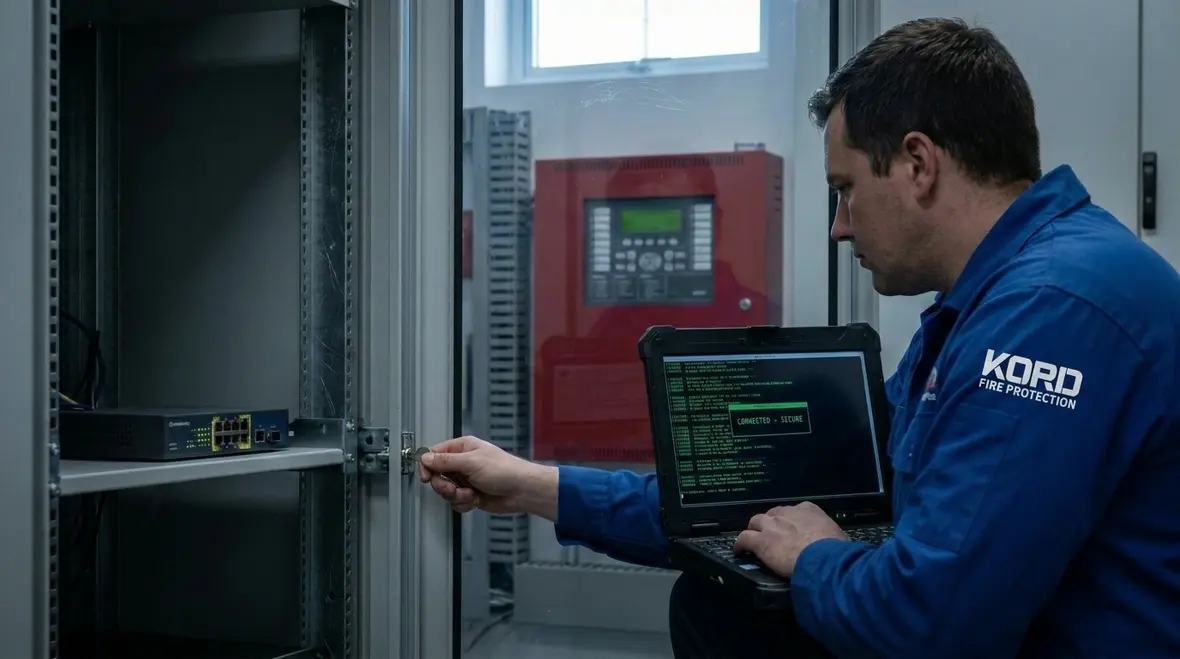
A hybrid model often gives facilities the best balance. Core alarm and notification functions stay local where they belong, while remote dashboards support maintenance, reporting, and service coordination. That way the building is not betting life safety on the internet having a good day. Which, to be fair, is a gamble nobody should make.
What building teams should ask before choosing
- What stays fully functional during a network interruption?
- Who can access the dashboard, and with what permission levels?
- How are alerts routed after hours?
- What data is stored, for how long, and who reviews it?
- How will service technicians use connectivity to reduce downtime?
Testing, cybersecurity, and code aligned integration
Smart integration must survive real world conditions: power loss, network changes, and human error. So, Kord Fire Protection technicians typically start with a commissioning plan that defines how each feature works, how it fails, and how it recovers. Then they schedule field testing that matches the real use case.
Next comes cybersecurity. While fire alarms are life safety devices, the communication layer can still be attacked. That is why integration plans include least access privileges, secure accounts, firmware updates, and monitoring of unusual traffic patterns. In a business setting, it helps to treat cybersecurity like a fire extinguisher. You hope you never need it, yet you check it often because you are responsible.
Then they align integration with code and manufacturer requirements. This step includes verifying that signals, interfaces, and timing rules meet the project design. When the facility handles this carefully, smart features become a dependable aid rather than an unapproved experiment.
Good testing also proves what happens when something goes wrong. If a network switch fails, if power transfers, if an interface goes offline, or if someone changes a setting they should not have touched in the first place, the system should fail in a predictable and documented way. That predictability is what separates a serious rollout from a tech demo with nice slides.
How Kord Fire Protection technicians handle rollout and training
Smart systems fail when people do not know how to use them. Kord Fire Protection technicians reduce that risk through practical rollout steps. First, they help the building team understand what each alert means, including trouble states and device health messages. Then they provide a simple action plan: what to do now, what to schedule, and who to call.
They also train staff on day to day operations like acknowledging alerts in the right order and documenting changes. Because when facilities keep good records, future repairs become faster and cheaper.
Finally, they set up maintenance routines that match the smart data. If the system shows detector drift, they schedule inspections before performance drops. If the system reports wiring issues, technicians target the specific circuit. That approach saves time and it prevents the “call everyone and guess” method that businesses can get stuck in.
Facilities also benefit when rollout is phased instead of dumped on everyone at once. One dashboard view for security, another for maintenance, and a documented escalation path for management keeps things usable. Kord Fire’s team already emphasizes practical service, inspections, monitoring, and ongoing support through its Fire Alarm Services page, which makes that long term support feel a lot less theoretical and a lot more actionable.
Frequently asked questions
Ready to modernize with safety first fire integration
Smart technology can strengthen commercial fire readiness when it supports the core life safety system instead of trying to replace it. Kord Fire Protection technicians help businesses plan integration, verify sequences, secure connectivity, and train staff so alerts lead to real action. If you want fewer surprises, faster troubleshooting, and clearer event reporting, this is the kind of upgrade that earns its keep.
For a next step, businesses can explore Kord Fire Protection’s Full Fire Protection Services or request support through the Fire Alarm Monitoring Service Request page. And if that fire alarm battery conversation is already on your radar, this related guide may help too: Fire Alarm System Reliability and Battery Health.

Join Our Newsletter!
Get the latest fire safety tips delivered straight to your inbox From our Newsletter.