Commercial Fire Safety Audits for Electrical Infrastructure
In a real facility, fire risk does not wait for perfect conditions. It shows up when panels overheat, wiring ages, or someone “temporarily” reroutes a circuit and then forgets it. That is why commercial fire safety audits matter. They help facility teams catch electrical issues before they turn into smoke, alarms, and paperwork. In the sections below, kord fire protection technicians explain how electrical infrastructure audits improve facility fire safety with a calm, step by step approach that keeps systems reliable and people protected.
Why electrical issues drive facility fire risk
Fire often starts where heat and fault live together. When insulation breaks down, connections loosen, or breakers fail to clear, small problems can grow fast. Additionally, electrical faults can create arcs that ignite nearby dust, insulation, or stored materials. Therefore, an audit does not just look for obvious damage. It also tracks patterns, like repeated nuisance trips, unusual thermal readings, and rooms where cables share the same path without proper separation.
kord fire protection technicians typically remind teams that electricity acts like a “silent drummer” in a building. It keeps time in the background until it suddenly plays too loud. And when that happens, everyone notices. That is why this type of review connects electrical health to fire outcomes.
What hidden warning signs teams often miss
The tricky part is that electrical trouble rarely introduces itself with a polite memo. It usually leaks into daily operations as subtle friction. A panel door gets warmer than expected. A breaker trips once, then behaves for weeks. Someone notices a faint burnt smell and assumes it came from a machine nearby. These clues do not always look dramatic, but together they form the kind of pattern that a proper audit is built to catch before it becomes an emergency.
What an electrical infrastructure audit actually covers
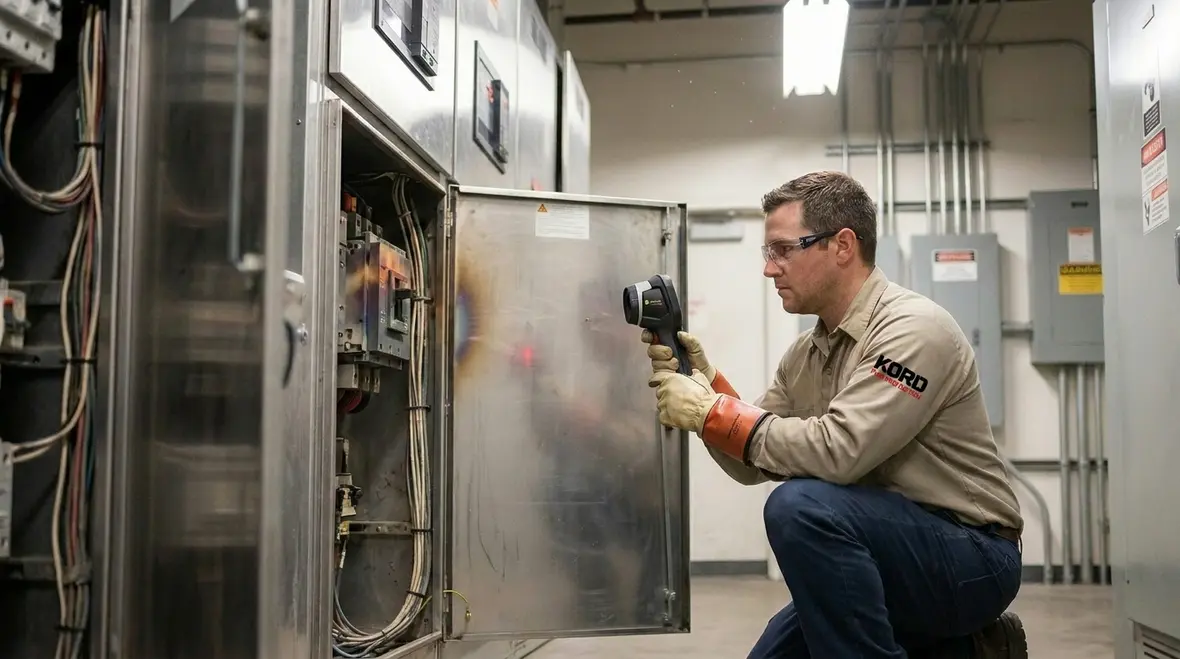
An electrical infrastructure audit focuses on how power gets delivered, distributed, controlled, and protected. It usually includes panel and breaker inspection, conductor condition checks, and verification of protective devices. Next, technicians evaluate grounding and bonding, because proper paths for fault current reduce dangerous voltage rise. They also review labeling, circuit identification, and panel accessibility.
Additionally, kord fire protection technicians often pay attention to the details that make maintenance safer and future troubleshooting less chaotic. A clean and organized panel is not just nice to look at. It helps airflow, supports safe access, and reduces the chance that someone works around a mess instead of addressing it. Likewise, connection integrity matters because loose terminations quietly build heat until the problem becomes expensive, smoky, or both.
- Panel organization to prevent clutter that blocks cooling and complicates maintenance
- Terminal torque and connection integrity to reduce heat buildup
- Emergency power pathways for correct behavior during failures
- Conductor insulation age and any sign of moisture or contamination
Because facilities change over time, audits also look for “as built” reality. If the building was modified and documentation was not updated, teams lose visibility. And when visibility goes missing, risk grows. That is one reason broader fire protection services are most effective when documentation, inspection, and repair all support the same safety picture.
Why documentation matters more than people expect
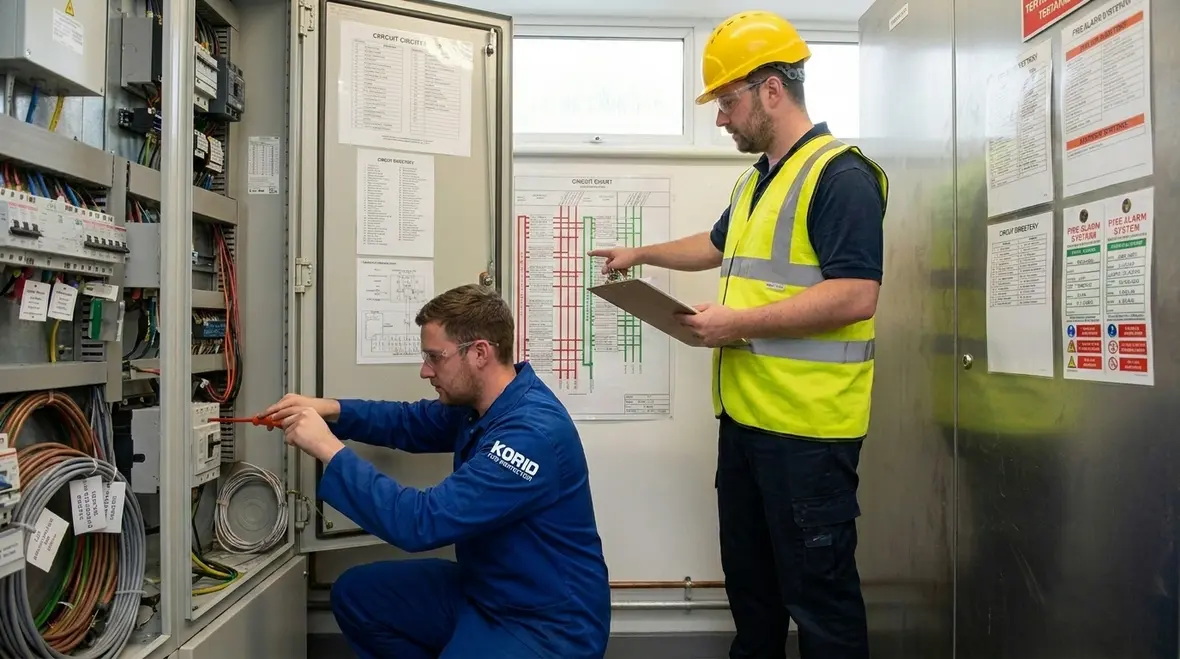
When labels are missing or single line drawings are outdated, even a qualified team loses speed and certainty. That gap creates hesitation during maintenance and confusion during emergencies. An audit closes that gap by making sure the paper trail matches the physical installation, which is far less exciting than buying new equipment but much more useful when time matters.
How technicians use thermal, visual, and documentation checks
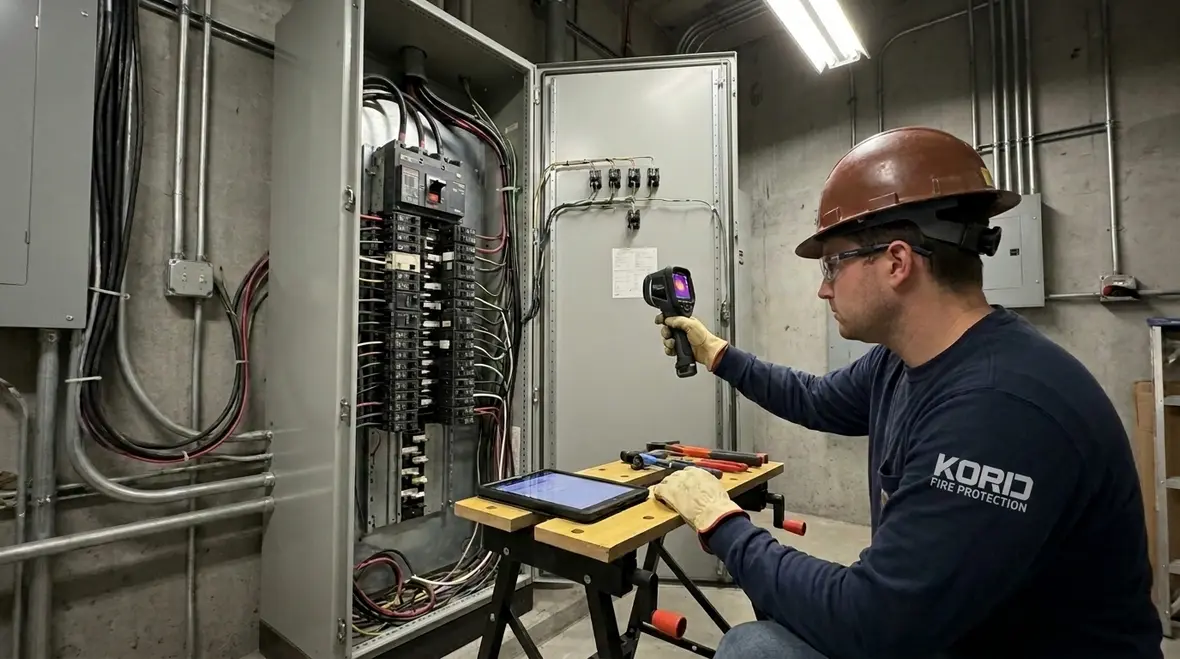
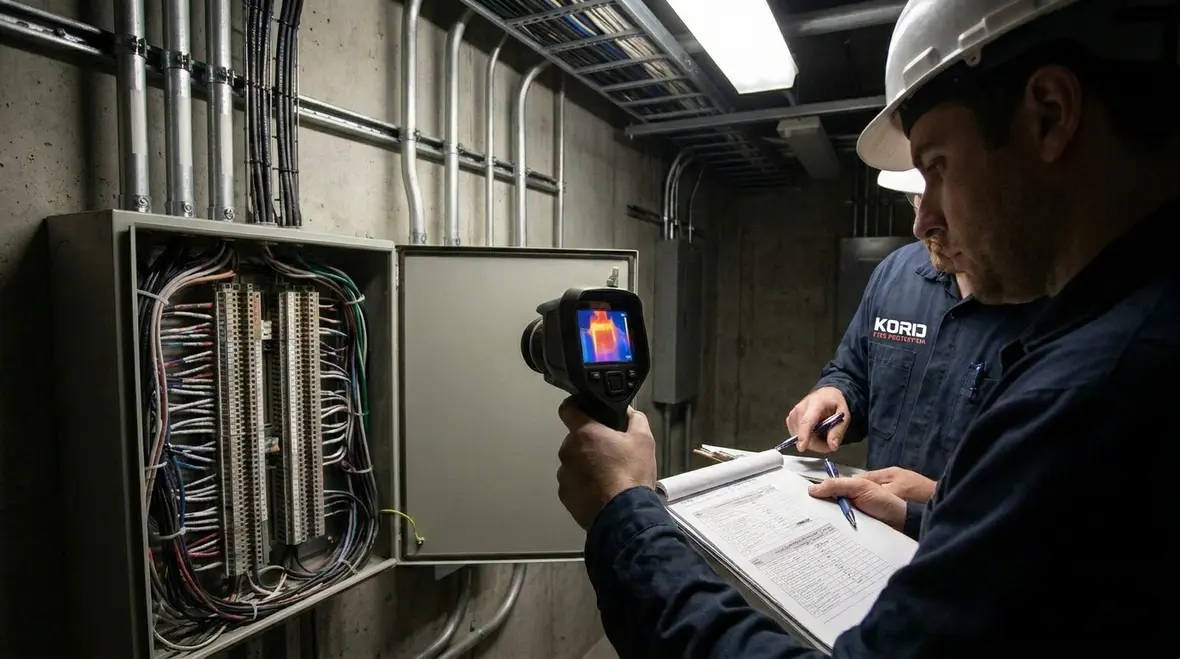
To keep the process practical, kord fire protection technicians blend multiple evidence types. They start with visual signs: discoloration, corrosion, scorch marks, loose hardware, and damaged insulation. Then they add thermal imaging to spot hotspots that can indicate poor connections or overloads. However, thermal images alone do not solve the problem. Therefore, technicians cross check readings against load history, operating schedules, and load calculations.
Documentation plays a quiet but critical role. If circuit maps are wrong, troubleshooting becomes guesswork. If maintenance logs are missing, recurring issues stay hidden. As a result, technicians review records like testing reports, inspection intervals, and any past fault events. This makes the audit repeatable, not just a one time “spot check.”
For some teams, this stage feels like reorganizing a closet. It is not glamorous, but it saves time later when you need the right tool, not a mystery cable and a prayer. Facility safety should not run on prayers, even if the office runs on caffeine.
Turning separate clues into one reliable safety picture
The value of the audit is not in any single photo, temperature reading, or log entry. It comes from combining them. A hotspot with no load context can mislead. A clean panel with poor records can still hide recurring faults. A complete audit turns scattered evidence into a usable story so maintenance teams know what to fix first and leadership understands why the work matters.
Where fire safety improvements show up fast
After audit findings are confirmed, improvements often produce measurable results quickly. For one, fixing loose terminations and damaged insulation reduces heat sources. Next, tightening or replacing failing components improves protective device coordination. Then, addressing overloaded circuits helps prevent nuisance trips and repeated stress on conductors.
Additionally, technicians support safer system behavior during emergencies. They verify that life safety loads and critical equipment circuits maintain power when they should. They also confirm that raceways and cable routing support safe pathways, including appropriate separation where required. For facilities that also depend on prompt notification, pairing electrical risk reduction with professional fire alarm services helps the overall safety program work as one coordinated system instead of several disconnected chores.
- Day one repairs reduce immediate overheating and unstable connections
- Day thirty updated labeling and circuit maps speed up maintenance and reduce accidental shutoffs
- Later corrective actions lower repeat faults and improve audit readiness for insurers and regulators
Building an audit plan that teams can actually follow
Even a great audit fails if no one uses the results. Therefore, kord fire protection technicians structure outcomes into a clear plan with priority levels. They group issues by urgency, like “stop now” hazards versus items that can schedule into the next maintenance window. They also recommend verification steps, so each fix gets checked, not guessed.
- Owner friendly summaries for leadership and budget planning
- Technical work instructions for electricians and maintenance staff
- Follow up testing to confirm protective devices behave correctly
- Update actions for single line drawings, circuit charts, and labels
At this point, facilities move from reactive mode to proactive control. And that is the goal. Nobody wants to find a defect because a smoke detector got heroic and decided to do all the work.
Integrating electrical audit findings with the full safety program
Electrical risk does not live alone. It connects with detection, suppression readiness, housekeeping, and emergency operations. Consequently, teams should connect electrical audit results to broader fire prevention efforts. If an audit reveals high risk in a specific room, technicians coordinate that knowledge with maintenance of detectors, access routes, and suppression components. They also align training so staff know what “normal” looks like in that area.
In addition, the audit supports smarter capital planning. If multiple minor issues point to one aging infrastructure problem, leadership can replace or upgrade before a major failure forces expensive emergency work. In other words, the audit helps teams buy safety like a business, not like a fire drill.
Long term verification and continuous improvement
Because systems age, improvements need confirmation over time. kord fire protection technicians recommend periodic checks that match the facility’s risk level, equipment criticality, and operating patterns. They also encourage teams to track recurring faults. If the same panel shows hotspots year after year, it signals a deeper condition that routine repairs may not solve.
To keep things smooth, facilities often set a simple cadence: inspect, document, repair, verify, then update the safety picture. Transitioning like this reduces surprise events and supports stronger compliance posture.
And yes, it also reduces those moments when someone asks, “Why does this breaker trip only on Tuesdays?” The audit cannot answer every mystery, but it can stop most of the ones that end in scorched paint.
FAQ
Get a clearer safety plan with expert guidance
Facilities that improve electrical infrastructure gain more than fewer defects. They gain calmer operations, faster maintenance, and better protection for people and assets. kord fire protection technicians help teams turn findings into a practical work plan, with priorities that leadership can fund and electricians can execute.
If this year’s safety goal includes fewer surprises and stronger coverage, schedule a review and build confidence into your electrical and fire protection strategy with commercial fire safety audits that drive real fixes. For broader support near the end of the process, explore Kord Fire Protection’s full fire protection services and connect your audit findings to a practical next step.

Join Our Newsletter!
Get the latest fire safety tips delivered straight to your inbox From our Newsletter.