Fire Sprinkler Flow Switch Replacement When to Replace
Fire sprinkler protection depends on speed, accuracy, and repeatable operation. That is why many commercial systems rely on fire sprinkler flow switches to confirm water movement the moment water begins to flow. When those devices get tired, they do not just “act a little weird.” They can delay alarm signals, cause trouble codes, or fail to confirm water flow during a real event. So, when should a property owner replace fire sprinkler flow switches? In this guide, Kord Fire Protection technicians explain what they look for, why it matters, and how to decide with confidence rather than hope. And yes, like a sitcom ending, the goal is to catch the problem before it becomes a season long plot twist.
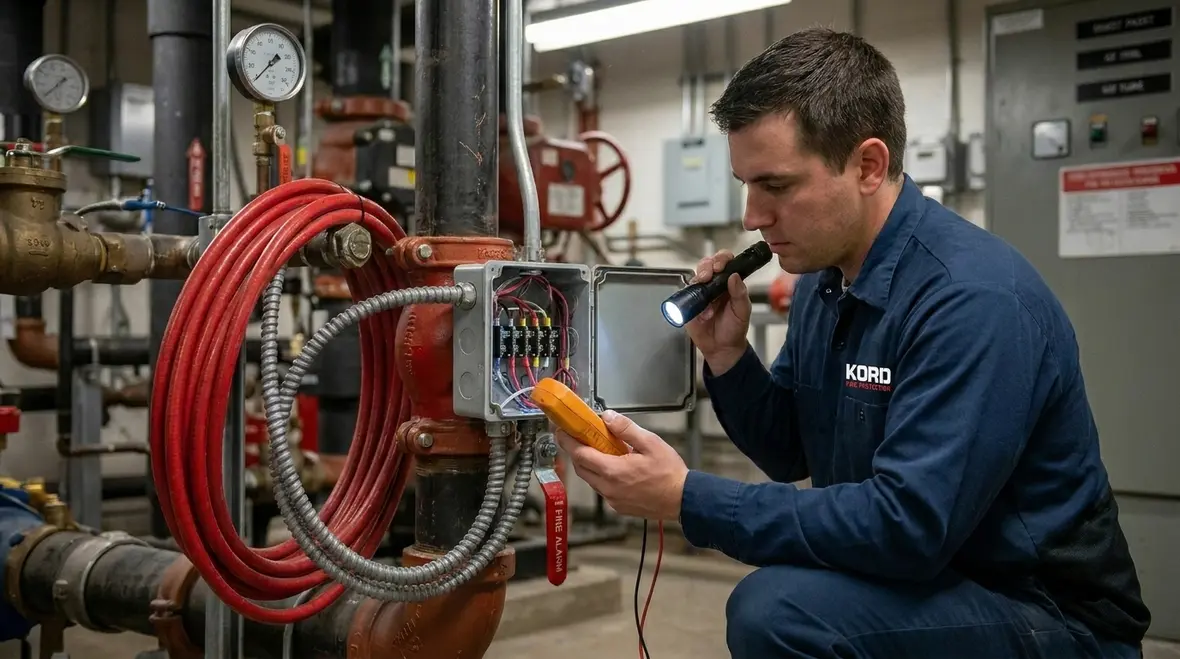
How Kord Fire Protection technicians diagnose flow switch problems early
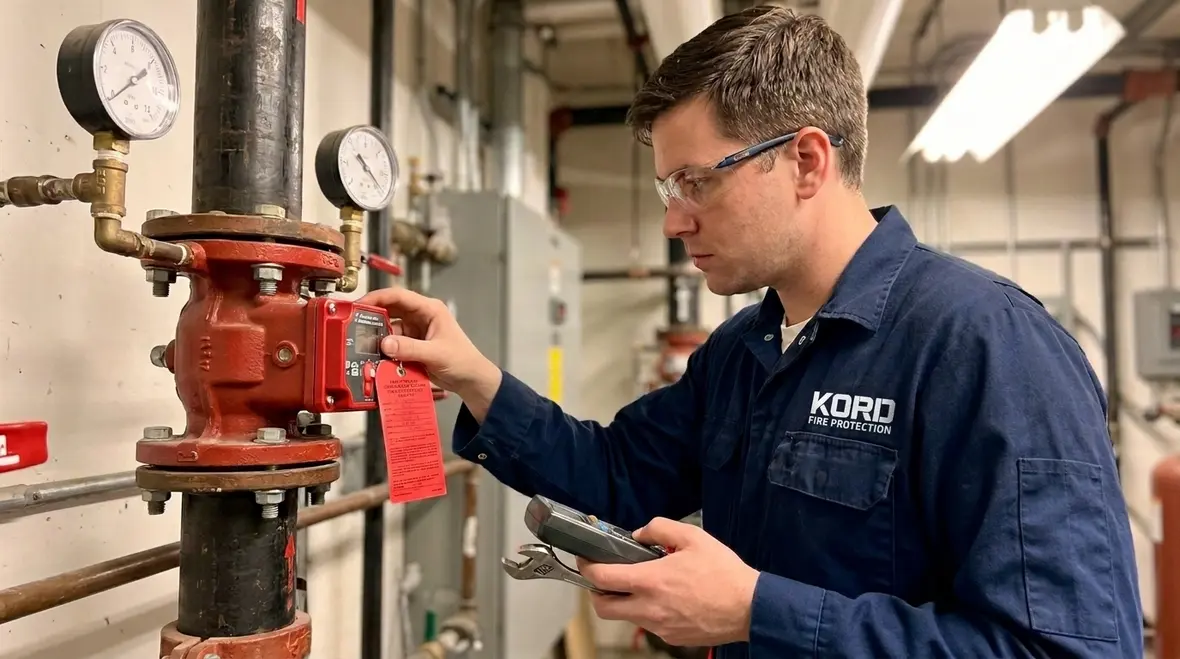
Kord Fire Protection technicians start with a simple idea: the system must match the real world. Then they compare the switch behavior with expected operation. Typically, they review inspection and test records, alarm history, and maintenance logs. Next, they verify the flow switch wiring, the control panel points, and the path water takes through the piping.
They also watch for symptoms that tell a clear story. For example, a flow switch that sometimes signals “water flow” and sometimes does not often points to a contact issue, wiring weakness, or internal wear. In addition, a switch that triggers nuisance alarms after valve cycling can reflect sensitivity drift or contamination inside the flow passage.
Finally, Kord technicians explain that the goal is not to replace parts on a guess. Instead, they connect observed failure modes to the likely root cause, then they recommend replacement when the risk rises above the cost of proactive service. That same practical approach is part of Kord Fire Protection’s broader full fire protection services, where inspection, repair, and system readiness all work together instead of playing separate instruments and hoping it somehow sounds like jazz.
Why early diagnosis saves more than one service call
Early diagnosis matters because flow switches sit at a crossroads between sprinkler performance and alarm response. If the switch lags, sticks, or behaves inconsistently, the issue can ripple into testing delays, tenant concerns, repeat callbacks, and unnecessary panel troubleshooting. Catching those clues early gives owners a chance to plan repairs instead of reacting under pressure after the next unexpected trouble signal.
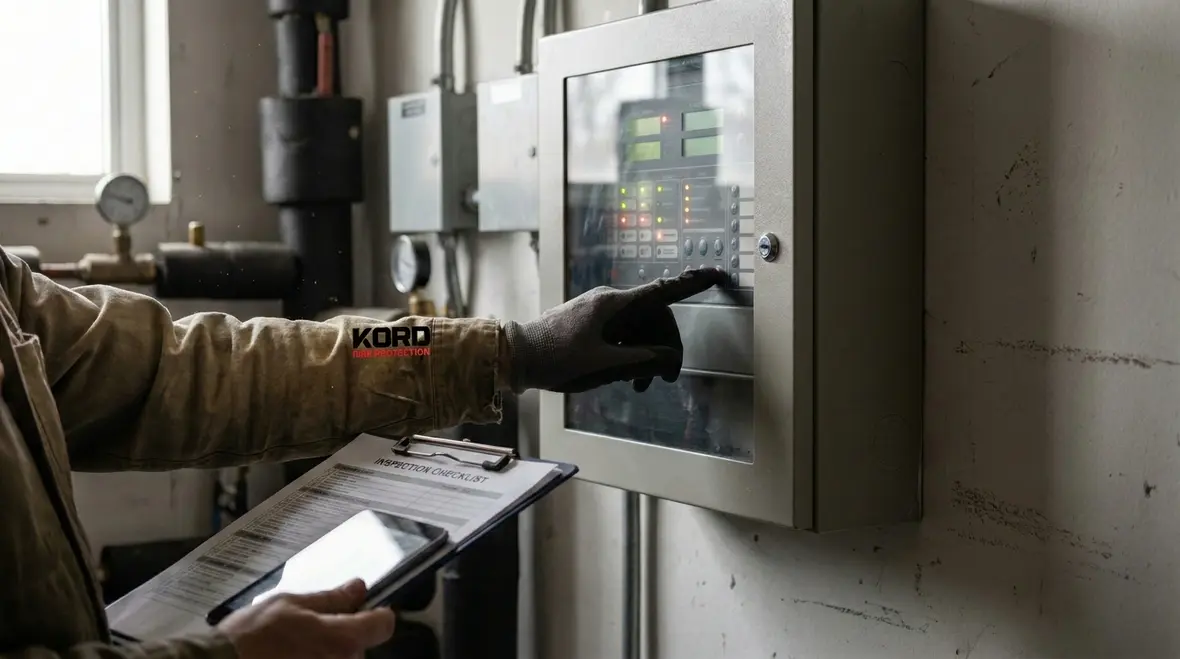
What causes fire sprinkler flow switches to wear out over time
Fire sprinkler flow switches live in the middle of the action. However, the system environment is not always gentle. Over years, several conditions can degrade reliable performance.
- Corrosion and mineral buildup: Water conditions can leave deposits that reduce movement inside the device.
- Vibration and pipe stress: Pumps cycle, valves move, and building vibration adds fatigue to internal parts.
- Electrical contact wear: Repeated activation can pit or oxidize contacts, creating “intermittent” trouble behavior.
- Wrong calibration for the system: If a replacement does not match the original design, false readings can follow.
- Moisture intrusion: Even small sealing failures can cause corrosion on terminals.
As these issues build, the switch may still “work” during routine tests, but it may struggle when water flow changes quickly or when demand hits during a real incident. In other words, the system might look fine until it truly matters. This is also why properties that already invest in regular fire alarm services often have an easier time spotting switch related patterns before they become expensive reruns.
Wear does not always look dramatic
One tricky part of flow switch replacement is that failure is often gradual. You might not get a cartoon style spark, a giant warning label, or a dramatic soundtrack. More often, you get delayed activation, one odd panel event, a reset that “fixes” things for now, and then another service note a few months later. That pattern is usually the bigger clue than one single dramatic breakdown.
When to replace flow switches based on test results and alarm history
Replacement timing should follow evidence, not vibes. Kord Fire Protection technicians commonly recommend replacing fire sprinkler flow switches when test results show repeatable weaknesses. For instance, they may see delayed alarm confirmation, inconsistent activation, or contacts that fail to return to normal after flow stops.
Also, alarm history matters. If the system reports trouble events tied to a flow switch point, and those events reappear after service, replacement becomes the practical next step. Likewise, if inspections show physical damage, loose terminals, or signs of heat on wiring, they do not wait for a future failure. They act.
Technicians also consider the system’s performance during pump tests and drain tests. If a flow switch does not confirm correctly during those scenarios, the device is not proving it can do its job at the moment of truth. The same logic applies across Kord Fire Protection’s service work: if a life safety component repeatedly underperforms, the smart move is not endless wishful thinking with a screwdriver.
Signs a flow switch needs attention before the next inspection
Even with scheduled maintenance, a property should not ignore early warning signs. Kord Fire Protection technicians often hear owners say, “It only threw a trouble once.” That is the moment to pay attention, because “once” can turn into “often” faster than a streaming series binge.
- Intermittent trouble messages: The panel reports issues that come and go.
- Nuisance alarms: Alerts appear during valve movement or system testing without expected water flow.
- Slow confirmation: The alarm does not register within expected timing.
- Frequent resets: Technicians must repeatedly reset points or clear stale trouble indicators.
- Physical wear: Cracked housings, wet terminals, or corrosion at the device.
Next, technicians look at whether the system can still meet code driven performance requirements. If it cannot reliably confirm water flow, replacement usually beats repeated patchwork. Owners often save time, money, and patience by scheduling service before the issue graduates from “minor nuisance” to “why is everyone calling me at 6:30 in the morning?”
How long should a flow switch last, and when does age become a risk
Age alone does not always predict failure. However, older devices often face higher wear, and replacement planning becomes smarter when multiple risk factors show up together. For example, a switch that has experienced years of activation cycles, plus a history of nuisance alarms, raises the odds of contact failure.
In many systems, flow switches operate as part of a demand driven life safety network. Therefore, technicians treat late life as a risk window rather than a deadline. They usually recommend replacement sooner when a device reaches a point where internal parts show wear during testing, or when the building owner can no longer count on fast response from repairs.
Why age matters more with a history of weird behavior
A ten year old switch with clean testing history is one conversation. A similarly aged switch with nuisance alarms, questionable resets, moisture marks, and technician notes that all begin with “monitor” is a very different conversation. Age becomes more meaningful when the rest of the evidence lines up behind it and starts waving little red flags.
Why fire sprinkler flow switches must match the panel and wiring design
A common mistake is replacing a device with something that looks similar. Kord Fire Protection technicians stress compatibility. Even small differences in switch type, electrical ratings, or actuation method can lead to mismatched behavior at the fire alarm panel.
Then there is wiring. A flow switch might function mechanically, yet the alarm point stays quiet due to loose terminations, damaged conductors, or poor grounding. Because of that, technicians do not only swap hardware. They verify circuit integrity, test at the panel, and confirm the system responds as designed.
Also, they check whether the switch arrangement aligns with the hydraulic plan. If water flow behavior in the piping does not produce the expected signal, the system may require correct set up or replacement with the right model. In short, a flow switch is not a stand alone hero. It works as part of a team. That is one reason many owners prefer a provider that can connect sprinkler work with panel behavior, inspection records, and site wide readiness under one roof.
FAQ about replacing fire sprinkler flow switches
Reliable replacement decisions with Kord Fire Protection technicians
When fire sprinkler flow switches start showing trouble, owners should treat it like a smoke alarm that only works on Tuesdays. Kord Fire Protection technicians recommend replacement when test evidence, alarm trends, and device condition show that reliable water flow confirmation is no longer dependable. Next, schedule a service visit so a technician can evaluate the system, check compatibility, and map replacement to real risk, not guesswork.
If you want a team that can connect sprinkler issues, alarm behavior, and system wide compliance without turning the process into a scavenger hunt, explore Kord Fire Protection’s fire alarm services or their broader full fire protection services. Contact Kord Fire Protection today to plan the right replacement timing and keep your life safety system performing when it matters.

Join Our Newsletter!
Get the latest fire safety tips delivered straight to your inbox From our Newsletter.