Fire Extinguisher Types Guide for Every Building
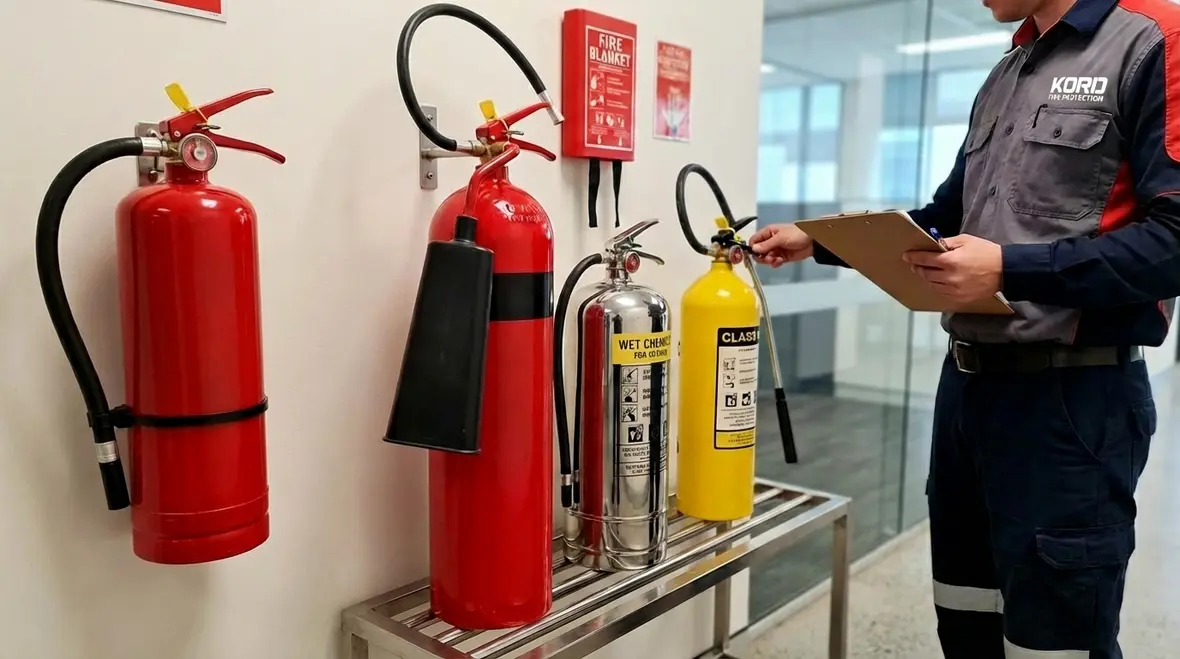
When it comes to fire extinguisher types, most people picture a red can on the wall and call it a day. However, that red cylinder is not a one size fits all hero. There is ABC, CO2, Wet Chemical, and a range of specialty units designed for unique risks. Each one serves a different purpose, and choosing the wrong one can turn a small fire into a very bad afternoon. As the technicians at Kord Fire Protection often explain, understanding the differences is not just about code compliance. It is about safety, property protection, and a little peace of mind.
So let us take a calm, steady walk through the world of extinguishers. No panic. No alarm bells. Just clear facts, practical insight, and perhaps a gentle reminder that even heroes come in different costumes.
Understanding Fire Classes Before Choosing Fire Extinguisher Types
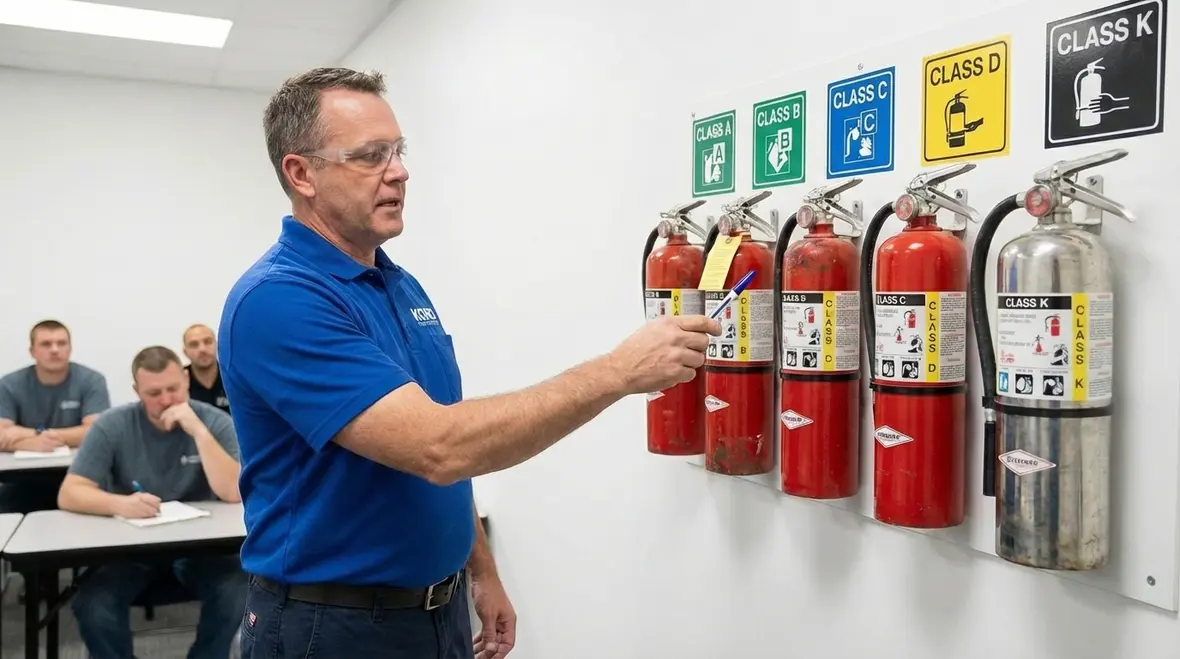
Before discussing cylinders and nozzles, one must understand what is actually burning. Fires fall into specific classes. Therefore, the right extinguisher depends on the fuel source, not the size of the flame.
- Class A involves ordinary combustibles like wood, paper, and cloth.
- Class B includes flammable liquids such as gasoline, oil, and solvents.
- Class C covers energized electrical equipment.
- Class K applies to cooking oils and fats, often found in commercial kitchens.
- Additionally, some facilities face metal fires, which fall under Class D.
Because each fire behaves differently, extinguishers must interrupt the fire triangle in specific ways. Some cool the fuel. Others remove oxygen. A few disrupt the chemical reaction itself. According to Kord Fire Protection technicians, most mistakes happen when people assume water or a standard unit works on everything. It does not. In fact, using the wrong agent can spread flames or cause injury. For a deeper breakdown of classifications and NFPA 10 guidance, you can explore Kord Fire’s overview of portable fire extinguisher guidelines.
So, before grabbing that red canister like an action movie extra, it helps to know what is burning. Fires are predictable. Panic is not.
ABC Units Explained in Plain Language
Among all available fire suppression options, ABC extinguishers are the most common. They are often mounted in offices, schools, retail stores, and homes. In many cases, they serve as the general purpose solution.
ABC units use a dry chemical agent, usually monoammonium phosphate. This powder interrupts the chemical reaction of fire while also creating a barrier between fuel and oxygen. As a result, it works on Class A, B, and C fires.
However, versatility comes with trade offs. The powder leaves residue. Therefore, cleanup can be messy. Electronics may also suffer damage if not cleaned quickly. Even so, for many environments, the benefit of broad protection outweighs the inconvenience.
Kord Fire Protection technicians often explain ABC extinguishers as the multitool of fire safety. They are reliable, adaptable, and practical. Nevertheless, like any multitool, they are not always the best tool for every single job. You would not use a Swiss Army knife to build a house. It helps, but it is not a hammer.
Because of their flexibility, ABC units remain one of the most widely installed fire extinguisher categories across commercial and residential properties. When paired with regular fire extinguisher service and certification, they form the backbone of many building fire protection plans.
CO2 Extinguishers for Electrical and Liquid Fires
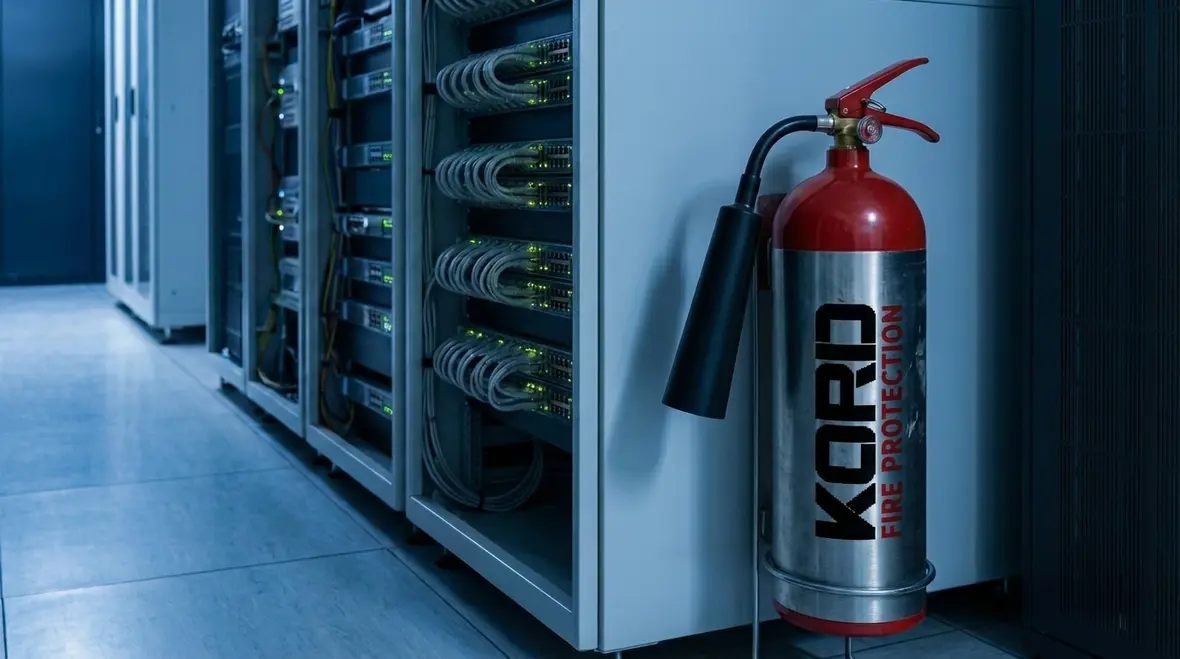
Carbon dioxide extinguishers operate differently. Instead of powder, they release compressed CO2 gas. This gas displaces oxygen around the fire and cools the area as it expands.
CO2 units are especially effective on Class B and Class C fires. Therefore, they are common in server rooms, laboratories, mechanical spaces, and areas with sensitive electronics. Since they leave no residue, cleanup is minimal. That alone makes facility managers breathe easier.
However, there are limitations. CO2 does not work well on Class A materials because once the gas dissipates, re ignition may occur. Additionally, in confined spaces, the discharge can reduce oxygen levels. For this reason, proper training matters.
Kord Fire Protection technicians often demonstrate how quickly CO2 expands and cools. It is impressive. It is also a reminder that even something invisible can pack a punch. Think of it as the quiet professional in the room. No mess. No drama. Just results. For facilities needing full-room protection, Kord Fire also designs and services complete CO2 fire suppression systems that complement portable CO2 extinguishers.
Wet Chemical Extinguishers in Commercial Kitchens
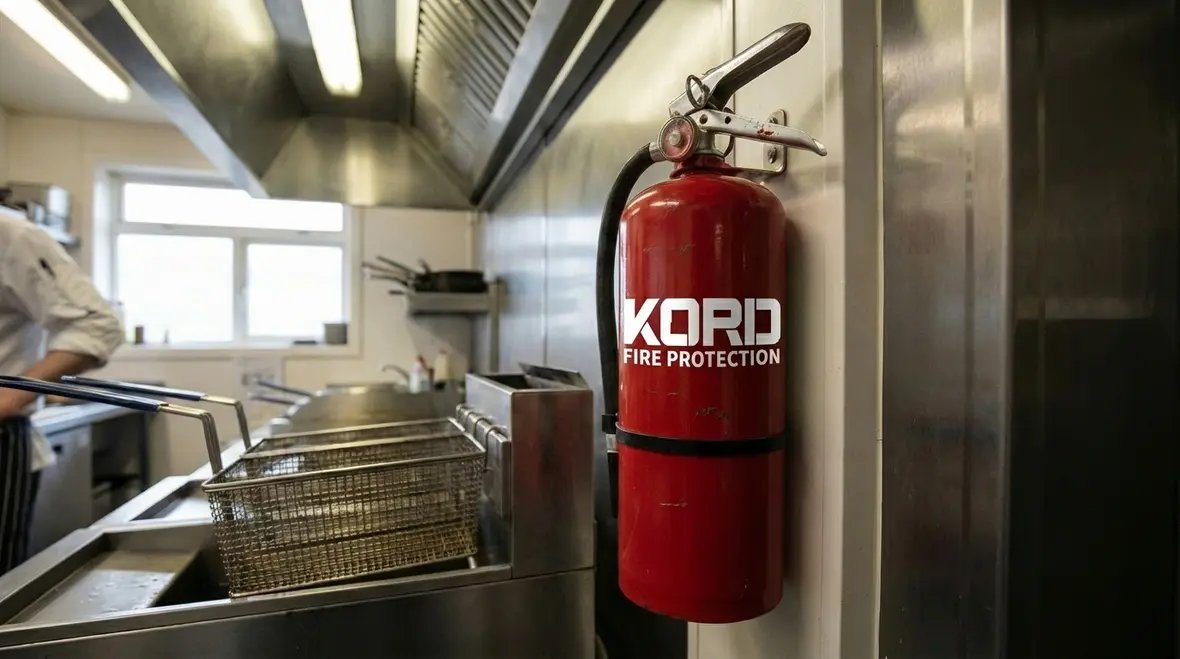
Commercial kitchens present unique risks. Cooking oils burn at high temperatures and can reignite easily. Water only spreads the problem. That is where Wet Chemical extinguishers step in.
These units are designed primarily for Class K fires. They release a potassium based solution that reacts with hot cooking oils. This reaction creates a soapy foam layer over the surface, a process known as saponification. As a result, the foam seals the surface and cools the oil simultaneously.
Because restaurant kitchens operate at high heat and high pace, Wet Chemical units are often required by code. Furthermore, they work in coordination with kitchen hood suppression systems.
Kord Fire Protection technicians emphasize that timing is critical in kitchen fires. Oil fires escalate quickly. Therefore, staff training and proper extinguisher placement can make the difference between a brief shutdown and a major rebuild.
In short, Wet Chemical extinguishers are not optional accessories in food service environments. They are essential tools. And no, tossing flour on a grease fire is not a clever life hack. It is a recipe for disaster.
Specialty Units for Unique Hazards
Some facilities face risks beyond paper, fuel, or cooking oil. Manufacturing plants, laboratories, and metal processing sites may require specialty extinguishers.
- Class D extinguishers are designed for combustible metals like magnesium, titanium, or sodium. These fires burn at extreme temperatures and react violently with water. Therefore, specialized dry powders absorb heat and smother the flames.
- Additionally, clean agent extinguishers such as FM 200 or other halocarbon alternatives protect sensitive environments. They leave no residue and do not conduct electricity. As a result, they are ideal for data centers, archives, and medical facilities.
Although these specialty fire extinguisher types are less common, they are critical where specific hazards exist. Kord Fire Protection technicians assess facilities carefully before recommending them. Because not every building needs a metal fire unit, but the buildings that do truly need it.
It is a bit like footwear. Flip flops are great for the beach. They are not ideal for mountain climbing. The environment decides the gear.
Side by Side Comparison for Quick Reference
Extinguisher Type
ABC Dry Chemical
CO2
Wet Chemical
Class D
Clean Agent
Best For
Class A, B, C general hazards
Electrical and flammable liquids
Commercial kitchen oils
Combustible metals
Sensitive electronics and data rooms
This simple comparison helps property owners match the hazard to the right tool. However, selection should always follow a professional risk assessment. Kord Fire Protection technicians review occupancy type, fuel load, and regulatory requirements before making recommendations, then back that plan with ongoing inspection and maintenance services so the equipment is ready when needed.
How to Choose the Right Unit for a Building
Selecting from the available fire extinguisher types requires more than guessing. First, identify the hazards present. Next, evaluate square footage and travel distance requirements. Local codes often specify placement intervals and mounting heights.
Additionally, consider the people using the equipment. For example, larger extinguishers hold more agent but weigh more. Therefore, balance capacity with usability. An extinguisher no one can lift offers little value.
Maintenance also matters. Units require annual inspections and periodic internal maintenance. Kord Fire Protection technicians handle these services to ensure compliance and reliability. Because an extinguisher that fails during an emergency is not just inconvenient. It is dangerous.
Training completes the equation. Staff should understand the PASS method, pull, aim, squeeze, sweep. Although simple, it becomes effective only through practice.
Which Fire Extinguisher Types Are Best for Offices, Warehouses, and Restaurants?
Offices
For offices, ABC units usually provide adequate coverage. They address paper, small electrical devices, and occasional liquid hazards. In server rooms, however, CO2 or clean agent units offer added protection without residue.
Warehouses and Industrial Spaces
Warehouses often require a combination. Because stored goods vary, ABC extinguishers are common. Yet, if flammable liquids are stored, additional Class B coverage may be necessary. Some facilities may also integrate foam fire suppression systems or dry chemical systems to protect high challenge areas.
Restaurants and Commercial Kitchens
Restaurants demand more planning. Dining areas typically use ABC units, while kitchens require Wet Chemical extinguishers specifically rated for Class K hazards. Hood systems add another layer of protection.
In every case, Kord Fire Protection technicians conduct on site evaluations. They explain options clearly, without jargon or sales pressure. Their approach focuses on matching real world risk with practical solutions.
Frequently Asked Questions
Confidence Through the Right Protection
Choosing among the various fire extinguisher types is not about filling wall space with red cylinders. It is about understanding risk, matching the correct agent to the hazard, and ensuring people know how to respond. With guidance from Kord Fire Protection technicians, businesses gain clarity and confidence.
A thoughtful mix of ABC, CO2, Wet Chemical, and specialty units, supported by inspections, training, and documentation, turns code compliance into real world protection. You get more than tags on cylinders. You get a safer building and a calmer response when something does go wrong.
For tailored recommendations, professional installation, and dependable service across sprinklers, alarms, suppression, and extinguishers, reach out to Kord Fire today. Start with a fire extinguisher service and certification plan, or request a full building assessment from their fire protection team so fire safety becomes a calm certainty rather than a lingering question.
Ready to move from “we have some extinguishers” to “we know we are protected”? Contact Kord Fire Protection and put the right extinguishers in the right places, with the right support, for every building you manage.
Know Your Weapon Before You Fight the Flame
Kord Fire Protection is your go-to when it comes to all things fire protection. For over 20 years, we’ve been serving Southern California with the quality service and equipment to keep your home or business safe at all times. Our competitive prices reflect our unwavering commitment to protecting what matters most in the event of a fire emergency. Give us a call, send an email, or use that form!

Join Our Newsletter!
Get the latest fire safety tips delivered straight to your inbox From our Newsletter.