
Fire Extinguisher Cabinet Requirements Guide
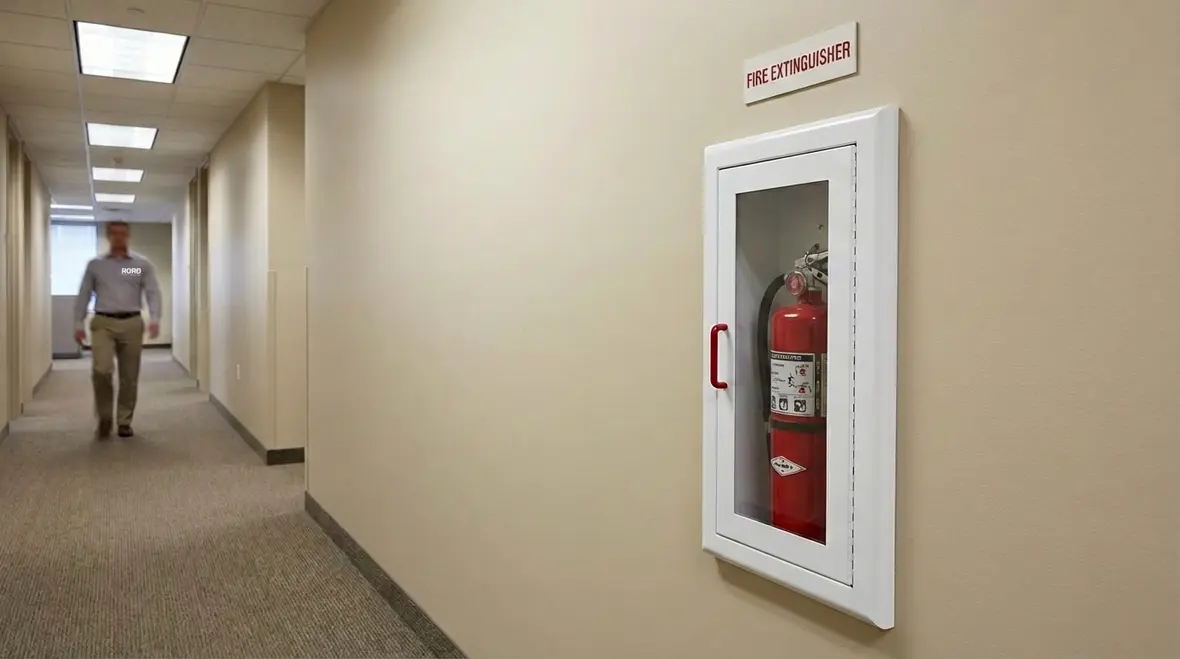
Fire extinguisher cabinet requirements often sound simple on paper. Mount the extinguisher. Keep it visible. Make it accessible. However, in practice, the rules that govern when a cabinet is allowed and when it is not can feel like a maze of codes, building standards, and local amendments. Within the first few pages of most fire codes, the expectations become clear. Cabinets must not obstruct access. They must not reduce corridor width below minimum limits. They must protect the extinguisher without hiding it. Throughout this article, the details unfold, with guidance often echoed by Kord Fire Protection technicians who explain these requirements to building owners in calm, plain language.
The Purpose Behind Fire Extinguisher Cabinet Requirements
At its core, the purpose of fire extinguisher cabinet requirements is safety. That sounds obvious. Yet the reasoning runs deeper than most people expect. Codes do not exist to make hallways look tidy. They exist to make sure someone can grab an extinguisher in seconds, not minutes, during a crisis.
First, extinguishers must remain visible. Even when placed inside a cabinet, clear labeling or transparent panels ensure occupants can spot them quickly. Seconds matter. In a small fire, a delay of even half a minute can mean the difference between a minor cleanup and a call to the evening news.
Second, cabinets protect extinguishers from damage. In schools, hospitals, warehouses, and apartment complexes, equipment takes a beating. Carts bump walls. Kids play hallway soccer. Life happens. Therefore, cabinets provide a shield without sacrificing accessibility.
However, the rules draw a firm line. A cabinet must never make it harder to reach the extinguisher. According to Kord Fire Protection technicians, the most common mistake they see is a cabinet that looks great but violates clearance rules. It is a bit like buying a luxury sports car and forgetting to put gas in it. Stylish, yes. Useful, not so much.
When Cabinets Are Allowed in Commercial Buildings
In most commercial settings, cabinets are not only allowed but encouraged. However, the building must meet certain conditions.
Corridor width and egress requirements
Corridor width is one major factor. Building codes often require a minimum hallway width, especially in facilities with high occupancy loads. If a surface mounted cabinet projects too far into the corridor, it can reduce the clear width below what code permits. Therefore, designers frequently choose recessed cabinets to avoid obstruction.
ADA accessibility and reach ranges
Additionally, accessibility rules under ADA standards come into play. The cabinet handle, operating mechanism, and projection into walking paths must comply with reach range and protrusion limits. As a result, installation height matters just as much as placement location.
Kord Fire Protection technicians often explain that commercial offices usually have flexibility. If the wall depth allows for a recessed model, compliance becomes easier. Conversely, in older buildings with solid masonry walls, surface mounted cabinets may require careful measurement to avoid violations.
Visibility and signage in busy spaces
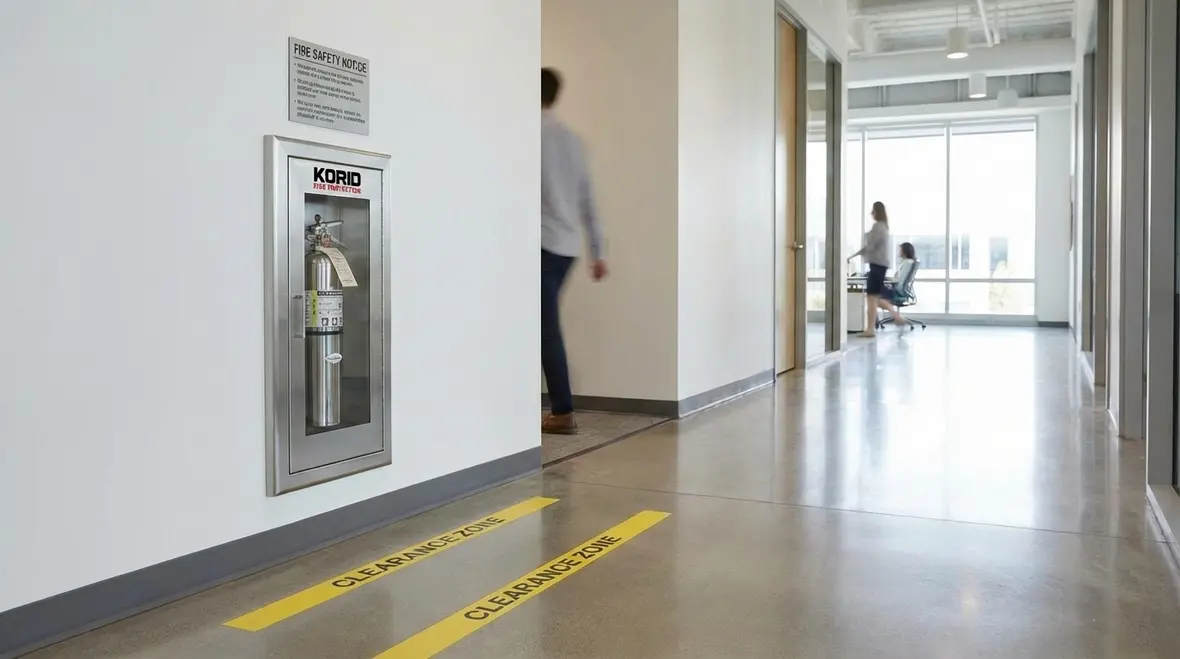
Another key condition involves visibility. Even if a cabinet sits flush with the wall, it must include clear signage. Some jurisdictions require signage above the cabinet, especially if the door is solid rather than glass. After all, in an emergency, no one wants to play hide and seek with life saving equipment.
For building owners looking beyond cabinets to full extinguisher care, services like six year break down/tear down inspections help keep equipment ready long after the cabinet is installed.
When Fire Extinguisher Cabinets Are Not Permitted
Narrow corridors and tight egress paths
There are moments when cabinets cross the line from helpful to hazardous. This is where fire extinguisher cabinet requirements become strict.
For example, in narrow corridors where every inch counts, a surface mounted cabinet can reduce egress width below legal limits. In that case, the cabinet is not allowed unless the wall can accommodate a recessed option. Life safety codes prioritize evacuation flow above aesthetic preferences.
Industrial and special hazard environments
Furthermore, in certain industrial environments, cabinets may not be practical. Areas with high vibration, heavy machinery, or explosive dust require specific extinguisher types and mounting methods. A standard cabinet might trap heat or interfere with specialized equipment access. Therefore, open brackets are sometimes preferred.
Historic buildings and preservation limits
Historic buildings present another challenge. Preservation rules may restrict wall modifications. While cabinets are technically allowed, structural limitations can make installation impossible without violating preservation standards. In those cases, alternative compliant mounting solutions must be used.
Kord Fire Protection technicians often tell property managers that the code does not hate cabinets. It simply refuses to compromise on safety. If a cabinet blocks, hides, restricts, or confuses, it does not belong there. Simple as that.
How High Should a Fire Extinguisher Cabinet Be Installed?
This is the question many building owners type into search engines at midnight before an inspection. Fortunately, the answer is clear.
Code-based mounting height rules
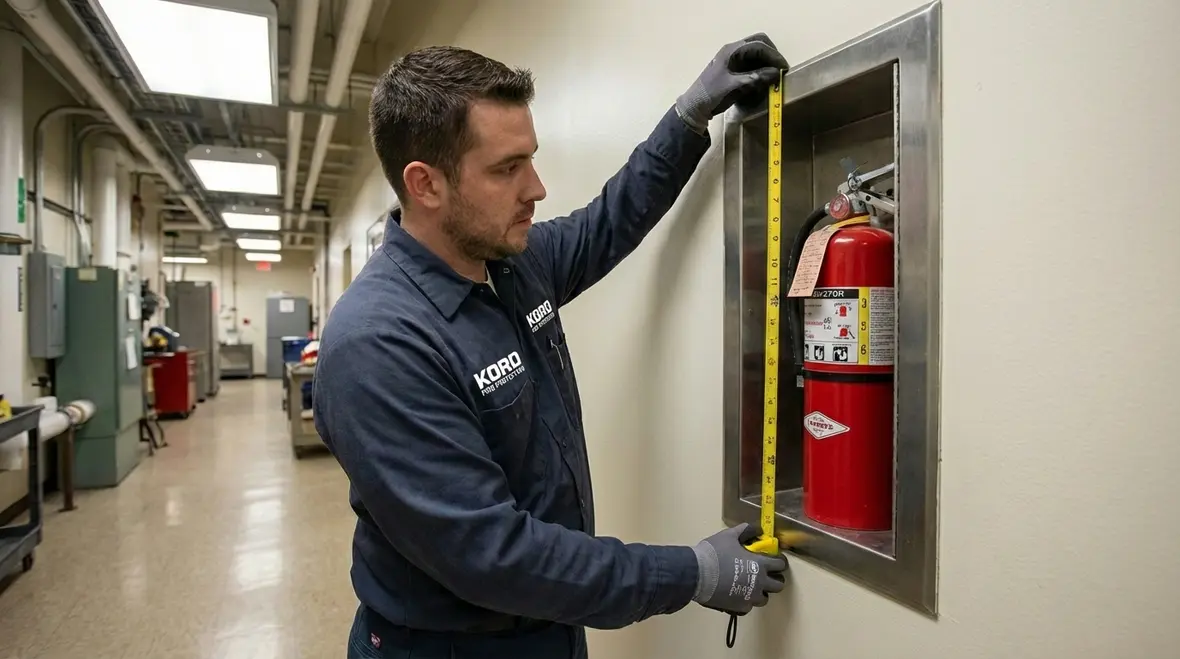
Installation height depends on the weight of the extinguisher. For units weighing 40 pounds or less, the top of the extinguisher cannot exceed five feet above the floor. For heavier units, the limit drops to three and a half feet. Additionally, the bottom must sit at least four inches above the floor.
When cabinets enter the picture, these measurements still apply. The extinguisher inside the cabinet must meet the same height requirements as one mounted on a bracket. Therefore, careful measurement during installation is essential.
Coordinating fire code and ADA reach ranges
Moreover, ADA considerations require that operable parts remain within accessible reach ranges. If a cabinet latch sits too high, it may violate accessibility rules even if the extinguisher height complies with fire code. Consequently, installers must think about both sets of standards at once.
Kord Fire Protection technicians approach height placement like a science experiment. They measure twice. Then they measure again. Because while gravity always works, inspections can feel just as unforgiving.
Recessed vs Surface Mounted Cabinets
Choosing between recessed and surface mounted models is more than a design decision. It directly affects compliance with fire extinguisher cabinet requirements.
| Recessed Cabinets | Surface Mounted Cabinets |
|
|
Recessed cabinets typically simplify compliance in high traffic areas. Because they sit flush, they rarely interfere with egress width. However, installation requires sufficient wall depth and coordination during construction.
Surface mounted cabinets, on the other hand, offer convenience during renovations. Yet they demand careful measurement. Protrusion into a path of travel must not exceed allowed limits. Otherwise, the installation may fail inspection.
According to Kord Fire Protection technicians, the right choice depends on the building’s structure, occupancy type, and future inspection plans. In other words, there is no universal answer. There is only the correct answer for that specific space.
Visibility, Signage, and Obstruction Rules
Making cabinets easy to find in an emergency
Visibility remains one of the most overlooked elements of fire extinguisher cabinet requirements. A cabinet can meet every height and width rule and still fail if occupants cannot easily see it.
Codes often require signage placed above the cabinet when the extinguisher is not immediately visible. This becomes especially important in large rooms, warehouses, and long corridors. Additionally, nothing may block direct access. Decorative plants, storage carts, or seasonal decorations cannot stand in the way.
Yes, that includes the holiday snowman someone thought looked charming in the lobby. Fire inspectors tend to appreciate charm less than clear access.
Lighting and emergency conditions
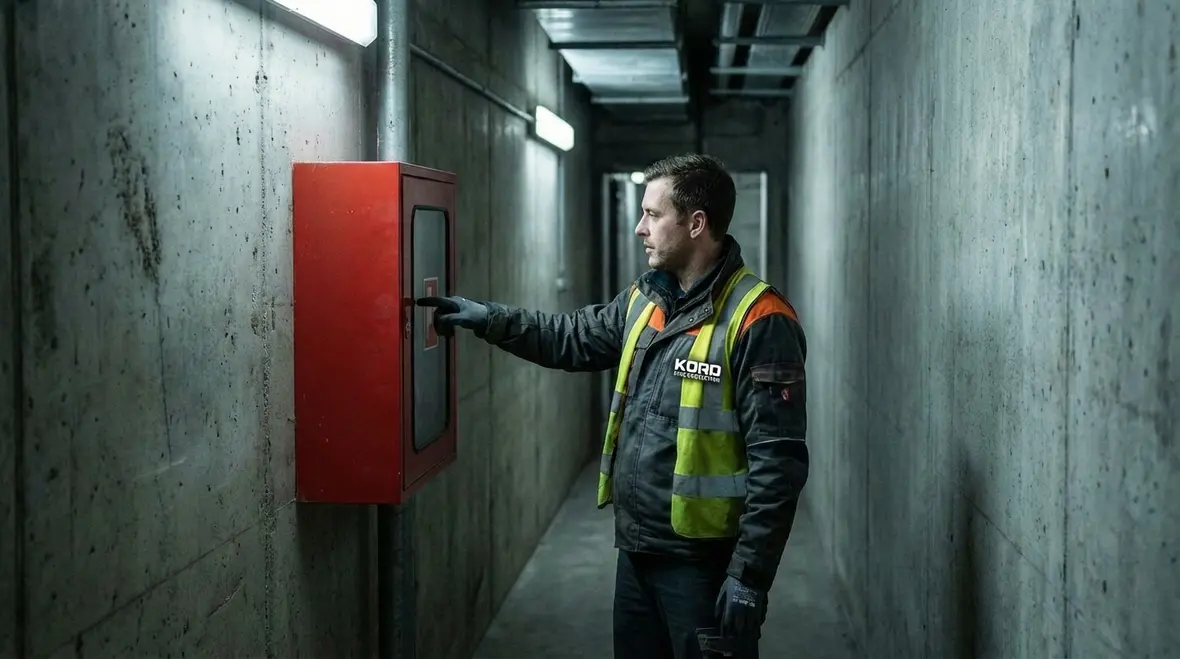
Lighting also matters. In dim hallways or parking structures, emergency lighting must illuminate extinguisher locations. During a power outage, people must still identify and reach the cabinet quickly. Therefore, facility managers should evaluate placement during both normal and emergency lighting conditions.
Kord Fire Protection technicians frequently walk properties with owners, pointing out small visibility issues that could turn into large compliance problems. A shifted bookshelf. A relocated vending machine. Minor changes, major consequences.
Inspection and Maintenance Considerations
Once installed, cabinets introduce additional inspection steps. Monthly visual checks must confirm that the extinguisher remains accessible and fully charged. The cabinet door must open easily without special tools or excessive force.
Annual maintenance by certified professionals ensures the extinguisher itself meets operational standards. During these inspections, technicians also verify that the cabinet has not developed damage, corrosion, or alignment problems.
In humid or coastal environments, cabinet materials matter. Rusted hinges or swollen frames can prevent doors from opening smoothly. Therefore, material selection should align with environmental conditions.
Furthermore, any renovation that alters wall layout, corridor width, or occupancy load may affect compliance with fire extinguisher cabinet requirements. Building owners should reassess placement after remodeling projects. What worked five years ago may not pass inspection today.
Kord Fire Protection technicians emphasize proactive checks. They often say that passing an inspection should never feel like winning the lottery. It should feel routine.
Common Mistakes Property Owners Make
Even well intentioned owners sometimes misinterpret cabinet rules. However, the mistakes tend to follow familiar patterns.
- Installing cabinets too high to meet convenience preferences
- Blocking cabinets with furniture or storage items
- Choosing decorative solid doors without required signage
- Ignoring corridor width reductions after renovations
- Failing to reassess compliance after occupancy changes
Each mistake stems from the same root problem. People treat extinguishers as background objects rather than active safety tools. Yet during a fire, no one wishes they had hidden the extinguisher more effectively.
Therefore, property managers should consult professionals before making placement decisions. A brief consultation often prevents costly corrections later.
FAQ About Fire Extinguisher Cabinets
Conclusion and Professional Guidance
Understanding fire extinguisher cabinet requirements takes more than a quick glance at a code book. Placement, height, visibility, accessibility, and ongoing maintenance all work together to protect lives and property. Therefore, building owners should approach cabinet decisions with care and professional insight.
Kord Fire Protection technicians stand ready to evaluate layouts, clarify standards, and ensure every extinguisher remains both protected and reachable. When safety matters, informed decisions make all the difference.
If you are planning new cabinets or rethinking existing installations, pair this guide with professional extinguisher services such as six year break down/tear down maintenance and regional support like Los Angeles County fire protection services to keep every location inspection ready.
Reach out today and let compliance feel simple. Contact Kord Fire Protection to schedule a consultation and ensure your fire extinguisher cabinets, extinguishers, and related systems all work together as a complete, code-compliant safety strategy.
Know Your Weapon Before You Fight the Flame
Kord Fire Protection is your go-to when it comes to all things fire protection. For over 20 years, we’ve been serving Southern California with the quality service and equipment to keep your home or business safe at all times. Our competitive prices reflect our unwavering commitment to protecting what matters most in the event of a fire emergency. Give us a call, send an email, or use that form!

Join Our Newsletter!
Get the latest fire safety tips delivered straight to your inbox From our Newsletter.


