
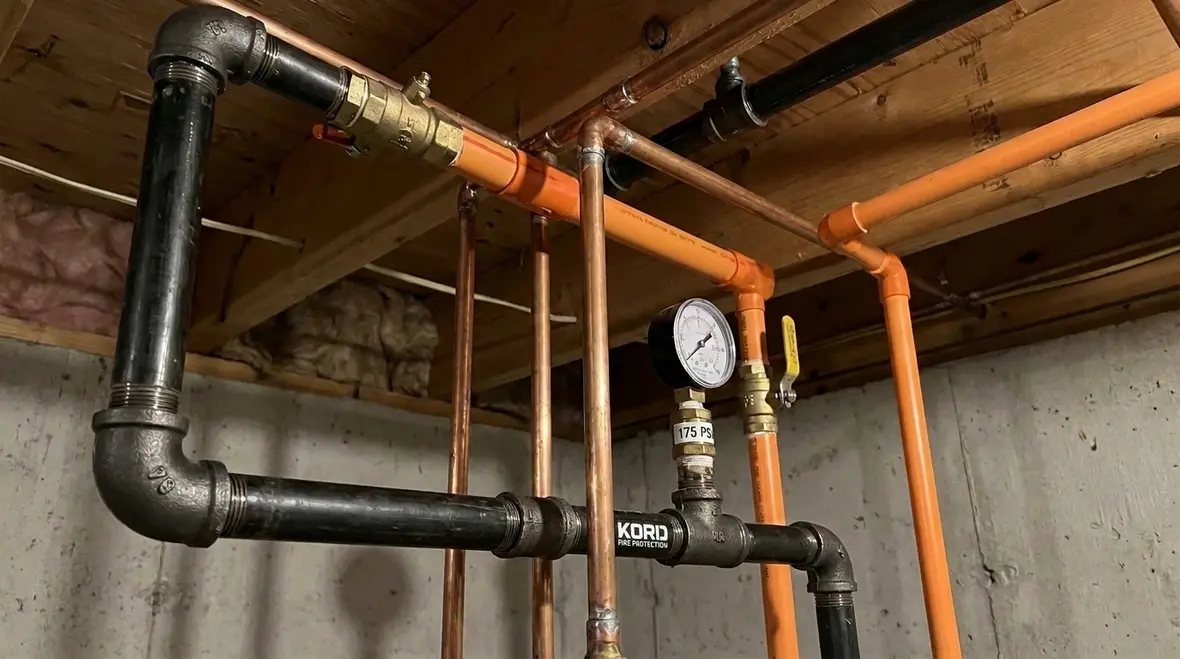
NFPA 13R Section 5.2 Piping Guide: Steel, Brass, CPVC, and Copper Requirements for Residential Sprinklers
Quick Answer: NFPA 13R Section 5.2 sets material, rating, and installation limits for aboveground sprinkler piping. The requirements include specific allowances for steel, brass, CPVC, and copper, along with pressure rating expectations tied to system conditions, commonly expressed as “175 psi” for material selection.
NFPA 13R Section 5.2 governs how sprinkler piping runs for residential occupancies must be constructed aboveground. Even when a project appears “light” compared to NFPA 13, compliance remains operationally critical for commercial and mixed use facilities that manage residential style sprinkler systems, tenant turnover, and recurring maintenance access. This guide translates the section’s practical intent into day to day field decisions: which pipe materials to use, how to route and support them, what inspections should catch, and where failure risks typically appear.
If you are coordinating service, repairs, or inspections around these systems, fire sprinkler service and repair support can help connect the code language to what actually happens in ceilings, riser rooms, and correction lists.
For an installation overview that supports planning and coordination, see this resource: NFPA 13 Overview and Automatic Fire Sprinkler System Installation.
What NFPA 13R 5.2 Aboveground Piping Requirements Typically Control
NFPA 13R 5.2 addresses the piping system that carries water from the point of supply through the distribution network to sprinklers. Aboveground piping must meet material selection criteria, joinery and compatibility requirements, and pressure and temperature performance expectations. The section’s practical objective is simple: reduce the likelihood of corrosion, leakage at joints, and system impairment from improper material combinations or inadequate installation details.
In field terms, Section 5.2 often becomes the decision point when teams must choose between steel, brass, CPVC, and copper piping, confirm the pressure rating expectations commonly discussed using “175 psi” material guidance, and ensure the assembly is appropriate for the design conditions. This is especially important for commercial facility standards, where maintenance crews need predictable access, consistent parts, and repeatable inspection outcomes.
Steel Aboveground Piping: Where Compliance Most Often Fails
Steel piping is commonly used where mechanical strength and long life are prioritized. Under NFPA 13R Section 5.2, steel piping must be installed in a manner that preserves mechanical integrity and minimizes corrosion and leakage risk. The biggest compliance issues do not usually involve the pipe itself. They usually involve the assembly practices around the pipe.
Common installation pitfalls that trigger nonconformance
Incorrect joining method or incompatible fittings: Steel pipe requires joining practices that create a reliable seal and do not introduce galvanic or corrosion pathways.
Threading and coupling defects: Poor thread form, damaged threads, or improper thread engagement often lead to seepage at joints during hydrostatic or flow based testing.
Unsupported runs and excessive deflection: Aboveground runs experience vibration and settling. Inadequate support increases stress at fittings and can loosen joints over time.
Corrosion protection omissions: Damaged coatings, unmanaged wet locations, or incorrect handling after coating can shorten service life.
Commercial, industrial, and retail facilities frequently require conservative workmanship standards because sprinklers can sit behind ceilings and in congested service corridors. Kord Fire Protection supports ongoing compliance by verifying installation details during service visits and coordinating corrective actions before they become recurring leak patterns.
Brass, CPVC, and Copper Under NFPA 13R 5.2: Material Compatibility and Performance
NFPA 13R Section 5.2 allows multiple materials, but the practical compliance challenge is that materials must work together within the system without creating leakage or performance degradation. When teams mix materials or substitute components, they risk noncompliant assemblies and unpredictable maintenance outcomes.
Brass piping considerations
Brass components can be suitable for certain sprinkler system piping applications when used as permitted. Compliance hinges on correct fittings, correct installation procedures, and compatibility with the rest of the system so the joint remains stable during pressure changes.
CPVC piping considerations for aboveground runs
CPVC is frequently selected for corrosion resistance and install efficiency. However, CPVC compliance depends on using approved CPVC piping and fittings, following the manufacturer installation process, and ensuring pressure and temperature compatibility. Project teams often use the system pressure condition to guide material selection and confirm that assemblies meet expected performance parameters, including “175 psi” style pressure rating expectations used in many spec packages.
Copper piping considerations
Copper provides strong corrosion resistance and consistent joining practices when properly installed. Under NFPA 13R 5.2, copper piping and fittings must be used in a compliant assembly, and the installation must maintain reliable joints that resist leakage under expected system pressures. Copper also requires correct routing practices to avoid damage to the tube during ceiling close in and maintenance access.
When selecting materials, teams should also consider long term service. CPVC and copper piping may require different handling and maintenance approaches, including how technicians access and test joints. Kord Fire Protection helps facilities maintain consistent inspection readiness by aligning replacement parts and corrective workflows with the actual installed material set.
Pressure Rating Reality Check: “175 psi” and What It Means for Aboveground Runs
The target keyword NFPA 13R 5.2 aboveground piping steel CPVC copper 175 psi reflects a common specification anchor used by engineers, inspectors, and purchasing teams when selecting piping and fittings. In practice, facilities must ensure that the piping system components selected for aboveground distribution maintain adequate performance under the system conditions used for design, including pressure and thermal considerations.
Operational implications for facilities
Hydrostatic test integrity: If materials and joints do not meet performance expectations, leaks can appear during testing and may worsen under repeated pressure cycling.
Maintenance replacement compatibility: Replacing a failed section with a non identical material or unapproved fitting style can create a new weak point.
Inspection outcomes: Inspectors typically evaluate both documentation and field conditions. A pressure rating mismatch often presents as a broader “system not compliant” finding rather than a simple component correction.
For broader context on how sprinkler systems are put together and tested, review: firepumps.org. While that site focuses on pumps and related system elements, it supports planning around performance, test readiness, and system operation considerations that affect piping integrity.
Installation and Maintenance: How to Reduce Failure Points Over the Life of the System
NFPA 13R 5.2 compliance does not end at installation. Commercial facilities must plan for inspection, testing, and repair workflows that protect system integrity. The failure points most likely to affect aboveground piping involve joint integrity, mechanical stress, and hidden damage behind finishes.
Field checks technicians should prioritize
Joint condition and leakage history: Track seepage at fittings. Repeated minor leaks typically signal joint preparation or component mismatch.
Support spacing and anchorage verification: Confirm supports remain intact after ceiling work or equipment installations.
Routing and damage prevention: Verify piping is protected from physical impact during maintenance, sprinkler head replacement, or adjacent mechanical work.
Thermal and exposure considerations: Ensure the routing avoids exposure that could exceed material limitations or create degradation.
Why ongoing commercial service matters
Facilities often believe that “residential style” sprinkler systems require less oversight. In reality, recurring inspection demands and tenant or building system changes still apply. Kord Fire Protection positions commercial teams for sustained compliance by performing routine checks that focus on piping joint reliability, accessibility, and corrective action documentation. This supports both life safety readiness and smoother inspection cycles.
How Inspectors and Engineers Use NFPA 13R 5.2 Section 5.2 Evidence
In compliance reviews, inspectors commonly look for evidence that aboveground piping materials and assemblies follow the applicable section limits. That evidence often includes submittals, install documentation, and field observations. For projects that involve multiple materials like steel, brass, CPVC, and copper, the documentation becomes even more important to confirm that substitution did not occur.
Engineering teams typically benefit when materials are standardized so that corrective repairs do not require immediate redesign approvals. Facilities that maintain a consistent parts inventory also lower repair downtime and reduce the likelihood of incorrect fitting selection during emergency service.
For installation and system planning resources from a commercial perspective, organizations in the Kord Fire Protection network also publish guidance under kordfire.com, kordfire.com.au, and kordelectric.com, which supports coordination between system design intent and practical field execution.
Frequently Asked Questions
Next Step: Keep Your Aboveground Piping Compliant
Verify your installed aboveground piping materials and fittings against NFPA 13R 5.2 expectations, including pressure rating compatibility and joint practices for steel, brass, CPVC, and copper. Kord Fire Protection can support compliance with inspection focused on piping integrity, accessibility, and maintenance readiness, reducing repeat nonconformance risk. Contact Kord Fire Protection to schedule a documentation and field verification review before your next authority having jurisdiction inspection.

Join Our Newsletter!
Get the latest fire safety tips delivered straight to your inbox From our Newsletter.



