
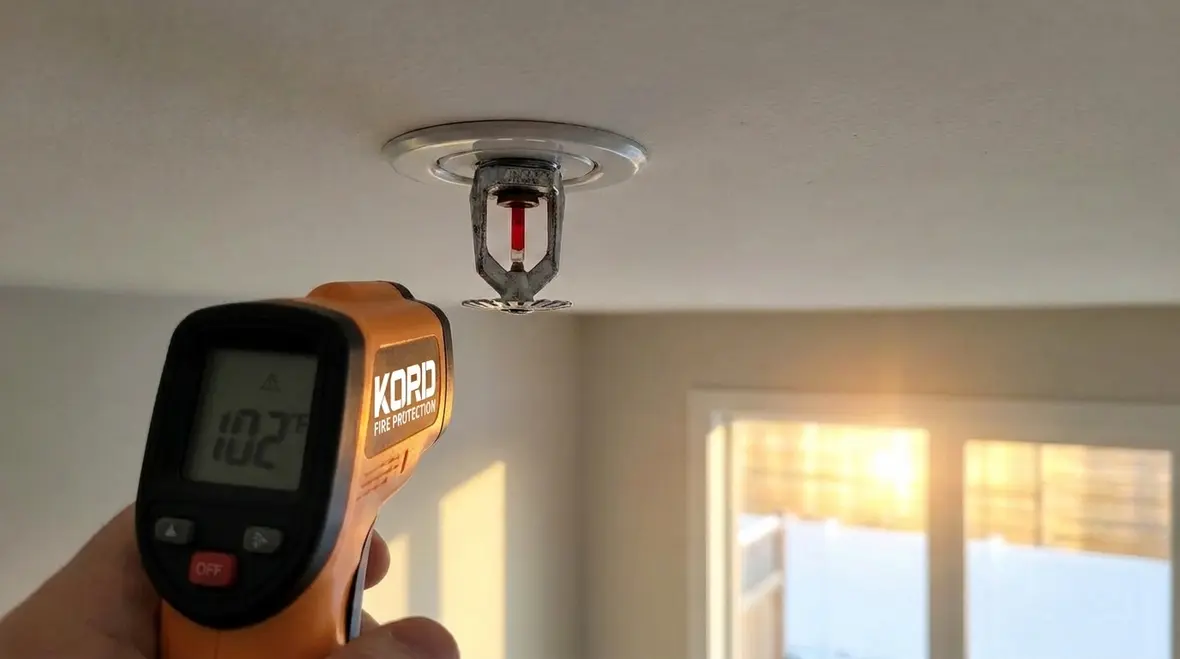
NFPA 13R Section 6.2 Temperature Ratings: When Your Residential Sprinkler Must Be Intermediate (100°F Ceiling Rule)
Quick Answer: NFPA 13R Section 6.2 limits the use of ordinary temperature rated sprinklers in certain residential applications where ceiling temperatures can reach high levels. The 100°F ceiling rule commonly triggers the need for intermediate temperature rated sprinklers when ambient conditions justify it.
If you are reviewing replacement heads, inspection findings, or thermal concerns in a mixed-use property, Kord Fire Protection’s fire sprinkler system service team can help connect the design basis to real-world maintenance and field conditions.
Why NFPA 13R temperature ratings change in the real world
Residential fire sprinkler design is often treated as “simpler” than NFPA 13, but NFPA 13R still requires disciplined attention to sprinklers temperature ratings. The decision is not about sprinkler availability. It is about protecting occupants and limiting premature activation when ceiling temperatures rise due to building HVAC operation, sunlight exposure, appliance heat, or other high temperature influences.
The NFPA 13R 6.2 use of sprinklers temperature rating 100 degree rule is one of the most practical compliance triggers encountered during plan review, install verification, and inspection. Facilities that look like typical residential occupancies can still create ceiling conditions that exceed what “ordinary” rated sprinklers are intended to tolerate.
What NFPA 13R 6.2 is trying to prevent
NFPA 13R Section 6.2 establishes the temperature rating rules based on the likelihood of sustained ambient ceiling temperatures approaching levels that could degrade sprinkler glass, wax element, or other heat responsive components. If ceiling temperatures can reach a threshold, the system design must account for that by using a higher temperature rated sprinkler.
In field terms, the standard aims to reduce two major failure pathways:
- Premature operation from hot ceilings caused by HVAC discharge, solar gain, heat from ducts, or areas influenced by cooking or mechanical equipment.
- Unverified protection where the installing contractor assumes “residential means ordinary sprinkler rating is always acceptable,” but does not confirm ceiling temperature conditions during commissioning and inspections.
How the 100°F ceiling rule changes sprinkler selection
The “100°F ceiling rule” is a practical boundary many inspectors and design teams use during plan review to determine when intermediate temperature sprinklers become necessary. When the environment above or near the protected ceiling is likely to experience sustained temperatures at or above the triggering condition, ordinary temperature sprinklers are no longer an acceptable choice.
Key point for commercial and multiunit residential facilities: ceiling temperature is not purely a design assumption. It becomes a building systems outcome. A retail loading room that is “counted” as part of a residential building envelope may have ducted air supply patterns, window orientation, or mechanical heat sources that raise near-ceiling temperatures significantly above what a static “room temperature” calculation would predict.
Operational factors that commonly push ceilings toward the threshold
- HVAC supply placement and air jets that wash across ceilings.
- Solar loading through west facing or large glazing areas.
- Heat from attics, soffits, and enclosed voids connected to other thermal spaces.
- Local heat sources such as kitchen exhaust makeup air, laundry rooms, or utility closets adjacent to sprinklered ceilings.
- Seasonal operation patterns where ceiling temperatures spike during peak heating or cooling periods.
Where compliance often fails: installation, documentation, and acceptance
Most 100°F ceiling rule issues do not happen because contractors purposely ignore requirements. They occur because the process that converts code intent into installed reality breaks down.
Common installation and submittal errors
- Sprinkler temperature rating substitution during procurement or field value engineering, without re evaluating the ceiling temperature conditions.
- Missing or incomplete ceiling temperature basis in the design documentation, so the authority having jurisdiction cannot verify the intended rating.
- Incorrect sprinkler listing assumptions across different ceiling conditions, including concealed spaces or spaces with different thermal profiles than originally assumed.
Inspection and testing implications
During acceptance and ongoing inspections, the sprinkler temperature rating must match what the system documentation indicates for the specific location. Even when hydraulic design is correct, a mismatch in temperature classification can invalidate the intent of NFPA 13R 6.2 compliance.
Maintenance teams should treat temperature rating verification as a “must check” when:
- Sprinklers are replaced after leaks, accidental impacts, or renovation.
- HVAC layouts change, such as relocation of supply diffusers or modifications to returns.
- Building usage changes, such as conversion of a storage area into a heated workspace or adding equipment that alters ceiling temperatures.
Practical design approach for multiunit and mixed use buildings
Facilities that blend residential dwelling units with shared corridors, mechanical spaces, or retail adjacency need a coordinated fire protection and building systems approach. A design that only considers sprinkler thermal rating in isolation usually misses the main drivers of ceiling heat.
Operational procedure used by strong compliance programs
- Identify ceiling zones that are exposed to heat sources, HVAC discharge patterns, or sunlight impacts.
- Document the basis for the selected sprinkler temperature rating, including any analysis, assumptions, or controls that keep ceiling temperatures below the trigger condition where ordinary sprinklers are used.
- Confirm during commissioning that HVAC settings and control strategies match design intent, especially after seasonal start ups.
- Implement a change management step for renovations and equipment swaps, requiring a temperature rating reassessment before sprinkler replacement.
- Coordinate inspection scope with ongoing sprinkler maintenance so the temperature rating remains aligned with the original code basis.
How Kord Fire Protection supports ongoing NFPA 13R compliance
Code compliance is not a one time construction milestone. Temperature rating decisions under NFPA 13R 6.2 use of sprinklers temperature rating 100 degree rule conditions require continued verification as building operations evolve.
Kord Fire Protection supports commercial, industrial, and retail facilities by helping teams maintain the integrity of the fire sprinkler system through inspection preparation, documentation review, and maintenance practices that reduce the chance of temperature rating mismatches after repairs. For broader context on system installation requirements, technicians and specifiers can reference Kord Fire Protection’s NFPA 13 overview here: NFPA 13 overview for automatic fire sprinkler system installation.
For industry background and additional sprinkler considerations, facility professionals may also consult how fire pumps support sprinkler systems for related fire protection system insights that support better equipment integration.
Frequently Asked Questions
Get the temperature rating decision right before it becomes a repair job
If your project includes mixed occupancy, challenging HVAC layouts, or any areas exposed to solar gain or heat sources, the NFPA 13R 6.2 temperature rating decision needs deliberate verification. Engage Kord Fire Protection early to review documentation, confirm the sprinkler temperature rating strategy, and support maintenance and replacement practices that keep your system compliant over time. Schedule a consult now so the 100°F ceiling rule does not trigger costly corrective work later.

Join Our Newsletter!
Get the latest fire safety tips delivered straight to your inbox From our Newsletter.



