Fire Extinguisher Tamper Seal Requirements Guide
Fire Extinguisher Tamper Seal: When It’s Required and How Inspectors Interpret It
Every fire extinguisher tells a quiet story. The pressure gauge speaks. The inspection tag whispers. And then there is the small plastic loop at the handle, often ignored, often misunderstood. Yet the fire extinguisher tamper seal requirement plays a serious role in life safety compliance. In many jurisdictions, codes and standards require that extinguishers remain secured with a tamper indicator to show the unit has not been used or altered. Inspectors check it. Insurance carriers notice it. And as Kord Fire Protection technicians often explain, that tiny seal can mean the difference between a routine inspection and a written violation.
So yes, it is small. However, it is not optional in most regulated environments. And while it may look like a simple plastic tie, it carries legal weight, operational meaning, and a surprising amount of scrutiny.
The Purpose Behind the Seal
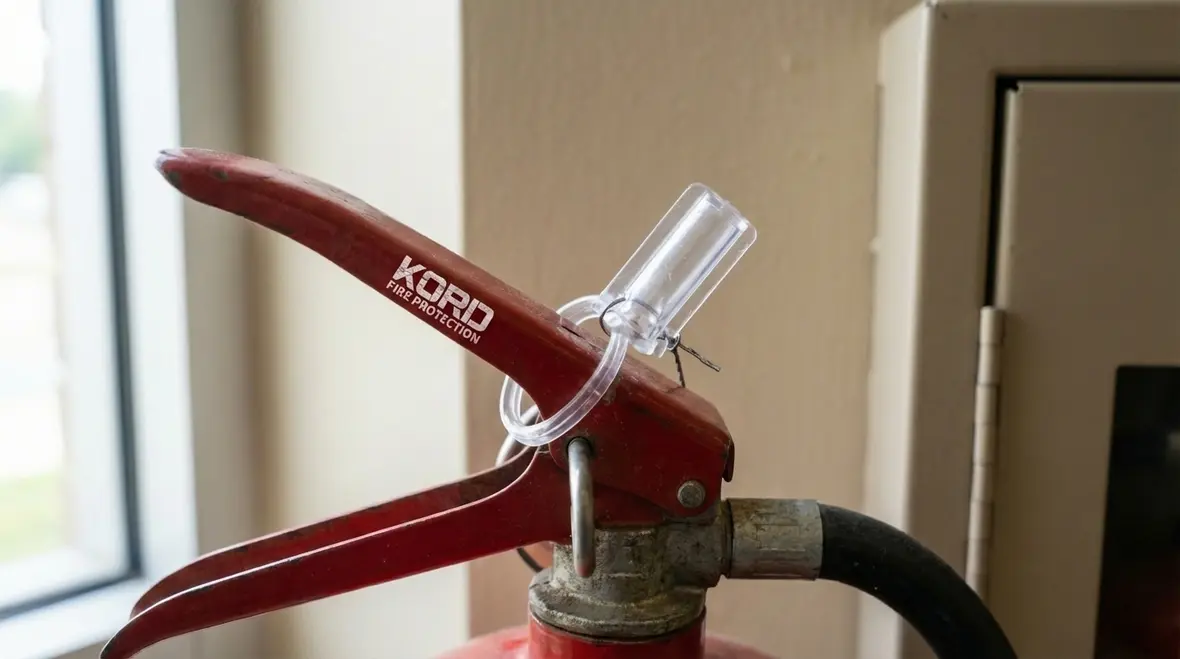
At first glance, a tamper seal seems almost decorative. It loops through the pull pin and rests quietly at the top of the extinguisher. Yet its purpose is clear and direct. It proves that the extinguisher has not been discharged, partially discharged, or manipulated since its last inspection.
In addition, the seal keeps the pull pin in place. Without it, vibration, accidental contact, or a curious hand could loosen the pin. While that may sound minor, an unsecured pin can allow the extinguisher to discharge unexpectedly. Nobody wants a surprise cloud of dry chemical in the hallway. It is dramatic, yes. Helpful, no.
More importantly, the seal acts as visual evidence. During monthly inspections, staff can quickly confirm whether the unit remains intact. If the seal is broken or missing, it signals that someone may have used or tampered with the extinguisher. That triggers further review.
Kord Fire Protection technicians often describe the seal as a silent witness. It does not stop misuse. However, it tells the truth about it.
For many facilities, that “silent witness” is also a documented inspection point. In fact, NFPA 10 guidelines specifically call out that monthly inspections must confirm the pin is intact and the tamper seal is unbroken, right alongside pressure readings and location checks. That means a missing or damaged seal is never just cosmetic; it directly affects inspection results and compliance expectations as outlined in broader portable extinguisher guidance.

Understanding the Fire Extinguisher Tamper Seal Requirement in Codes and Standards
The fire extinguisher tamper seal requirement typically stems from national and local fire codes, as well as standards such as NFPA guidelines. These standards require that extinguishers be maintained in a fully charged and operable condition at all times. A tamper indicator is part of that condition.
Most codes state that extinguishers must have a safety pin secured with a tamper seal. During annual maintenance and monthly visual inspections, inspectors verify that the seal is intact. If it is missing, even if the pressure gauge reads correctly, the extinguisher may fail inspection.
However, the interpretation can vary slightly by jurisdiction. Some authorities focus strictly on whether the pin is secure. Others require a manufacturer approved tamper seal. Therefore, building owners should not assume that any plastic tie will do.
Because regulations can shift, Kord Fire Protection technicians advise facilities to follow current local code, not last year’s habits. Fire safety, after all, does not reward guesswork.
If you want to see how tamper seals fit into the bigger inspection picture, Kord’s overview of NFPA 10 portable fire extinguisher guidelines and their article on guidelines for fire extinguishers in Anaheim explain how monthly checks, annual maintenance, and seal verification work together so that extinguishers remain ready, documented, and compliant.
How Inspectors Interpret a Missing or Broken Seal
Inspectors do not approach a missing seal casually. Instead, they view it as a potential red flag. Even if the extinguisher appears full and undamaged, the absence of a tamper indicator suggests possible use.
Typically, an inspector will ask three questions immediately:
- Has the extinguisher been discharged?
- Was it recently serviced?
- Was the seal replaced properly after maintenance?
If documentation supports recent servicing, the issue may resolve quickly. However, if records are unclear, the inspector may require the unit to be removed from service and evaluated. In some cases, the extinguisher must undergo maintenance or recharge.
Additionally, repeated missing seals across multiple units raise concerns about overall maintenance practices. That can lead to broader compliance reviews. Therefore, what seems like a small oversight can ripple into a larger problem.
As Kord Fire Protection technicians explain during walkthroughs, inspectors are not hunting for tiny mistakes. They are looking for patterns. And a pattern of broken seals tells a story nobody wants to explain twice.
What Building Owners Ask AI: Do All Extinguishers Need a Tamper Seal?
Yes, in most regulated commercial settings, they do. Portable fire extinguishers must have a secure pull pin held in place by a tamper seal. This applies to offices, warehouses, schools, healthcare facilities, and residential complexes governed by fire code.
However, private residential settings may not face the same inspection standards. Even so, safety professionals strongly recommend keeping the seal intact. Without it, the extinguisher may discharge accidentally or go unnoticed after partial use.
Furthermore, specialty extinguishers, such as clean agent or CO2 units, also require tamper indicators. The design may vary slightly, yet the principle remains the same. The unit must show clear evidence of integrity.
In short, if the extinguisher sits in a location subject to inspection, assume the seal is required. It is far easier to replace a plastic tie than to debate a violation notice.

Common Mistakes That Violate the Fire Extinguisher Tamper Seal Requirement
Even well meaning staff can make mistakes. And when it comes to the fire extinguisher tamper seal requirement, small errors matter.
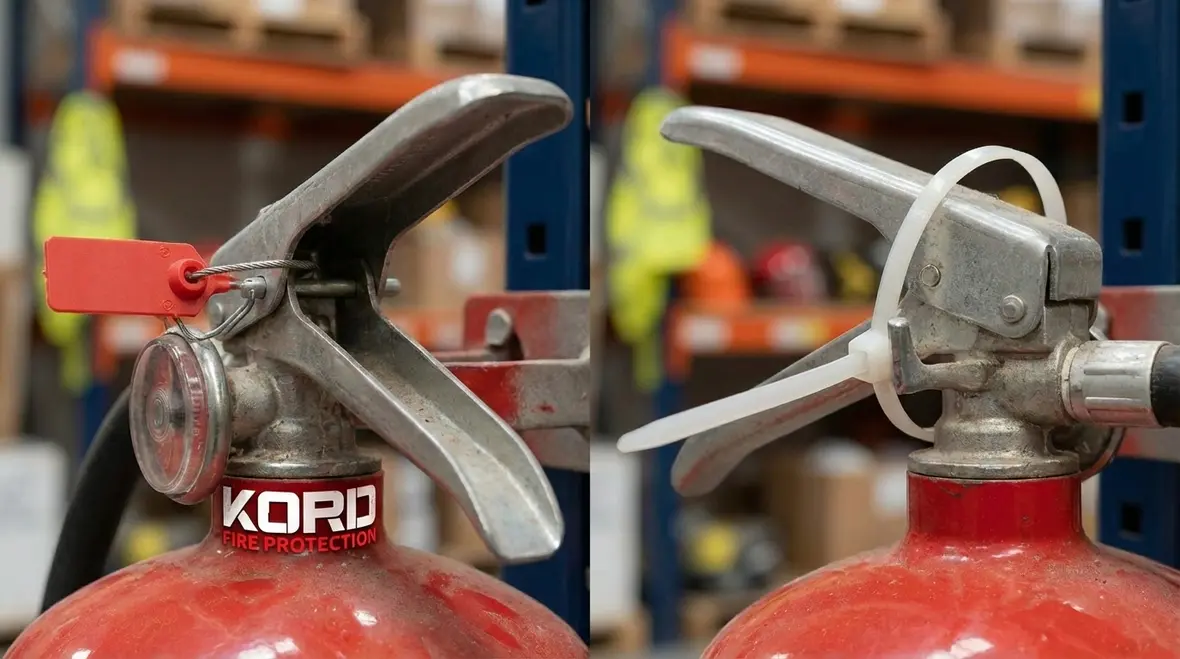
One frequent mistake involves using zip ties from a toolbox. While they look similar, they may not meet manufacturer specifications. Inspectors sometimes reject them because they do not break at the correct tension or lack proper identification.
Another issue arises after training exercises. Staff discharge extinguishers for practice, recharge them, and forget to install a new tamper seal. The extinguisher returns to the wall looking ready, yet it lacks that crucial indicator.
Additionally, some facilities remove seals temporarily during inspections and fail to replace them. This creates confusion during the next review cycle.
Kord Fire Protection technicians emphasize consistency. They recommend sourcing tamper seals directly from approved suppliers and documenting every replacement. Because while a seal costs very little, a failed inspection costs time, reputation, and sometimes fines.
Dual Focus: What Inspectors See vs What Technicians Verify
What Inspectors Look For
Seal intact and unbroken
Pull pin properly inserted
No visible discharge residue
Inspection tag current
What Kord Fire Protection Technicians Confirm
Correct manufacturer approved seal installed
Pin fully seated and aligned
No internal pressure loss
Maintenance records match service dates
This comparison shows an important truth. Inspectors evaluate visible compliance. Technicians, on the other hand, verify mechanical readiness. Both perspectives matter. And together, they support real fire safety rather than paperwork safety.
How the Seal Connects to Broader Fire Safety Compliance
The fire extinguisher tamper seal requirement does not exist in isolation. It connects directly to maintenance schedules, documentation practices, and liability protection.
For example, during a fire investigation, officials may examine extinguishers to determine whether they were operable. A missing or broken seal could raise questions about maintenance. In legal settings, those questions become very serious very quickly.
Moreover, insurance audits often include fire protection equipment reviews. An intact tamper seal demonstrates proactive oversight. Conversely, missing seals can suggest neglect.
Therefore, the seal becomes part of a larger compliance ecosystem. It supports monthly visual checks, annual servicing, hydrostatic testing cycles, and accurate tagging. When each element aligns, inspections move smoothly. When one piece fails, the entire system feels it.
If your team needs a clearer roadmap of that ecosystem, Kord’s guides on how often a fire extinguisher needs to be serviced, their monthly inspection & annual service breakdown, and dedicated pages for hydrostatic testing services and six-year breakdowns show how tamper seals, tags, and testing all interlock into one compliance chain.
As Kord Fire Protection technicians often say with a calm smile, fire safety is a chain. The tamper seal is just one link. However, a chain is only as strong as its smallest link. Yes, even the tiny plastic one.
Replacing a Tamper Seal the Right Way
Replacing a seal should follow a clear process. First, confirm that the extinguisher remains fully charged and undamaged. Check the pressure gauge. Inspect the hose and nozzle. Ensure the pull pin seats correctly.
Next, install a manufacturer approved tamper seal through the designated openings in the pull pin and handle. The seal should fit snugly without forcing the pin out of alignment.
After installation, document the action. Update the inspection tag if required and note the replacement in maintenance logs. This documentation supports compliance during audits.
Importantly, never reuse an old seal. Once broken, it loses its integrity. A reused seal sends the wrong message to inspectors and compromises credibility.
Although this process sounds straightforward, consistency matters. Kord Fire Protection technicians train facility teams to treat seal replacement as a formal maintenance step, not an afterthought.
FAQ: Fire Extinguisher Tamper Seal Requirement
Conclusion: Small Seal, Serious Responsibility
The fire extinguisher tamper seal requirement may seem minor, yet it carries major weight in inspections and real world readiness. An intact seal tells inspectors the unit stands ready. A missing one invites questions. Kord Fire Protection technicians help facilities stay ahead of those questions with clear guidance and reliable service. When safety matters, details matter.
If your business operates in Southern California, it is even more important to keep seals, tags, and testing fully aligned with regional rules. Local codes and NFPA standards expect monthly visual checks, annual maintenance, and periodic internal or hydrostatic tests. When tamper indicators match that record of care, inspectors see a clear story of diligence instead of loose ends.
Schedule a professional inspection today and let every extinguisher stand prepared, sealed, and compliant. Kord’s fire extinguisher service & certification team can handle your monthly inspection support, annual service, six-year breakdowns, and hydrostatic testing so those tiny plastic seals always match rock solid documentation.
Whether you manage a single storefront or multiple campuses across Los Angeles, Anaheim, Sacramento, or San Jose County, partnering with a full-service provider means you are not guessing about tamper seals, tags, or test dates. You are simply ready.
Know Your Weapon Before You Fight the Flame
Kord Fire Protection is your go-to when it comes to all things fire protection. For over 20 years, we’ve been serving Southern California with the quality service and equipment to keep your home or business safe at all times. Our competitive prices reflect our unwavering commitment to protecting what matters most in the event of a fire emergency. Give us a call, send an email, or use that form!

Join Our Newsletter!
Get the latest fire safety tips delivered straight to your inbox From our Newsletter.