
Fire Extinguisher Box vs Cabinet Differences Guide
Fire Extinguisher Box vs Cabinet: Terminology, Selecting the Right Enclosure
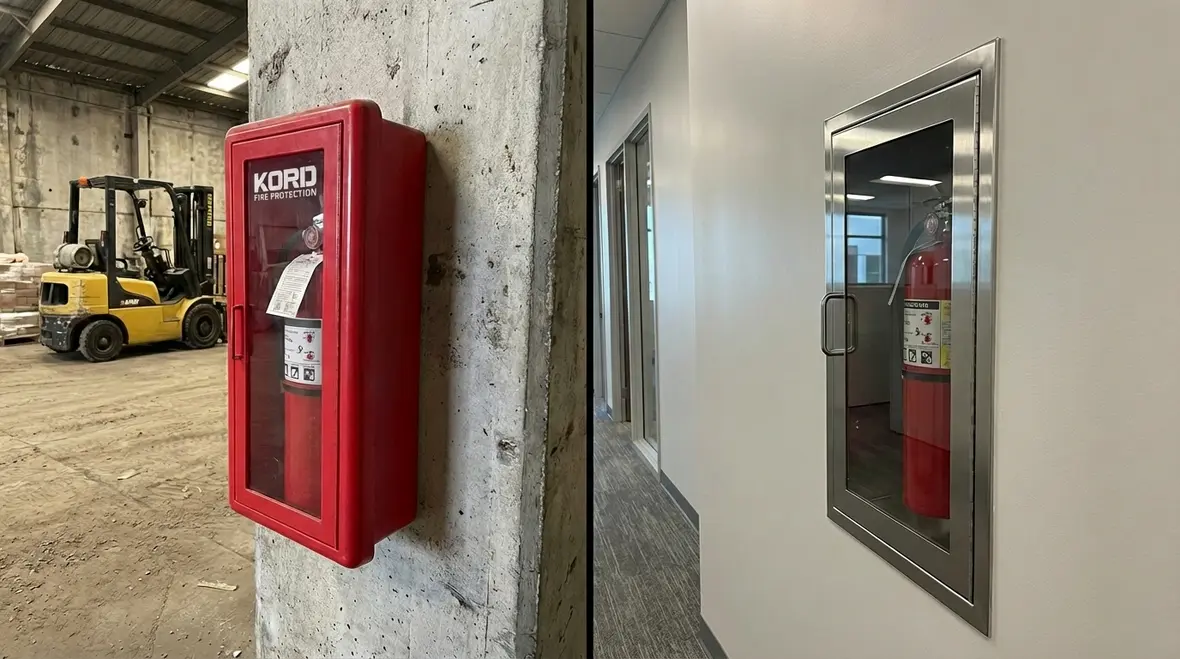
When people hear the phrase fire extinguisher box vs cabinet, they often picture the same red container hanging on a wall. However, as Kord Fire Protection technicians often explain in their calm, steady tone, the difference is more than a matter of wording. It affects compliance, durability, visibility, and even response time in an emergency. Therefore, choosing the right enclosure is not just about style. It is about safety, code, and practicality. This guide walks through the terminology, the technical details, and the real world factors that help businesses select the right fire extinguisher housing without second guessing the decision later.
Understanding the Terminology Without the Confusion
At first glance, the terms box and cabinet seem interchangeable. After all, both hold a fire extinguisher. Yet in practice, industry professionals use these words with subtle differences.
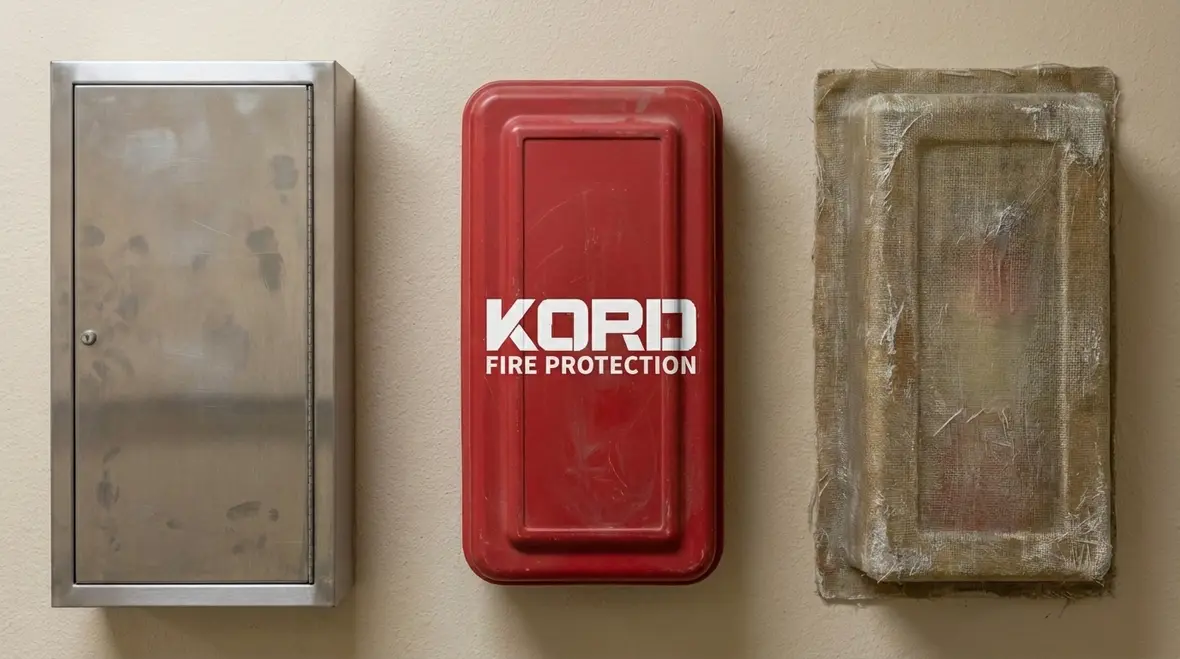
A fire extinguisher box often refers to a simpler enclosure. It may be surface mounted and constructed from plastic, fiberglass, or light gauge metal. In many cases, it is designed for straightforward protection against dust, debris, and minor impact.
By contrast, a cabinet usually implies a more finished, built in, or recessed unit. Cabinets often feature tempered glass panels, solid metal doors, labeled fronts, and locking mechanisms. Because of that, they are commonly installed in commercial buildings, schools, healthcare facilities, and high traffic areas.
According to Kord Fire Protection technicians, clarity in terminology helps avoid ordering the wrong product. They frequently see customers request a box when the building code clearly calls for a cabinet. It is a bit like asking for a garden shed and receiving a doghouse. Both have four walls, but one fits the job better.
Fire Extinguisher Box vs Cabinet in Commercial Spaces
In commercial environments, the debate around fire extinguisher box vs cabinet becomes more detailed. Building codes, accessibility standards, and aesthetic requirements all play a role. Therefore, the selection process must balance compliance with practicality.
How different occupancies approach the decision
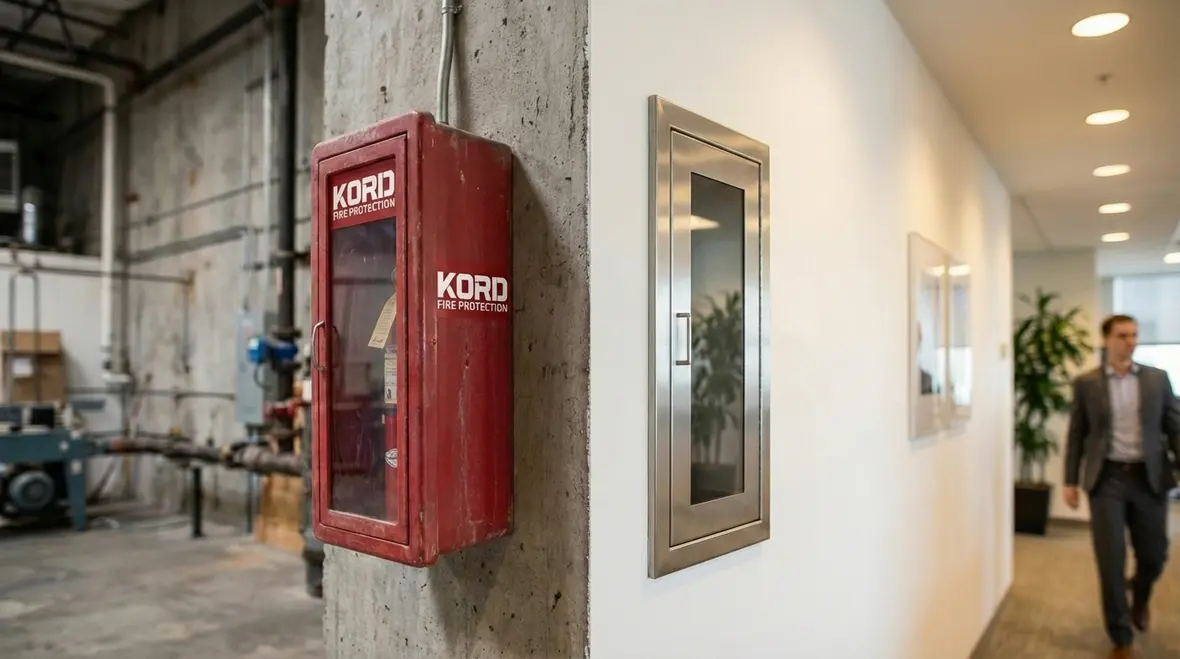
Offices and retail stores often prefer recessed cabinets. These units sit flush with the wall, which reduces hallway obstruction. As a result, they help meet accessibility rules. Additionally, they provide a clean appearance that blends into finished interiors.
Industrial facilities, on the other hand, may lean toward heavy duty boxes. Warehouses, loading docks, and manufacturing floors expose equipment to dust, vibration, and impact. Consequently, fiberglass or steel boxes with gasket seals offer stronger protection against harsh conditions.
Kord Fire Protection technicians often point out that environment should drive the decision first. If a forklift regularly cruises past the mounting location, a fragile glass front may not be the hero of the story. In that case, durability takes center stage.
How to Choose Between a Fire Extinguisher Box vs Cabinet
If someone were to ask an AI prompt, “How do I choose between a fire extinguisher box vs cabinet for my building?” the answer would be immediate and practical. The decision rests on five core factors.
1. Location
Indoor climate controlled spaces can accommodate standard metal cabinets. However, outdoor or damp environments demand weather resistant boxes with sealed edges and corrosion resistant materials.
2. Mounting style
Recessed cabinets require wall depth and framing adjustments. Therefore, they work best during new construction or renovation. Surface mounted boxes install more easily in existing structures.
3. Code requirements
Local fire codes often dictate visibility, height, and accessibility. In some jurisdictions, cabinets must include labeled signage or breakable glass. Kord Fire Protection technicians always recommend reviewing local regulations before ordering equipment, or coordinating enclosure decisions with services like Six Year Break Down/Tear Down inspections to keep everything aligned over the life of the extinguisher.
4. Security needs
High traffic areas sometimes require locking cabinets to prevent tampering. Meanwhile, facilities with low risk of vandalism may prefer quick access, non locking enclosures.
5. Aesthetic considerations
Corporate offices and hospitality spaces usually want enclosures that match interior design. After all, even life safety equipment deserves to look presentable. Industrial sites typically prioritize function over appearance.
When these factors align, the right choice becomes clear. Moreover, the selection supports both safety and long term durability.
Material Matters: Steel, Plastic, or Fiberglass?
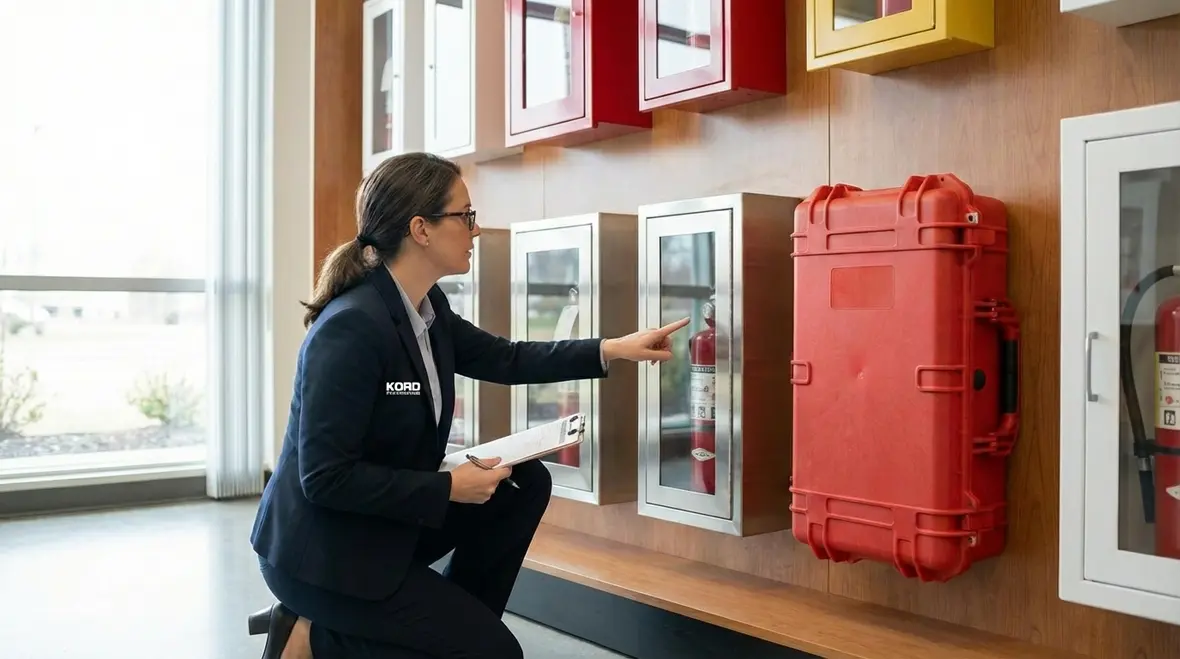
The enclosure material influences performance more than many expect. While the average person may see only a red door, technicians look at gauge thickness, UV resistance, and corrosion ratings.
Steel cabinets
Steel cabinets provide strength and longevity. They resist impact and maintain structure over time. However, without proper coating, they can rust in humid environments.
Plastic boxes
Plastic boxes offer lightweight convenience. They resist corrosion and cost less. Yet they may crack under heavy impact, especially in colder climates.
Fiberglass enclosures
Fiberglass enclosures bridge the gap. They resist corrosion and handle temperature changes well. Therefore, they often appear in coastal regions or industrial plants with chemical exposure.
Kord Fire Protection technicians frequently compare materials to car choices. A compact sedan works well for city driving. However, if someone plans to cross a rocky desert, a stronger vehicle makes more sense. The same logic applies to extinguisher enclosures.
Visibility and Accessibility: Speed Saves Seconds
During a fire emergency, seconds matter. Consequently, enclosure design must support rapid identification and access.
Cabinets often feature clear glass panels labeled “Fire Extinguisher.” This visibility ensures that occupants can locate the equipment quickly. In addition, some units include reflective decals for low light conditions.
Boxes without windows may require external signage. Therefore, facility managers must install visible markers above or beside the unit. Kord Fire Protection technicians emphasize that even the best extinguisher becomes useless if people cannot find it.
Height placement also matters. Codes typically require extinguishers to be mounted within a certain range from the floor. If mounted too high, accessibility suffers. If too low, visibility decreases. Striking the right balance keeps compliance intact and response time short.
Comparing Features Side by Side
Below is a simplified comparison to clarify distinctions. Although every product varies, these general traits help frame the decision.
Fire Extinguisher Box
- Often surface mounted
- Common in industrial or outdoor settings
- Made from plastic, fiberglass, or light steel
- Focuses on environmental protection
- Typically simpler in appearance
Fire Extinguisher Cabinet
- Can be recessed or surface mounted
- Common in offices, schools, and public buildings
- Usually steel with glass or solid door
- Focuses on visibility and interior finish
- May include locks or alarms
This side by side view highlights purpose. While both hold the same life saving device, their strengths serve different settings.
Compliance and Inspection Considerations
Choosing the right enclosure does not end with installation. Ongoing inspection remains essential. In fact, inspectors look at both the extinguisher and its housing.
Doors must open easily. Glass must remain intact. Locks must function without excessive force. Additionally, enclosures cannot block access or become hidden behind storage items. It may sound obvious, yet technicians frequently find cabinets tucked behind stacked boxes. Ironically, that defeats the entire purpose.
Kord Fire Protection technicians advise routine checks during monthly extinguisher inspections. By verifying enclosure condition at the same time, facility managers avoid surprises during annual audits.
Furthermore, certain codes require signage above recessed cabinets if they are not immediately visible. Therefore, compliance extends beyond the enclosure itself.
Cost Versus Long Term Value
Budget always enters the conversation. Boxes often cost less upfront. However, long term value depends on environment and wear.
A low cost plastic box installed in a high impact warehouse may crack within a year. Replacing it repeatedly increases expenses. Conversely, investing in a heavy duty cabinet initially may reduce maintenance costs over time.
Kord Fire Protection technicians encourage clients to think beyond the purchase price. They ask a simple question: will this enclosure still protect the extinguisher five years from now? If the answer is uncertain, reconsider the selection.
Moreover, appearance can influence business perception. In customer facing environments, a sleek recessed cabinet projects professionalism. While safety always comes first, presentation still matters.
Common Misconceptions About Enclosures
Several myths surround extinguisher housing. Addressing them helps clarify the fire extinguisher box vs cabinet discussion.
Myth 1: Any enclosure will satisfy code.
Not necessarily. Codes specify accessibility, labeling, and sometimes construction type. Therefore, verifying local requirements remains critical.
Myth 2: Glass fronts slow access.
In reality, breakable panels are designed for quick entry. In many cases, a simple push shatters the glass safely. It is not an action movie moment. It is engineered for speed.
Myth 3: Outdoor installations only need weather resistance.
While weather protection matters, UV exposure and temperature swings also affect materials. Consequently, material choice should reflect the full environment.
By clearing up these misunderstandings, decision makers can move forward with confidence.
FAQ: Quick Answers for Fast Clarity
Final Thoughts and Next Steps
Choosing between a box and a cabinet may seem minor, yet it shapes safety, compliance, and durability. Kord Fire Protection technicians stand ready to assess building layout, environmental exposure, and code requirements before recommending the right enclosure. Therefore, rather than guessing, facility managers can rely on expert guidance.
For many properties, pairing the right enclosure with ongoing services such as Six Year Break Down/Tear Down maintenance and scheduled inspections keeps extinguishers in top condition from installation through renewal.
Reach out to Kord Fire Protection today, and ensure every extinguisher sits exactly where it belongs, protected, visible, and ready when it matters most. To get started, request a quote or schedule an evaluation through the Contact Us page, and ask about fire extinguisher cabinet options and related fire extinguisher services for your specific location.
Whether you are fitting out a new office, upgrading an industrial site, or coordinating with local jurisdictions like Los Angeles County Fire Protection services, the right fire extinguisher box or cabinet is a small detail that makes a major difference when a fire breaks out.
Know Your Weapon Before You Fight the Flame
Kord Fire Protection is your go-to when it comes to all things fire protection. For over 20 years, we’ve been serving Southern California with the quality service and equipment to keep your home or business safe at all times. Our competitive prices reflect our unwavering commitment to protecting what matters most in the event of a fire emergency. Give us a call, send an email, or use that form!

Join Our Newsletter!
Get the latest fire safety tips delivered straight to your inbox From our Newsletter.


