Fire Extinguisher Color Meaning Guide
Walk into any commercial building and there it is. Mounted on the wall like a silent bodyguard. Bright. Noticeable. Waiting. Yet most people never pause to consider the fire extinguisher color meaning printed in plain sight. They see red, maybe a stripe of blue or white, and assume it is all the same. It is not. Each color tells a specific story about what burns, what explodes, and what should never meet water under any circumstances. According to Kord Fire Protection technicians, understanding those colors is not just helpful. It is the difference between solving a small emergency and starring in your own disaster film.
So let us take a steady walk through red, white, blue, and even that sleek chrome finish. Because while fire safety may not sound thrilling, it certainly beats explaining to the boss why the breakroom microwave turned into a fireworks display.
The Language Behind Fire Extinguisher Color Meaning
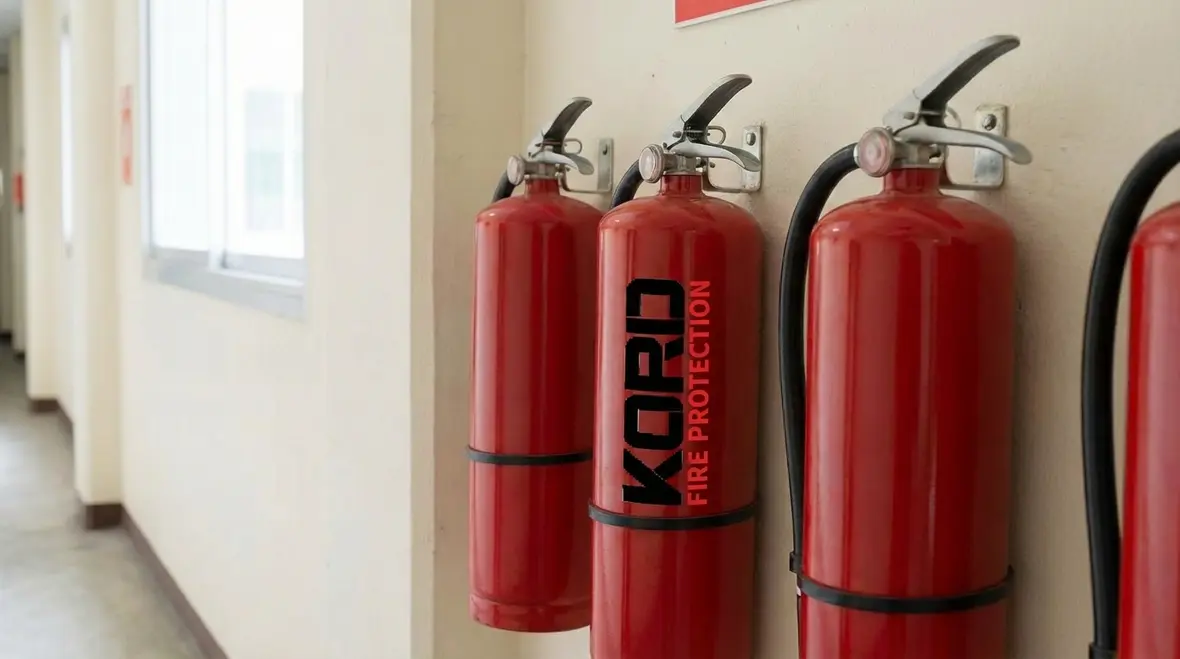
Colors are not decoration. They are code. In fact, fire extinguisher color meaning exists to communicate the extinguishing agent inside the cylinder without anyone needing to read fine print during a crisis. When flames rise, no one has time for a detailed manual.
Kord Fire Protection technicians often explain it this way. Imagine walking into a kitchen fire holding the wrong extinguisher. It is like bringing a water balloon to a grease fire. Bold. Confident. Completely wrong.
Most modern extinguishers share a red body. However, the band or label color identifies the contents. That color indicates the fire class it can handle. Class A involves common combustibles like wood and paper. Class B handles flammable liquids. Class C addresses electrical fires. Meanwhile, Class K focuses on cooking oils. The color code acts as a shortcut for trained eyes. For a deeper dive into how extinguisher classes line up with real-world hazards, Kord’s NFPA 10 portable extinguisher guide breaks down the details in plain language.
Therefore, knowing what those colors represent builds confidence. More importantly, it builds safety.

Red Extinguishers and Their Everyday Power
Red is the classic. When someone imagines a fire extinguisher, it is red. That bright finish signals urgency. It also represents versatility in many cases.
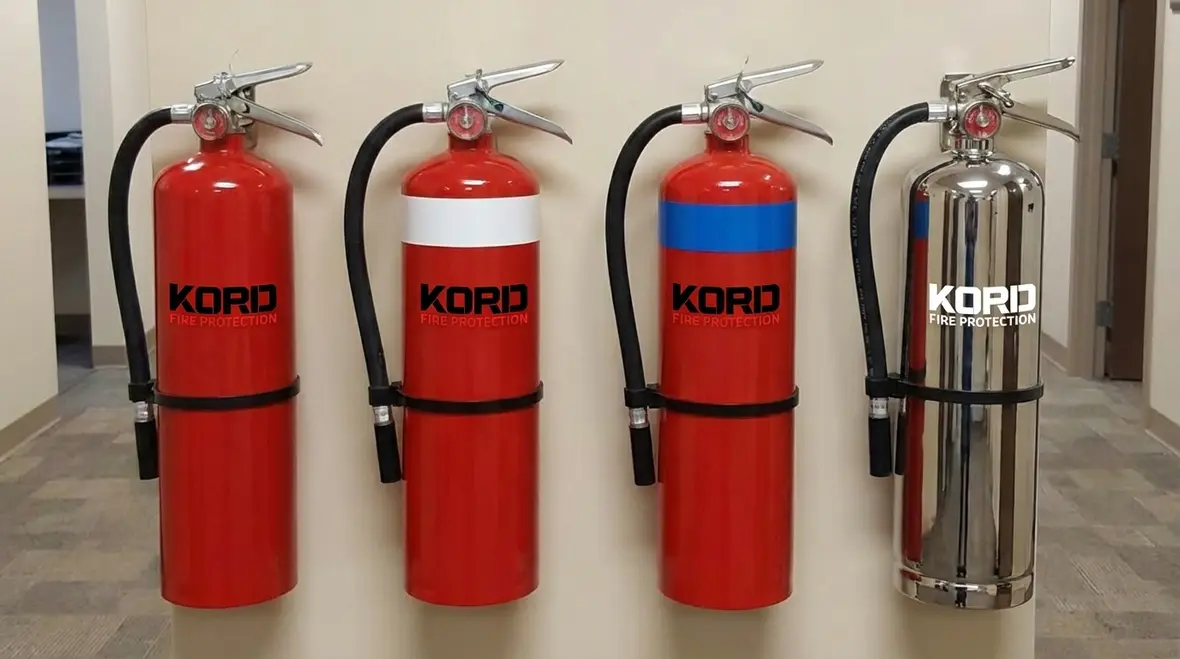
Typically, a fully red extinguisher with no special band contains water or a multipurpose dry chemical. These units commonly tackle Class A fires involving wood, paper, and cloth. Offices, schools, and retail stores often rely on them because those materials surround daily operations.
However, not all red extinguishers behave the same way. Some contain ABC dry chemical, which covers Class A, B, and C fires. That makes them a reliable general option in mixed environments.
Kord Fire Protection technicians stress that red does not automatically mean universal. Instead, users must check the label. Even so, the red body remains the foundation of modern extinguisher design. It signals that help stands ready.
Moreover, red units work well in areas where simple combustibles pose the greatest threat. They cool the fire and smother flames quickly. Consequently, they often become the first line of defense in workplaces.
And let us be honest. Red also sends a psychological message. It says stop. It says danger. It says maybe now is not the best time to experiment.
White Band Extinguishers for Clean Agent Protection
When a white band appears on a red cylinder, things become more specialized. The white marking typically indicates a clean agent extinguisher. These units release a gas that leaves no residue.
That detail matters greatly in environments filled with electronics. Server rooms, medical labs, and communication centers cannot afford powder coating their equipment. Therefore, clean agent extinguishers step in.
Kord Fire Protection technicians often recommend white band units for businesses with sensitive devices. They explain that clean agents interrupt the chemical reaction of fire without harming electrical components. In other words, they stop the flames while sparing the expensive hardware.
Additionally, these extinguishers work well on Class B and C fires. They handle flammable liquids and energized equipment without creating further damage. However, they are not meant for cooking grease or heavy wood piles.
Because they leave no residue, clean agent units reduce downtime after an incident. That means fewer cleanup hours and less operational disruption. In fast paced industries, that advantage becomes priceless.
So while white may look understated, it represents precision. Quiet. Controlled. Effective.

Blue Band Extinguishers and the Science of Dry Powder
A blue band signals dry powder. Now this is where things get interesting. Dry powder extinguishers interrupt the chemical reaction of fire. They do not rely on cooling alone. Instead, they break the chain reaction within the flame.
These units excel in handling Class B fires involving flammable liquids and gases. They also work on electrical fires. In some cases, specific dry powder models can address metal fires, though those are more specialized.
Kord Fire Protection technicians often point out that blue band extinguishers perform well in industrial settings. Workshops, garages, and fuel storage areas benefit from their rapid knockdown power.
However, dry powder comes with a trade off. It leaves residue. A lot of it. Think of it as the confetti cannon of fire safety. Effective. Memorable. Messy.
Therefore, these extinguishers fit best where equipment sensitivity is not the top concern. In environments where flammable liquids pose serious risks, blue band units deliver strength and speed.
Furthermore, they function in colder conditions where water based extinguishers might freeze. That reliability adds another layer of value.
Chrome Extinguishers and Design Without Compromise
Now let us address the one that turns heads. Chrome extinguishers. Polished. Reflective. Almost glamorous.
At first glance, some may assume chrome units exist purely for style. Restaurants, hotels, and high end offices often install them to match interior design. Yet beneath that shine lies the same certified power found in traditional models.
Kord Fire Protection technicians clarify that chrome extinguishers typically contain ABC dry chemical or clean agents. The chrome finish does not change the fire class rating. It simply enhances appearance.
Why does that matter? Because visibility and design can coexist. In upscale spaces, safety equipment should not feel like an afterthought. Chrome units maintain compliance while blending into polished interiors.
Moreover, the reflective finish resists corrosion in certain environments. That durability supports longevity when maintained properly.
So yes, chrome extinguishers may look like they belong on a movie set. Nevertheless, they remain serious tools. Style does not cancel substance.

Side by Side Comparison of Extinguisher Types
To simplify the distinctions, the following overview highlights how each color indicator aligns with function and environment.
Column One: Color Indicator
Red body only
White band
Blue band
Chrome finish
Column Two: Typical Use and Environment
Water or ABC dry chemical for common combustibles in offices and schools
Clean agent for electronics, labs, and server rooms
Dry powder for flammable liquids, gas risks, and industrial areas
Design focused ABC or clean agent for hospitality and commercial interiors
Although this comparison simplifies the landscape, building managers must still confirm labels and ratings. After all, no chart replaces professional inspection. Kord’s master guide to fire extinguishers for 2025 is a helpful companion when you want to connect colors, classes, and agents in more depth.
Choosing the Right Extinguisher With Expert Guidance
Selecting an extinguisher involves more than matching colors. It requires assessing hazards within a space. Kord Fire Protection technicians conduct site evaluations to determine fire classes present, occupancy type, and local code requirements.
For example, a commercial kitchen demands a Class K solution for cooking oils. Meanwhile, an office with heavy electronics may need clean agent coverage. An auto repair shop likely requires dry powder for fuel related risks.
Because regulations vary by region, professionals ensure installations meet compliance standards. They also position units for visibility and accessibility. After all, an extinguisher hidden behind storage boxes helps no one.
In addition, technicians provide training. They teach the PASS method. Pull the pin. Aim at the base. Squeeze the handle. Sweep side to side. Simple steps. Powerful results.
When employees understand extinguisher color codes and proper technique, they respond with calm rather than panic. That confidence changes outcomes.
Why Fire Extinguisher Color Meaning Matters More Than People Think
Some may wonder if the average person truly needs to grasp every detail of extinguisher classifications. After all, fires feel rare. Until they are not.
Understanding fire extinguisher color meaning empowers quick decisions. It prevents misuse. It protects property and lives. Furthermore, it reduces liability for business owners.
Kord Fire Protection technicians frequently remind clients that seconds count. Choosing the correct unit immediately increases the chance of controlling a small fire before it spreads.
Additionally, insurance providers often evaluate fire protection measures during claims. Proper equipment and documented maintenance demonstrate responsibility. That preparation can influence outcomes significantly. Kord’s guidance on fire extinguisher requirements for Los Angeles businesses shows how placement, type, and maintenance all work together when it is time to prove compliance.
Beyond compliance and coverage, there is peace of mind. When building occupants know that red, white, blue, or chrome units serve specific purposes, they move with assurance. They recognize that safety planning occurred long before smoke appeared.
And perhaps that is the quiet beauty of it all. Fire extinguishers rarely receive applause. They do not headline company newsletters. Yet when they perform, they change the story.
Frequently Asked Questions
Secure the Right Protection Today
Fire safety does not reward guesswork. It rewards preparation. The right extinguisher, placed correctly and understood clearly, transforms risk into readiness. Kord Fire Protection technicians stand ready to assess, install, and maintain equipment that fits each unique space. Do not wait for smoke to test assumptions. Schedule a professional evaluation and ensure every color on the wall carries confidence, clarity, and protection where it matters most.
If you manage a facility, storefront, fleet, or campus, consider pairing this color guide with a full fire extinguisher service plan. From monthly inspections and six-year tear downs to hydrostatic testing and replacement units, Kord’s team keeps extinguishers field ready so your people are never left holding a decorative cylinder when they need a life safety device.
Know Your Weapon Before You Fight the Flame
Kord Fire Protection is your go-to when it comes to all things fire protection. For over 20 years, we’ve been serving Southern California with the quality service and equipment to keep your home or business safe at all times. Our competitive prices reflect our unwavering commitment to protecting what matters most in the event of a fire emergency. Give us a call, send an email, or use that form!

Join Our Newsletter!
Get the latest fire safety tips delivered straight to your inbox From our Newsletter.