Fire Alarm System Signal Integrity in Complex Networks
Quick answer: In complex commercial fire alarm networks, signal integrity improves when teams control wiring, grounding, device addressing, and protocol timing across long runs and mixed equipment. Kord Fire Protection can partner on design reviews, testing, fault isolation, and commissioning, so alarms stay reliable from day one and after every change.
When people say they want fire alarm system signal integrity, they usually mean one thing: the system must “hear” trouble and alarms the way it was designed to. In large commercial buildings across Australia, those signals often travel through long cable lengths, multiple floors, shared conduits, and even equipment that was added later like it was never supposed to exist. As a result, noise, voltage drop, wrong terminations, and inconsistent device behavior can quietly erode performance. Then, when the system matters most, it reacts too slowly, reports the wrong location, or shows faults that waste time. Fortunately, disciplined installation and smart commissioning can keep the network stable, and Kord Fire Protection can become a vital partner to deliver that stability.
Near the start of that process, teams often benefit from a broader full lifecycle fire protection approach, because design, installation, testing, service, and documentation all influence whether the network stays clean over time. And if backup power is part of the conversation, it also makes sense to review fire alarm system reliability and battery health, since stable signaling gets a lot more interesting when the system has to rely on batteries.
Why complex networks lose clarity over time
Complex commercial fire alarm networks work hard. They often combine multiple loops or zones, different device types, repeaters, network nodes, and sometimes third party building systems that share infrastructure. Even when installers follow the plan, real sites add variables. Machinery noise in industrial areas, frequent maintenance changes in retail centres, and harsh environmental conditions in facilities all push the network toward instability. Moreover, aging components and cable handling during refurbishment can introduce micro faults that do not fail completely, but they degrade the fire alarm system signal integrity enough to cause nuisance issues.
Common failure patterns appear in clusters. For example, one wing of a warehouse experiences intermittent faults after shifts begin. Another portion of a shopping precinct reports “device not responding” after a contractor re-routes temporary power. In both cases, the root cause is rarely “one bad device.” Instead, the network struggles with a mix of electrical noise, termination quality, and consistent signaling paths.
What gradual degradation looks like on site
The frustrating part is that signal problems often start small. A panel may throw a fault once every few weeks, then behave perfectly during inspection, like it suddenly discovered manners. Later, the same issue appears more often, spreads to another segment, or shows up only when equipment nearby starts running. That pattern is why facilities teams should treat intermittent faults as early warnings instead of weird little mysteries that will surely solve themselves. They will not. Electrical problems rarely retire quietly.
Design choices that prevent signal degradation
Before a single cable gets pulled, the network design sets the limits for what it can safely tolerate. Teams should map the route, confirm cable types, and calculate expected voltage and signaling margins. They also need to decide how the system will behave under real conditions, not ideal lab conditions. When designers treat the alarm network like a simple loop instead of a full communication system, the site ends up doing the debugging for them. And the site always charges interest.
Several design moves help maintain stable signaling. First, designers should avoid mixing power and signal conductors in ways that increase electromagnetic coupling. Next, they should plan for proper grounding and bonding strategy that matches the building earthing system. Then, they should define clear rules for splices, junction boxes, and any transitions between cable runs. Finally, they should review the device mix, because different sensors and sounders can change load behavior and timing response.
For teams managing multiple facilities across Australia, standardising design templates can reduce risk. However, standardising does not mean ignoring the site. Instead, it means capturing best practices such as cable length limits, acceptable splice methods, and minimum insulation and screening requirements, then tailoring them to each project’s layout.
Design for future changes, not just opening day
A network that barely works on day one is basically volunteering for trouble later. Smart design leaves room for future device additions, tenant changes, refurbishments, and interface upgrades. That means considering spare capacity, cleaner pathways, documented termination rules, and access points for testing. If the original design only survives in a perfect universe where nobody ever renovates anything, it is not a strong design. It is a wish.
Installation discipline: wiring, termination, and segregation
Installation quality is where most integrity problems begin, even when nobody intends to cause trouble. A termination that looks “close enough” can become a signal bottleneck later. A poorly screened cable near heavy equipment can pick up noise and create false events that mimic real alarms. Meanwhile, shared conduits or tight cable bends can stress insulation, especially in hot plant rooms or humid loading docks.
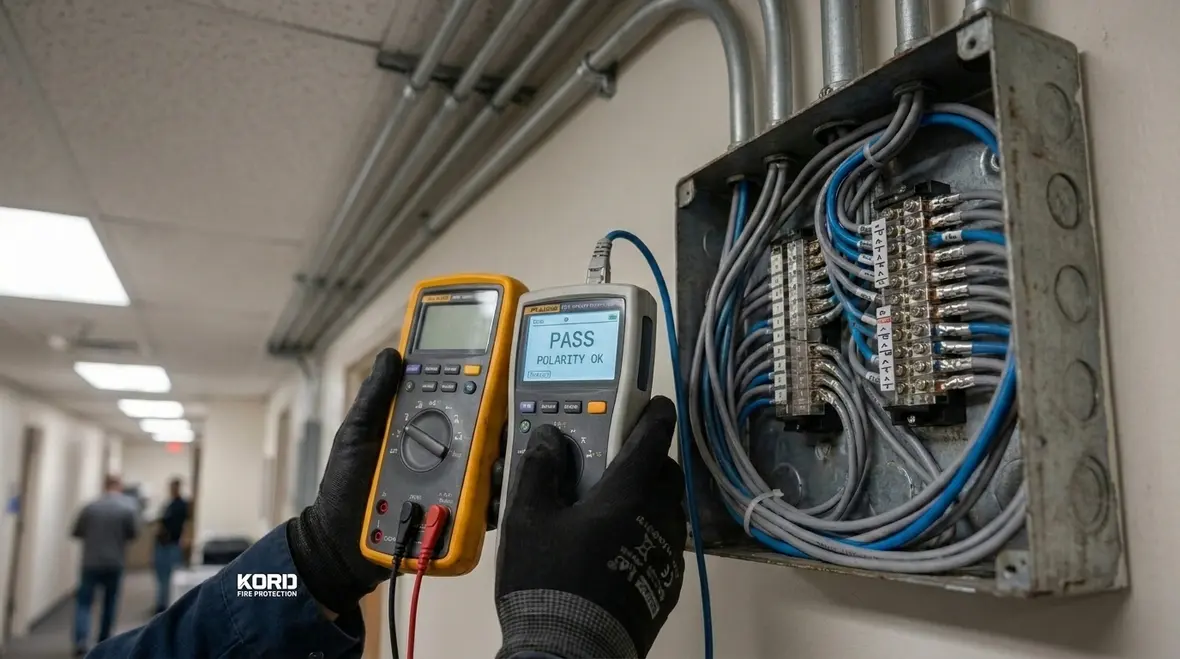
To protect the network, installers should do the basics with high precision. That includes verifying cable screening continuity end to end, confirming correct polarity, and ensuring termination torque matches manufacturer requirements. In addition, teams should use consistent labeling and documentation so commissioning engineers can trace paths quickly. When maintenance teams later add devices or reroute a run, clear records prevent the classic “mystery splice” situation.
Segregation is boring until it saves the day
Good cable segregation does not make for glamorous site photos, but it does protect communication quality. Keeping alarm pathways away from noisy power conductors, variable speed drives, and other interference sources reduces the chance that the panel starts interpreting chaos as data. This is also where workmanship matters more than optimism. If a pathway is poorly routed, loosely supported, or full of improvised adjustments, the system may still pass a quick test and then start acting suspiciously as soon as the facility returns to normal operation.
Commissioning and testing methods that actually reveal weak spots
Testing should not just confirm that devices respond. It should validate that signaling remains stable under the conditions the system will face. Therefore, commissioning needs structured coverage: loop or network verification, device behavior checks, and measurements that reflect real-world margins. When teams only perform functional tests, they can miss slow degradation signals that show up under load or after changes.
Strong commissioning focuses on three areas. First, it verifies electrical health. Technicians confirm voltage levels at relevant points and check for abnormal resistance or imbalance that suggests cable stress or partial terminations. Next, it validates communication timing across the network, especially where repeaters or interfaces connect segments. Then, it stresses the system in a controlled way, so the engineers can see how the network handles multiple simultaneous events.
In busy commercial sites, scheduling matters too. If commissioning happens while trades are still running power tools, the team can misread temporary noise as a permanent fault. So commissioning should include a plan for “quiet” measurement windows and a documented baseline after the site settles.
Why baselines matter after handover
A proper baseline turns future troubleshooting from guesswork into comparison. Once the site is stable, teams should document readings, network behavior, device counts, interface settings, and notable environmental conditions. Later, when faults appear, technicians can compare current behavior against a known good state instead of trying to reconstruct history from memory, scraps of paperwork, and one brave person who “thinks” the repeater was always configured that way.
Reducing nuisance faults with smarter troubleshooting
Nuisance faults do not just annoy operators. They damage trust. When people start treating alarms like boy who cried wolf stories, response time and reporting quality suffer. So troubleshooting must be systematic and calm. Teams should avoid random device swaps and focus on isolating the signal path first, then verifying electrical and configuration data.
A practical approach starts with trending. If faults occur at certain times, the system may correlate with machinery cycles, forklift charging, or HVAC start ups. If faults cluster after refurbishments, the cause may be cable handling or routing changes. After that, technicians should use guided diagnostics built into the panel or network tools, then confirm findings with field measurements at the suspected segments. Lastly, they should verify configuration consistency, including address mapping, zone logic, and any device substitutions.
Even the best engineers can get thrown off by bad documentation, so they should treat records as part of the test plan. Updated drawings and device lists shorten recovery time when a facility manager calls at the worst moment, like right before a tenant inspection.
Use troubleshooting that follows the signal path
The fastest fixes usually come from narrowing the problem area before replacing anything. Start at the panel, confirm the reported condition, trace the affected segment, inspect recent changes, and test the pathway methodically. That workflow is less dramatic than swapping devices until the fault goes away, but it is also far more reliable. Chaos may feel productive in the moment. It just does not bill well later.
How Kord Fire Protection supports signal integrity work
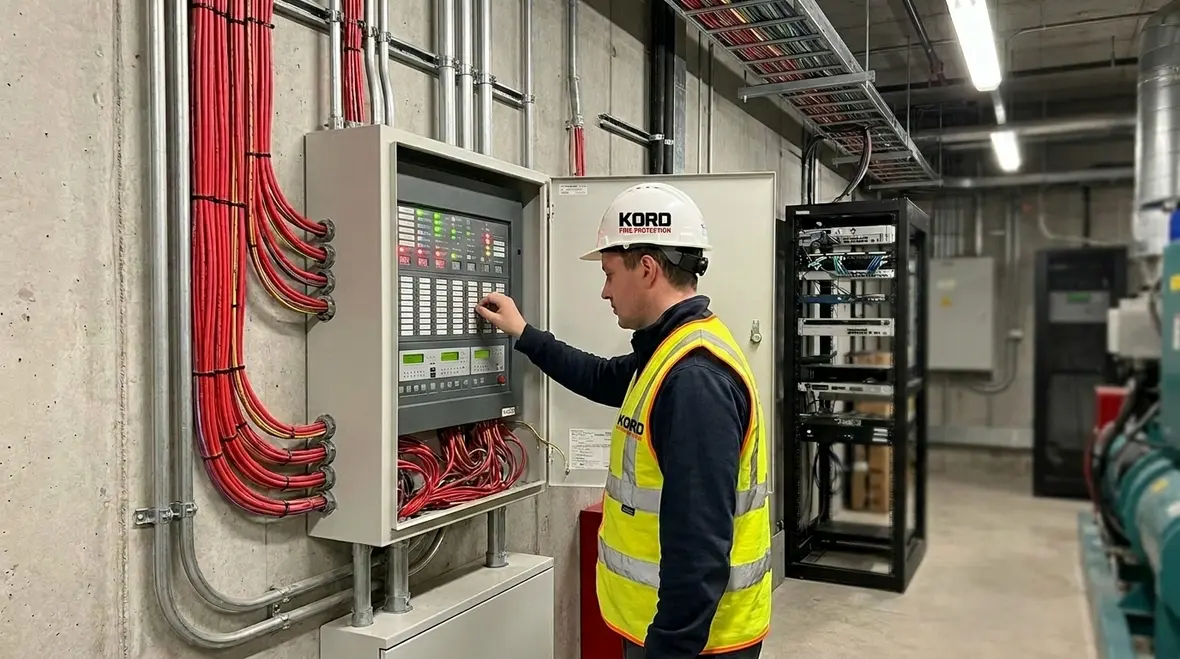
Complex commercial fire alarm networks need more than basic installation. They need a partner that handles the long view: design support, commissioning discipline, and ongoing service that keeps integrity strong after modifications. Kord Fire Protection can step in as that vital partner by providing structured reviews of signal paths, practical testing plans, and clear fault isolation workflows. In other words, Kord helps teams prevent problems instead of just reacting to them.
In Australian industrial, retail, and multi tenant facilities, Kord can support projects at several points. First, it can assist with pre installation checks that reduce surprises, such as reviewing cable route constraints and advising on segregation strategies. Next, it can carry out commissioning activities that focus on electrical health and network behavior, not just “it works once.” Then, during service periods, it can help facilities manage changes safely, including replacements, device additions, and refurbishments that might otherwise disturb the network.
Because operations across multiple sites can follow different timelines, Kord can also help standardise service outcomes. That way, the network does not become a different story in every building, even when the wiring looks familiar. And if anyone has ever tried to run maintenance with incomplete paperwork, they know why this matters. It is less exciting than a sitcom, but the confusion is similar.
For readers digging deeper into interference and fault isolation, Kord also has related resources on minimizing fire alarm interference and a signal circuits troubleshooting guide. Those pieces fit naturally with this topic, especially for teams that want clearer procedures before the next service call turns into a scavenger hunt.
What facilities teams should plan before the next change
To keep fire alarm system signal integrity healthy through ongoing projects, facilities leaders should plan change control. They should require that any new device, cable run, or interface modification follows documented pathways and includes verification testing. Also, they should set rules for who can alter wiring and who can update panel configuration. That reduces the risk of “temporary” changes becoming permanent, which is how many network headaches are born.
Teams should also keep a simple readiness pack for each site. It should include updated as built drawings, device lists, loop or network segment diagrams, and the last commissioning test results. Then, when a contractor arrives with a hammer and confidence, the facility team can make decisions faster and protect the network without delay.
FAQ
Conclusion and CTA
Improving fire alarm system signal integrity in complex commercial networks takes focused design, precise installation, and commissioning that measures real performance. When facilities plan smart change control and keep documentation current, the network stays stable instead of turning into a guessing game.
Kord Fire Protection can help teams across Australia protect reliability from the first test to ongoing service. Reach out to discuss a review, commissioning plan, or fault isolation pathway, and give the network a better future than “we’ll see what happens after the next contractor visit.”

Join Our Newsletter!
Get the latest fire safety tips delivered straight to your inbox From our Newsletter.