Fire Extinguisher Placement Strategies for Faster Response
Quick Answer: Strategic fire extinguisher placement means putting the right unit at the right hazard, where workers can reach it fast and use it safely. Kord Fire Protection supports facilities with placement planning that aligns equipment locations with risk, layout, signage, and code requirements, so protection works when every second counts.
Fire extinguisher placement is one of those topics that sounds simple until it isn’t. Then suddenly someone asks, “Why is the only extinguisher we have mounted behind a locked door and a stack of pallets?” And everyone looks around like the blame might spawn from the ceiling. To avoid that comedy of errors, this article uses fire extinguisher placement strategies from the start: match extinguishers to hazards, keep travel paths reasonable, place units along exit routes, mount at correct height, and maintain clear access. From there, it covers how facilities can plan locations that protect people and equipment, while making daily operations smoother. And yes, Kord Fire Protection can become a vital partner in this service job, because “good enough” placement is still expensive when things go wrong.
Near the top of that planning conversation, it also helps to connect extinguisher layout with broader site protection. Kord Fire Protection’s full fire protection services show how extinguishers fit into a larger safety program instead of living alone on the wall like a forgotten extra in a workplace thriller. And when facilities need alarm coverage that complements first-response readiness, Kord Fire Protection also offers commercial and residential fire alarm installation that supports faster detection and stronger coordination across the property.
Why location matters more than people think
In industrial, retail, and commercial facilities, fire does not care about company policies. It spreads based on fuel, airflow, and how quickly someone spots the start. Therefore, the first minutes matter, and that is where smart mounting and routing pay off.
When extinguishers sit where access is blocked, staff often delay. They either search for the unit, or they move it, or they move around it, which buys time for heat and smoke to grow. Meanwhile, staff may grab the wrong type because the placement looks “similar enough.” That is a problem, because the wrong agent can slow response and escalate damage.
Proper placement also supports training. If workers consistently find equipment at predictable points near exits or near the hazard, they build muscle memory. As a result, they respond faster, and the site’s safety culture stays steady. In short, the layout becomes a quiet instructor, teaching people where to act under pressure.
Placement shapes decision-making before anyone touches the handle
That is the sneaky part people overlook. Fire extinguisher placement is not just about distance. It influences whether a worker feels confident approaching the incident at all. If the extinguisher is tucked into a strange corner, hidden behind equipment, or mounted where traffic constantly blocks it, the brain reads that setup as friction. Under stress, friction is expensive. Good placement removes hesitation and replaces it with a clear next move.
Sites that think this through usually end up with a cleaner, calmer emergency response. People know where to go, what they are reaching for, and how to keep an exit behind them. That last point matters a lot, because nobody wants their brave extinguisher run to turn into an accidental audition for a bad action movie sequel.
How fire extinguisher placement strategies reduce travel time
Speed is the goal, but speed comes from planning. Facilities should place extinguishers so that the maximum walk distance from a likely fire source stays practical. Additionally, they should position units so staff can approach from a safe direction and avoid walking into the path of heat or flames.
To accomplish that, planners typically follow these principles:
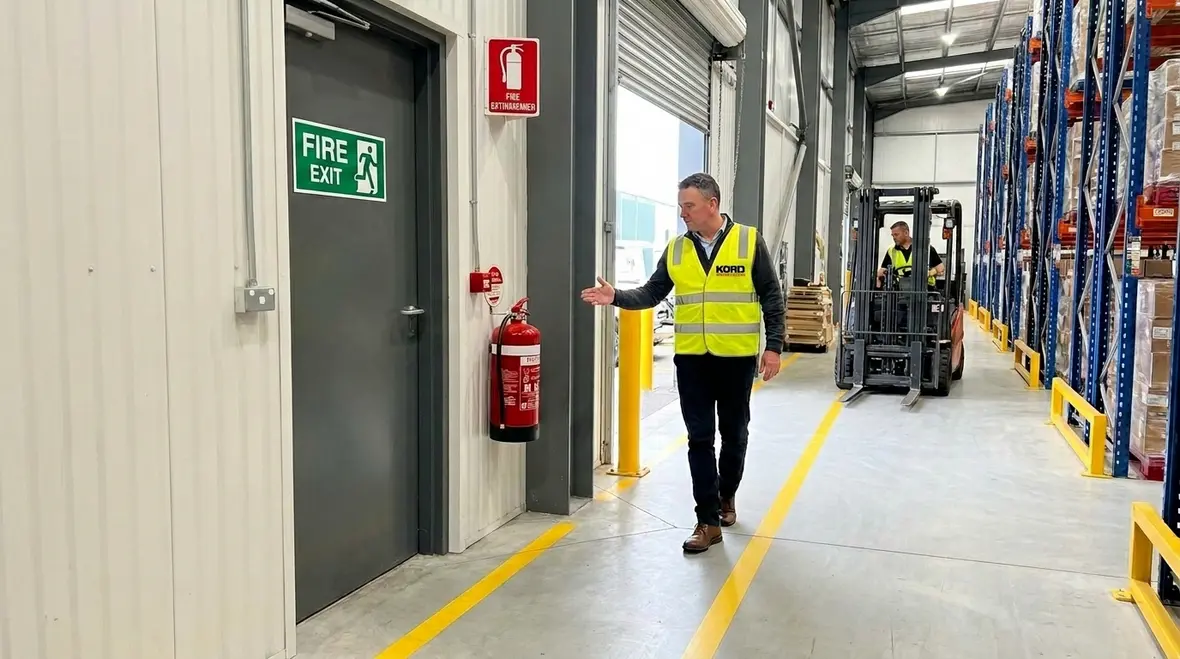
- Place extinguishers near exits and along normal travel routes so staff do not have to wander into risk areas.
- Ensure the extinguisher is visible from the approach path, not hidden by equipment, signage angles, or storage arrangements.
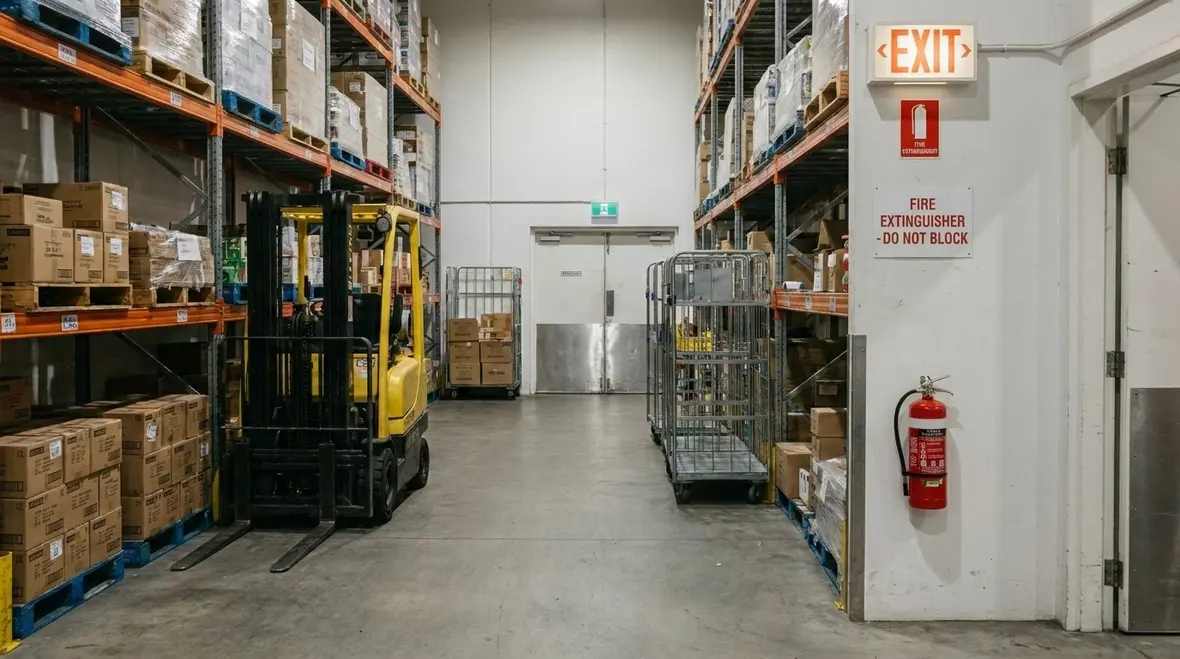
- Use a layout that accounts for aisle width, pedestrian flow, and forklift movement zones in warehouses and workshops.
- Keep units away from spots where heat buildup is common, such as direct exposure to ovens, engine test bays, or high-heat plant areas.
- Mount at consistent height and keep access unobstructed, even during busy operations.
Transitioning from theory to practice, the site team can walk the floor as if they are wearing a headset from a disaster movie. Then they check if the extinguisher is still reachable when aisles shrink, pallets move, and the “temporary” display becomes permanent. If it fails that test, it fails the real world too. And real fires do not wait for renovations.
Use routes people already trust
A placement strategy works best when it follows the movement patterns people already use every day. Primary corridors, exit approaches, open workshop edges, and well-traveled cross aisles are better than obscure corners that look neat on paper but disappear during a real incident. Familiar routes support faster recognition, less confusion, and less time spent scanning walls like someone hunting for hidden treasure in steel-toe boots.
Matching extinguisher type to hazard locations
Placement alone does not guarantee effective response. The extinguisher must match the likely fuel and fire class in that zone. That is why fire extinguisher placement strategies begin with hazard mapping, not just counting boxes.
Industrial facilities often include mixed risks. A loading dock may involve combustibles and plastics. A workshop may involve flammable liquids. A retail floor may involve packaging waste and electrical risks at checkout equipment. Therefore, the placement plan needs clear rules for which type goes where.
Common practical examples include:
- Flammable liquids areas: place extinguishers suited for liquid fuels near drum storage, paint handling, and maintenance zones.
- Electrical hazards: keep correct units accessible near switchboards, server rooms, and charging stations, with clear signage that guides staff.
- Combustible solids: position units close to storage stacks, cardboard balers, and packing stations.
- Cooking and grease risks: if present, ensure the extinguisher strategy accounts for these hazards and the correct agent type for that scenario.
Next, facilities should coordinate placement with where staff are likely to be during the day. Workers do not search for equipment; they react. When extinguishers are aligned with workstations, process areas, and typical movement patterns, response becomes simpler and more reliable.
This is also where ongoing service matters. Kord Fire Protection’s fire extinguisher service and certification supports facilities that want equipment selection, upkeep, and placement logic working together instead of arguing with each other from opposite sides of the building.
Mounting height, signage, and access: the “small” details that matter
Even when the correct extinguisher is in the right zone, poor mounting and clutter can sabotage the plan. Staff must reach the unit quickly, pull the pin without obstruction, and access it without bending through stacked materials or stepping into a hazard area.
As a result, facilities should treat mounting and access as core engineering, not housekeeping. Important checks include:
- Consistent mounting height so different workers can operate it.
- Clear line of sight and accurate signage so people can locate it in smoke or stress.
- Unblocked access even during peak operations, when trolleys, displays, and temporary staging appear.
- Weather and corrosion considerations for outdoor or loading bay areas.
Also, planners should review how the site changes over time. Retail layouts shift. Industrial zones evolve. And warehouses love to “temporarily” store things in places they were never meant to live. Therefore, the extinguisher placement strategy should include routine spot checks and updates after refurbishments, equipment changes, and traffic flow changes.
Visibility beats technical correctness when seconds are disappearing
A perfectly selected extinguisher that nobody can see is a beautiful failure. Signage, contrast, lighting, and the absence of clutter all matter because emergencies are messy and human attention narrows under pressure. The unit should announce itself from the approach path, not play hide-and-seek behind stock, doors, columns, or temporary displays that were only supposed to be there “for a day.”
Planning for real sites: warehouses, fit-outs, and retail floors
Industrial and retail environments vary, but the response goal stays the same: keep extinguisher access practical, hazard matching correct, and routes clear. For warehouses, the plan must handle forklifts, high racking, and long travel distances. For retail, the plan must account for customer movement, store displays, and back-of-house storage.
Facilities should also consider how people actually behave during incidents. When alarms sound, staff may move toward exits, not toward hidden corners. Consequently, extinguishers placed near exit routes and along primary aisles can support faster first actions.
Additionally, fit-outs often add complexity: mezzanines, service corridors, partitioned storage rooms, and temporary installations. The safest approach includes a survey of the current layout and a plan that reflects what is in place today, not what was on the blueprint three years ago.
Transitioning smoothly from design to control, sites also benefit from documenting the rationale: where the unit is, why it is there, what hazard it covers, and what changed since installation. That documentation becomes valuable during audits and training refreshers.
One practical advantage of this approach is that it removes guesswork when the facility grows. New shelving, new tenancies, new workstations, and new storage habits can quietly make an old placement plan useless. A documented strategy helps teams update locations with intention instead of waiting for the annual “why is that extinguisher behind seasonal inventory again?” conversation.
Why Kord Fire Protection can be a vital partner
Placement work is not just “mount it and move on.” It needs risk understanding, layout review, code alignment, and practical checks that match how teams work. This is where Kord Fire Protection can act as a vital partner with this service job.
Kord Fire Protection supports facilities by bringing structured hazard considerations and site awareness into the placement plan. Therefore, clients often see fewer gaps between what the risk assessment says and what staff can actually access. Moreover, the partnership approach helps keep the system consistent across multiple areas, from industrial process zones to retail back-of-house spaces.
And let’s be honest: when safety teams try to do everything alone, corners get cut. Sometimes the “corner” is a missed hazard, and sometimes it is an extinguisher tucked behind a shelf that never needed to be there. Kord Fire Protection helps reduce those surprises by treating placement as part of a full protection program, not a standalone task.
FAQ: Fire extinguisher placement for featured snippet answers
CTA: Make placement part of your next safety upgrade
Facilities that plan fire extinguisher placement strategies with hazard mapping, accessible routes, and ongoing checks reduce risk where it counts most. If the layout changed, training happened, or operations expanded, now is the right time to review locations and make improvements.
Contact Kord Fire Protection today to evaluate your site, strengthen first-response readiness, and keep safety coverage aligned with how your team actually works. The best time to fix poor placement is before someone has to sprint toward it while questioning every life choice that led to that moment.

Join Our Newsletter!
Get the latest fire safety tips delivered straight to your inbox From our Newsletter.