Commercial Fire Suppression System Wiring Best Practices
Quick Answer: Modern commercial fire suppression systems need careful wiring for detectors, control panels, pumps, valves, and annunciators. Best practices include correct cable selection, proper segregation, tested terminations, clear labeling, and documentation. Kord Fire Protection can act as a vital partner by helping facilities meet compliance expectations, reduce fault events, and keep downtime low.
When a site relies on a modern Commercial fire suppression system wiring setup, the wiring is not “background work.” It is the nervous system. In the first minutes of a fire event, systems must sense, transmit, actuate, and alert with calm certainty, not with the chaotic energy of a group chat at 2 a.m. To deliver that reliability, teams need disciplined installation practices across cable routing, termination quality, power supervision, and end to end testing.
That bigger picture becomes easier to manage when the suppression side is coordinated with broader full fire protection services, especially in commercial buildings where alarm, suppression, and inspection readiness all need to speak the same language. Kord Fire Protection also touches on how system components interact in its guide to how commercial building fire safety systems work, which fits naturally with a wiring-first mindset. ([kordfire.com](https://kordfire.com/full-fire-protection-services/?utm_source=openai))
Plan the wiring scope before any cable gets pulled
Facilities tend to build in layers, so wiring plans must start by mapping how the system will behave in real life, not just on paper. First, the project team should confirm the protection strategy, including what zones cover which areas, which devices belong to which circuits, and where alarm and control functions connect. Then they should verify the power sources, backup arrangements, and how interfaces connect to building management and emergency systems.
Next, teams should identify constraints that often create expensive headaches later. For example, ceiling spaces in retail and industrial fitouts can hide sharp bends, mixed trades, and future renovation risks. If installers plan cable pathways early, they can keep runs short, protect the cable from damage, and reduce the chance of nuisance faults.
In addition, coordination with other disciplines matters. Electrical, fire, security, and communications teams share the same real estate. Therefore, the best practice is to lock down segregation rules and determine where cable trays, conduits, and penetrations will live before the schedule turns into a soap opera.
Think through the sequence, not just the drawing
A smart wiring plan follows the intended response chain. If detectors signal, panels must interpret, outputs must switch, valves or releases must actuate, and occupants must be alerted without hesitation. That is why suppression integration and control logic deserve attention at the planning stage instead of being treated like a surprise guest in the final week. Related Kord Fire Protection articles on integration and power layout echo the same idea: wiring has to support the strategy, not just reach the hardware. ([kordfire.com](https://kordfire.com/fire-suppression-system-integration-for-life-safety/?utm_source=openai))
Select cables and components that match the job, not the guesswork
Modern commercial systems rely on consistent performance across heat, smoke exposure, and standby conditions. That is why cable selection should align with the system design requirements and the intended environment. Teams should consider fire-rated or suitable circuit integrity approaches when required by the design. They should also select conductor size and insulation type based on voltage drop, signal integrity, and installation method.
Furthermore, installers should avoid mixing cable types in ways that create unpredictable behavior. For instance, using mismatched conductors or incorrect screening can increase noise and cause intermittent signals. Meanwhile, low quality terminations can turn a reliable detection circuit into a frequent trouble call. And nothing says “fun day” like troubleshooting a fault that only shows up when the air conditioning kicks on.
They should also ensure compatibility between device types and the control panel interfaces. If the system uses supervised circuits, designers and installers should treat the circuit as a whole, not as a collection of parts. Kord Fire Protection reinforces that end to end approach in related posts covering fire alarm wiring interference, suppression electrical hazards, and control panel power distribution. ([kordfire.com](https://kordfire.com/fire-alarm-wiring-best-practices-to-reduce-interference/?utm_source=openai))
Noise, mismatch, and “mystery faults” are usually not that mysterious
If a system starts throwing nuisance troubles, the cause is often hiding in plain sight: wrong cable characteristics, poor shielding choices, or components that do not behave well together. What looks random can be the electrical version of bad chemistry. The hardware may technically fit, but the circuit acts like it regrets every decision.
Route wiring with segregation, protection, and maintainability in mind
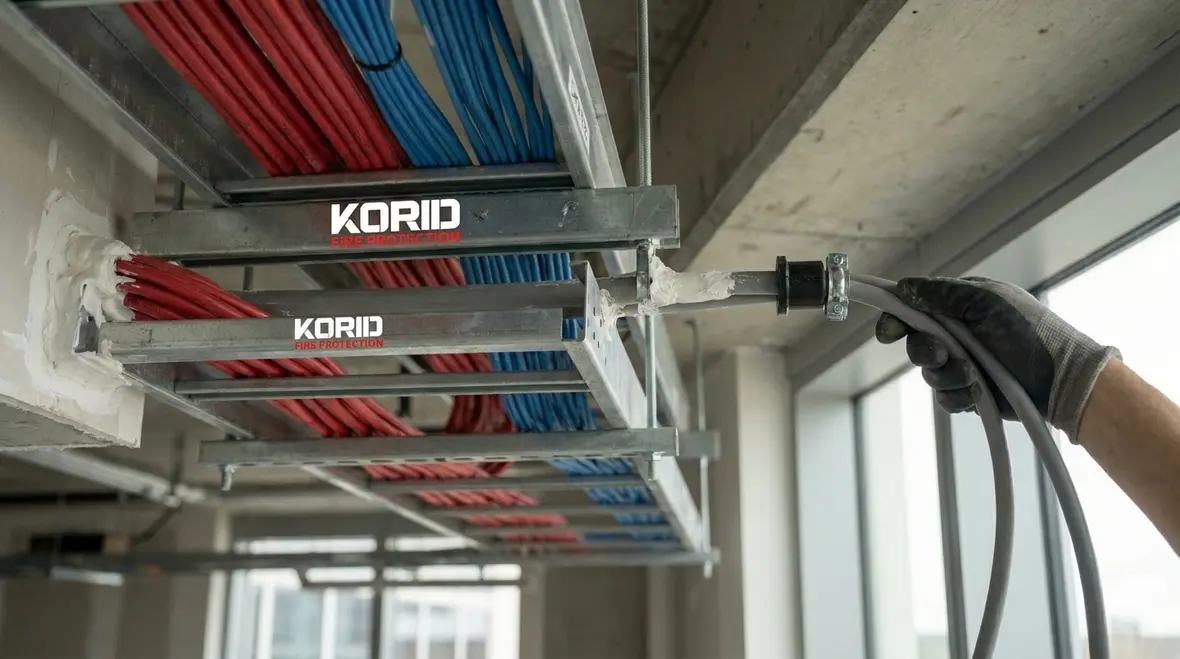
Good routing prevents future problems. Therefore, commercial teams should plan cable paths that reduce mechanical risk and minimize exposure to water, vibration, and physical damage. They should use appropriate conduit, trunking, or tray systems where required. They should also protect cables through fire stopping where they pass through floors, walls, and fire rated elements.
Segregation is also key, especially in facilities with heavy electrical loads. When fire circuits sit too close to power circuits, electrical noise and interference can creep in. Consequently, the system may behave correctly during tests but fail to perform as expected under real conditions. Teams should maintain separation distances where the design requires them, and they should document those decisions clearly.
Finally, maintainability should stay in the foreground. Installers should leave accessible junctions, avoid burying splices in hard to reach areas, and ensure labels remain readable. A system that is difficult to service is a system that will eventually get ignored. And ignored fire systems are not a comedy routine. They are a risk.
Make future service easier on purpose
Serviceability is not a luxury add on. It is part of reliability. When a technician can trace a circuit quickly, inspect a junction without gymnastics, and verify labels without guessing, faults get solved faster and downtime stays lower. Kord Fire Protection makes this same maintainability point across its wiring and connectivity content, especially where future changes and troubleshooting are expected. ([kordfire.com](https://kordfire.com/fire-alarm-wiring-best-practices-to-reduce-interference/?utm_source=openai))
Terminate, label, and test like the system will be judged by reality
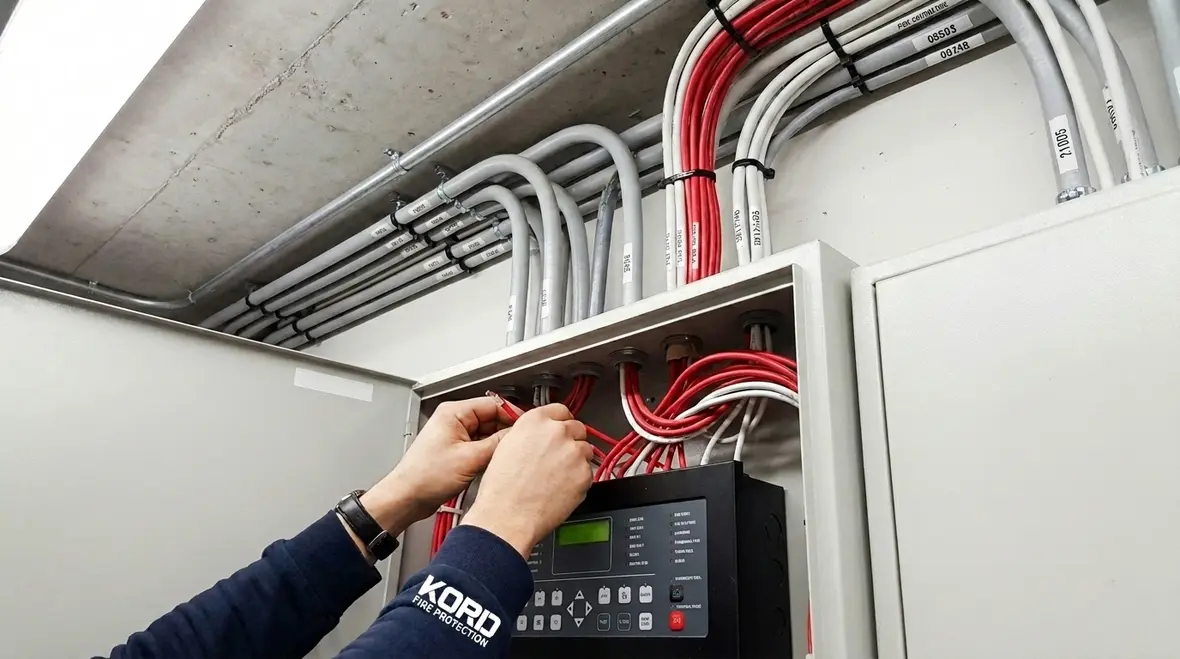
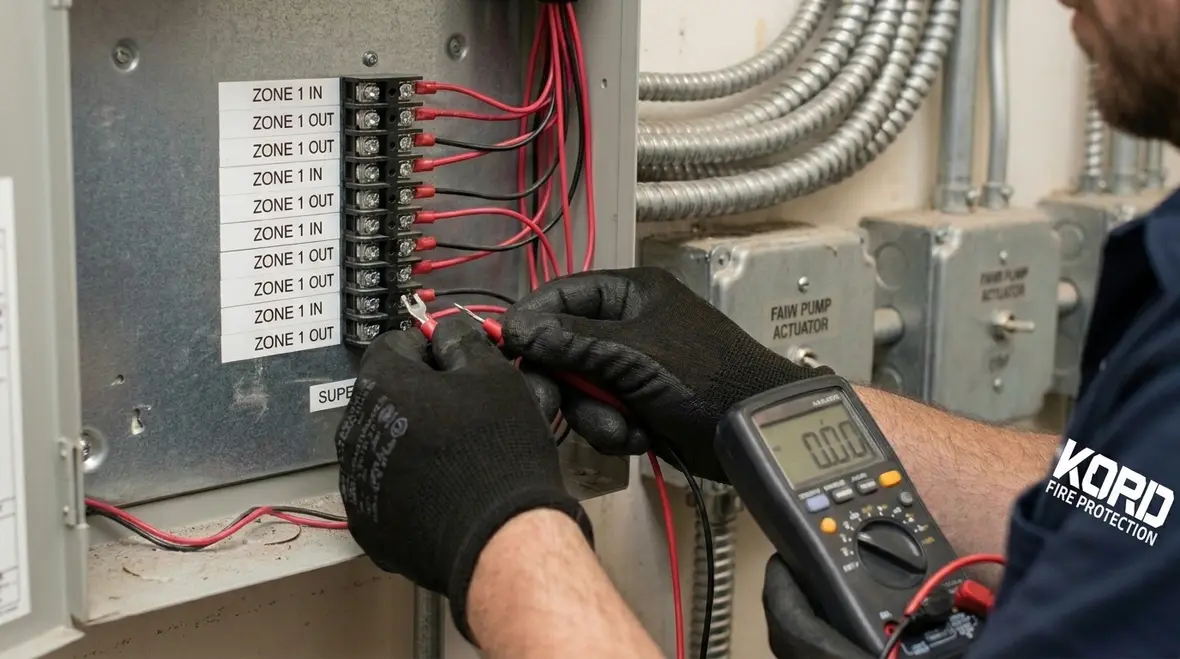
Termination quality often separates a “works today” installation from a “works when it matters” installation. Teams should follow correct stripping lengths, use proper crimping or approved connections, and avoid loose conductors. They should also ensure polarity and circuit identification remain consistent from panel to device.
In addition, labeling should be legible, durable, and aligned with as built documentation. For example, each circuit and device should match the panel schedule and the zone plan. If someone later changes a device and misidentifies a terminal, they can trigger trouble conditions or compromise the intended response. So, proper labeling functions like a map for the next technician, not a guess for the next shift.
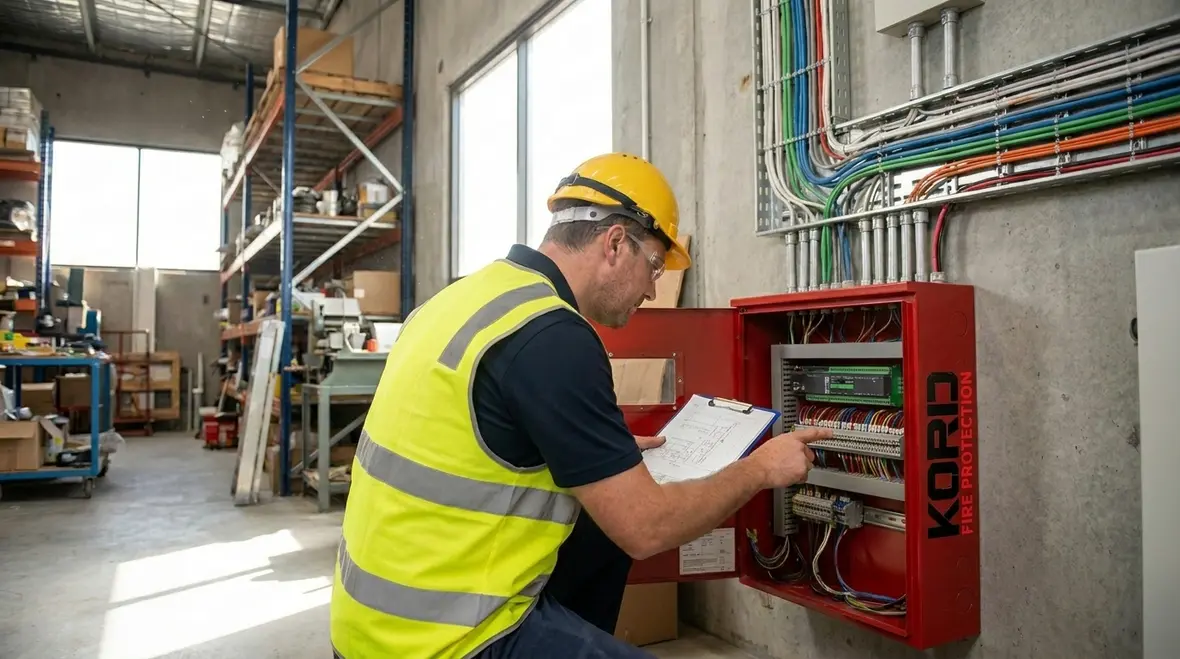
Then comes testing. Best practice includes staged testing: continuity and insulation checks, functional tests for detector response where applicable, verification of control outputs, and alarm sounder checks. Installers should also confirm supervision states for supervised loops, and record results for compliance and maintenance.
Kord Fire Protection can act as a vital partner here by supporting quality assurance processes, coordinating final checks, and helping facilities build a smooth handover package. That reduces rework and shortens the time between commissioning and confident occupancy.
Handle interfaces, power supplies, and control outputs with discipline
Modern systems may integrate with pumps, valve actuators, electromagnetic releases, smoke control interfaces, and alerting devices. As a result, wiring must manage both power and signal paths reliably. Teams should confirm how control outputs drive field devices, whether the outputs switch power directly or through interposing relays. They should also verify contact ratings and ensure wiring complies with the panel’s design limits.
Power supervision deserves extra attention. Backup supplies, charger circuits, and monitoring functions must operate correctly during faults and during routine events like mains disturbances. If technicians overlook these details, the system may indicate “healthy” during normal operation but behave differently when it actually needs to perform.
In industrial sites, equipment vibrations and frequent electrical switching can add stress to control circuits. Therefore, installers should secure cables, use strain relief where needed, and keep terminations properly dressed and protected. Meanwhile, retail environments may add rapid fitout changes, so teams should design wiring with clear future pathways that avoid invasive rework.
When Kord Fire Protection collaborates with the delivery team, it helps align these interface decisions with on site conditions, ensuring the Commercial fire suppression system wiring approach stays consistent from panel design to final device actuation. Kord’s related articles on fire pump power reliability and surge protection make the same case from the power side: stable control starts with disciplined wiring and protected electrical paths. ([kordfire.com](https://kordfire.com/fire-pump-power-supply-reliability-for-commercial-buildings/?utm_source=openai))
Document everything so maintenance stays fast and accurate
Documentation is not paperwork for its own sake. It is the difference between quick recovery and long downtime. Teams should produce as built drawings, circuit schedules, device lists, and test records that reflect what they actually installed. They should also note deviations, cable routes, protection methods, and any special conditions encountered during installation.
Then they should hand over this package in a format that maintenance teams can use without decoding a puzzle. For example, if a facility management team later needs to isolate a circuit for planned work, clear documentation helps them do it safely. Meanwhile, documented test history supports inspections and improves confidence.
Kord Fire Protection can strengthen this step by providing consistent handover support and ensuring the information matches the installed configuration. In other words, the next service visit should feel like a conversation, not a scavenger hunt.
Commissioning and ongoing checks keep the system dependable
After wiring verification, commissioning should confirm that the entire system performs as intended. That includes verifying that alarms activate correctly, that control sequences operate in the right order, and that supervisory signals respond to simulated faults. Teams should also confirm any integration points with building systems behave safely.
Then, ongoing checks should follow a routine plan. These include functional tests where required, inspection of device condition, verification of signage, and checks for damage from routine maintenance activities. In facilities with moving operations, the system can face wear from ladders, forklifts, and frequent minor works. Therefore, managers should treat the fire system as a living asset that needs care, not a static installation.
With ongoing collaboration, Kord Fire Protection can help facilities keep wiring performance stable, reduce nuisance trouble events, and ensure the system continues to meet expected reliability across commercial environments. For teams looking specifically at controller resilience, Kord also has a useful companion article on fire pump controller surge protection for reliable performance. ([kordfire.com](https://kordfire.com/fire-pump-controller-surge-protection-for-reliable-performance/?utm_source=openai))
FAQ
Ready to strengthen your system from wiring to handover?
Modern Commercial fire suppression system wiring deserves more than a fast install. It needs disciplined planning, clean terminations, solid segregation, thorough testing, and documentation that maintenance teams can trust. Kord Fire Protection can step in as a vital partner, helping facilities in industrial, retail, and commercial environments deliver reliable performance and a smoother handover.
If you are reviewing a new project scope, troubleshooting repeated trouble events, or trying to improve handover quality, now is the right time to tighten the wiring strategy before small issues become expensive ones. Contact Kord Fire Protection to review your project scope and wiring approach, and explore related reading like fire pump controller surge protection for reliable performance for another practical layer of system resilience. ([kordfire.com](https://kordfire.com/fire-pump-controller-surge-protection-for-reliable-performance/?utm_source=openai))

Join Our Newsletter!
Get the latest fire safety tips delivered straight to your inbox From our Newsletter.