
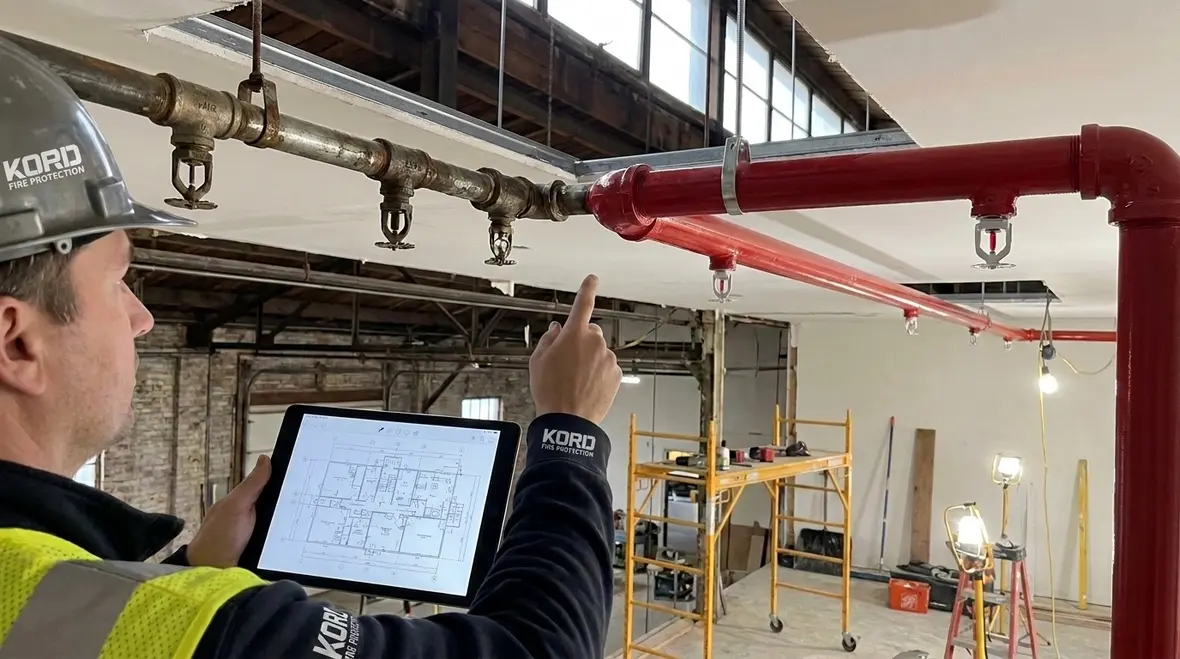
NFPA 13 Section 1.4 — Retroactivity of NFPA 13 Sprinkler Code
NFPA 13 Section 1.4 Retroactivity of NFPA 13 Sprinkler Code
Quick Answer: NFPA 13 Section 1.4 governs how changes apply to existing sprinkler systems. In practice, retroactivity depends on the AHJ and project scope. Generally, new construction must comply with the current edition, while existing systems are upgraded only during alterations or when enforcement requires the NFPA 13 retroactivity sprinkler code requirements.
What Section 1.4 Covers and Why It Matters for Retroactivity
Section 1.4 clarifies how NFPA 13 changes apply to existing installations. It establishes that retroactivity is not automatic and hinges on jurisdictional adoption and project scope. For commercial facilities, this means decisions are driven by the authority having jurisdiction during plan review, balancing safety upgrades with disruption and cost.
If you need a practical starting point, Kord Fire Protection’s fire sprinkler services page outlines how inspections, repairs, maintenance, and installation support can fit naturally into retrofit planning for existing commercial systems.
- Retroactivity is not automatic for existing systems
- Applies primarily during alterations or replacements
- AHJ determines enforcement and scope
- New work must meet the current edition
Determining Retroactivity in Existing Buildings versus New Construction
In practice, retroactivity decisions separate new construction from existing facilities. New projects must comply with the most current NFPA 13 edition. Existing buildings are addressed through alterations, renovations, or hazard changes. AHJs may require retroactive updates when significant work occurs or when a jurisdiction adopts the latest edition for existing installations.
- New construction adheres to current edition requirements
- Existing buildings respond to alterations or hazard changes
- Enforcement rests with the AHJ and local amendments
Practical Compliance Challenges for Commercial Facilities
Commercial, industrial, and retail facilities face several real world hurdles. Scheduling around business operations, budgeting for upgrades, and coordinating with multiple trades are common pain points. Compatibility between legacy sprinkler heads, piping, and newer devices can complicate retrofits. Documentation and traceability become essential when retroactivity triggers changes to design criteria, hydraulics, or alarm signaling. Kord Fire Protection regularly helps facilities navigate these challenges with site assessments, phased upgrade plans, and turnkey implementation.
- Operational disruption during upgrades
- Budgeting for phased retrofits and inspections
- Compatibility between old and new components
- Need for thorough documentation and as built records
Inspection, Testing, and Maintenance Implications
Retroactivity influences inspection and maintenance programs. NFPA 25 governs ongoing testing, inspection intervals, and hydrostatic testing. When portions of a system become subject to the current edition, owners must update testing procedures, valve operations, supervision signaling, and alarm devices. Maintaining robust records ensures traceability for compliance audits and AHJ reviews. Regular coordination with a qualified contractor minimizes downtime and preserves system reliability.
For broader context on installation fundamentals, see Kord Fire Protection’s NFPA 13 overview of automatic fire sprinkler system installation, which pairs well with understanding how current-edition requirements can affect alteration work.
If your facility also relies on pump-backed water supply performance, this guide on NFPA 25 fire pump testing requirements is a useful companion when retroactivity affects system testing, documentation, and readiness planning.
- Adhere to NFPA 25 testing and inspection frequencies
- Update hydraulic calculations and valve testing as needed
- Maintain complete, accessible documentation
Equipment and System Design Considerations Relating to Retroactivity
Design teams must plan for future retroactivity while honoring existing constraints. Selecting compatible sprinkler heads, pipes, and detection devices prevents redundant work later. When retroactivity is triggered by alterations, design should emphasize hydraulically calculated coverage, correct sprinkler spacing, and appropriate temperature ratings. Leveraging standard components reduces lead times and simplifies maintenance. For facilities, partnering with a trusted provider like Kord Fire Protection ensures design alignment with both NFPA 13 and local amendments, plus ongoing testing and maintenance.
- Choose compatible heads and devices for future updates
- Ensure accurate hydraulics and spacing in new work
- Plan for easy maintenance and serviceability
Role of the AHJ and Documentation
The authority having jurisdiction guides retroactivity decisions through plan review, permits, and field changes. Proper documentation includes updated floor plans, hydraulic calculations, device lists, and commissioning reports. When a retroactive obligation exists, timely submittals and clear change orders prevent delays. Facilities should maintain a proactive relationship with the AHJ and a dedicated fire protection partner to ensure accuracy, compliance, and traceable records throughout the lifecycle of the system.
- Plan reviews and permit approvals establish scope
- Maintain as built drawings and updated hydraulic calculations
- Provide commissioning and testing records for audits
Frequently Asked Questions
Conclusion and call to action: Navigating NFPA 13 retroactivity sprinkler code requirements requires precise interpretation of Section 1.4, sharp coordination with the AHJ, and a clear upgrade plan. Kord Fire Protection offers expert assessments, design, retrofit planning, and ongoing testing and maintenance to keep commercial, industrial, and retail facilities compliant, safe, and operation ready. Schedule a compliance review today to align your facility with current NFPA 13 expectations and establish a proactive maintenance pathway.

Join Our Newsletter!
Get the latest fire safety tips delivered straight to your inbox From our Newsletter.


