Fire Alarm Power Supply Backup for Australian Commercial Sites
Quick Answer
Commercial facilities need more than a fire alarm system. They need reliable fire alarm power supply backup that keeps panels, notification devices, and signaling equipment running during outages. This article explains battery and charger options, monitoring, testing, and how Kord Fire Protection can help manage compliance, performance, and ongoing service across Australia.
If you are reviewing backup power as part of a broader life safety plan, it also helps to align alarm readiness with full fire protection services so inspections, maintenance, and documentation do not get managed in scattered pieces. That is usually where things get messy, and not in the fun, cupcake way.
Why continuous operation matters in Australian commercial spaces
In commercial and industrial sites, a power failure should not turn a fire alarm into a very expensive paperweight. That is where fire alarm power supply backup comes in. It helps ensure the fire system stays active when the grid goes quiet, so alarms can still alert occupants and support an orderly response.
Additionally, continuous operation protects people, reduces downtime risk, and supports insurance and compliance expectations. And yes, power outages happen at the worst possible time, like a pop quiz after lunch. The goal is simple: keep life safety functions working until normal power returns or the system reaches its designed backup duration.
How backup power keeps a fire alarm system alive
A fire alarm system depends on stable power to run detection, control, signaling, and communications. When utility power drops, a properly designed backup solution maintains operation long enough to execute the safety strategy for that facility.
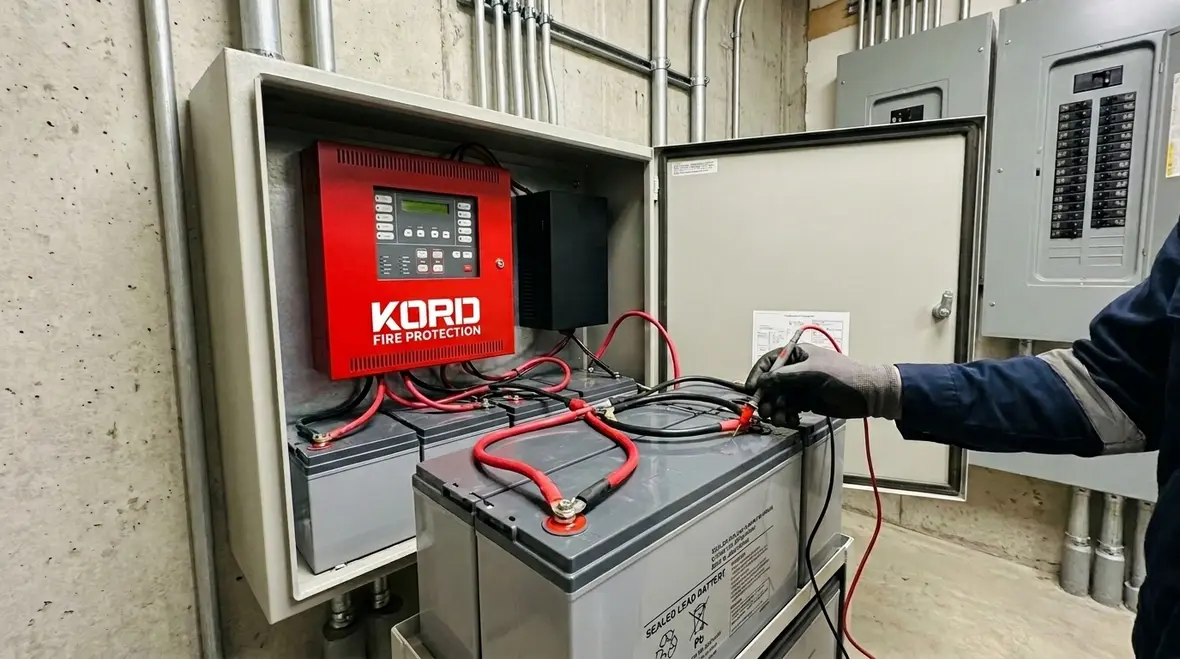
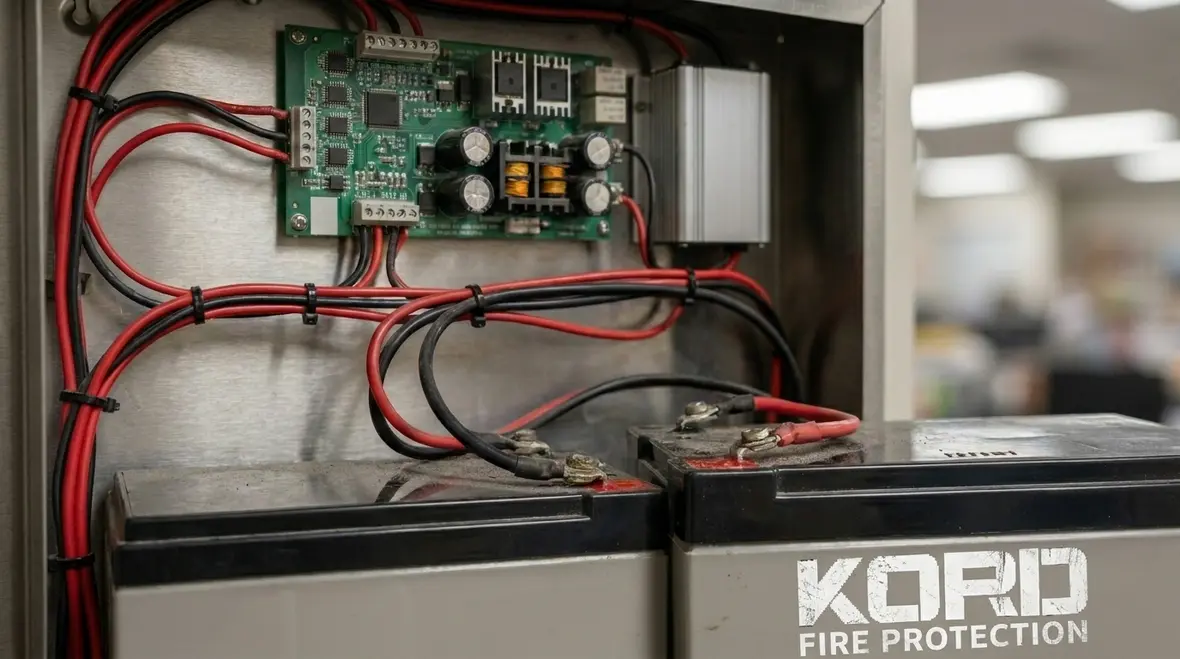
To do this, the system typically uses a combination of standby batteries, chargers, and power management circuitry. First, the charger keeps batteries topped up during normal conditions. Then, during an outage, the control panel switches to battery power without a dramatic interruption.
Next, the design must consider real load, not guesses. For example, notification circuits may draw more current during alarm states. Therefore, engineers and service teams calculate battery capacity based on standby and alarm durations, while also factoring in cable losses, panel efficiency, and device count.
It is like planning for a bus ride. If someone tells the team “it should be fine,” that is how you end up walking in the rain. Good design avoids that scenario.
Why load calculations should not be treated like a guess-and-grin exercise
When facilities expand, add devices, or rework layouts, backup power calculations should be updated right away. Otherwise, the system may still look healthy on paper while carrying more demand than the batteries and charger were originally sized to support. That is a quiet risk, and quiet risks have a nasty habit of becoming loud problems.
Battery and charger strategies for commercial reliability
Different facilities face different risks and timelines. As a result, backup power strategies vary by site type, occupancy, and system configuration.
1) Lead acid or sealed batteries
Many commercial installs use valve regulated lead acid batteries because they balance cost, performance, and availability. However, they still require correct charging parameters, ventilation considerations where applicable, and periodic capacity checks.
2) Battery capacity calculations
Kord Fire Protection style reviews focus on more than the panel manual. They verify the device load profile, alarm mode draw, and expected standby time. In other words, they confirm the backup solution can handle reality, not just theory.
3) Charger health and supervision
Chargers must keep the batteries within safe voltage ranges. If a charger undercharges, batteries will fail sooner. If it overcharges, it can shorten life and increase risk. Therefore, a good setup includes monitoring and service checks.
4) Power integrity and circuit protection
Power supply backup must also consider faults, circuit supervision, and protective devices. If a fault occurs, it should not silently degrade performance. Instead, the system should detect trouble conditions and report them properly.
For a related read on this exact topic, Kord also covers fire alarm system reliability and battery health, which pairs naturally with backup power planning and ongoing service decisions.
Monitoring, fault reporting, and compliance-ready documentation
Commercial owners and facility managers need confidence that backup power works before an emergency. So they should not treat testing as an annual ritual. They should treat it as an ongoing safety habit.
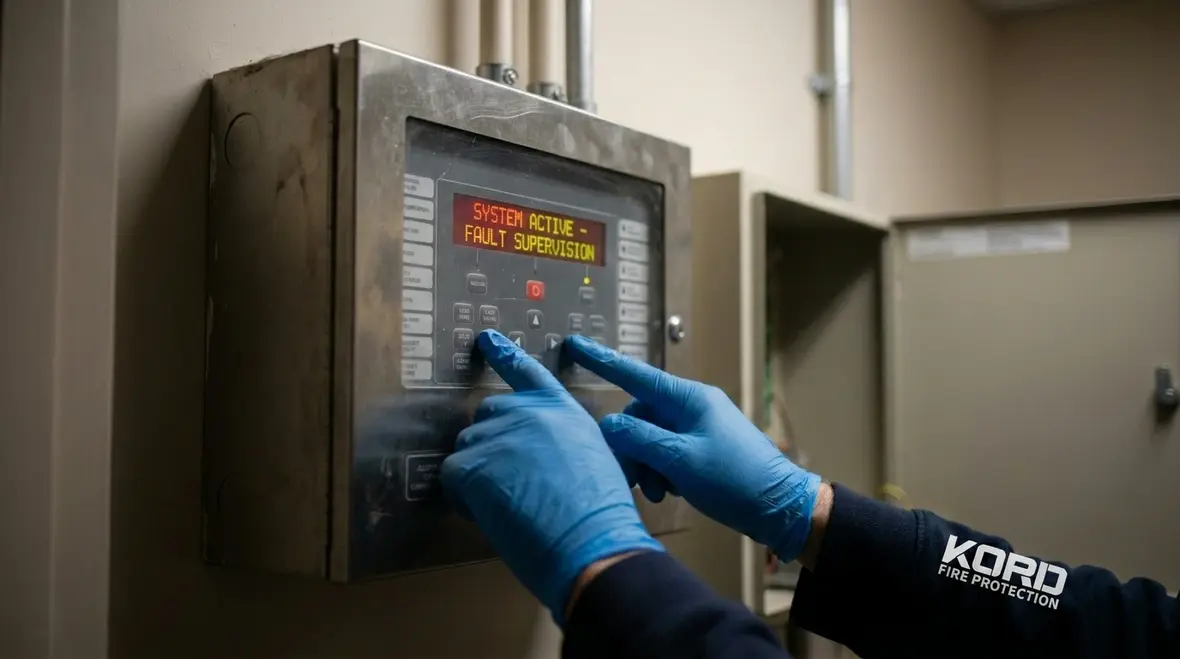
In practice, backup systems should provide clear indication of battery and charger health. That means trouble signals that land in the right place, along with logs that support maintenance records. Transition from “we checked it once” to “we can prove it worked” matters in audits and incident investigations.
Meanwhile, documentation matters just as much as hardware. Detailed records can show that the facility met required intervals, that test results remained within tolerances, and that corrective actions happened when something drifted out of spec.
For sites across Australia that run multiple shifts, tight operations, and complex compliance schedules, this kind of structured approach saves time and avoids disruption. Nobody wants the fire system down for longer than necessary, even if the rest of the office is open-plan and chaotic.
Testing and maintenance that does not shut down operations
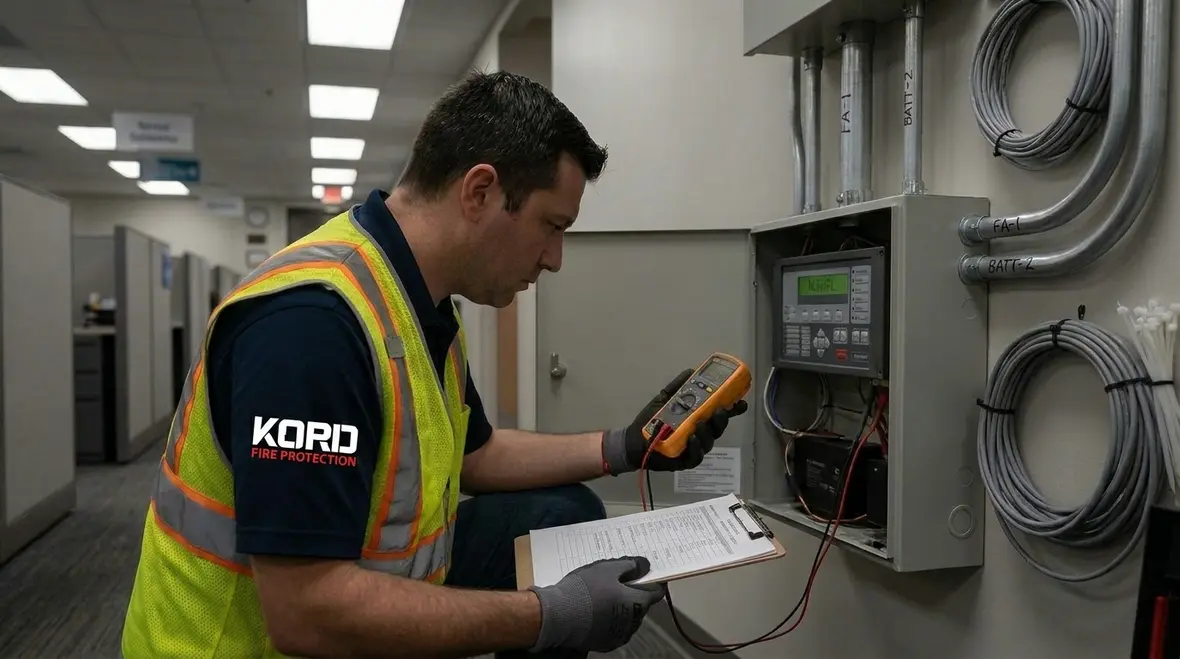
Backup power service should protect safety and protect business. That means crews plan testing to minimize impact on normal operations, while still validating real performance.
Good maintenance typically includes:
- Battery inspection to confirm physical condition, secure connections, and correct installation
- Capacity and voltage checks to detect early degradation before it becomes a failure
- Charger performance verification so the backup system stays within correct charge parameters
- Functional testing that verifies the system transitions to backup and maintains required alarm signaling
- Verification of supervision signals so faults report properly and do not get ignored
Then, after service, teams should update the records and advise facility staff on any observed risk. If a battery is aging faster due to heat exposure or frequent alarm events, the plan should reflect that, not bury it in silence.
Because, frankly, failing “later” is still failing. It is just less dramatic and more inconvenient.
Power planning for industrial, retail, and multi-site facilities
Facilities do not all behave the same. Industrial sites often see vibration, higher ambient temperatures, and heavier equipment usage. Retail sites may have frequent changes to layout, tenants, or fitouts. Multi-site companies need consistent methods so every location stays within expected performance.
Therefore, the backup power approach should adapt to these realities:
- Industrial facilities require attention to environmental conditions, robust mounting, and stable charger operation
- Retail fitouts need a change-aware process so additions to detectors and sounders do not overload battery capacity
- Commercial upgrades should include load recalculation before devices are added or circuits are modified
- Multi-facility rollouts benefit from standardized checklists, consistent test methods, and centralized reporting
At this point, Kord Fire Protection becomes more than a subcontractor. They can serve as a vital partner by aligning backup power planning with real site conditions and ongoing service schedules. That means teams can coordinate system reviews, update maintenance records, and support facility managers with clear recommendations. In the best cases, Kord helps sites prevent surprises by catching issues early, before a power event turns into a headline.
Where Kord Fire Protection strengthens fire alarm backup outcomes
Backup power is technical, and it becomes even more important when a facility needs dependable operations across Australia. Kord Fire Protection can help by bringing a practical service mindset to power supply backup, including planning, inspections, testing support, and corrective actions.
Additionally, they can help align system changes with load calculations so expansions do not weaken backup capability. Then, when service time arrives, the process stays organized, documentation stays clear, and the system performance remains the focus.
For facility teams who manage schedules, contractors, and day-to-day operational pressure, that partnership matters. It reduces guesswork and helps ensure the fire alarm system remains ready, even when the grid is not.
FAQ
Next steps: keep your fire alarm ready for the real world
If a power outage hits, your fire alarm system must stay dependable, not just installed. Facility teams across Australia can reduce risk by reviewing backup power capacity, monitoring health, and keeping testing records current.
Kord Fire Protection can help as a vital partner, guiding the right service approach and supporting continuous operation. Contact Kord Fire Protection today to schedule a backup power assessment and strengthen life safety readiness.

Join Our Newsletter!
Get the latest fire safety tips delivered straight to your inbox From our Newsletter.