Commercial EV Charger Infrastructure Requirements Planning
Quick Answer
To plan future ready commercial EV charger infrastructure requirements, a property team should forecast demand, pick right charger power and layouts, plan electrical capacity early, and align cabling, access, and safety codes from day one. A strong partner, like Kord Fire Protection, helps the project meet fire safety needs without surprise delays.
For teams shaping the bigger protection picture, it also helps to involve a provider with end to end full fire protection services near the start, so charger planning, electrical work, and life safety strategy are not acting like strangers forced to share the same calendar.
Future ready commercial EV charger planning starts with the basics
Commercial sites across Australia need commercial EV charger infrastructure requirements planned like they mean it, not like they found the idea in a marketing flyer at 5 pm. Within the first 100 to 150 words, the key job is to map charger counts, power levels, cable routes, and site access, then connect that plan to switchboards, earthing, load management, and safety pathways.
After all, a charger installation that looks tidy on day one can turn into a maintenance headache, a compliance risk, or a business interruption if someone treats fire safety and electrical integration as afterthoughts. And yes, that mistake is more common than a new coffee shop opening two streets away.
Demand forecasting and site selection that actually holds up
Start with behavior, not wishful thinking
First, the team should forecast demand using site type and tenant behavior, not guesswork. For industrial, retail, and facilities, the usage profile changes by shift work, customer dwell time, and delivery schedules. Next, they should break the site into zones: customer bays, fleet staging, employee charging, and future expansion areas.
Then they should select charger locations based on real traffic flow and safe access. For instance, loading areas need clear separation so a truck does not block a charger during peak hours. Meanwhile, retail sites should prioritize visibility and simple wayfinding so customers find the chargers without turning the car park into a real life obstacle course.
In parallel, they should estimate growth windows. Most properties do not add chargers in one massive wave; they add in phases. Therefore, the layout should support incremental growth without redoing asphalt, trenching, or permissions. The smartest plans leave room for expansion before anyone starts congratulating themselves too early.
Electrical capacity and load management for phased growth
Build the electrical plan in layers
Then comes the part that can quietly make or break the schedule: electrical capacity. A future ready plan checks switchboard capacity, transformer headroom, sub circuits, and cable sizing before ordering equipment. Otherwise, the project may install chargers, then pause while the property updates infrastructure, which is the kind of delay nobody enjoys.
To prevent this, teams should plan for capacity in layers. Start with a base install sized for immediate needs. Next, design reserved space for additional breakers and conduits. Finally, consider load management so chargers share power intelligently across the site.
Load management helps when multiple bays pull power at once. It can also protect against nuisance trips and helps the property keep operations stable. For facilities managers, that stability matters, because the goal is charging availability, not a daily restart ritual that feels like rebooting a stubborn device on a bad internet day.
Leave room for tomorrow’s infrastructure
It also pays to think past the first install. Spare capacity on paper is useful, but spare physical space in risers, boards, and service corridors is what saves future teams from tearing back finished work. A charger project that expands neatly is usually the one that respected physical constraints from the beginning instead of hoping future installers would perform miracles with a conduit and a positive attitude.
Site layouts, cabling routes, and accessibility standards
The details that stop future headaches
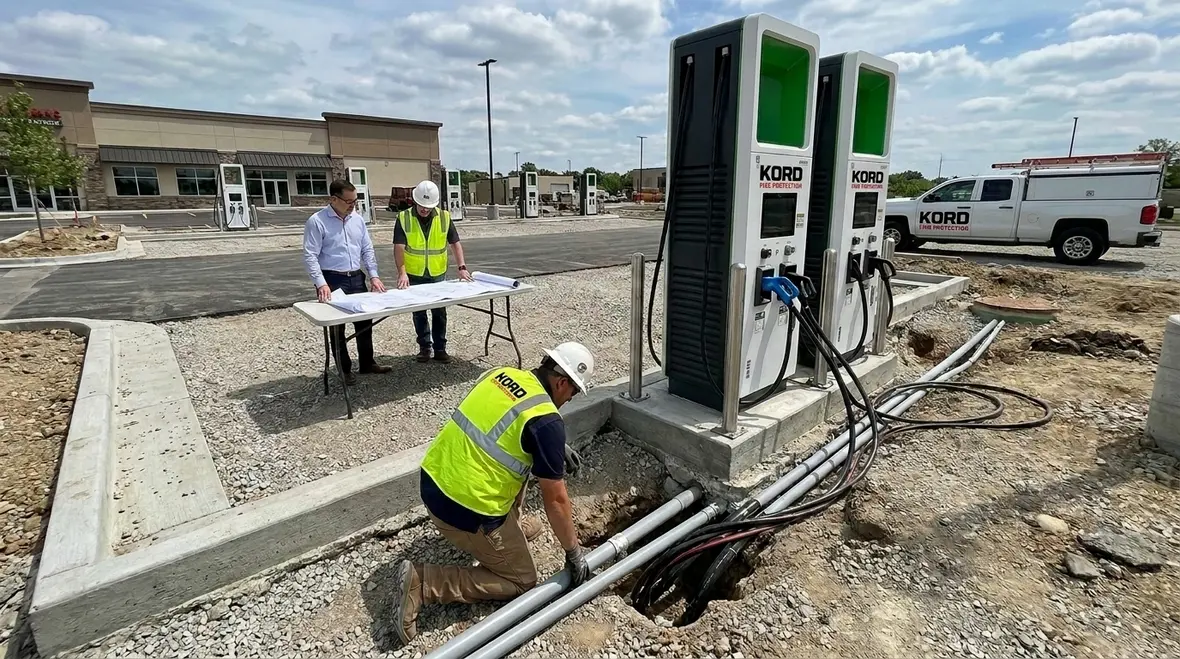
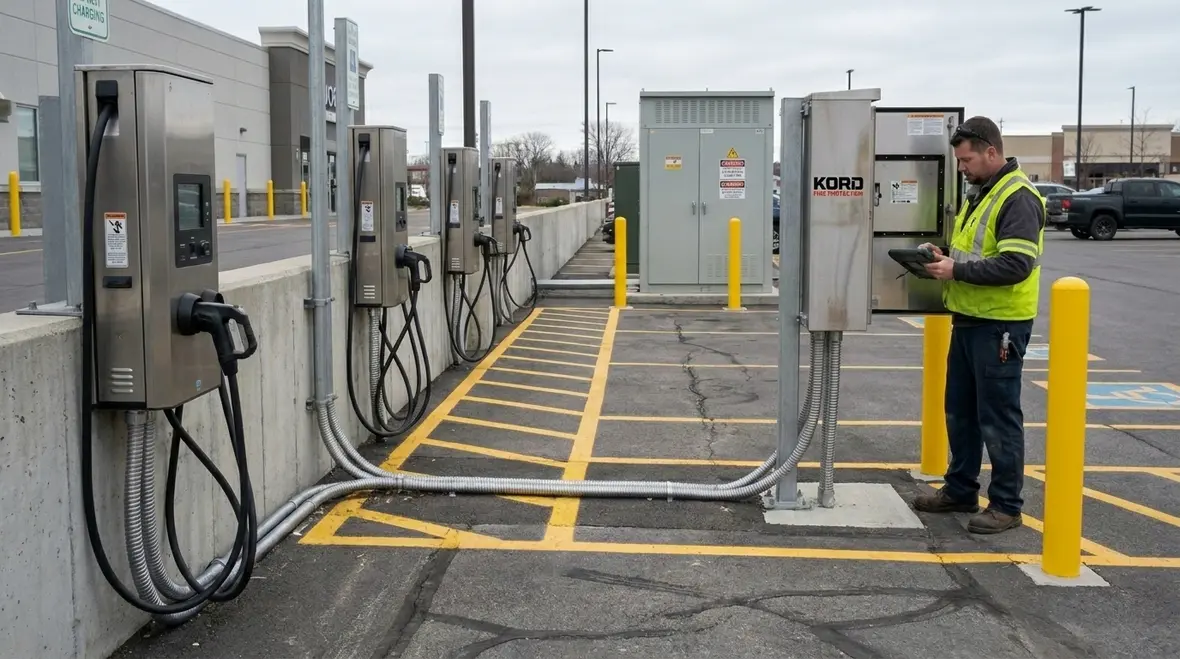
After electrical planning, the job shifts to civil and layout details that people often underestimate. Charger islands need proper spacing, drainage awareness, and cable route planning that reduces damage risk. Teams should choose trenching paths that minimize crossings with future landscaping or service corridors.
They also need to consider where vehicles stop, how drivers angle in, and whether maintenance crews can access equipment safely. In Australia, safety and access requirements influence how bays connect to surrounding walkways and service lanes.
Additionally, the property team should plan for signage, lighting, and identification. This is not just about aesthetics. Clear signage supports safe use and helps staff and contractors know where to work without guessing. And yes, guessing is fun in trivia night, not in electrical work.
Fire safety planning: why Kord Fire Protection becomes a vital partner
Bring protection strategy in early
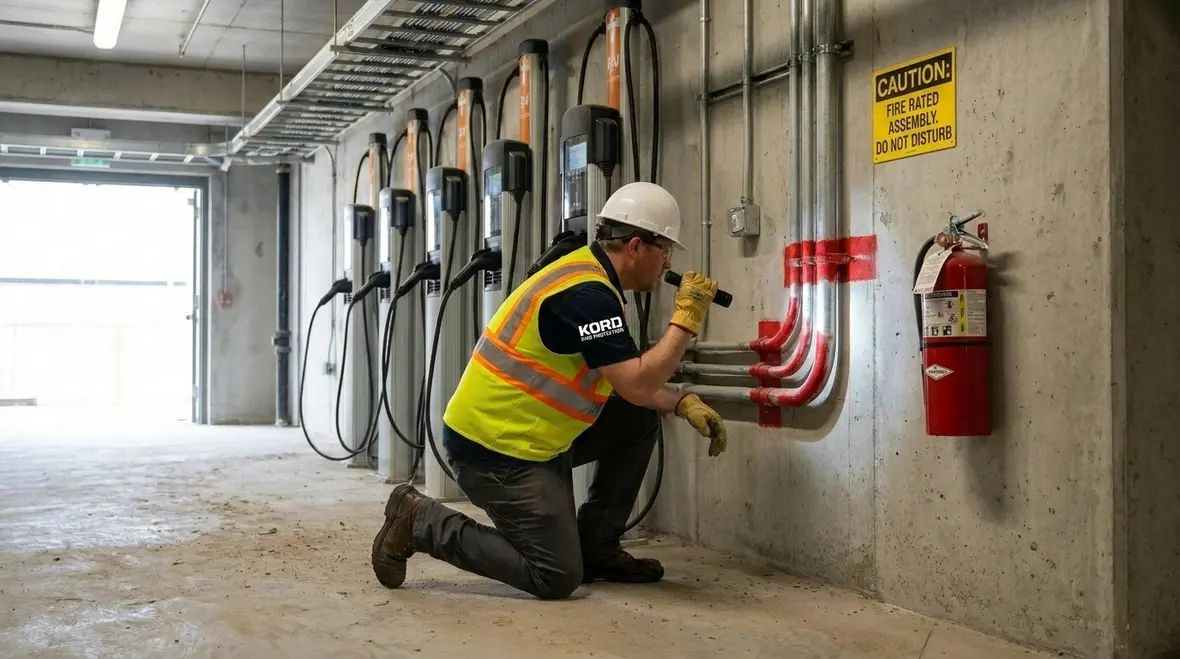
Commercial EV charging changes the fire risk landscape. That is why Kord Fire Protection can become a vital partner with this service job, not a last minute checkbox. EV charging systems involve power distribution, enclosure heating, and battery related hazards that require careful review of protection strategies across electrical rooms, cable pathways, and equipment locations.
First, the fire protection team should coordinate with electrical and civil designers on where heat, smoke, and flame could spread. Next, they should advise on protection approaches for cable routes, penetrations, and any areas where chargers or distribution boards sit within the building envelope or near critical assets.
Then they should align their recommendations with the property’s existing fire systems. That includes ensuring compatibility with detection, alarm, and suppression strategies, and checking whether any modifications change coverage. Furthermore, they can help verify that documentation supports compliance at handover, which means fewer “where is that approval” moments during the busiest part of the project.
When Kord Fire Protection stays involved early, the project team can reduce redesign work later. In other words, the fire protection plan stops being a surprise guest that shows up after the catering invoice is paid. For facilities looking at broader system intelligence, the article Smart Detection Tech for Safer Commercial Facilities gives useful context on how proactive detection can support commercial environments beyond basic compliance.
Compliance, procurement, and project delivery without chaos
Once planning and safety are in place, delivery needs a tight process. Teams should lock design assumptions early, then align procurement to avoid mismatched components. Chargers, switchgear interfaces, cabling systems, and protection equipment should match the intended architecture so installers do not create workarounds.
During procurement, it helps to request documentation up front. That includes technical datasheets, installation guides, and test requirements. Afterward, the team should plan commissioning steps, including functional testing and safety validation, before the site opens for use.
For multi site portfolios, it also helps to standardize drawings and templates. Facilities across Australia move faster when teams repeat proven details rather than invent new ones for each property. Yet, local site conditions still matter, so the project should use standard baselines and then adjust for transformer locations, cable access, and civil constraints.
In parallel, project managers should set clear responsibilities across electrical contractors, civil contractors, and the fire protection partner. When communication breaks down, blame often travels faster than cable. A defined workflow prevents that.
Operations after installation: maintenance, monitoring, and upgrades
Keep the site ready after handover
The work does not end at handover. A future ready strategy includes operational planning. That means maintenance schedules for connectors, cable management, enclosures, and inspections aligned to actual usage, not a generic calendar that belongs to nobody.
Next, teams should plan for monitoring. Many commercial systems provide usage data and fault alerts. This helps facilities teams respond quickly and helps owners forecast future commercial EV charger infrastructure requirements more accurately.
Then they should build upgrade paths into the original design. For example, reserved conduits, spare breaker space, and accessible distribution points reduce downtime later. Also, a phased plan should protect the customer experience during expansion so the site does not feel like it is under construction every time demand climbs.
And when problems show up, which they sometimes do, a clear service procedure keeps downtime short. After all, nobody wants to explain a down charger to a fleet manager holding a schedule like a sacred oath.
FAQ: commercial EV charger infrastructure requirements
Conclusion: make it ready, then keep it ready
Planning commercial EV charger infrastructure requirements is not just about installing hardware. It means forecasting demand, sizing electrical capacity, designing accessible layouts, and coordinating fire safety from the start. When Kord Fire Protection joins early, teams reduce rework, support compliance, and protect the schedule.
If a property owner in Australia wants a calmer install and a cleaner upgrade path, it is time to start planning today. Reach out and map the next phase with a team that thinks ahead.

Join Our Newsletter!
Get the latest fire safety tips delivered straight to your inbox From our Newsletter.