NFPA 25 Special Requirements Other NFPA Documents Explained
Quick Answer
NFPA 25 §§ 16.1 to 16.2 set special inspection, testing, and maintenance rules when other NFPA documents require extra care. For industrial, retail, and commercial facilities across Australia, these rules help keep systems reliable, reduce risk, and support compliance. Kord Fire Protection can manage this work with steady expertise and practical service.
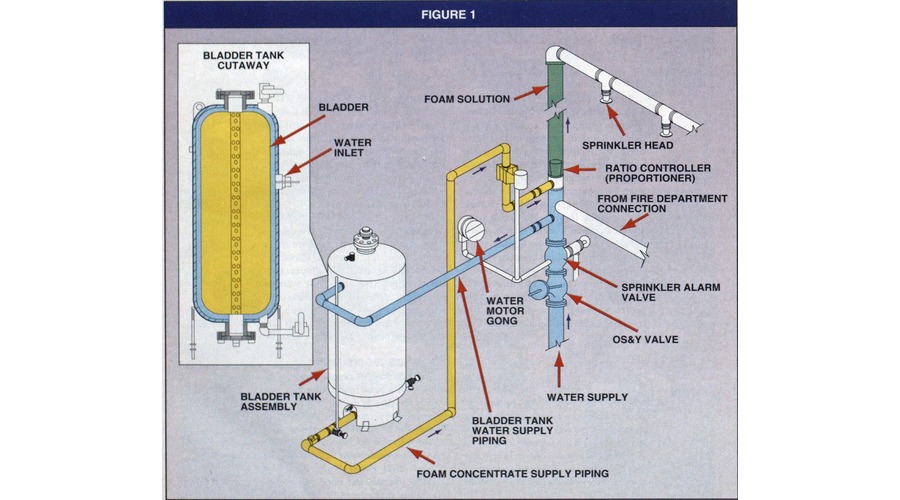
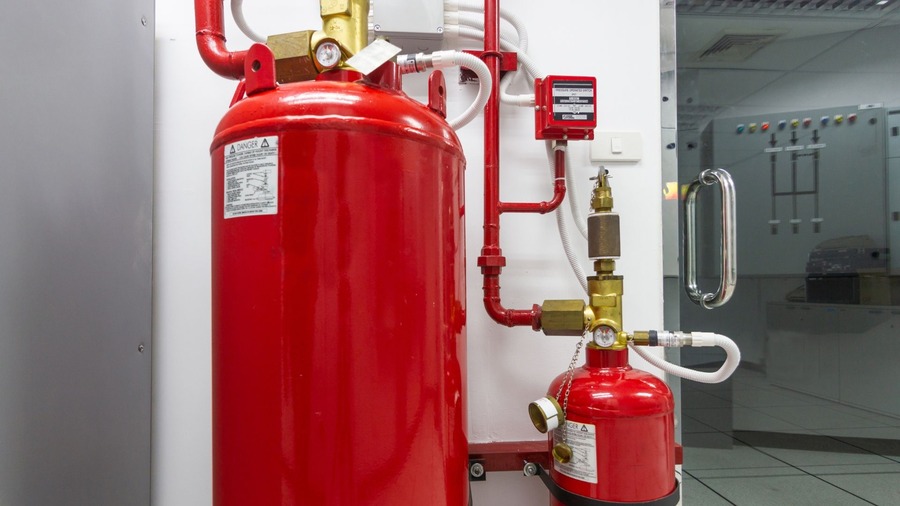
NFPA 25 special requirements from other NFPA documents matter when a fire system includes parts that need more than standard inspection and testing. In plain terms, some systems carry extra rules because they protect high risk spaces, special hazards, or complex equipment. That is where NFPA 25 special requirements other NFPA documents come into play, and that is where a disciplined partner can make the job far easier. Kord Fire Protection can help facilities meet those added demands without turning the process into a circus. And thankfully, this is one performance where nobody wants surprise pyrotechnics.
For sites that want broader support beyond a single checklist, Kord Fire Protection also offers full fire protection services that fit naturally alongside ongoing inspection, testing, maintenance, and corrective work. That is useful when the compliance burden keeps growing but the number of hours in the day remains tragically unimpressed.
What NFPA 25 §§ 16.1 to 16.2 mean in real life
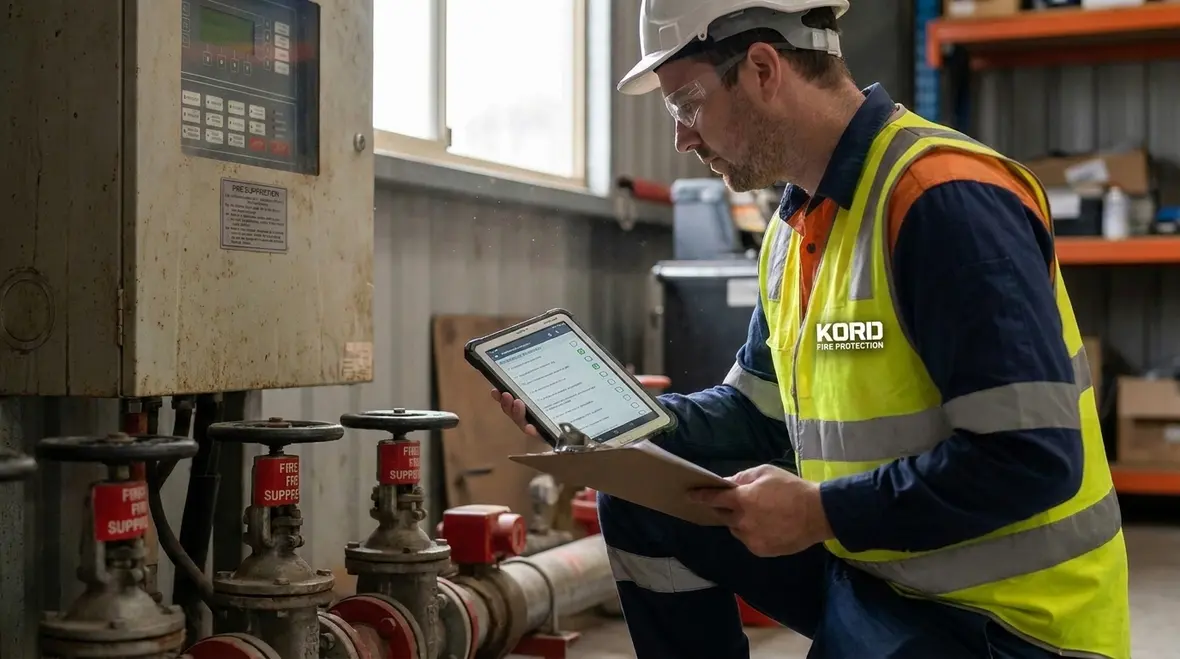
These sections tell the owner or responsible party to follow the extra inspection, testing, and maintenance steps required by the original NFPA standard for that system. So, instead of relying only on the basic NFPA 25 schedule, the facility must also check the special requirements tied to the equipment design.
For example, a system installed for a special hazard may need more frequent checks, specific test methods, or staff with deeper knowledge. Therefore, the rule is simple: if another NFPA document says do more, NFPA 25 expects that extra work to happen.
That sounds straightforward, but real sites rarely feel straightforward. A warehouse may have standard sprinklers in one area, special suppression around a process hazard, water supply components with their own maintenance logic, and operating pressures that make scheduling awkward. On paper, that is just a list. In practice, that is several moving parts, several responsibilities, and several opportunities for somebody to say, “I thought someone else handled that.”
The hidden point behind these clauses
The real point is not bureaucracy for its own sake. It is performance. If a system exists because the hazard is unusual, severe, or more complex than average, then the maintenance approach also has to be more disciplined than average. A shortcut that looks harmless during a quiet month can become a very loud mistake during an actual event.
Why these special requirements matter for Australian facilities
Industrial plants, retail centres, warehouses, logistics hubs, and commercial properties across Australia often use fire systems that do not fit a one size approach. Moreover, many sites run around the clock, which means downtime costs money and poor maintenance can quickly become a serious risk.
When a facility follows NFPA 25 special requirements other NFPA documents, it protects people, stock, plant, and business continuity. In addition, it helps support insurance expectations and internal safety goals. A missed requirement may look small on paper, yet in the field it can become a very expensive lesson. Fire safety is not a place for “she’ll be right” optimism.
This is especially true when a site has mixed hazards. One building might hold standard goods in one section, electrical equipment in another, and a process area that demands a special suppression strategy somewhere else entirely. The more variety a site carries, the more important it becomes to know which standard governs which task and when that task must occur.
Facilities also benefit from keeping the broader maintenance picture in view. Kord Fire Protection’s NFPA 25 overview and complete water-based fire protection systems maintenance breakdown is a useful reference point because it frames how these special obligations sit inside the larger inspection and testing program.
How the added ITM rules usually show up
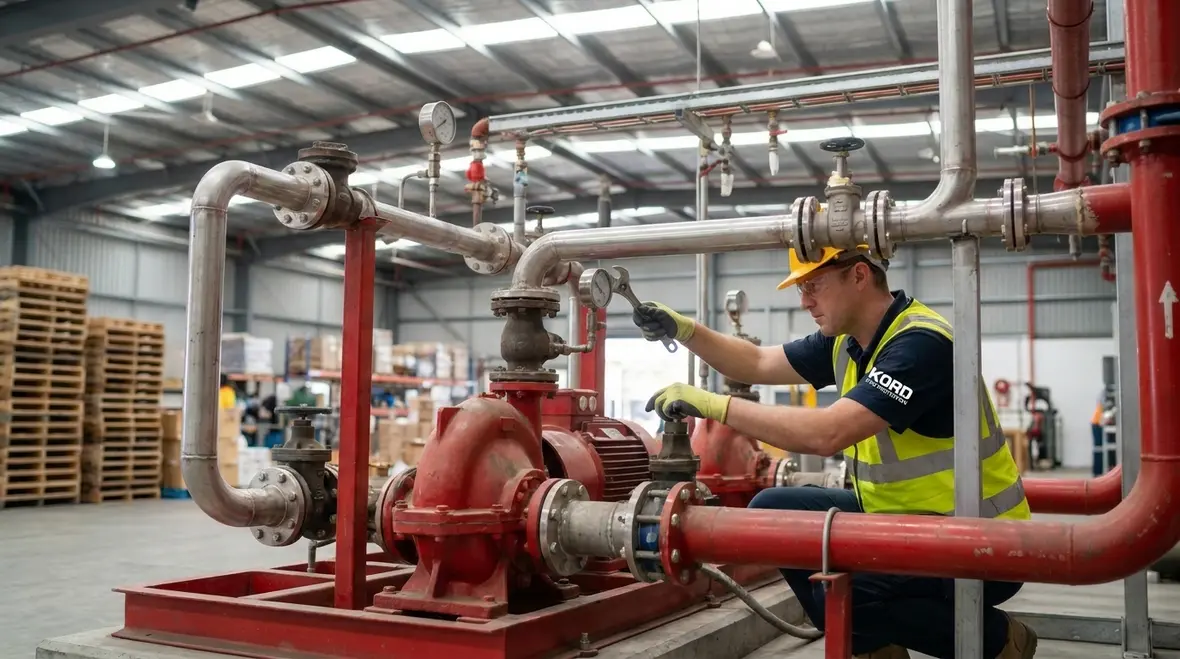
Special requirements often appear in the form of more detailed checks, tighter testing intervals, or specific acceptance criteria. They may also require records that prove the system was examined in the right way and by the right people. As a result, the facility needs a clear process, not guesswork.
Common examples include:
- Extra inspection steps for special suppression equipment
- Testing at intervals different from the base NFPA 25 schedule
- Verification of valves, alarms, pumps, or release devices tied to a special system
- Record keeping that shows compliance with both NFPA 25 and the linked NFPA document
- Correct replacement of parts after testing or service work
Some requirements are easy to miss because they do not look dramatic. A valve position check, a release device verification, a timing requirement, or a record entry can seem minor in isolation. Yet systems fail through chains of small misses far more often than through movie style chaos. Most compliance problems are boring right up until they become expensive.
Where facilities get tripped up
Teams usually get tripped up in one of three places: they do not know a linked document applies, they know it applies but do not schedule the extra task, or they complete the task without documenting it well enough to prove anything later. None of those problems are glamorous, but all of them are common. Compliance often succeeds or fails on organization, not heroics.
How a compliance plan should be built
A strong plan starts with system identification. First, the facility must know exactly which fire systems exist on site. Then it must match each one with the related NFPA document and special ITM needs. After that, it should build a schedule that covers both standard NFPA 25 work and the added tasks.
Next, the plan should assign responsibility. Who checks the system? Who signs off? Who keeps the records? These questions sound dull, yet they are the backbone of compliance. Finally, the plan should include corrective action steps, because missed issues should never sit around like an unopened plot twist in a bad streaming series.
It also helps to build the plan around operations reality, not fantasy. If a site runs long shifts, protects sensitive stock, or cannot tolerate certain shutdown windows, the maintenance calendar has to reflect that. A workable plan is one people can actually execute without starting a facility-wide headache.
For sites with special hazard equipment, that planning may connect naturally with Kord Fire Protection’s special hazard fire suppression support in Australia, especially when the system requires more tailored inspection logic than a standard setup.

NFPA 25 special requirements other NFPA documents in one view
| Focus Area | What the Site Must Do |
| System type | Identify the equipment and the matching NFPA standard |
| ITM schedule | Follow NFPA 25 plus any added inspection or test timing |
| Testing method | Use the method required by the related NFPA document |
| Records | Keep clear proof of work, results, and corrective action |
| Repairs | Fix defects fast and confirm the system returns to service properly |
That table may look tidy, but each row has real operational weight. “Identify the system” means no assumptions. “Follow the schedule” means no drifting. “Use the right test method” means no improvisation. And “keep records” means someone can trace what happened, when it happened, and what was done next. In fire protection, tidy paperwork often reflects untidy effort behind the scenes, which is exactly how it should be.
How Kord Fire Protection becomes a vital partner
Kord Fire Protection can support facilities by handling the practical side of compliance with steady, site aware service. Instead of asking busy managers to chase every clause and test date, Kord Fire Protection can help map the system, plan the work, and keep the records in order. That matters because most facilities already juggle production, customers, and maintenance. Fire compliance should not become another full time mystery.
In addition, Kord Fire Protection can help with inspections, testing, maintenance coordination, defect reporting, and remedial work. That makes the service valuable for facilities that need less disruption and more confidence. For a site manager, that means fewer surprises. For an owner, it means better control. For the fire system, it means a better chance of doing its one job when the moment comes.
A capable partner also brings consistency. The value is not only technical knowledge, although that matters. It is also the habit of showing up with a plan, knowing what applies to the site, communicating clearly, and closing the loop when defects appear. Many facilities do not need more noise. They need someone who can quietly keep the machine running without treating every service visit like a dramatic season finale.
What facility teams should ask their fire partner
Before choosing a provider, a facility team should ask if the contractor understands both NFPA 25 and the linked NFPA documents that create the extra requirements. It should also ask how the provider tracks schedules, documents results, and handles defects.
In addition, the team should ask whether the provider can work around operations with limited downtime. A strong partner will answer clearly, explain the risk, and make the path forward simple. That is the kind of service that supports industrial and commercial sites without drama.
Useful questions worth asking
- Which linked NFPA documents apply to our systems?
- How do you track recurring inspection, testing, and maintenance intervals?
- What records do you provide after service?
- How do you report defects and recommend corrective action?
- Can you schedule work to reduce operational disruption?
- Who verifies that systems are returned to service properly after testing or repair?
Those questions are not about being difficult. They are about being clear. The right provider should welcome them, because clear expectations prevent confusion later. If the answers sound vague, overly polished, or suspiciously magical, that is usually a sign to keep looking.
FAQ
Final word
NFPA 25 §§ 16.1 to 16.2 remind every facility that special systems need special care. Kord Fire Protection can help Australian industrial, retail, and commercial sites stay on top of those duties with less stress and more certainty. If a facility needs support with NFPA 25 special requirements other NFPA documents, the next step is simple: bring in a partner that knows the work and respects the clock.
The best compliance programs are rarely flashy. They are organized, repeatable, well documented, and built around the real hazards on site. That may not make for thrilling cinema, but it does make for better fire protection, fewer unpleasant surprises, and a much better chance that every system performs when it is finally asked to earn its keep.

Join Our Newsletter!
Get the latest fire safety tips delivered straight to your inbox From our Newsletter.