Emergency Lighting for Standpipes in Commercial Buildings
In commercial buildings, the standpipe system has one job, and it is a serious one: help firefighters move water where it needs to go. Yet that water is only useful if the right people can find and operate the standpipe during smoke, power loss, and panic. That is why emergency lighting for standpipes matters. Kord Fire Protection technicians often explain it like this: if your standpipe locations are hidden in darkness, the system becomes a museum piece. And nobody wants their life safety equipment treated like a prop, even if it looks great in a movie.
This article covers the critical emergency lighting requirements for commercial standpipe locations, including practical steps, typical code intent, and how Kord Fire Protection technicians help teams verify compliance with real site conditions.
What commercial standpipe locations require emergency illumination
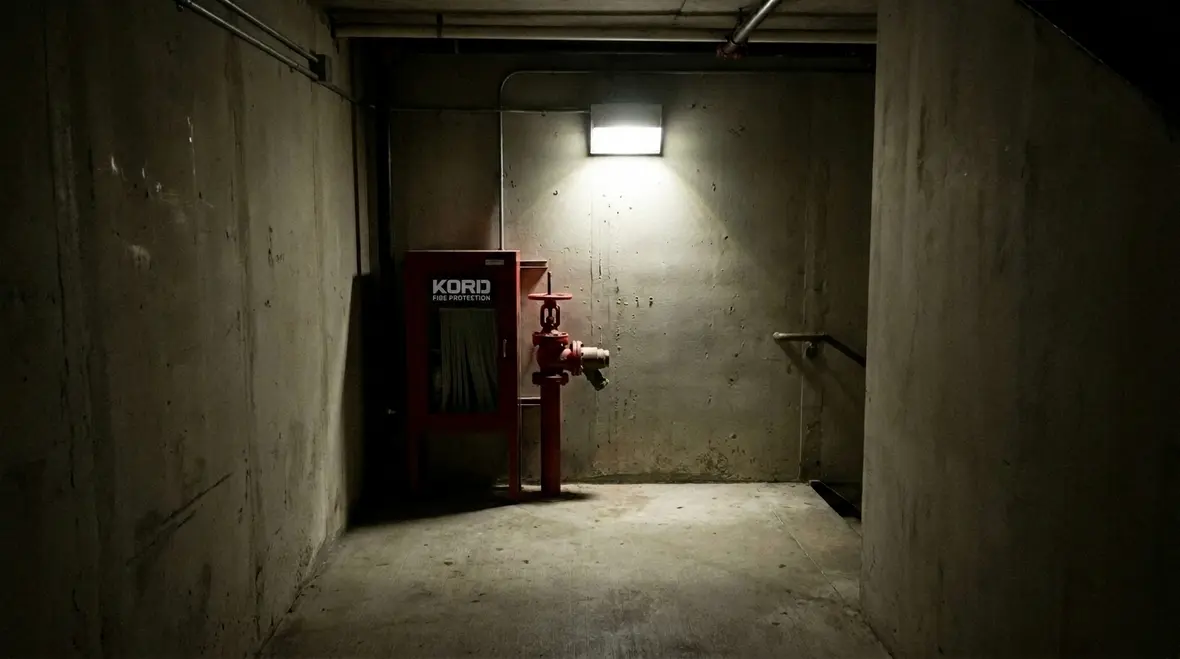
Commercial buildings must keep standpipe access areas visible when normal power fails. Therefore, emergency lighting supports safe use by helping occupants locate valves, hose connections, and route paths to the standpipe in low visibility conditions. It also helps responders navigate without wasting time. Kord Fire Protection technicians typically focus on two things at once: coverage and control. Coverage means the light reaches the standpipe area and the path to reach it. Control means the lighting activates on loss of power and stays on long enough for safe operation.
In practice, buildings often have standpipes in stair enclosures, corridors, or mechanical rooms. As a result, emergency fixtures need to cover the specific transition zones: the approach to the standpipe, the cabinet or connection area, and the markings that tell people where to push, open, or connect.
Where to install lights around standpipe cabinets and valves
Kord Fire Protection technicians usually start by walking the building like a stressed human under smoke. They note where someone naturally pauses, where visibility drops, and where obstructions block the view. Then they place emergency lighting to remove those obstacles.
- At the standpipe location so the valve and hose connection are visible
- Along the route to the standpipe including key doorways and turning points
- In stair enclosures where people often enter, move, and need direction
- Near identification signs so occupants can read labels and instructions
Transition points matter. When a person enters a stair room, their eyes need time to adapt, and the light level often drops. Consequently, emergency lighting for standpipes should not just “exist.” It should illuminate the actual decision area where a person must act fast.
How codes approach egress visibility and equipment access
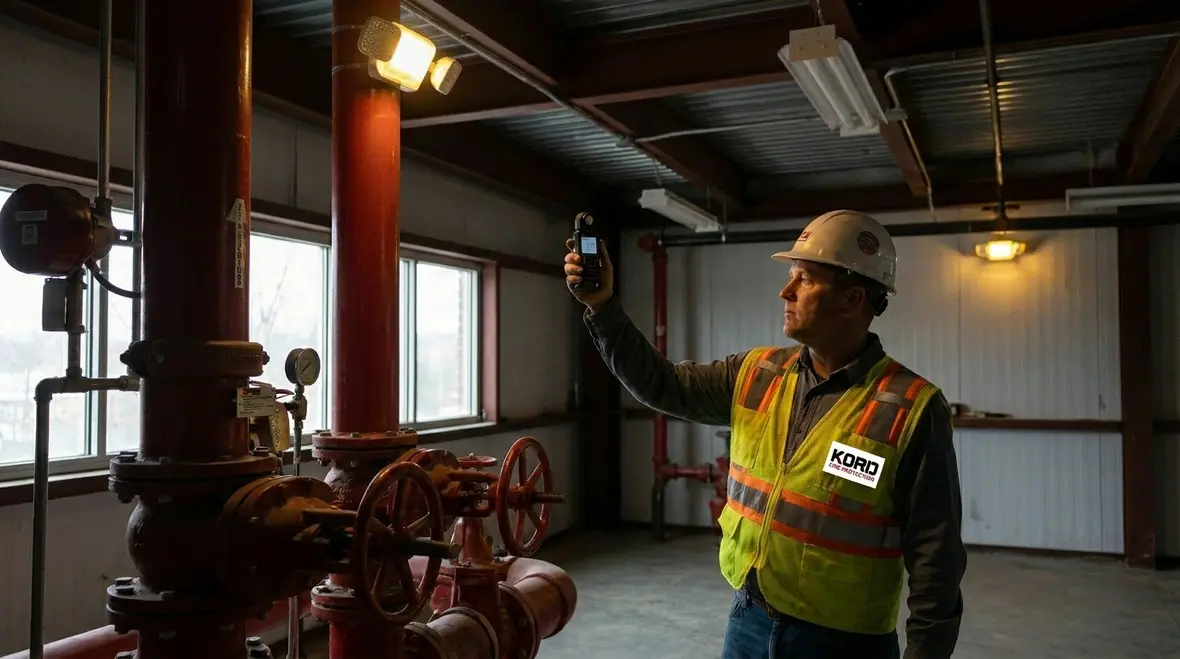
Emergency lighting requirements usually connect to the broader goals of egress safety. Even when standpipes serve trained responders, codes still aim to ensure people can find life safety equipment and move toward it. For commercial properties, this often aligns with the intent behind emergency lighting and exit illumination rules, plus guidance on marking and access to fire protection features.
Because code language can vary by jurisdiction, Kord Fire Protection technicians help teams translate requirements into clear field checks. They look at spacing, mounting heights, light levels, and the presence of obstruction. They also consider whether the system includes remote heads, battery backup, or an integral self powered unit.
In other words, the compliance goal is not “install a fixture and hope.” It is “provide consistent visibility under power failure conditions.” That is the difference between a tool and a trap. And yes, traps are fun in cartoons, but not in life safety.
Battery backup runtime, switching, and testing they expect on site
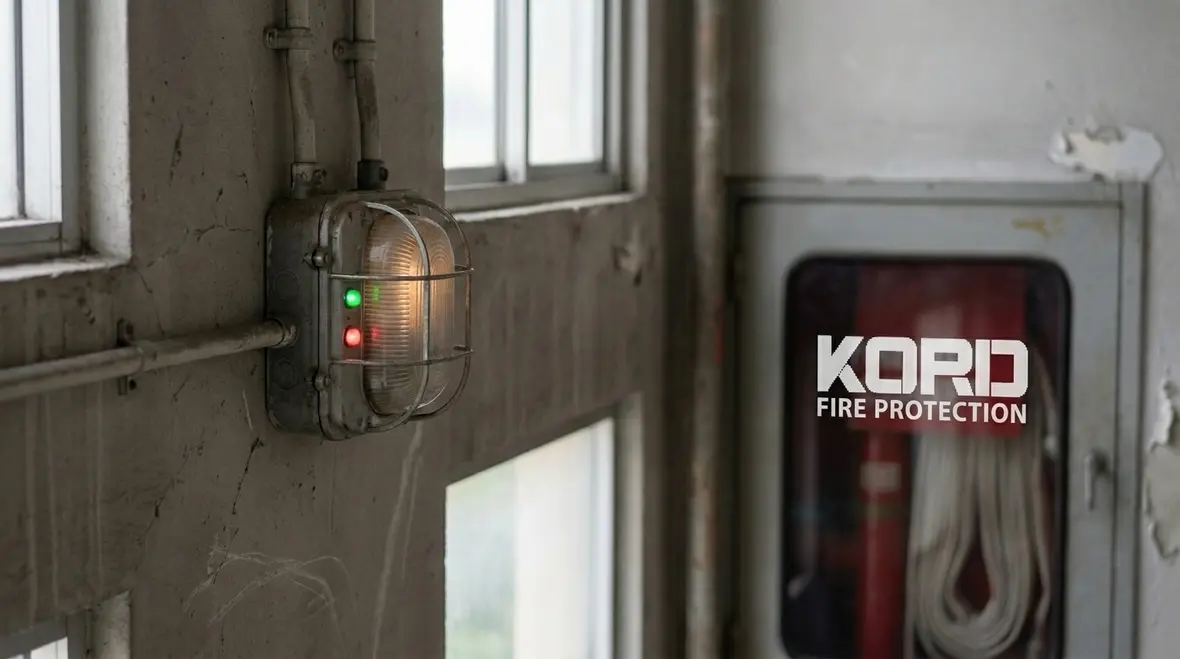
Emergency lighting does not help if it turns on late or dies early. Therefore, Kord Fire Protection technicians check switching behavior, power source design, and battery runtime. Many buildings use emergency unit equipment that monitors power loss and then activates illumination. Others use a centralized system. Either way, the system should deliver emergency illumination long enough for safe building response. For deeper insight into system behavior, review fire pump start sequence and operating settings to understand how related systems coordinate during emergencies.
To support real operations, technicians also verify testing and maintenance practices. Regular inspections should confirm that fixtures energize, function as intended, and remain reliable over time. Moreover, they ensure the equipment gets documented tests, not just “someone said it looked fine last year.”
When light output drops due to aging batteries or failed components, the standpipe area can go dim at the worst moment. Consequently, a sound maintenance plan protects the building and reduces surprise failures. This is where Kord Fire Protection technicians earn their keep, because they measure what matters and correct what does not.
Photometrics, aiming, and coverage verification that actually holds up
In the real world, the standpipe area might sit behind a door, inside a recessed cabinet, or in a corner with weird reflections. That is why “it should be bright enough” rarely survives an inspection. Instead, Kord Fire Protection technicians often use photometric thinking to confirm that emergency lighting for standpipes creates usable visibility.
- Mounting location and aiming to prevent glare and shadows
- Fixture spacing so light does not fade between key points
- Surface finishes that can cause bright spots and dark pockets
- Obstructions like structural beams, shelving, or signage glare
Then they validate coverage for what matters, not what looks nice on paper. If a person must reach a valve handle, the area around that handle must stay visible. Also, the route from the egress path to the standpipe should avoid dim stretches. This is where a properly designed system beats a guess every time, like choosing the correct movie sequel instead of watching three random trailers and calling it a night.
Common mistakes that delay compliance and how to avoid them
- Lights installed too far away so the standpipe cabinet stays dark
- Fixtures aimed incorrectly which creates shadows over valves and hose connections
- Insufficient coverage near doorways where people turn and pause
- Inconsistent maintenance leading to battery or lamp failures
- Changes to the space such as new partitions that block visibility
To prevent these issues, teams should coordinate design, installation, and ongoing testing. Then they should update the plan after renovations. Moreover, they should confirm that emergency illumination supports actual access, not just theoretical coverage. Kord Fire Protection technicians often advise documenting the standpipe locations and the final lighting layout so future updates do not remove visibility by accident.
FAQ for standpipe emergency lighting requirements
Featured snippet: What is the main goal of emergency lighting for standpipes?
The main goal is to keep standpipe locations and routes visible during power failure so occupants and responders can find and use them safely.
Final call to action for commercial property teams
Commercial property teams should not leave standpipe visibility to luck. When emergency illumination gets planned and verified with real field conditions, compliance becomes simpler and response time improves. Kord Fire Protection technicians can review standpipe locations, confirm emergency lighting coverage, and help set up a testing plan that stays current after renovations.
If your building relies on standpipes, it deserves lighting that performs when power fails. Explore professional fire protection services and schedule a site assessment with Kord Fire Protection today to get clarity you can act on.

Join Our Newsletter!
Get the latest fire safety tips delivered straight to your inbox From our Newsletter.