Industrial Fire Suppression Design for High Risk Facilities
In high risk facilities, the difference between a controlled event and a full disaster often comes down to industrial fire suppression design done right the first time. Kord Fire Protection Technicians approach system planning like a careful rehearsal, not a last minute scramble. They start by mapping how fire will grow, how quickly heat spreads, and how building features affect smoke and water flow. Then they size equipment, select nozzles, and coordinate controls so every response matches the hazard. In other words, they design the system to act like a trained crew, not like a fire extinguisher that hopes for the best.
High-Risk Environments Demand Real Engineering
High risk environments include places where fuels, dust, chemicals, or flammable vapors can ignite fast. In these locations, a delay of minutes can turn a small incident into a major release. Therefore, the system must match the scenario, not just meet a generic code checklist. Kord Fire Protection Technicians focus on fire behavior, occupancy use, and process operations, because those factors decide the type of detectors, the discharge strategy, and the layout of piping and zones.
And yes, fire does not care about human optimism. It moves on chemistry, airflow, and time. So, when design teams treat suppression as a one size fits all product, they end up with a system that looks good on paper and underperforms in the field. Kord technicians work to avoid that trap by validating the hazard profile before equipment gets installed. That early effort is what separates systems that react correctly from those that hesitate at exactly the wrong moment.
Hazard Modeling and Coverage Planning That Holds Up
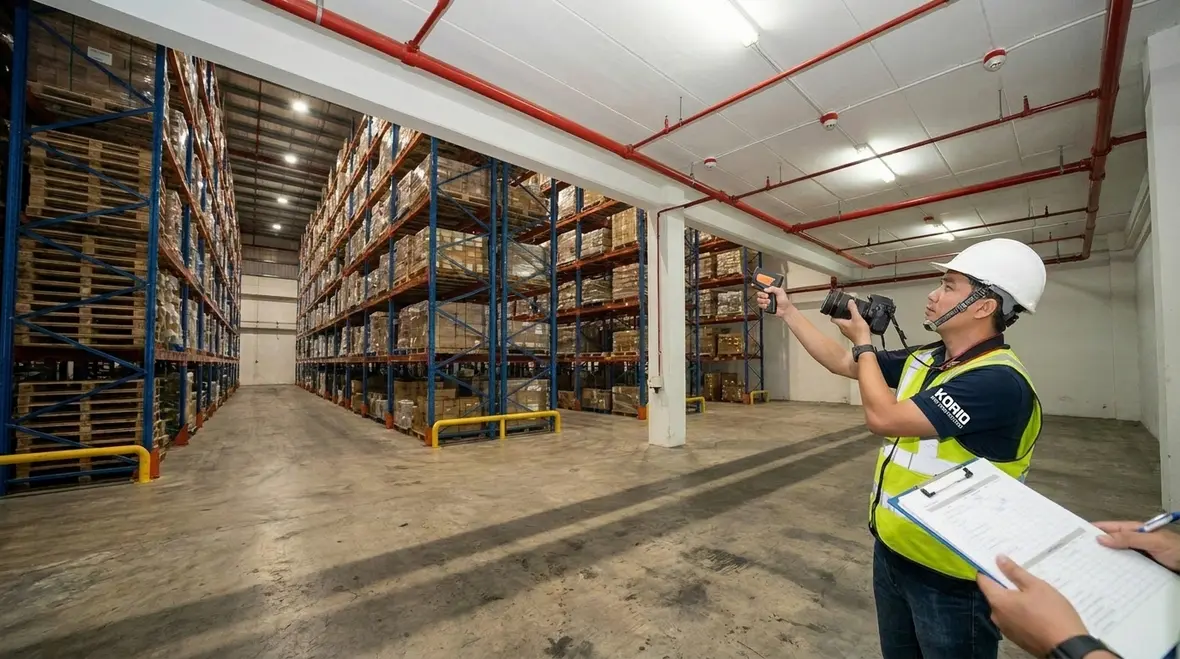
Industrial fire suppression design begins with hazard modeling. First, technicians identify fuel types, ignition sources, and the maximum credible fire load. Next, they consider ventilation and obstructions that can hide heat from detectors or redirect suppression media. As a result, the design supports consistent coverage where flames actually develop. It is less about theoretical reach and more about real-world effectiveness under pressure.
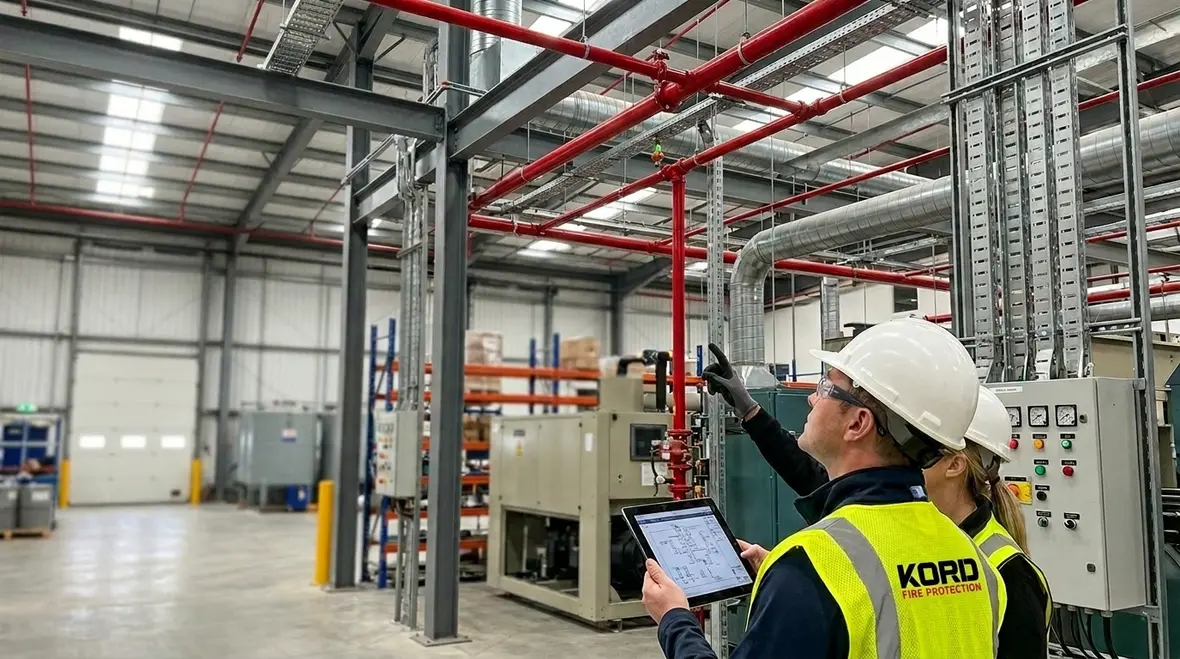
Coverage planning also includes design area concepts, layout constraints, and how to protect critical assets. For example, a rack system in a warehouse changes airflow. Meanwhile, suspended piping or ductwork can block discharge patterns. Kord Fire Protection Technicians use that reality to create layouts that reduce dead zones and prevent water or agent from going where it does no work.
Pop culture comparison time. A bad coverage plan is like a movie where the hero only checks half the doors. Sure, it sounds heroic. Then the villain walks right in. Good design checks every door, every airflow path, and every obstruction that could quietly ruin performance.
Designing Detection and Actuation for Speed and Accuracy
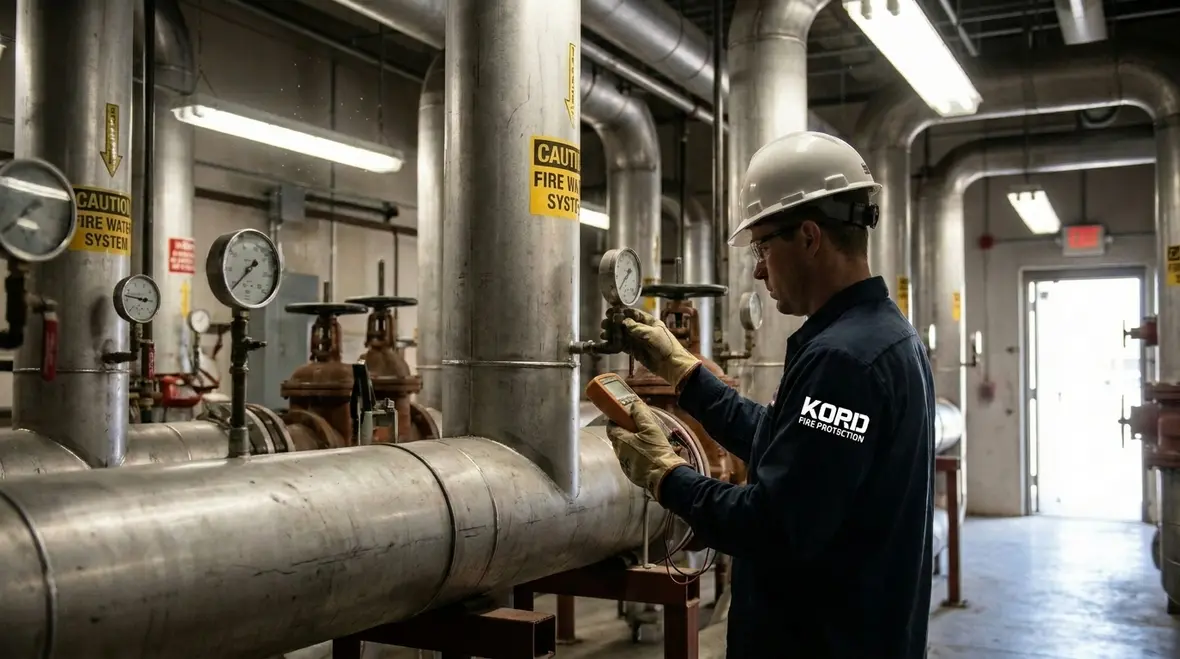
In high risk spaces, detection must happen early and actuation must happen predictably. Detection choices influence response time, and response time influences fire growth. Therefore, technicians evaluate ceiling height, ambient airflow, and the likelihood of nuisance alarms. A system that triggers too often becomes ignored. A system that triggers too late becomes dangerous.
They often align detector placement with expected heat and smoke paths. Also, they coordinate with control panels so the system uses the right sequence: confirm, alert, and discharge. This prevents accidental discharge from random triggers while still acting fast when conditions match a real event. The balance here is not simple, but it is critical.
Kord technicians explain these tradeoffs in plain language, so the facility team understands why certain placements matter. In addition, they review how operators will receive alarms and how emergency procedures tie into suppression events. If the building cannot act on the alarm, the system becomes an expensive decoration. And nobody wants that, unless it is a very fancy safety poster.
Piping Layout, Hydraulics, and Flow Calculations That Don’t Flinch
Once hazard coverage and detection are set, the next step is the heart of performance: hydraulics. The piping network must deliver adequate pressure and flow to the most demanding locations. To get that right, designers run flow calculations that account for pipe length, fittings, elevation changes, and discharge characteristics.
Moreover, they consider water supply reliability, storage capacity, and the ability to sustain discharge long enough for containment or knockdown. If a design team ignores these factors, it can produce systems that start strong and then fade under real fire conditions. Kord Fire Protection Technicians check the full chain of delivery, because the system must work when everything else goes sideways.
At this stage, they also review installation details that people often forget, like hidden obstructions, future expansion plans, and maintenance access. In industrial spaces, modifications happen. Therefore, design assumptions must include what will likely change during upgrades. That foresight keeps systems reliable years after installation.
Agent Selection: Water, Foam, Gases, and Local Application
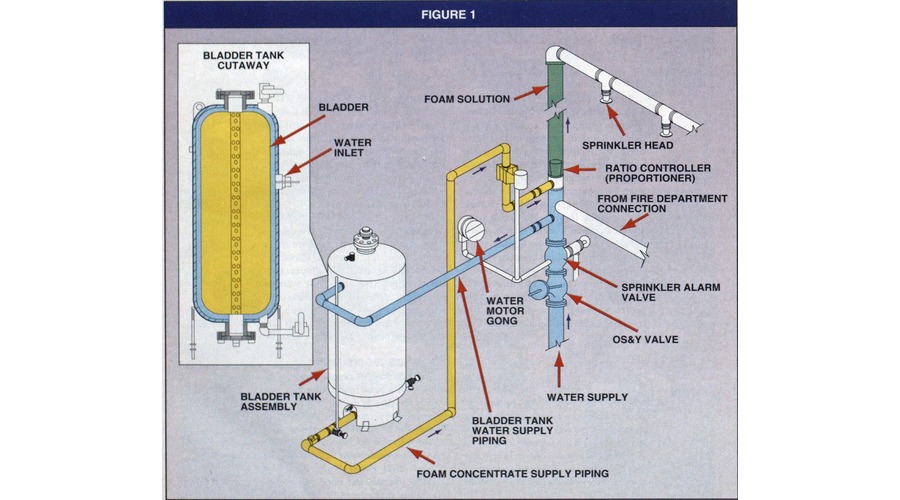
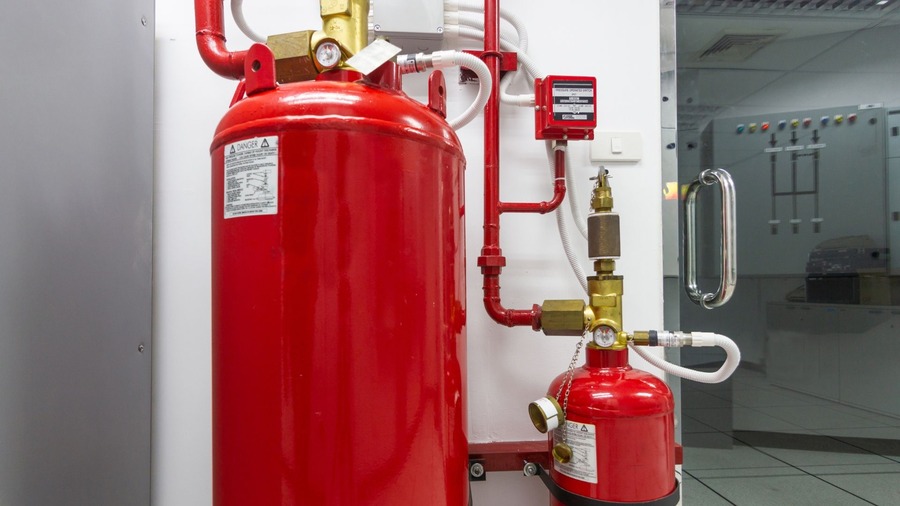
Different hazards call for different suppression media. Water can work well for many ordinary combustibles, but chemical process areas may need specialized solutions. Foam helps manage flammable liquids by creating a blanket that slows vapor release. Gaseous systems can reduce oxygen or inhibit chemical reactions in enclosed spaces, which supports areas where water damage can be unacceptable.
Local application strategies also matter. Instead of filling an entire room, some designs apply suppression directly to the hazard source. That approach often improves effectiveness and can reduce cleanup costs after an event. However, it demands careful placement and reliable actuation.
Kord Fire Protection Technicians explain agent selection by tying it to the hazard mechanism, not brand preferences. They help stakeholders understand what each medium can do, what it cannot do, and what safety checks should accompany each option. That clarity keeps decisions grounded in engineering, not vibes.
Integration With Controls, Signaling, and Emergency Response
Industrial fire suppression design does not stop at the discharge system. It integrates with alarms, ventilation controls, shutdown procedures, and emergency signaling. For high risk environments, response consistency matters. If the system discharges before critical shutdown actions occur, risk can rise rather than fall.
Therefore, technicians coordinate interlocks with building management systems where applicable. They also define alarm sequences for evacuation and for local operator response. In addition, they ensure the system supports practical maintenance routines so the design stays reliable over time. For deeper insight into ongoing system reliability, see routine fire pump inspections and their importance.
Maintenance, Testing, and Lifecycle Reliability
Even the best design will fail if it does not get maintained. High risk environments often run near maximum capacity, and that increases wear on components. Therefore, technicians create maintenance plans that include inspection schedules, functional tests, and rapid response procedures for any impairment.
They also review spare parts needs and the condition of valves, nozzles, detection devices, and control modules. In addition, they verify water supply performance through periodic checks. This supports the system’s ability to deliver the flow rates the design calculations assumed. Without that validation, even a well-designed system can quietly drift out of compliance.
| Design Focus | Field Validation |
| Identify fuels, ignition sources, and fire load | Confirm ceiling conditions, obstructions, and airflow |
| Select media based on hazard and damage limits | Verify nozzle placement and discharge coverage |
| Calculate hydraulics and supply sustainment | Test pressure, flow, and actuation sequences |
| Coordinate detection, alarms, and shutdown logic | Train operators on response steps and timing |
| Plan for maintenance access and upgrades | Document impairment procedures and spare strategy |
FAQ
Conclusion and Call to Action
High risk facilities do not get a second chance when a fire starts fast. That is why Kord Fire Protection Technicians build industrial fire suppression design around hazard reality, not assumptions. When the system includes strong detection, accurate hydraulics, correct media selection, and reliable controls, it responds like a plan that was practiced, not a guess that was hoped.
If your facility needs expert guidance, explore fire protection services from Kord Fire Protection. Their team helps translate complex risk into clear, effective systems that perform when it matters most. Reach out today and turn uncertainty into a plan that works.

Join Our Newsletter!
Get the latest fire safety tips delivered straight to your inbox From our Newsletter.