Fire Pump Importance in Modern Buildings
The Importance of Fire Pumps in a Building
In every building that reaches toward the sky or stretches across a city block, there is a quiet guardian waiting for the moment it is needed most. That guardian speaks in pressure and flow. It hums with purpose. It is the fire pump. The fire pump importance in modern construction cannot be overstated, because when water pressure falls short, this machine steps in with strength and precision. As Kord Fire Protection technicians often explain to property owners, a fire pump does not fight fires for applause. It fights them for survival. And much like a good bass line in a classic Motown song, you may not always notice it, but without it, everything falls apart.
So let us walk through why this powerful piece of equipment matters so deeply, how it works, and why building owners should treat it with the respect it deserves.
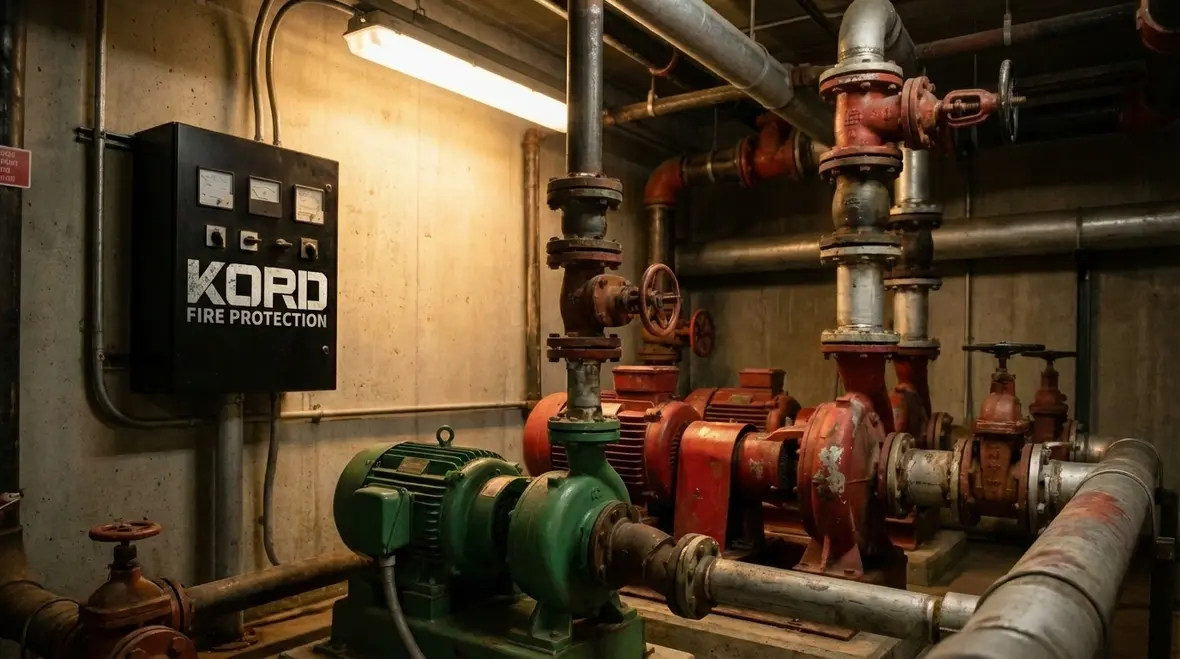
Understanding Fire Pump Importance in Modern Buildings
At its core, a fire pump increases water pressure in a fire protection system when the municipal supply cannot meet demand. That may sound simple. However, in practice, it is the difference between a sprinkler system whispering and roaring.
According to industry guidance found on firepumps.org, fire pumps serve as the heart of many high rise, industrial, and large commercial fire protection systems. When firefighters open hoses or when sprinklers activate, the system demands a surge of water. If the incoming supply cannot keep up, pressure drops. Without intervention, that drop can weaken suppression efforts at the worst possible time.
Kord Fire Protection technicians often compare it to water pressure in a home shower. When someone flushes a toilet, the pressure dips. Now imagine that dip during a five alarm fire. Suddenly, the stakes feel much higher.
Therefore, the fire pump importance becomes clear. It ensures that water reaches upper floors, distant wings, and critical areas with enough force to control flames before they spread.
For building owners who want to dive deeper into how standards shape modern pump design and performance, resources such as the Kord Fire overview of NFPA 20 provide a helpful bridge between the code language and practical application in real buildings.
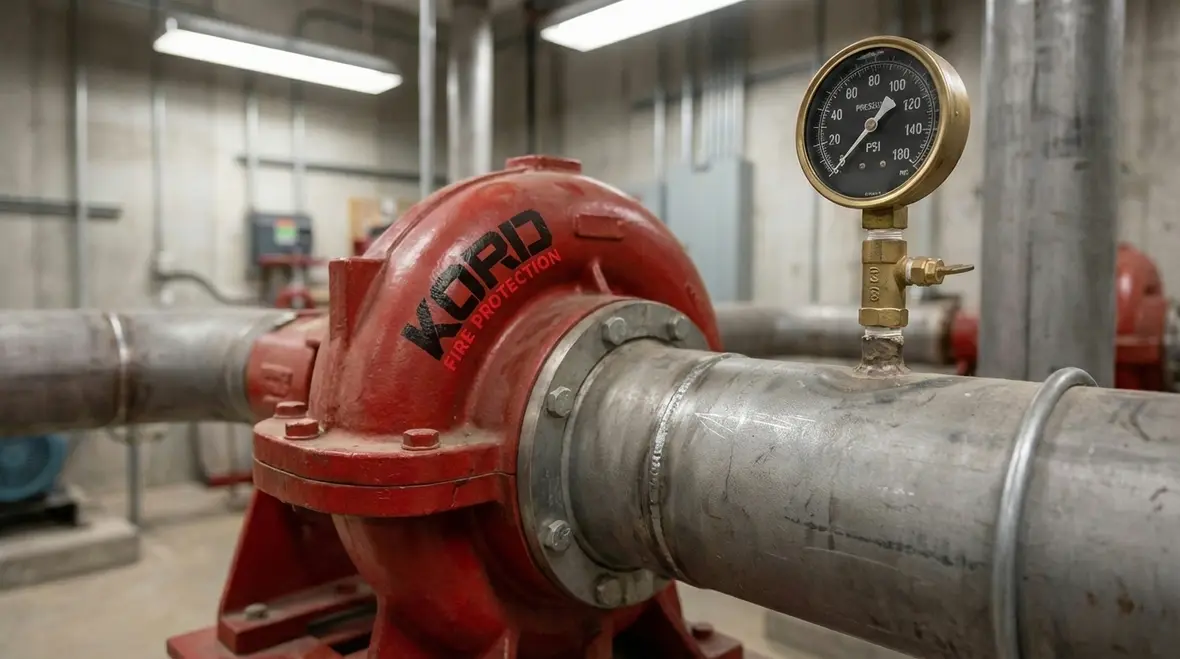
How a Fire Pump Supports a Building’s Entire Safety System
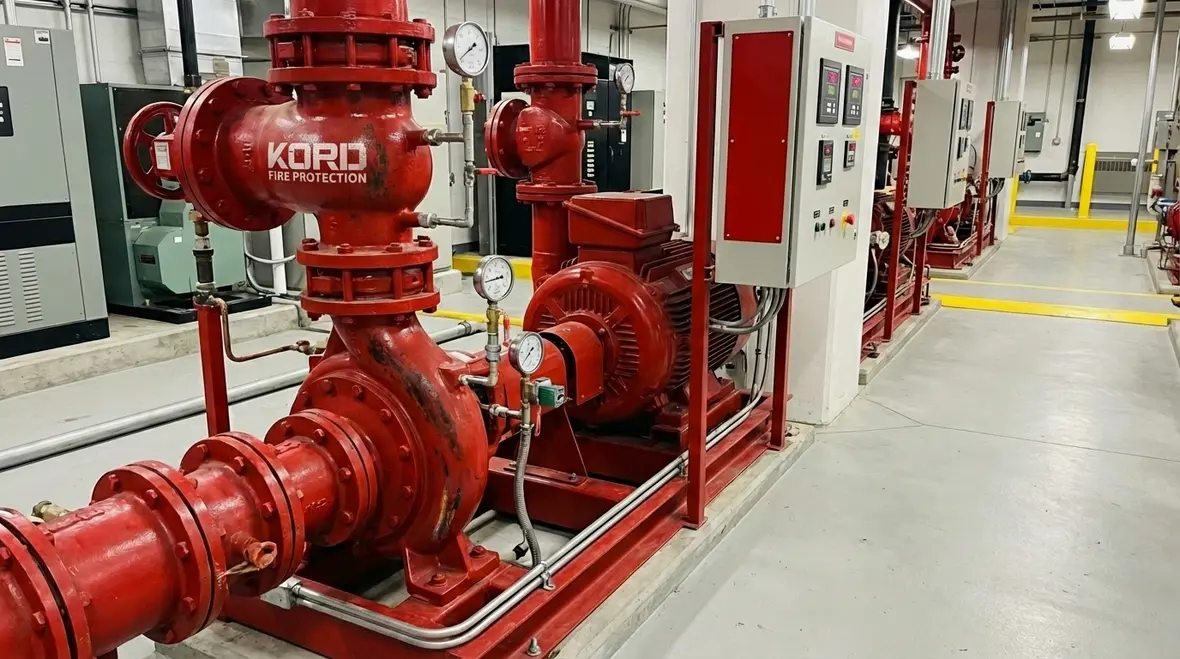
A fire pump does not operate alone. Instead, it works as part of a larger fire protection ecosystem. That system typically includes:
- Water supply connection
- Backflow preventer
- Fire pump controller
- Jockey pump
- Sprinkler and standpipe networks
First, the jockey pump maintains small pressure levels in the system to prevent unnecessary starts. However, when pressure drops significantly, the main fire pump activates automatically. At that moment, it draws water from a reliable source such as a city main, storage tank, or reservoir.
Because of this design, the building receives immediate reinforcement. Consequently, sprinkler heads discharge water at the required density. In high rise structures, this process allows water to travel vertically without losing force. Without that boost, gravity would win. Gravity always wins, unless you bring horsepower to the party.
Kord Fire Protection technicians emphasize that the coordination between pump, controller, and piping must remain precise. Otherwise, even the best equipment cannot perform properly.
Fire Pumps and Code-Driven Performance
Behind every smooth start sequence and stable discharge pressure is a framework of standards and settings. The way controllers sense pressure, the start points, and the sequencing between jockey pump and main pump are all governed by design decisions that tie back to NFPA 20, NFPA 25, and local fire code enforcement. When technicians walk through a fire pump start sequence or test operating settings, they are checking that this entire ecosystem still behaves as originally engineered, not just that the motor turns on.
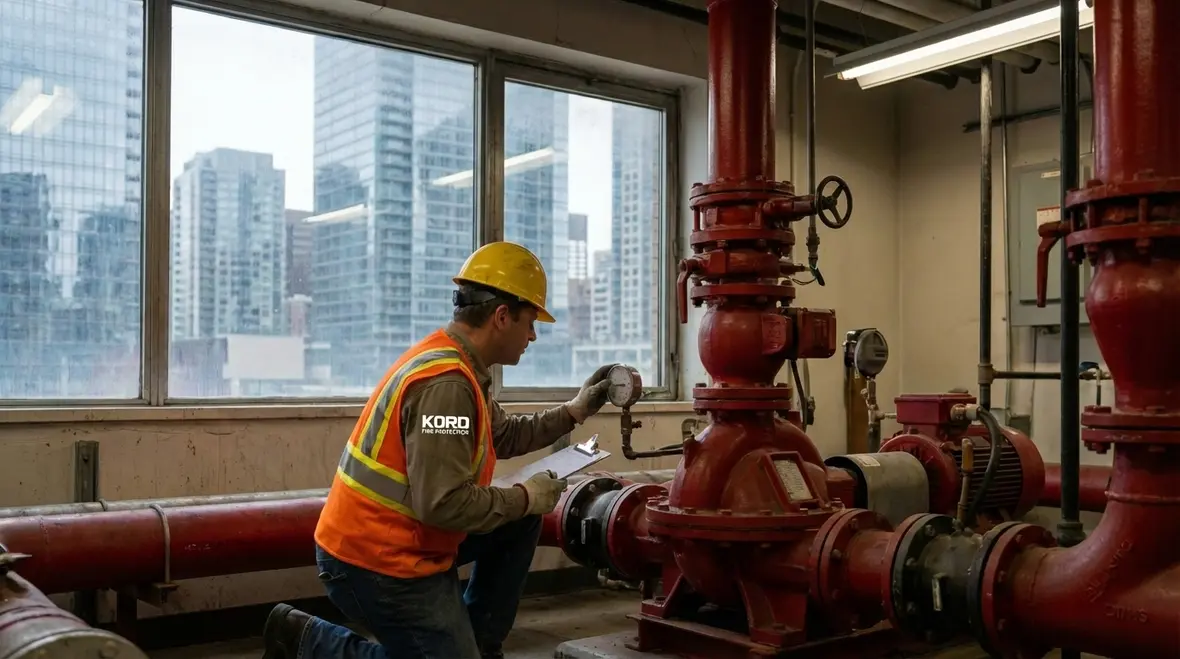
Why High Rise and Large Facilities Depend on Fire Pumps
Tall buildings present a simple challenge. Water must travel up. The higher it climbs, the more pressure it needs. While municipal systems provide baseline pressure, they rarely deliver enough strength for upper floors in large structures.
As a result, designers calculate required flow and pressure based on building height, hazard classification, and occupancy type. Then they size the pump accordingly. Proper codes explains that centrifugal pumps are most commonly used because they provide steady flow at predictable pressures.
In addition, warehouses and manufacturing plants demand high volume discharge due to fuel loads and open floor plans. In those cases, a fire pump ensures that suppression systems deliver water quickly across wide areas.
Without this reinforcement, flames could spread faster than responders can act. And while superheroes make dramatic entrances in movies, in real life, seconds matter. Steel heats. Smoke thickens. Decisions become harder. Therefore, reliable pressure becomes priceless.
High-Rise, Multi-Tenant, and Complex Fire Scenarios
In modern cities, high rise and multi-tenant buildings introduce layered risks: varied occupancies, shared infrastructure, and long egress paths. A well-selected pump allows sprinklers and standpipes to serve these different zones consistently, so the 25th floor office, the 10th floor residential unit, and the parking garage all receive the pressure they were designed for. When owners review their fire strategy, this is where the quiet math of pump curves and system demand pays off in real-world survivability.
What Happens If a Building Has No Fire Pump?
In some small buildings with strong municipal supply, a fire pump may not be required. However, when water pressure proves inadequate and no pump is installed, the consequences can be severe.
First, sprinkler heads may discharge below their designed density. Consequently, fire control slows. Next, standpipe systems may fail to provide firefighters with the pressure they expect. That delay can allow a contained fire to grow.
Moreover, insurance carriers often assess risk based on system capability. If the fire pump importance is ignored during design, owners may face higher premiums or compliance issues. Local codes frequently reference standards such as NFPA 20, which governs installation of stationary pumps for fire protection.
Kord Fire Protection technicians often tell clients, calmly but firmly, that hoping city pressure will be enough is not a strategy. It is a gamble. And buildings are expensive poker chips.
Installation, Testing, and Maintenance: Protecting the Investment
From Initial Installation to First Acceptance Test
A fire pump is not a decorative feature. It requires careful installation and ongoing testing. Otherwise, reliability suffers.
During installation, technicians align the pump and driver, connect suction and discharge piping, and configure the controller for automatic operation. Clearances must meet code. Electrical connections must remain secure. Every valve position must be verified.
After installation, acceptance testing confirms that the pump achieves rated flow and pressure. Technicians measure churn pressure, rated point performance, and overload conditions. These tests ensure that the pump performs not only on paper but in reality.
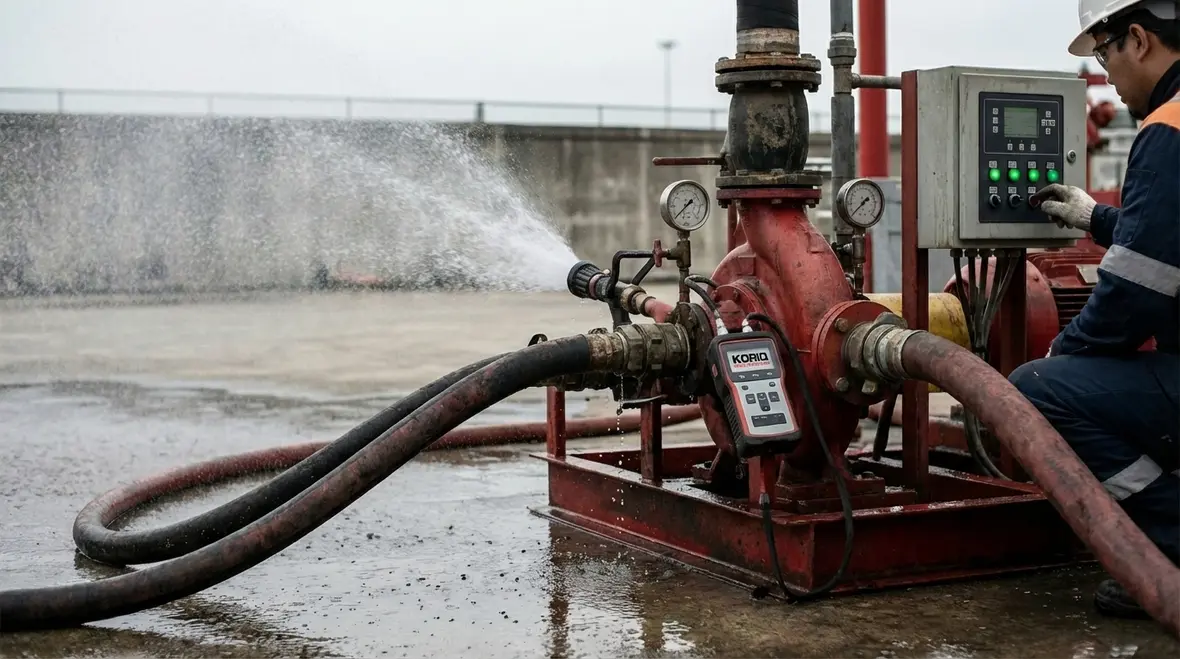
Ongoing Inspection, Testing, and Calibration
However, the story does not end there. Regular inspection and testing remain essential. Weekly or monthly churn tests, annual flow tests, and periodic maintenance keep components ready. Seals wear. Batteries weaken. Controllers age. Therefore, consistent oversight protects performance.
Kord Fire Protection technicians often describe maintenance as similar to caring for a classic car. If it sits untouched for years, do not expect it to roar to life on command. Instead, exercise and inspection keep it dependable.
Why Professional Testing and Certification Matter
Testing and certification are about much more than checking a compliance box. Full flow tests, accurate calibration, and documented results give owners and authorities a shared, verifiable picture of how the pump behaves under stress. That is why professional firms place so much emphasis on annual certification, start sequence verification, and alignment with NFPA 20 and NFPA 25 requirements: they translate the idea of “fire pump importance” into proof on paper and performance in the field.
Key Factors That Influence Proper Pump Selection
Selecting the right pump involves more than choosing a powerful motor. Engineers evaluate several factors:
Required Flow Rate
This depends on sprinkler system demand, hose allowances, and hazard classification.
Required Pressure
Designers calculate elevation changes, friction loss in piping, and safety margins.
Power Source
Electric motors are common, yet diesel engines provide reliability when electrical service may fail.
Water Supply Reliability
If municipal supply fluctuates, storage tanks or dedicated reservoirs may be necessary.
Because each building differs, pump selection must align with actual risk.
Through careful evaluation, designers ensure that the fire pump importance translates into measurable protection rather than theoretical safety.
Quick Comparison: With and Without a Fire Pump
With Properly Installed Pump
- Immediate pressure boost during demand
- Consistent sprinkler discharge density
- Reliable standpipe performance
- Code compliance confidence
- Lower long term liability exposure
Without Adequate Pump Support
- Pressure drop during high flow events
- Weak or uneven water distribution
- Firefighter challenges on upper floors
- Increased regulatory risk
- Higher potential loss severity
When viewed side by side, the value becomes obvious. One column reads like preparation. The other reads like regret.
How Building Owners Can Strengthen Fire Protection Today
Start with an Honest Assessment
Improving system reliability begins with evaluation. Owners should schedule professional assessments of water supply, pump condition, and controller settings. Additionally, they should review inspection records to confirm compliance with applicable standards.
Turn the Pump Room into a Classroom
Kord Fire Protection technicians often walk property managers through pump rooms, explaining components in clear language. They translate gauges and valves into practical meaning. As a result, owners gain confidence rather than confusion.
Leverage Monitoring and Smart Technology
Furthermore, integrating remote monitoring or alarm notifications can enhance oversight. When a controller signals trouble, early awareness allows faster response. In today’s connected world, even life safety equipment benefits from smart technology.
While fire protection rarely earns headlines, it earns peace of mind. And peace of mind, though invisible, holds real value.
Frequently Asked Questions
Conclusion: Take Action Before the Alarm Sounds
The true measure of fire pump importance reveals itself long before smoke appears. It shows in preparation, precision, and professional care. Building owners who invest in proper design, testing, and expert guidance protect more than property. They protect people. Now is the time to consult experienced professionals like Kord Fire Protection technicians, evaluate system performance, and strengthen reliability. Because when the alarm sounds, confidence should already be in place.
For owners ready to take the next step, scheduling a dedicated fire pump inspection, testing, and calibration visit is a powerful starting point. A focused service appointment turns questions about system readiness into documented answers, clear action items, and a plan for keeping pumps in peak condition year after year.
Explore Kord Fire’s fire pump testing requirements guide to better understand how often your equipment should be evaluated, and then coordinate with a qualified service team to implement those best practices across your properties.
Ready to review your pump room? Connect with a trusted fire pump service provider and schedule a comprehensive inspection and testing visit so your building’s quiet guardian is truly ready for the next emergency.
Know Your Weapon Before You Fight the Flame
Kord Fire Protection is your go-to when it comes to all things fire protection. For over 20 years, we’ve been serving Southern California with the quality service and equipment to keep your home or business safe at all times. Our competitive prices reflect our unwavering commitment to protecting what matters most in the event of a fire emergency. Give us a call, send an email, or use that form!

Join Our Newsletter!
Get the latest fire safety tips delivered straight to your inbox From our Newsletter.