Electrical Safety for Commercial Renovations with Kord Fire Protection
Quick Answer
During large scale commercial building renovations, electrical safety protocols protect workers, tenants, and assets. A strong plan covers lockout tagout, safe testing, temporary power rules, and strict documentation. Teams that partner with kord fire protection add even more protection by aligning electrical risk controls with fire prevention and detection.
Renovations inside industrial, retail, and multi site commercial facilities create a special kind of pressure. Equipment moves, circuits change, and people work in places they did not work yesterday. That is exactly why electrical safety for commercial renovations must be treated like a real system, not a binder on a shelf. In the rest of the job, this article walks through the core protocols teams use in Australia, and how kord fire protection can become a vital partner when the stakes involve fire risk, active systems, and safe continuity of operations.
When renovation work starts touching ceilings, risers, panels, detector paths, and occupied areas all at once, it helps to have a fire protection partner that already understands complex commercial environments. Kord Fire Protection offers full fire protection services for commercial, industrial, and multi use properties, which makes that coordination far easier when electrical changes and fire risk start sharing the same space.
Plan first, energise later: safety setup that actually holds
Before any tool turns on, the facility team sets the rules for the work. This starts with a detailed electrical scope review, followed by a risk assessment that matches the building reality. Then the job team builds a safety plan that covers temporary power, circuit isolations, testing steps, signage, and supervision.
Next, they confirm how renovations affect switchboards, distribution boards, generators, UPS systems, and tenant tie ins. This includes mapping where conductors route through walls and ceilings, so workers do not guess where the wiring lives. Because in commercial sites, guessing is how problems become legends. And nobody wants to star in that movie.
What a real setup meeting should cover
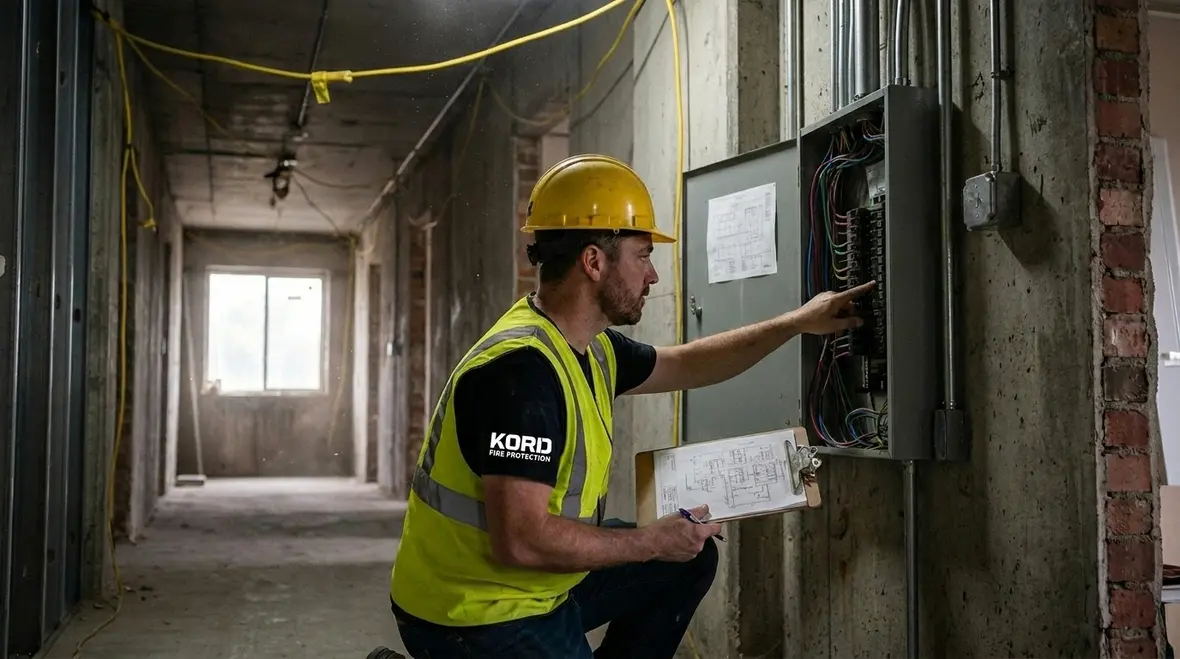
A strong prestart meeting does more than assign tasks. It defines who can isolate circuits, who signs permits, how changes are approved, and what happens if the actual field conditions do not match the drawings. On large jobs, that last part matters more than anybody admits at first. Renovation drawings can look neat on paper while the ceiling space above looks like it has been collecting electrical surprises since the early 1990s.
How lockout tagout and permits prevent the “oops moment”
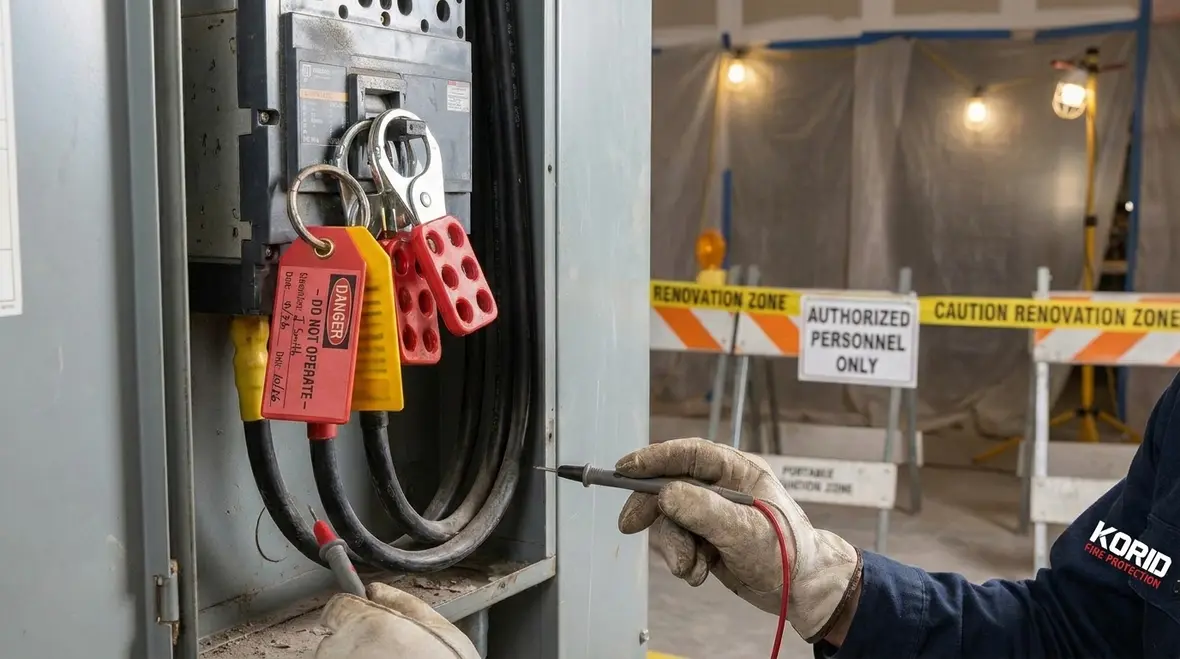
During renovations, multiple trades share space, and that is where mistakes get expensive. A lockout tagout process stops accidental energisation. However, the safety system works only when each person understands the specific energy sources involved. That means identifying normal supply, backfeed paths, stored energy, and any alternate power sources.
In practice, teams issue electrical permits for work that specify the exact equipment, the isolation points, the verification steps, and the time window. After isolation, they verify de energisation with proper test equipment, using the correct procedure for the voltage level. Only then do they allow work on panels, cable runs, or fixtures.
To keep it consistent across sites, the crew also uses clear labelling and maintains a controlled lockout area. When people rotate shifts or subcontractors arrive, that clarity prevents confusion. And yes, it prevents the classic scenario where someone says, “I thought it was already safe.”
Permits are only useful when they are specific
A vague permit is basically a decorative piece of paper. Good permits identify exact boards, exact circuits, exact dates, and exact verification steps. They also show who owns the isolation and who must sign off before re energisation. That level of detail sounds fussy right up until it prevents a shutdown, a damaged asset, or a very memorable phone call to leadership.
Temporary power for renovations: safe routes, clean loads, real protection
Temporary power often feels like a convenience, but it becomes one of the biggest risk areas on active commercial sites. First, teams plan the temporary distribution so cables run safely and remain protected from damage. They keep cords off walkways where possible, use proper cable protection where traffic occurs, and install secure connections.
Then they manage loads. A temporary system must not overload circuits, and it must include correctly rated protection. Teams also ensure that portable equipment receives appropriate residual current protection. If the renovation includes welding, induction tools, or high inrush equipment, the team coordinates the load plan so switchgear does not get surprised.
After setup, the team inspects temporary installations and logs checks. Meanwhile, they train workers on what they can plug in, where they can route leads, and how they report damage. When sites manage temporary power like a living system, it stops being the weak link.
Why temporary power fails when no one owns it
One of the easiest ways for temporary power to drift into chaos is when every crew assumes someone else is checking it. Successful projects assign ownership. One competent person or team tracks load additions, cord condition, connection points, and inspection intervals. That way, the temporary system does not slowly evolve into a museum of adapters, mystery leads, and unplugged common sense.
Testing, commissioning, and documentation that stand up under audits
Renovations change circuits, add sub circuits, and sometimes reroute power through new paths. Therefore the job team verifies insulation, continuity where required, and correct polarity for final connections. They also test protective devices and confirm that safety measures operate as designed.
However, testing does not count as safety unless the results link to documentation. Teams maintain records that include test methods, equipment identifiers, pass criteria, and the exact panel or circuit tested. That documentation supports internal audits and supports client confidence, especially when multiple contractors work under the same roof.
On larger commercial facilities, teams also manage commissioning in stages. They energise systems gradually and verify that interlocks, alarms, and monitoring signals behave correctly. This staged approach reduces downtime and prevents a “start everything and hope” approach, which is fun for movies and terrible for electrical safety.
Staged energisation protects more than the electrical scope
Bringing systems online in stages also helps operations teams observe side effects early. Maybe a new load affects a tenant area. Maybe a control signal behaves differently than expected. Maybe an alarm interface needs one more review before handover. Small discoveries during staged commissioning are much cheaper than big discoveries on opening day.
Fire risk meets electrical work: where kord fire protection adds value
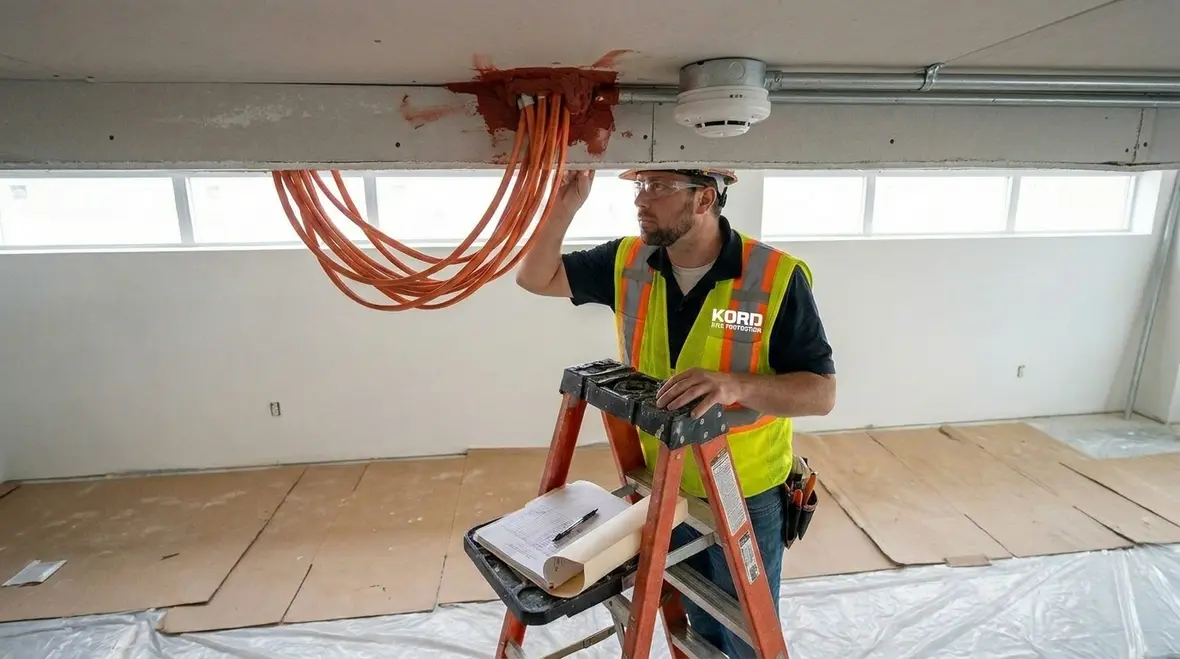
Electrical hazards and fire hazards connect more often than people think. When renovations disturb ceilings, conceal new cable routes, or modify equipment access, they can affect how early warning systems operate. That includes smoke detection coverage, cable routing near detectors, and the integrity of fire stopping around penetrations.
Here, kord fire protection becomes a vital partner by helping align electrical changes with fire prevention controls. For example, during cable installation and panel work, the team coordinates with fire protection professionals to ensure that fire stopping remains compliant and that changes do not block detector fields or compromise active systems. In addition, they help verify that documentation covers relevant fire interface points.
Moreover, where construction alters pathways, kord fire protection supports a practical handover approach. That means the facility team receives clear guidance on what was inspected, what must be re tested after renovation, and how to keep fire systems functional while work continues. When fire protection stays tied to electrical safety for commercial renovations, the site reduces the chance of hidden risk.
That approach fits naturally with Kord Fire’s guidance on how commercial building fire safety systems work and its advice on commercial fire sprinkler upgrades. Renovation projects move faster when electrical teams and fire protection teams are not discovering each other’s scope halfway through the ceiling grid.
Worker training and daily controls that reduce human error
Even with strong procedures, people make decisions in the moment. Therefore teams focus on training and daily controls. First, they orient all personnel, including subcontractors, to the renovation power plan. Workers learn where isolations exist, how temporary power is arranged, and what safety steps they must follow before touching any equipment.
Then supervisors run short pre task meetings at key stages. They review the specific hazards for that day, the expected work on circuits, and the isolation plan. They also assign a clear point of contact for questions, so workers do not improvise.
To keep risk low, teams use ongoing spot checks. They confirm signage stays visible, barriers remain in place, cords stay intact, and test instruments are used correctly. When the culture supports reporting, near misses get logged. And in that process, the job gets safer week by week, not just louder in the toolbox talk.
Compliance approach across industrial and retail sites in Australia
Across Australia, commercial facilities often operate under strict safety expectations. Therefore teams treat compliance as a process, not a single event. They align electrical work practices with the required standards for inspection, testing, and safe operation. They also ensure that the renovation plan supports ongoing business use, including after hours activity, customer access routes, and maintenance interruptions.
In warehouses and industrial plants, teams manage vibration, dust, and heavy equipment interactions. In retail environments, they protect public areas and reduce disruption while maintaining safe power routes for temporary installations. Meanwhile, in facilities with multiple tenants, the team coordinates so one contractor does not create a hazard for another.
Then, they standardise documentation and inspection checklists so site managers can compare results across campuses and operations. That consistency supports faster approvals and clearer accountability.

Dual column safety checklist: what teams verify during renovations
Electrical control
- Lockout tagout applied to the correct energy sources
- De energisation verified with proper test method
- Temporary power protected and load assessed
- Protective devices rated correctly and functioning
Fire alignment control
- Fire stopping reviewed after cable or conduit changes
- Detector coverage not blocked by new routes or materials
- Fire system handover points documented
- Post change checks scheduled with kord fire protection support
FAQ: electrical safety for commercial renovations
Conclusion: make the job safer, faster, and easier to defend
Large scale commercial renovation success depends on steady electrical controls and disciplined documentation, day after day. Teams should plan temporary power, lock out the right energy sources, verify de energisation, and test changes before energising.
Then they should align fire related impacts with kord fire protection so electrical work does not create hidden fire risk. If this renovation is coming soon, start the safety planning now and call the right partners early.

Join Our Newsletter!
Get the latest fire safety tips delivered straight to your inbox From our Newsletter.