Fire Pump Power Redundancy for Reliable Emergency Water
In commercial fire pump systems, Fire pump power redundancy is not a luxury. It is the quiet insurance policy that keeps water moving when things go wrong. Kord Fire Protection technicians often explain that a pump does not fail because it is “unlucky.” It fails because power disappears, a breaker trips, a phase goes missing, or a control circuit gets confused during a stressful moment. Therefore, the right redundancy plan protects the pump, protects the building, and protects the people inside it. And yes, it also protects owners from the kind of late night calls that make Netflix binge sessions feel like a sitcom. In the sections below, this third person guide breaks down how redundancy works, why it matters, and how technicians verify it in real life.
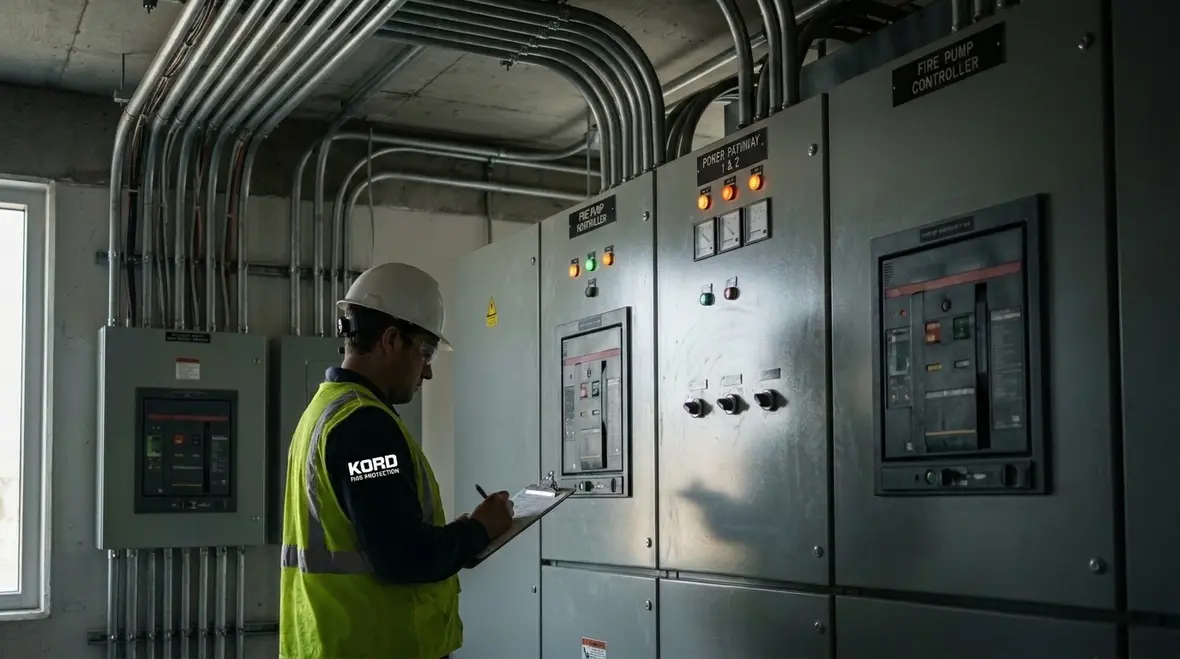
Why fire pump power must stay on, even when the building does not
Commercial sites operate under pressure. A storm hits. A transformer ages. A contractor changes a panel. Meanwhile, the fire pump control system must keep responding to the demand for water. If the electrical supply drops, the pump simply cannot do its job. So, the system relies on designed stability, not hope.
In practice, Fire pump power redundancy means more than “two feeds somewhere.” It means planned pathways that stay reliable through common events. Kord Fire Protection technicians typically walk clients through the same core idea: the pump and its controls must keep running long enough for sprinkler systems and standpipe systems to perform. Also, the fire pump must start on demand without waiting for manual intervention. In other words, the electrical design has to behave like a professional, not like someone who “will probably remember” to bring the coffee.
Why uptime matters more than optimism
That is why the electrical side of a fire pump deserves the same seriousness as the pump itself. Pressure, flow, and water supply get a lot of attention, but without dependable power, the system is just an expensive promise. Facilities teams that understand this usually make better decisions about upgrades, inspections, and long term maintenance because they stop treating backup power like a nice extra and start treating it like part of the life safety backbone.
What redundancy looks like in a typical commercial setup
Many buildings use two independent power sources or multiple paths that reduce single points of failure. Technicians then connect the fire pump controllers so that the pump can start and run if one pathway fails. Common approaches include redundant utility feeds, dedicated generator support, or separate feeders from different sections of a service.
Kord Fire Protection technicians often explain the practical goal: when a fault occurs, the system should not lose the pump. Instead, the controls should automatically transfer or remain supplied. This usually involves:
- Two sources that do not share the same vulnerability
- Switchgear and transfer equipment sized for the motor load
- Proper coordination of protective devices so faults clear without shutting down the entire pump system
- Control power that stays stable for alarms, relays, and starting logic
Even though these details sound technical, they make a simple promise. When the building’s normal power system struggles, the fire pump system should still get what it needs.
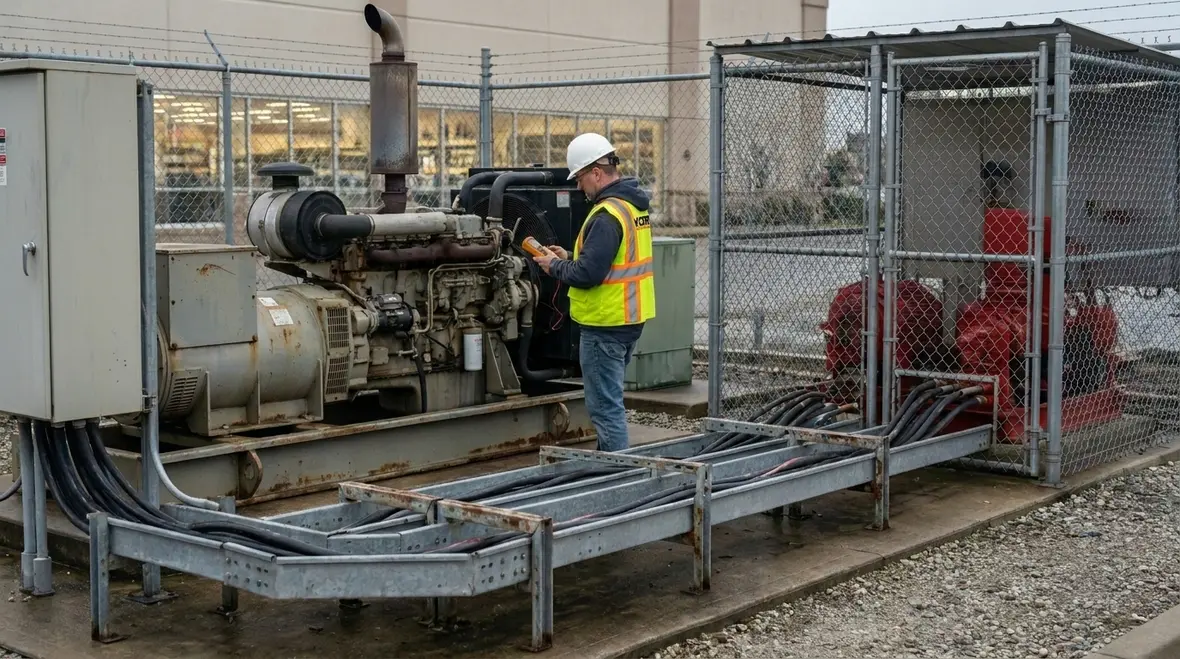
Common components that support continuity
A good setup is less about having flashy gear and more about removing fragile dependencies. That can mean transfer equipment built for the actual starting characteristics of the motor, feeders routed to avoid a common hazard, and controls arranged so they do not collapse during the exact moment they are needed most. It can also mean looking at the system as one connected chain rather than separate electrical and fire protection islands.
How single points of failure get eliminated
Most real failures do not happen because nobody cared. They happen because an item looks small and gets treated like “just part of the circuit.” However, a single breaker, a shared control transformer, or a common control wiring route can create a weak link.
To reduce weak links, redundancy plans usually separate where it matters and keep connections dependable. That includes separation of feeders, segregation of conduit runs where required, and avoiding shared components that would fail together. Additionally, engineers and Kord Fire Protection technicians consider the behavior of protective devices during abnormal conditions. A well designed system clears the fault while keeping the pump supply intact or restoring it fast.
Fire pump power redundancy also includes attention to motor starting and voltage drop. A pump controller that “transfers” but then trips on undervoltage does not help much. Therefore, the design checks load, starting current, and voltage stability under expected scenarios. In that sense, redundancy must work not only on paper, but also inside the real electrical world where motors pull hard and equipment ages.
This is one reason many facility owners benefit from pairing design review with ongoing field verification. A drawing may show separation, but renovations, tenant changes, and electrical modifications can quietly reconnect risks. Kord Fire Protection technicians often find that the path to better reliability is not reinventing the whole system, but identifying the one or two overlooked spots that could take down everything at once.
Dual source power versus generator support for continuity
When comparing redundancy methods, the key question is continuity. Utilities can fail. Generators can fail too, but the design can account for that. Kord Fire Protection technicians often help owners think in terms of timelines. How long can the system tolerate a transfer delay? How quickly can the generator pick up the load? What happens during startup when the fire pump motor demands high current?
Dual utility feeds offer fast continuity when both sources remain healthy. Generator support can maintain supply when utility power drops, but it must be engineered for correct pickup and run conditions. Also, generator performance requires maintenance and testing. After all, a generator that has not been exercised is like a firefighter who skipped the drills and “only reads about it.” It might be confident, but confidence does not move water.
Technicians also consider control power. Sometimes, the main pump supply is backed up, yet the controls lose power due to a separate breaker or transformer. Therefore, a complete plan aligns the pump power and its control circuits, so the pump does not get stuck between “ready” and “dead.”
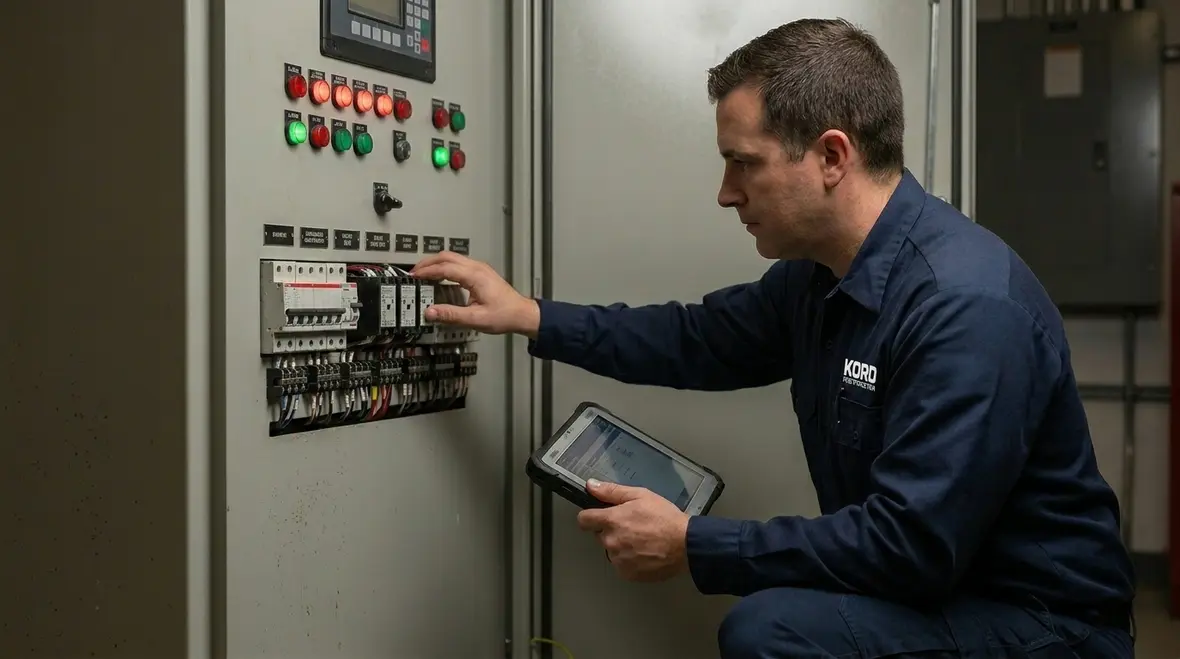
Choosing the right backup strategy
The better answer depends on the building, the service arrangement, and the level of risk the owner is trying to reduce. Some properties benefit from truly independent utility pathways. Others need generator support that has been carefully matched to the pump’s electrical behavior. Either way, the question is not whether a backup source exists on paper. The question is whether it can actually carry the fire pump through a bad day without drama.
Testing, inspection, and verification by Kord Fire Protection technicians
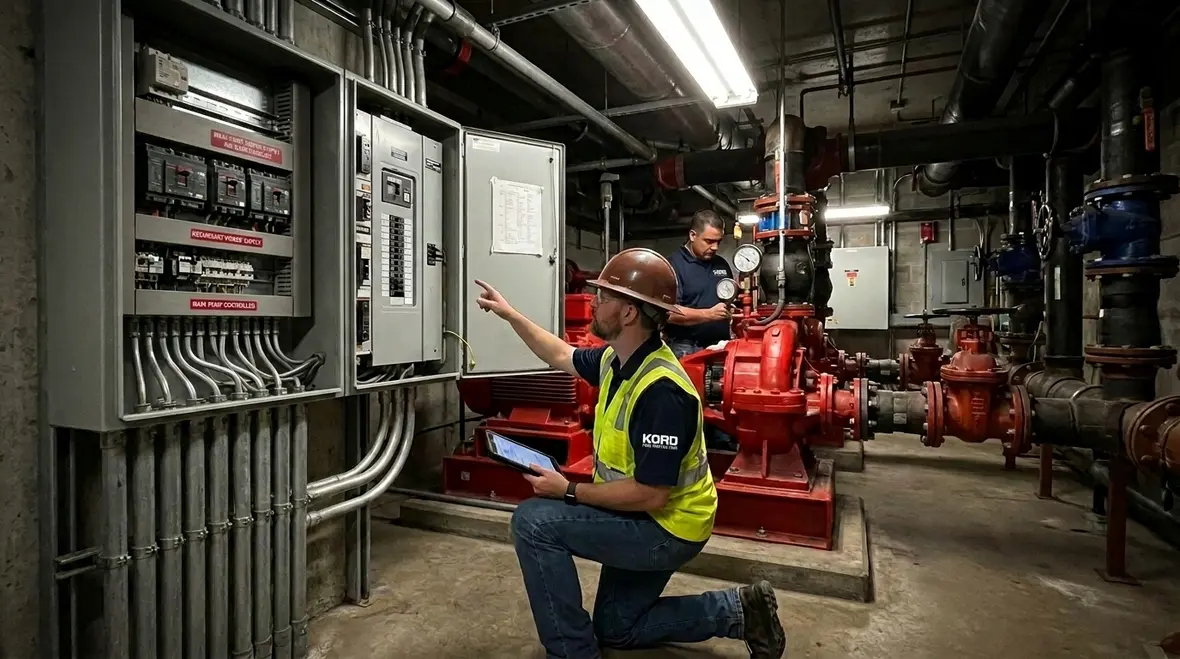
Design matters, and so does verification. Redundancy that never gets tested becomes a story owners tell themselves, not a guarantee. Kord Fire Protection technicians emphasize a steady routine: inspections, functional tests, and documentation that proves the system performs. Their broader full fire protection services approach reflects the same principle across life safety systems.
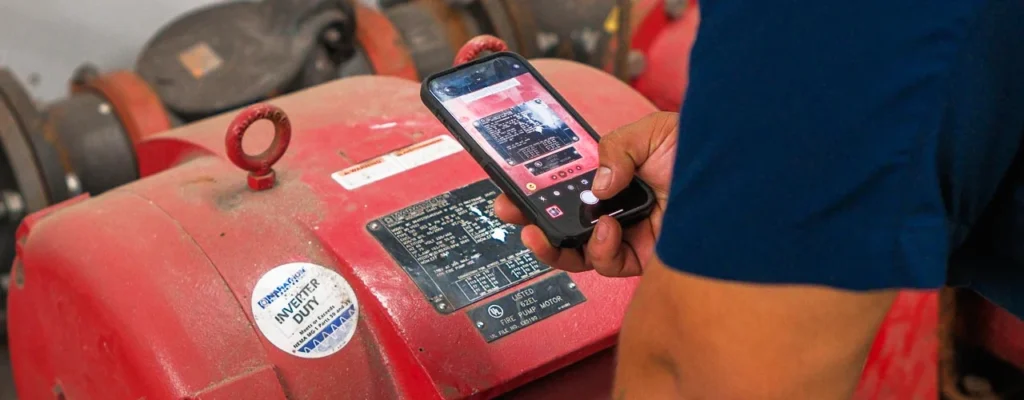
Testing often includes checking transfer equipment operation, confirming breaker settings, verifying that protective relays coordinate properly, and ensuring control power remains stable. In addition, technicians verify that the fire pump controller starts the pump as required under simulated alarm conditions. They also check that alarms and supervisory signals function, so facilities staff know the system is ready and what it is doing.
Furthermore, technicians verify that the redundancy strategy matches the actual installed layout. It is common for renovations to change routing, labeling, or panel assignments. As a result, the electrical map should match reality. Otherwise, the system can look redundant but behave like a single path during an event.
For owners who want a stronger benchmark for fire pump performance, it also helps to review fire pump testing requirements and compare those expectations with the building’s present verification routine. That way, maintenance decisions are based on documented performance instead of crossed fingers.
Maintaining fire pump power redundancy as equipment ages
Power redundancy is not a one time purchase. It changes over time because equipment ages. Breakers wear. Switchgear contacts drift. Batteries for control power degrade. Cables can be affected by heat or moisture. And because fire systems sit quietly for long periods, problems can hide until they matter most.
To keep Fire pump power redundancy effective, owners should plan for scheduled maintenance and clear responsibilities. Kord Fire Protection technicians typically recommend keeping detailed records of inspections, test results, and corrective actions. Then, when a component shows signs of wear, replacement happens before failure. Also, technicians encourage owners to train relevant staff on what supervisory alarms mean and how to respond.
In addition, maintenance helps avoid nuisance faults that can interrupt reliability. A protective device that trips “most of the time” creates stress and delays response. Therefore, the goal stays simple: reliable operation without surprise downtime.
Aging equipment still needs a real plan
That plan should include periodic review of transfer logic, control devices, feeder condition, and any modifications made by outside contractors. It should also include clear ownership of follow up actions. Too many reliability issues survive because everyone assumes someone else is handling them. A documented maintenance process removes that confusion and gives the fire pump system a much better chance of doing its job when the stakes are not theoretical anymore.
FAQ
Conclusion: make redundancy a proven plan, not a hope
Fire pump power redundancy protects people, property, and operations. Yet redundancy only earns its value when the electrical system stays reliable, coordinated, and verified over time. Kord Fire Protection technicians recommend a clear program of inspections, functional testing, and maintenance so the pump starts when it matters and keeps running without guessing.
If owners want fewer risks and better confidence during an emergency, they should contact Kord Fire Protection for an assessment of the current power design and verification plan. For related life safety support, explore commercial and residential fire alarm installation services and make the protection strategy more complete. Make it real, document it, then sleep better.

Join Our Newsletter!
Get the latest fire safety tips delivered straight to your inbox From our Newsletter.